Artwork
Christ's Charge to St Peter
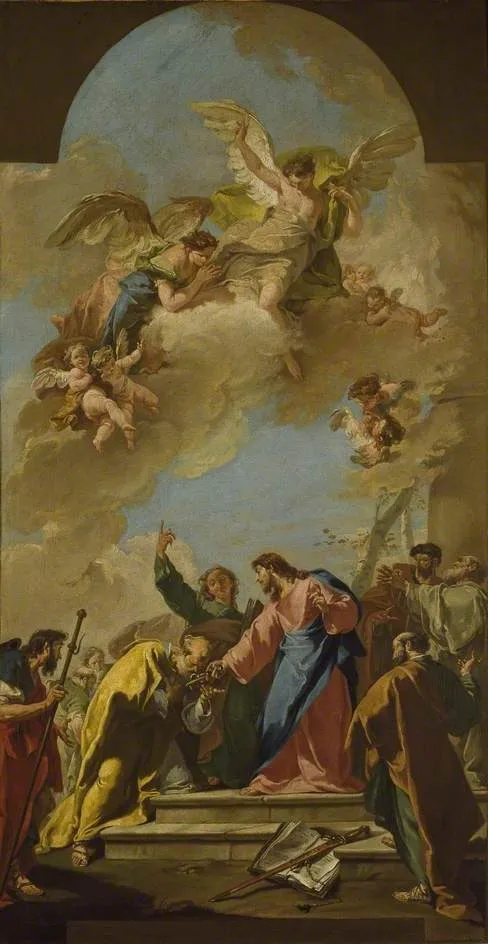
Christ's Charge to St Peter is an oil painting by the Rococo painting artist Giambattista Pittoni. It dates from 1737 and is held in the collection of the Ashmolean Museum.
About this work
Overview
Giambattista Pittoni, a Venetian artist active in the early eighteenth century, painted *Christ’s Charge to St Peter* circa 1737. Executed in oil on canvas, the work belongs to the religious genre and is part of the Ashmolean Museum’s collection.
Subject & Meaning
The composition shows Jesus in a white garment standing on a rocky ledge, extending his right hand toward a kneeling Saint Peter, who is clothed in yellow. Peter looks upward in reverence, suggesting the biblical moment when Christ entrusts him with the keys of the Church.
Technique & Style
Pittoni employs a clear Rococo palette and a delicate handling of light, creating soft transitions between illuminated and shadowed areas. The chiaroscuro effect gives the figures a palpable sense of volume, while the overall tone remains light and decorative, characteristic of his late‑Baroque sensibility.
Context
Working in Venice during a period when the Rococo style was gaining favor, Pittoni was a founding member of the Academy of Fine Arts of Venice and later its president in 1758. His religious canvases often combined devotional narrative with the period’s preference for elegance and gentle movement.
History & Provenance
After its creation, the painting entered private collections before being acquired by the Ashmolean Museum, where it remains on display as an example of Pittoni’s religious output and the broader Venetian Rococo tradition.
Artist & collection
Artist
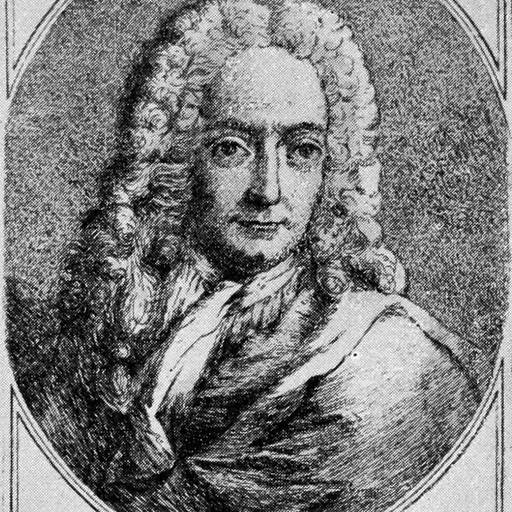
Giambattista Pittoni or Giovanni Battista Pittoni (6 June 1687 – 6 November 1767) was a Venetian painter of the late Baroque or Rococo period.

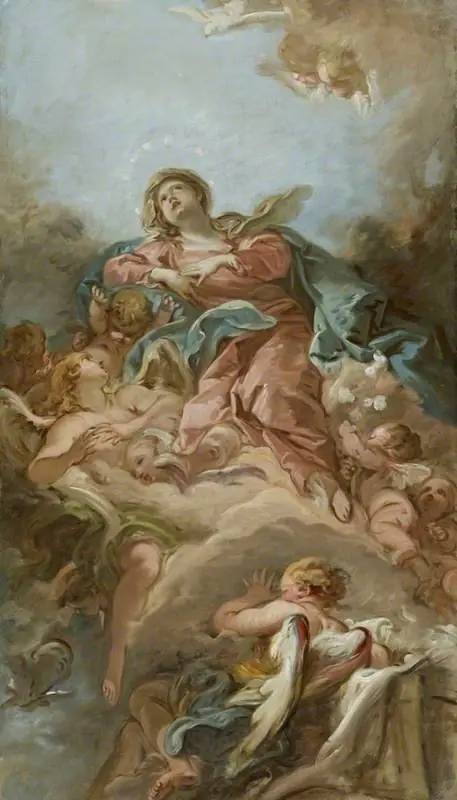 The Assumption of the Virgin
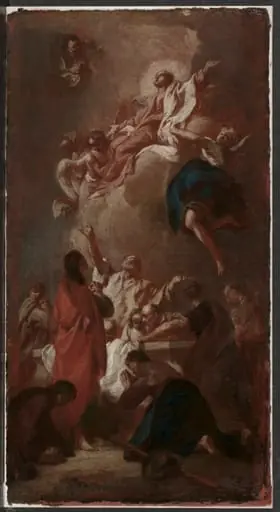 Sketch for "The Assumption of the Virgin" (for St. James, Zbraslav, near Prague)?
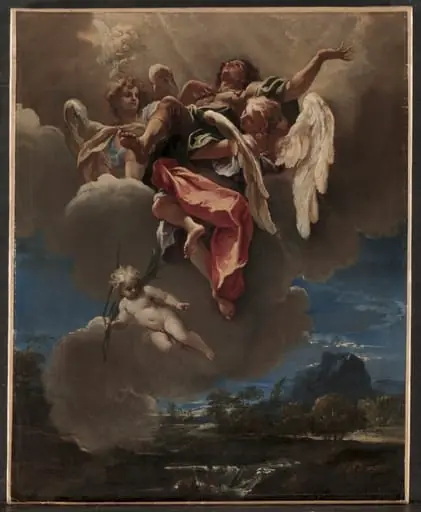 Study for "An Apotheosis of a Saint" (for San Bernardino dei Morti, Milan)
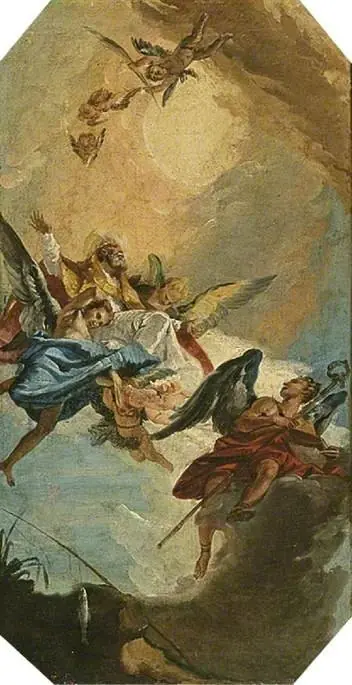 The Apotheosis of St Zeno
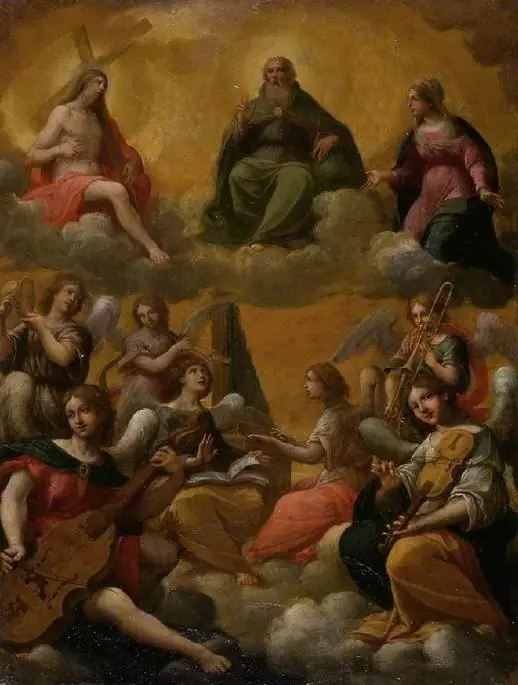 The Trinity with the Virgin Mary and Musician Angels
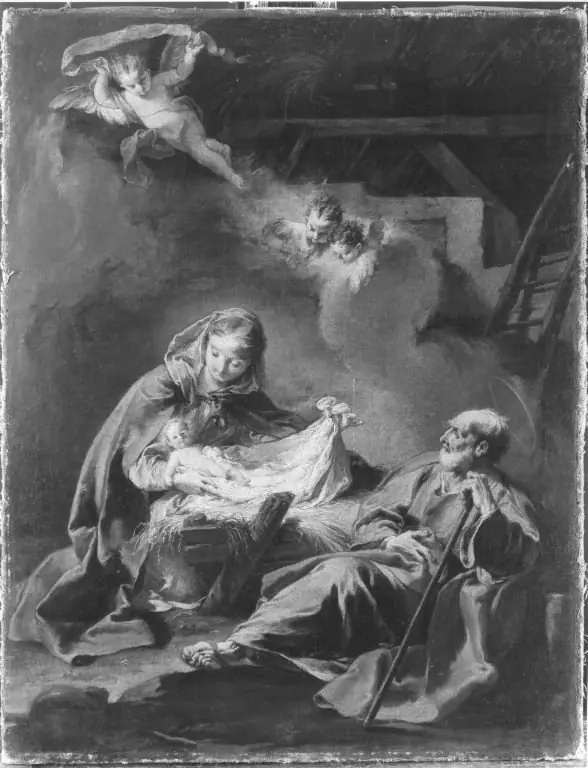
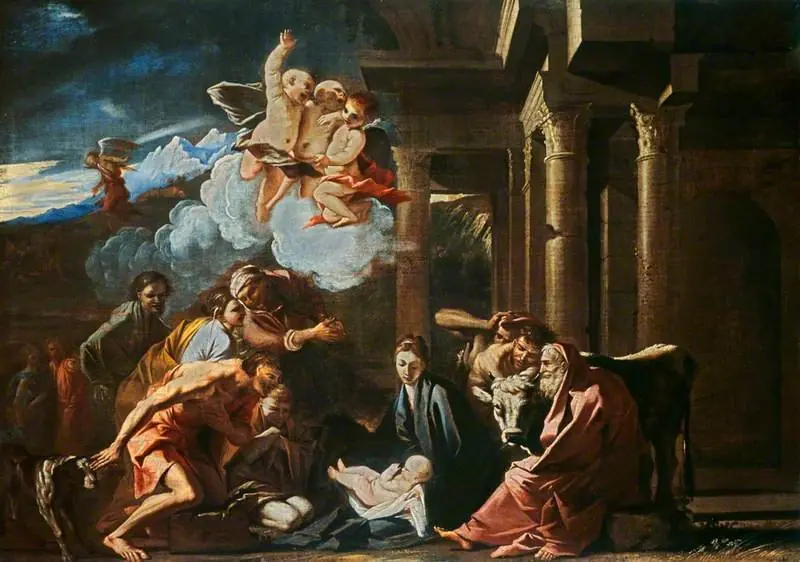 The Adoration of the Shepherds
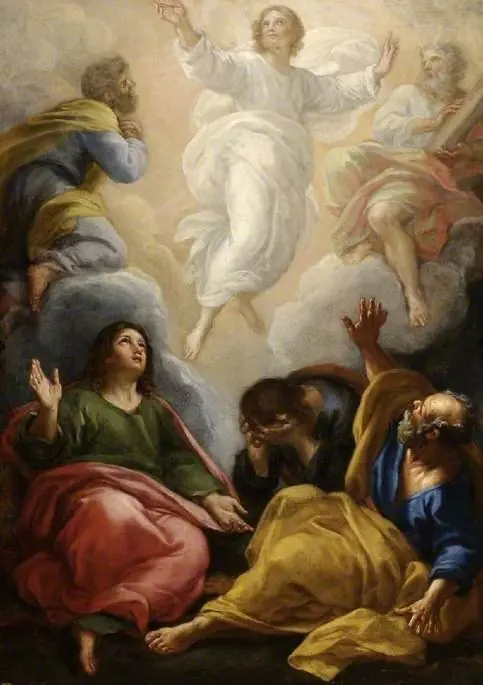 The Transfiguration
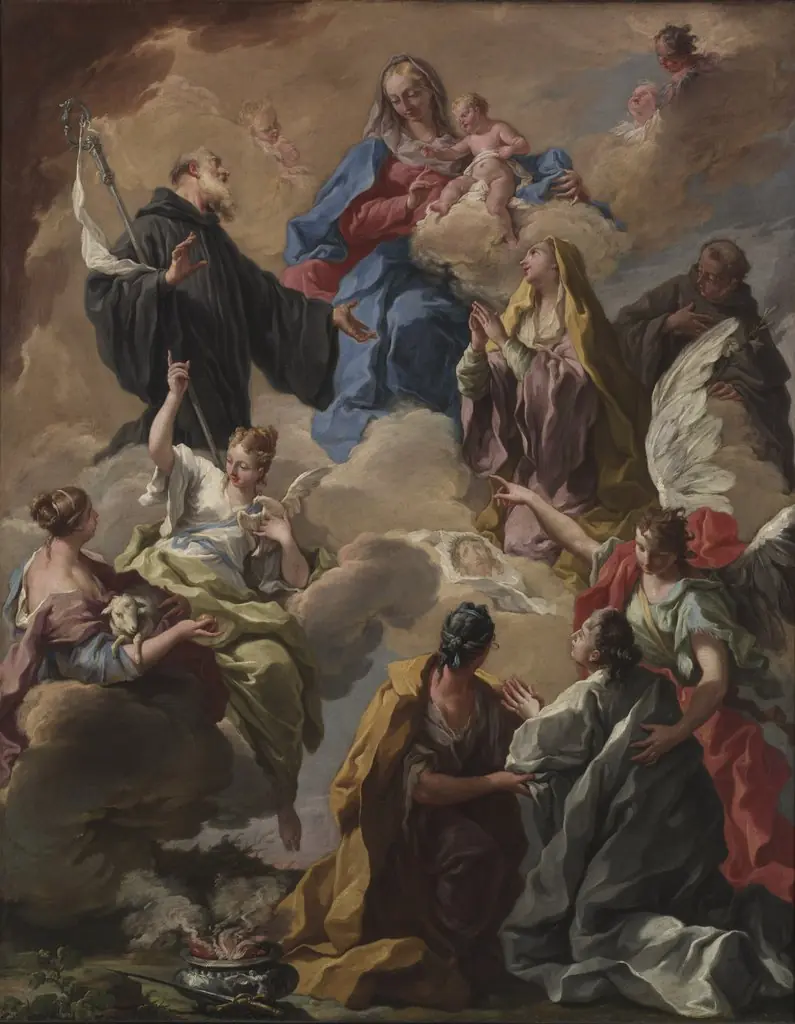
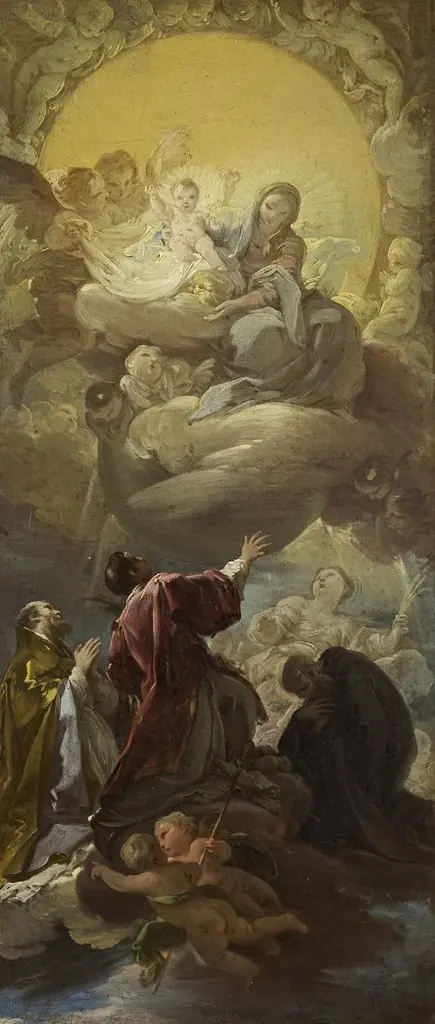 Madonna and Child in Glory appearing to St Stephen and three other Saints
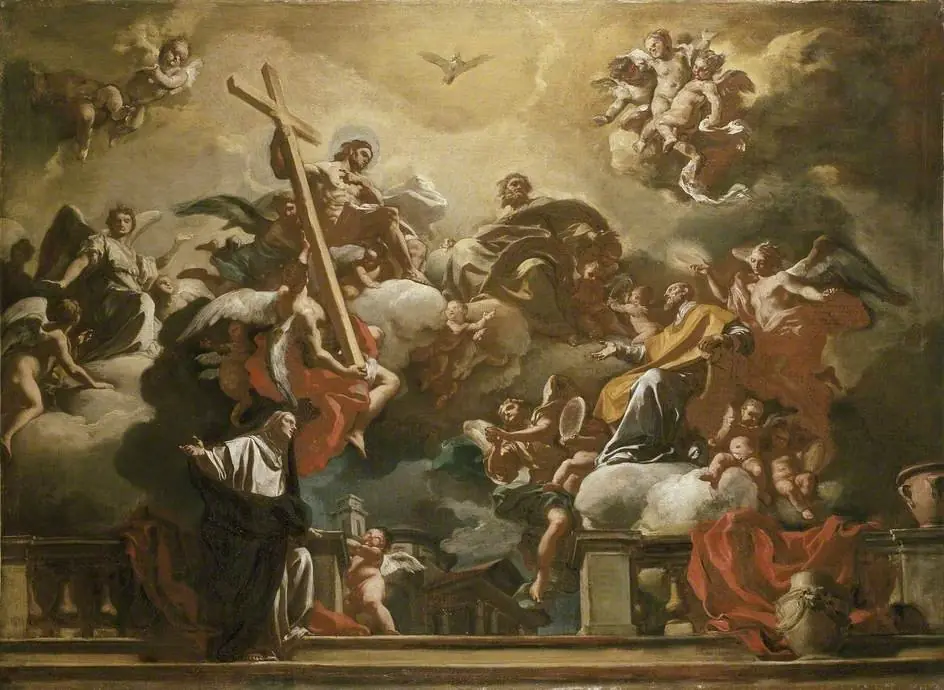 The Holy Trinity with St Philip Neri in Glory
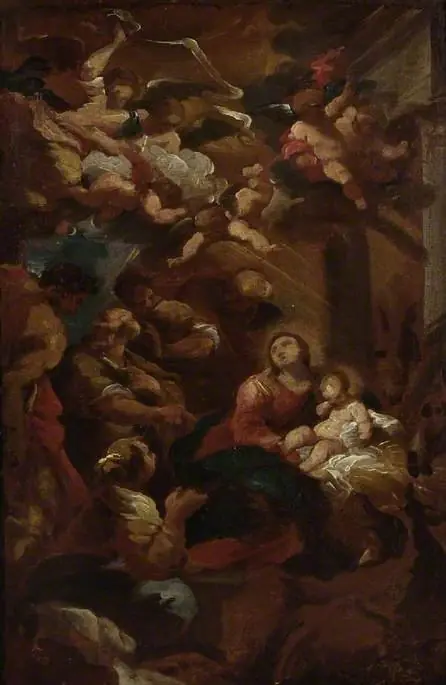 The Adoration of the Shepherds
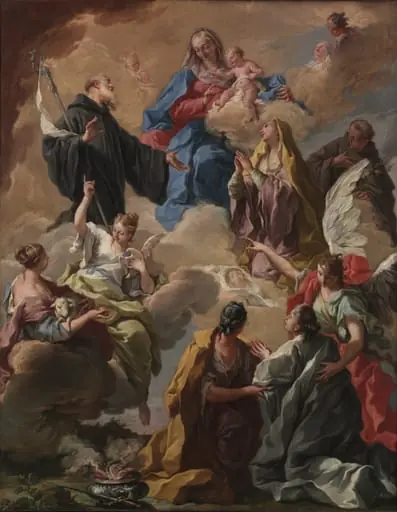 Saints Presenting a Devout Woman to the Virgin and Child
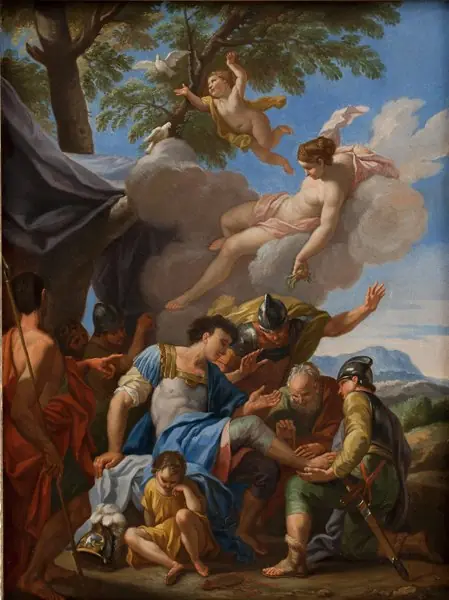 Venus Bringing Simples for the Wounded Aeneas