Artwork
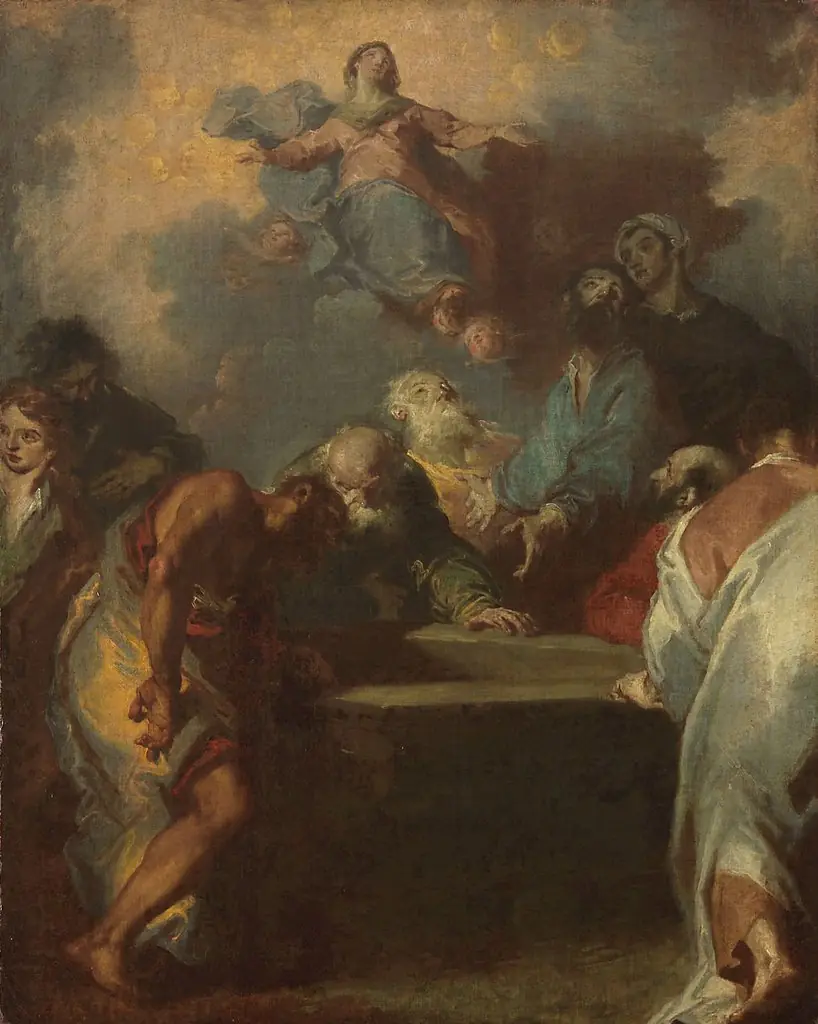
Sketch for "The Assumption of the Virgin" (for St. James, Zbraslav, near Prague)?
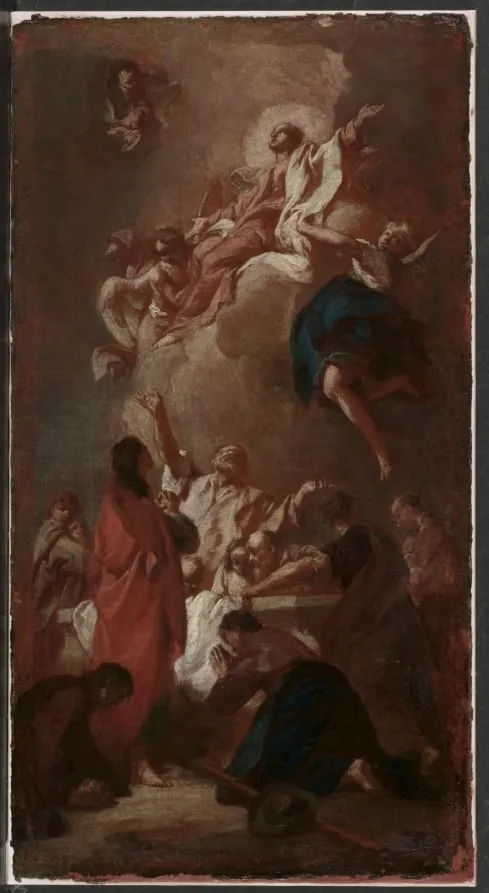
Sketch for "The Assumption of the Virgin" (for St. James, Zbraslav, near Prague)? is an unspecified painting by the Baroque artist Giovanni Battista Piazzetta. It dates from 1744 and is held in the collection of the Cleveland Museum of Art.
About this work
Overview
This oil sketch by Giovanni Battista Piazzetta was prepared as a preliminary study for an altarpiece commissioned in 1743 for the Church of St.
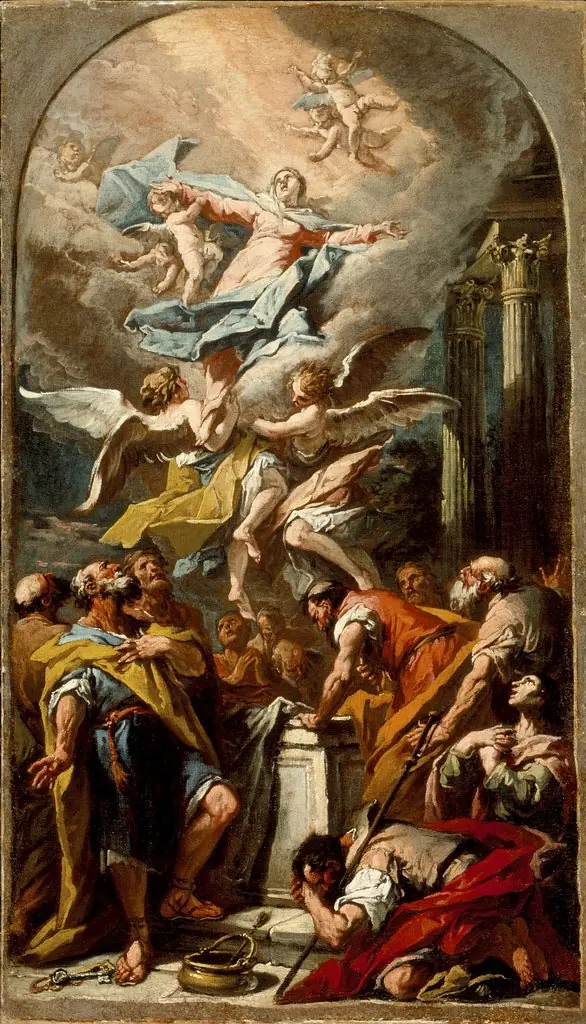
This oil sketch by Giovanni Battista Piazzetta was prepared as a preliminary study for an altarpiece commissioned in 1743 for the Church of St. James in Zbraslav, near Prague. Unlike the final work, it captures the artist’s early compositional decisions with loose, expressive brushwork. The sketch reveals Piazzetta’s process in refining the arrangement of figures and the play of light before executing the full-scale painting.
Subject & Meaning
The scene depicts the Virgin Mary ascending to heaven, her body and soul drawn upward by two angels as she reaches toward the divine. Below, saints gather around her empty tomb, their gestures and gazes connecting the earthly realm with the celestial. St. Peter’s outstretched hand, nearly touching her foot, symbolizes the link between the Church on earth and the heavenly realm, reinforcing theological themes of grace and transcendence.
Technique & Style
Piazzetta employed rapid, fluid brushstrokes to capture movement and gesture, emphasizing the upward motion of the Virgin and the dynamic postures of the saints. The sketch’s unfinished quality highlights his focus on form and lighting over detail. A strong, directional light illuminates the central figures, casting deep shadows that model volume and enhance the sense of spiritual elevation, foreshadowing the chiaroscuro of the final altarpiece.
History & Provenance
Created in 1743 as a preparatory study for the altarpiece in Zbraslav, this sketch is among the rare surviving oil studies by Piazzetta. The completed painting closely follows its composition, though the sketch features more pronounced illumination on the figures below. Its preservation offers insight into the artist’s working method and the transition from concept to monumental religious art in 18th-century Bohemia.
Context
Commissioned for a Jesuit church in Bohemia, the altarpiece responded to Counter-Reformation ideals that emphasized visual devotion and the glorification of Marian doctrine. Piazzetta’s sketch reflects the broader European tradition of using preparatory studies to resolve complex religious narratives. The emphasis on divine light and hierarchical composition aligns with Baroque ecclesiastical aesthetics, designed to inspire awe and spiritual contemplation.
Legacy
The sketch stands as a testament to Piazzetta’s ability to convey grand theological themes through intimate, dynamic study. Its survival allows scholars to trace the evolution of a major altarpiece and understand how preparatory works informed large-scale religious commissions. The work remains a valuable example of how artists refined composition, gesture, and light before committing to permanent, public installations.
Artist & collection

Artist
Giovanni Battista Piazzetta (also called Giambattista Piazzetta or Giambattista Valentino Piazzetta) (February 13, 1682 or 1683 – April 28, 1754) was an Italian Rococo painter of religious subjects and genre scenes.

 The Assumption of the Virgin
 The Assumption of the Virgin
 The Assumption of the Virgin
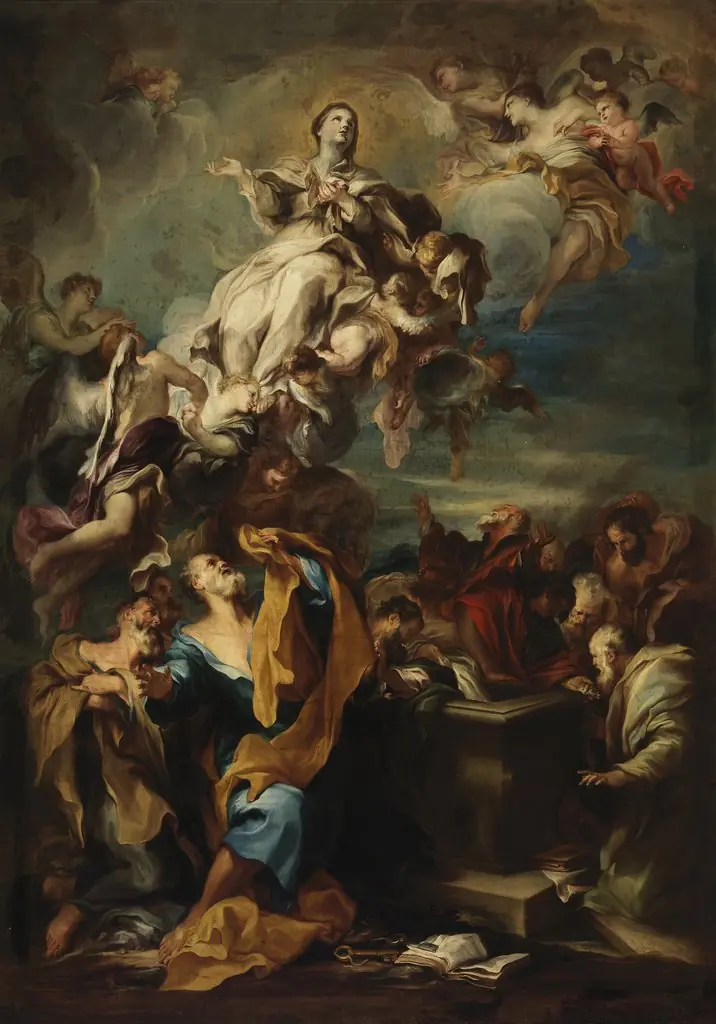 The Assumption of the Virgin
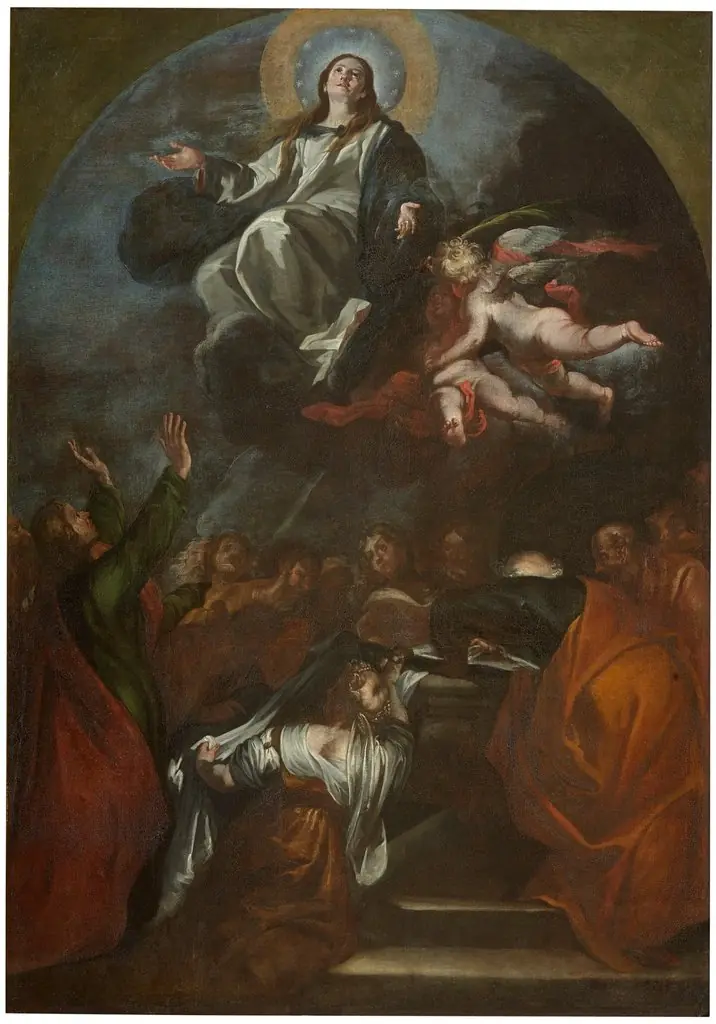 The Assumption of the Virgin
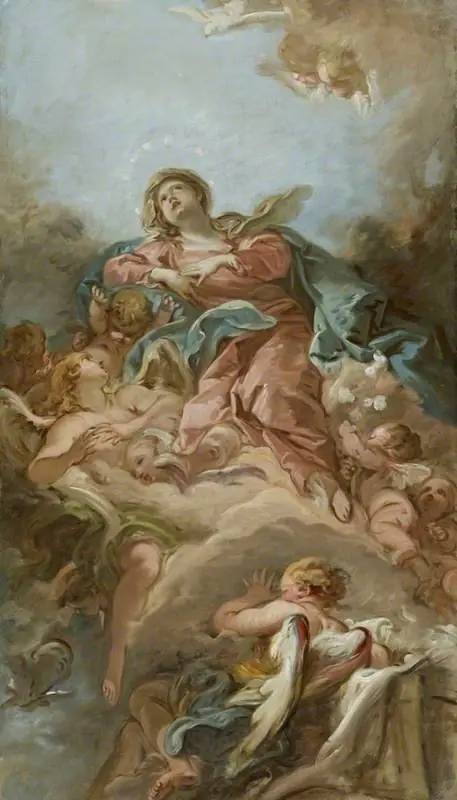 The Assumption of the Virgin
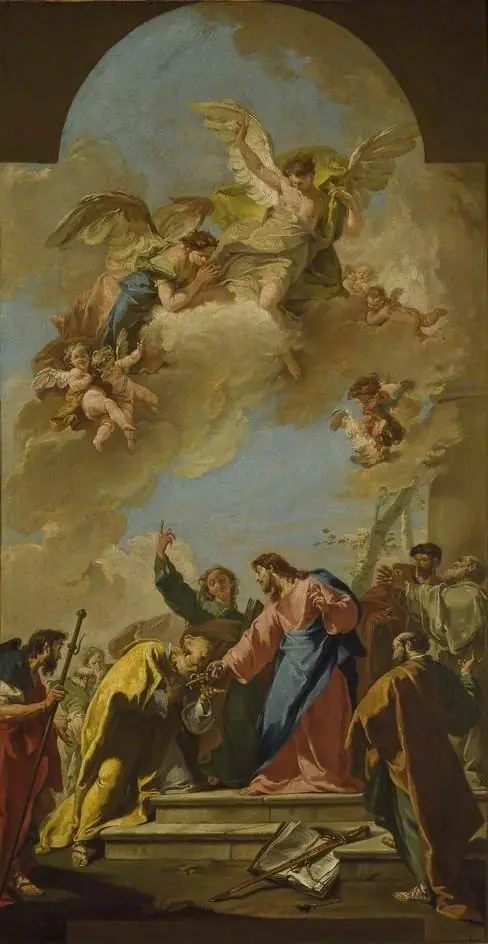 Christ's Charge to St Peter
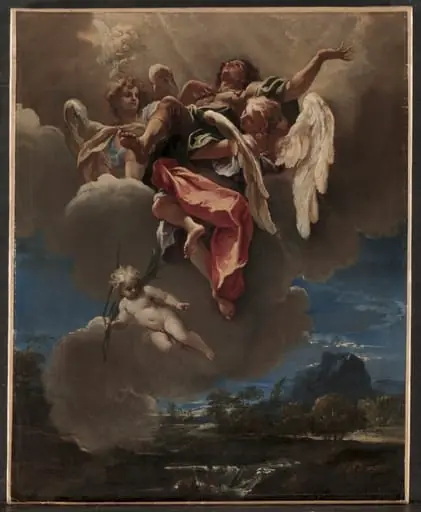 Study for "An Apotheosis of a Saint" (for San Bernardino dei Morti, Milan)
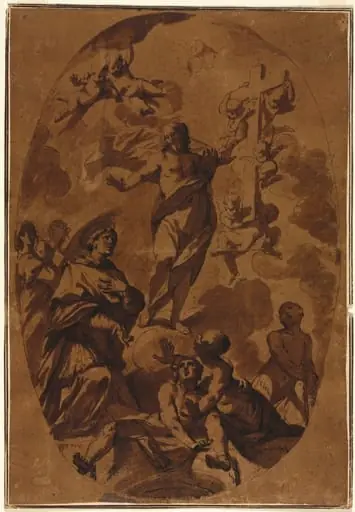 Christ Triumphant Appearing to an Interceding Saint
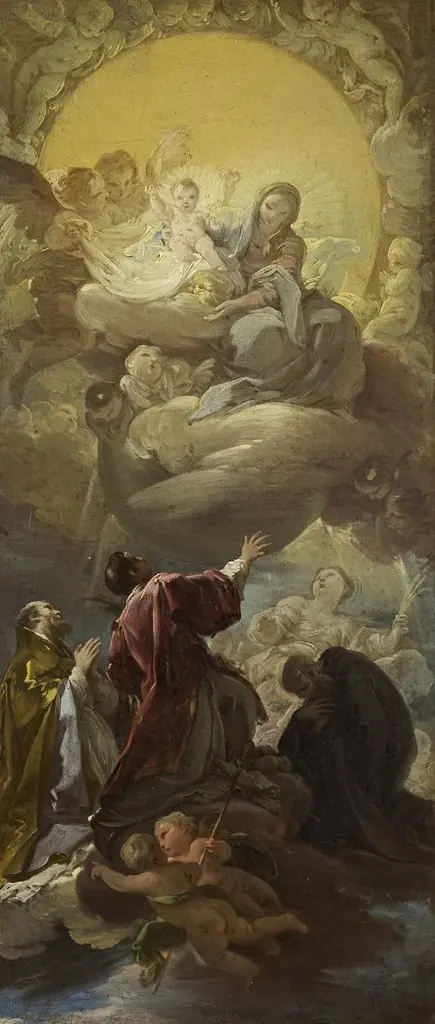 Madonna and Child in Glory appearing to St Stephen and three other Saints
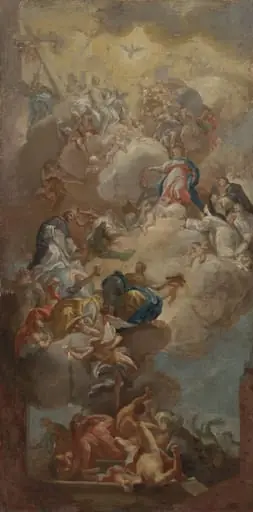 The Glorification of Saint Dominic
 Himmelfahrt Mariae