Artwork
Ecorché study of a horse
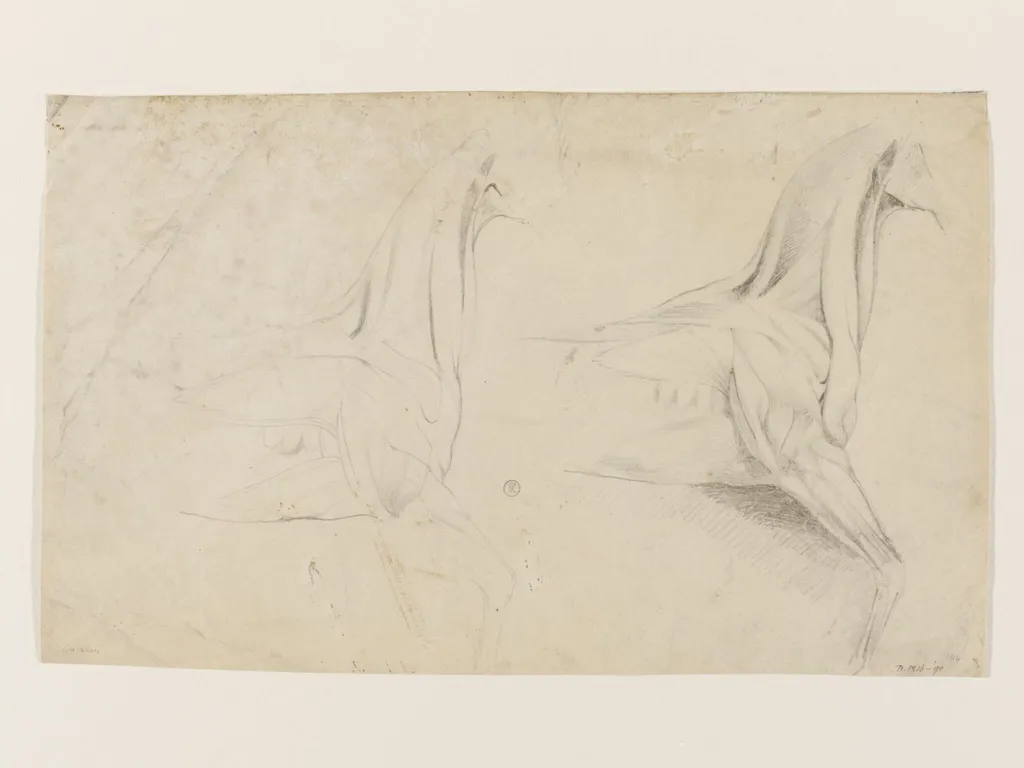
Ecorché study of a horse is a drawing by the Romanticist artist John Gibson. It dates from 1815 and is held in the collection of the Victoria and Albert Museum.
About this work
Overview
Two ink drawings from 1815 by John Gibson present anatomical studies of a horse, stripped of skin to reveal underlying musculature and bone.
Two ink drawings from 1815 by John Gibson present anatomical studies of a horse, stripped of skin to reveal underlying musculature and bone. Executed in rapid, expressive lines, these works prioritize functional clarity over finish. The paper shows signs of age—staining and wear—suggesting frequent handling. The focus lies in capturing the horse’s structural dynamics, particularly in the spine and limbs, as tools for understanding movement rather than aesthetic presentation.
Subject & Meaning
The drawings serve as educational records of equine anatomy, emphasizing how muscle groups connect and function during motion. By removing the epidermis, Gibson isolates the mechanics of locomotion—how tendons stretch, how joints pivot, how weight shifts. These are not idealized forms but working diagrams, intended to inform sculptors and artists about the forces shaping a horse’s posture and gait. The absence of skin underscores a commitment to anatomical truth over ornament.
Technique & Style
Gibson employed loose, gestural ink lines with minimal shading to define form, favoring speed and observation over refinement. Cross-hatching appears sparingly, used to suggest volume rather than texture. The hand is confident but unpolished, with visible corrections and overlapping strokes. The medium’s fluidity allows for immediacy, capturing the animal’s tension and balance in real time. The worn paper reinforces the sense of a working sketch, not a finished piece.
History & Provenance
Created in 1815, these drawings likely originated from Gibson’s studio practice during his training or early career as a sculptor. They may have been used as reference material for larger works or shared among students. Their survival suggests they held pedagogical value. No documented ownership history exists prior to their inclusion in institutional collections, but their condition indicates prolonged use in an artistic environment.
Context
In early 19th-century Britain, anatomical study was central to academic art training, especially for sculptors working with live subjects. Gibson, trained in Rome and influenced by classical ideals, engaged with dissection practices common among artists seeking realism. These drawings align with broader European trends in scientific observation, where art and anatomy intersected to deepen representation of the natural world beyond surface appearance.
Legacy
Though not widely exhibited, these studies reflect a quiet but vital strand in 19th-century artistic pedagogy. They exemplify how sculptors relied on direct anatomical observation to translate movement into three-dimensional form. Their rawness distinguishes them from polished academic renderings, offering insight into the private, iterative process behind public works. Today, they remain useful as historical documents of artistic methodology.
Artist & collection
Artist
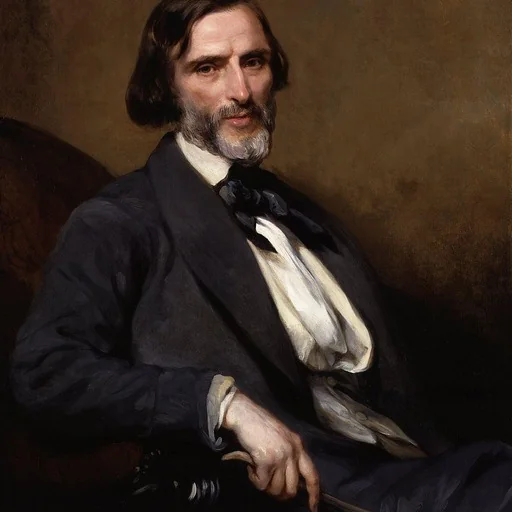
John Gibson (19 June 1790 – 27 January 1866) was a Welsh neoclassical sculptor who studied in Rome under Canova.

![Drapery Studies [recto], by Baldassare Franceschini](https://artifactworldgallery.com/img/baldassare-franceschini--drapery-studies-recto--8283f7732b58979e-w320.webp)
![Studies of Horses [verso], by Jacques Callot](https://artifactworldgallery.com/img/jacques-callot--studies-of-horses-verso--968bbf047ebcef7b-w320.webp)
![Studies of a Cow [verso], by Paul Gauguin](https://artifactworldgallery.com/img/paul-gauguin--studies-of-a-cow-verso--80694066ae3cfdb3-w320.webp)
![Study of the "Ecorché" [recto], by Paul Cezanne](https://artifactworldgallery.com/img/paul-cezanne--study-of-the-ecorche-recto--1614b86d796e004d-w320.webp)