Artwork
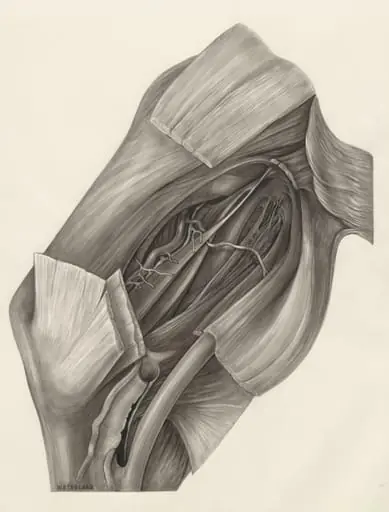
Ecorche drawing of the hind legs of a dog
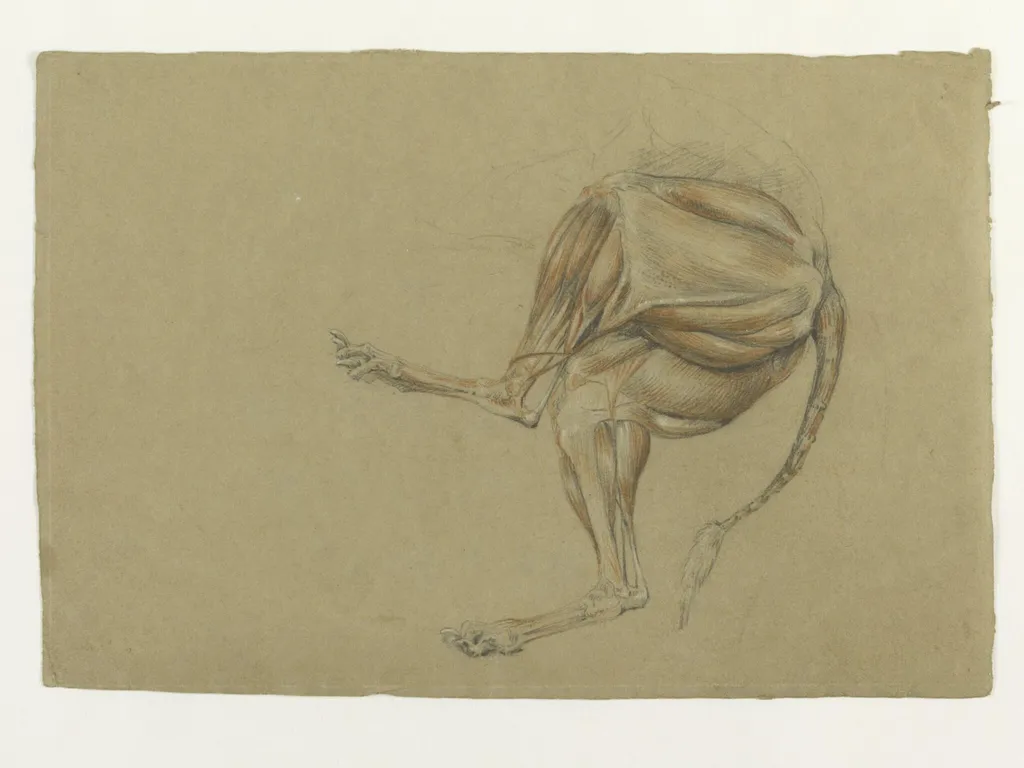
Ecorche drawing of the hind legs of a dog is a drawing by the Romanticist artist Thomas Landseer. It dates from 1816 and is held in the collection of the Victoria and Albert Museum.
About this work
This drawing is of the hind legs of a dog. It's an ecorche drawing, which means it shows the muscles and other tissues underneath the skin.
The artist, Thomas Landseer, made this drawing around 1816. He was studying anatomy at the time, which was an important part of his training as an artist.
To learn more about the style and techniques used in this drawing, look into the movement: Romanticism.
Overview
This drawing by Thomas Landseer depicts the hind legs of a dog with its skin removed, revealing the underlying muscles and tissues. Created around 1816, it is an example of an écorché study, a crucial exercise in artistic anatomy.
Subject & Meaning
The drawing shows a detailed representation of a dog's hind legs, stripped of their skin to expose the muscular structure. This type of study was essential for artists to understand the underlying anatomy of their subjects.
Technique & Style
Landseer's drawing demonstrates a high level of skill in rendering the complex anatomy of the dog. The work is associated with the Romanticism movement, which emphasized the importance of understanding and depicting the natural world.
History & Provenance
Thomas Landseer created this drawing while studying under Benjamin Robert Haydon, who stressed the importance of anatomical knowledge. The drawing was likely made during an anatomy demonstration by Sir Charles Bell, a renowned surgeon.
Artist & collection

Artist
Thomas Landseer was a British artist best known for his engravings and etchings, particularly those of paintings by his youngest brother Edwin Landseer.

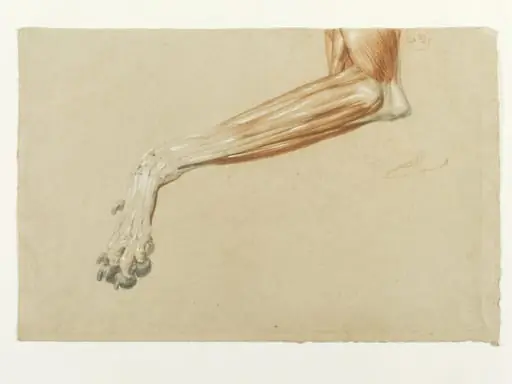 Ecorche drawing of a dog's leg
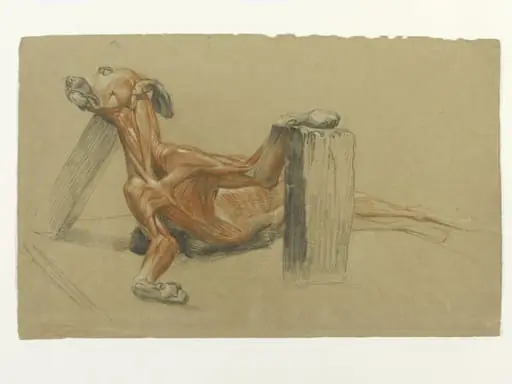 Ecorche drawing of a greyhound supported by planks
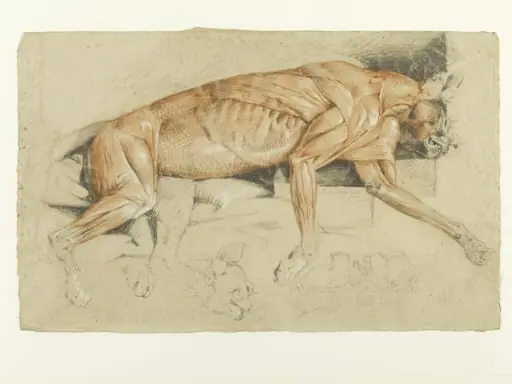 Ecorche drawing of a wild cat
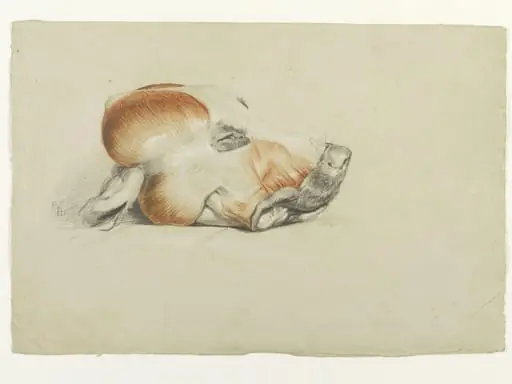 Ecorche drawing of the head of a dog
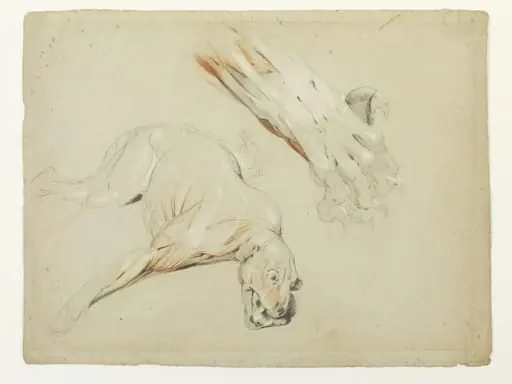 Ecorche drawing of a dog and enlarged detail of a paw
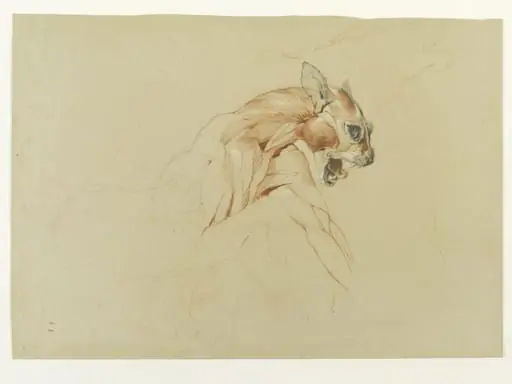 Ecorche drawing of the head and upper body of a wild cat
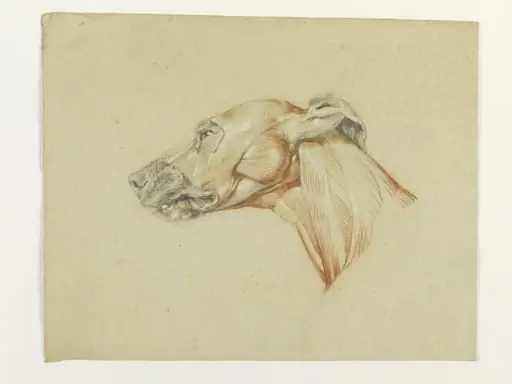 Ecorche drawing of the head of a greyhound
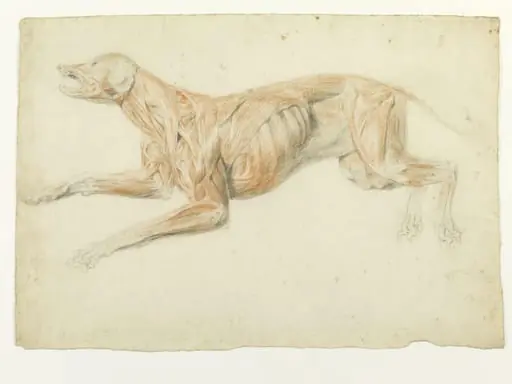
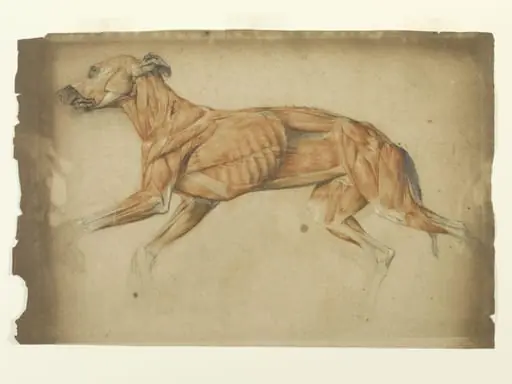 Ecorche drawing of a greyhound
 Untitled
 Muscular tissue of the hand or fingers