Artwork
Ramapo Hills
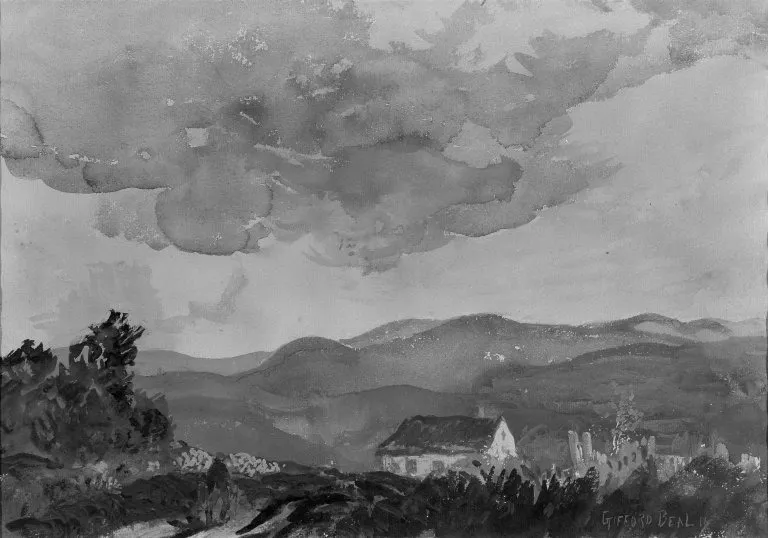
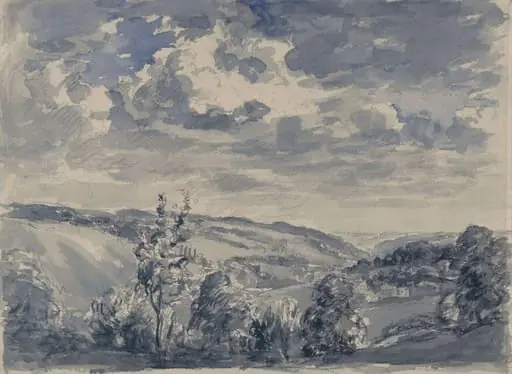
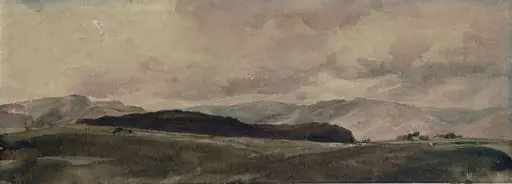
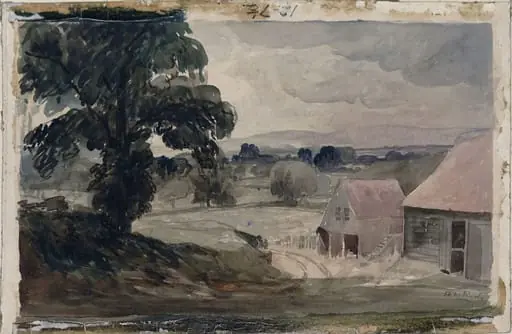
Ramapo Hills is a watercolor painting by Gifford Beal. It dates from 1916 and is held in the collection of the Brooklyn Museum.
About this work
Overview
The work is part of the Brooklyn Museum’s collection and exemplifies Beal’s interest in American scenery rendered with sensitivity to light and atmosphere.
Ramapo Hills is a 1916 watercolor painting by American artist Gifford Beal. It captures a quiet rural landscape in the Ramapo region, characterized by undulating terrain and a modest dwelling nestled at a distance. The work is part of the Brooklyn Museum’s collection and exemplifies Beal’s interest in American scenery rendered with sensitivity to light and atmosphere. Watercolor’s transparency allows for subtle tonal transitions across the hills and sky.
Subject & Meaning
The painting presents a tranquil, unpopulated stretch of countryside, emphasizing stillness over narrative. A single small house on the horizon suggests human presence without intrusion, grounding the scene in lived experience. The absence of figures or activity invites contemplation, aligning the work with early 20th-century American landscape traditions that valued quietude and the dignity of ordinary places.
Technique & Style
Beal employed watercolor with a restrained, fluid approach, layering washes to suggest depth and texture without heavy detail. Soft edges between hills, sky, and trees create a sense of atmospheric cohesion. The brushwork is deliberate yet unobtrusive, allowing the paper’s natural texture to contribute to the effect. This technique reflects a shift from rigid academic rendering toward a more intuitive, impressionistic handling of light and form.
History & Provenance
Created in 1916, the painting entered the Brooklyn Museum’s collection shortly after its completion. Beal was an active participant in American art circles at the time, exhibiting regularly with groups like the National Academy of Design. The work’s preservation in a major public institution reflects its recognition within early modern American watercolor practice, though it was never widely reproduced or publicly highlighted.
Context
In the 1910s, American artists increasingly turned to domestic landscapes as subjects, moving away from European models. Beal’s work aligned with this trend, influenced by the Ashcan School’s focus on everyday life and the Tonalist emphasis on mood. Ramapo Hills reflects a broader cultural interest in regional identity and the quiet beauty of the Northeastern countryside during a period of rapid urbanization.
Legacy
Though not among Beal’s most frequently exhibited works, Ramapo Hills remains a representative example of his mature watercolor style. It contributes to the understanding of early 20th-century American landscape painting as a medium for personal observation rather than grand spectacle. The painting continues to inform scholarly discussions on the evolution of watercolor as a serious artistic medium in the United States.
Artist & collection