Artwork
Hugh Latimer, Bishop of Worcester
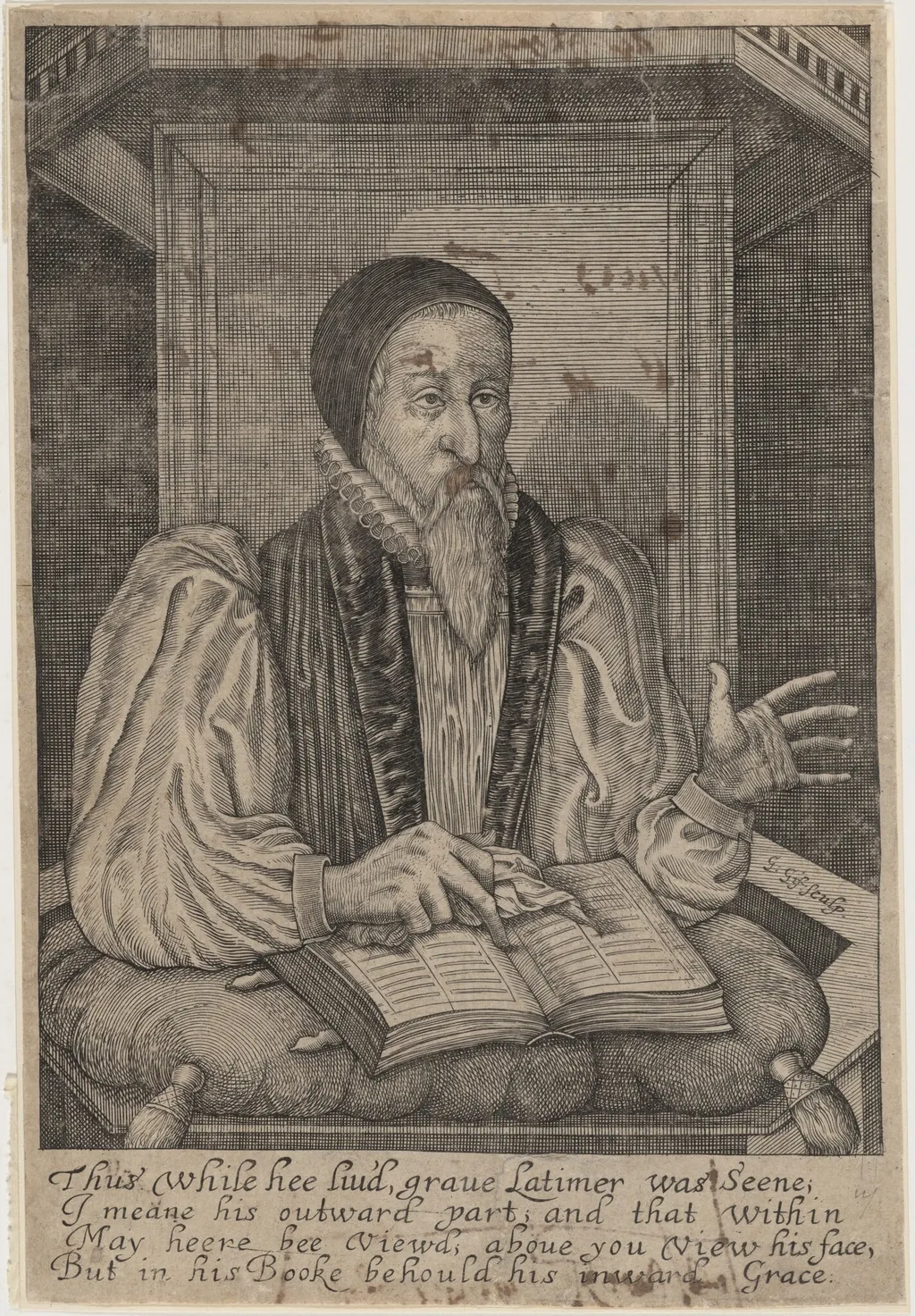
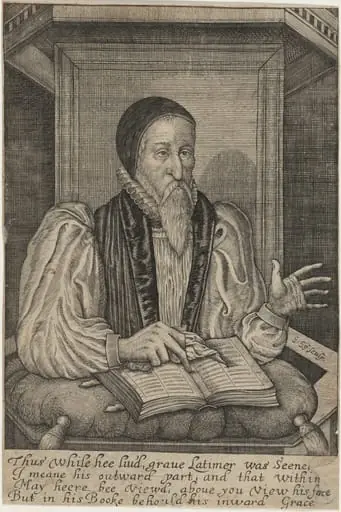
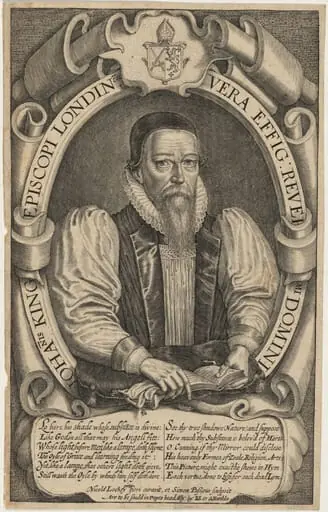
Hugh Latimer, Bishop of Worcester is an ink print by the Baroque artist George Gifford. It dates from 1635 and is held in the collection of the National Gallery of Art.
About this work
Overview
Rendered in monochrome, the image captures him seated with an open book on his lap, hands gently resting upon its pages.
This 1635 engraving by George Gifford depicts Hugh Latimer, former Bishop of Worcester, as a contemplative elder. Rendered in monochrome, the image captures him seated with an open book on his lap, hands gently resting upon its pages. The composition is framed by dense cross-hatching that lends depth and texture to the background, emphasizing the solemnity of the subject through tonal contrast rather than color.
Subject & Meaning
Latimer, a Protestant martyr executed in 1555, is portrayed not as a saintly figure but as a learned man absorbed in scripture. The open book suggests his lifelong engagement with religious texts and his role as a reformer. The accompanying poem invites viewers to consider the relationship between his physical presence and spiritual essence, positioning the book as a bridge between outward appearance and inner conviction.
Technique & Style
Gifford employed fine-line engraving to render texture and form with precision. The face and robe are defined by controlled hatching and cross-hatching, creating subtle gradations of light and shadow. The background’s密集 lines contrast with the smoother areas of skin and fabric, directing focus to Latimer’s face and hands. This method, typical of early 17th-century portraiture, prioritizes clarity and introspective detail over dramatic flair.
History & Provenance
Created nearly eight decades after Latimer’s death, the engraving emerged during a period of renewed interest in Protestant martyrs under Charles I. It likely served devotional or educational purposes, circulating among Puritan and reform-minded audiences. Though no early ownership records are documented, its survival suggests it was valued within religious circles seeking to preserve the memory of Reformation figures.
Context
In the 1630s, England saw a resurgence of interest in Reformation history, even as tensions rose between Crown and Parliament. Portraits of martyrs like Latimer functioned as quiet assertions of Protestant identity. This engraving reflects a broader trend of using printed images to anchor religious memory, especially when public veneration of saints remained controversial under Anglican authority.
Legacy
The engraving remains a modest but enduring record of how Protestant reformers were visually memorialized in the decades after their deaths. It exemplifies the use of print media to sustain religious narratives beyond oral tradition. Though not widely reproduced today, it contributes to the visual archive of Reformation commemoration, illustrating how textual and pictorial elements combined to convey moral and spiritual authority.
Artist & collection