Artwork
Sidon
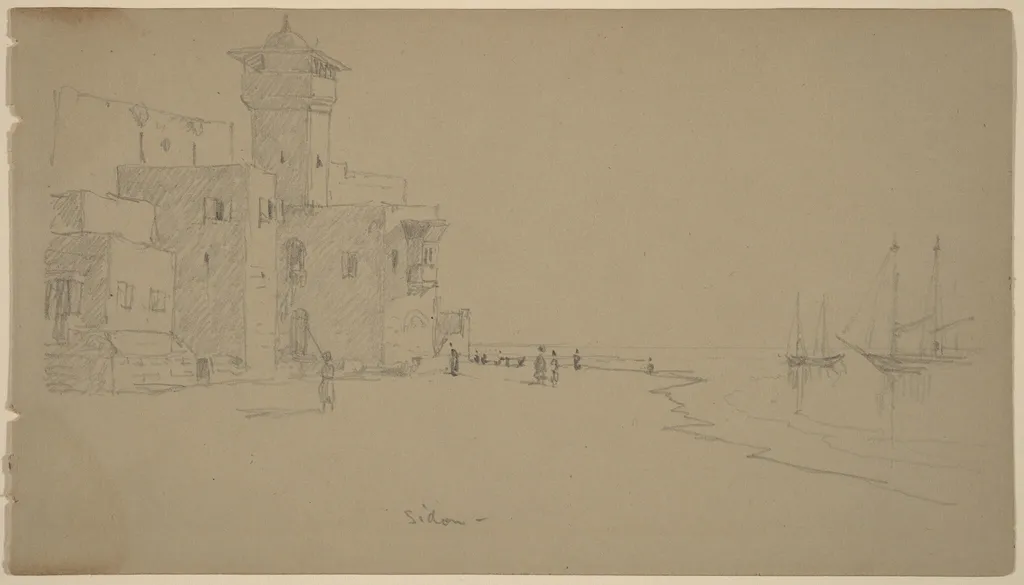
Sidon is a graphite drawing by the Impressionist artist Sanford Robinson Gifford. It dates from 1868 and is held in the collection of the National Gallery of Art.
About this work
Overview
Sidon is a graphite drawing on greenish wove paper, executed around 1868 by American landscape artist Sanford Robinson Gifford.
Sidon is a graphite drawing on greenish wove paper, executed around 1868 by American landscape artist Sanford Robinson Gifford. The work belongs to a series of studies Gifford made during and after his travels in the Middle East, reflecting his interest in architectural ruins and atmospheric light. Unlike his finished oil paintings, this piece captures a moment of direct observation, emphasizing tonal nuance over color.
Subject & Meaning
The drawing depicts the ancient city of Sidon, located on the eastern Mediterranean coast. Gifford focused on the remnants of classical and medieval structures, rendered with careful attention to mass and shadow. The subject suggests a contemplation of time and decay, aligning with 19th-century Romantic sensibilities that valued historical ruins as silent witnesses to human transience.
Technique & Style
Gifford employed graphite with subtle gradations to suggest depth and texture, exploiting the paper’s faint green hue to imply ambient light. His lines are restrained, avoiding heavy outlines in favor of soft modeling. The composition is deliberately sparse, isolating fragments of architecture to heighten a sense of quiet solitude and spatial ambiguity.
History & Provenance
Created during Gifford’s return from his 1866–67 journey through the Levant, Sidon was likely made as a preparatory study or personal record. It remained in the artist’s possession until his death in 1880, later passing through private collections before entering a public museum’s holdings in the 20th century. Its survival as a standalone drawing is uncommon, as most of his travel sketches were absorbed into larger works.
Context
Gifford’s interest in Sidon emerged amid a broader 19th-century fascination with Orientalist subjects and archaeological exploration. While European artists often dramatized the East, Gifford’s approach was restrained, favoring quiet observation over exoticism. His drawings from this period contributed to a more nuanced American engagement with non-Western landscapes, distinct from theatrical narratives prevalent in contemporary art.
Legacy
Sidon exemplifies Gifford’s role in shaping American landscape drawing beyond the Hudson River School’s grand vistas. Its intimacy and technical restraint influenced later generations of American draftsmen who sought authenticity in travel studies. Though less known than his paintings, this work remains a quiet testament to his commitment to direct observation and atmospheric truth.
Artist & collection


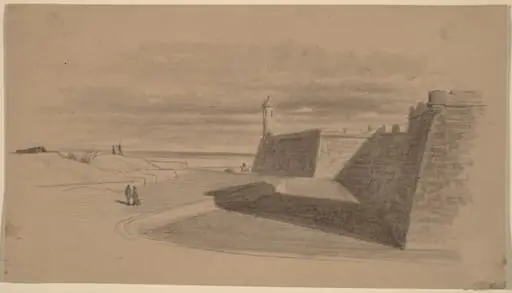 Moat at Fort Marion, Florida
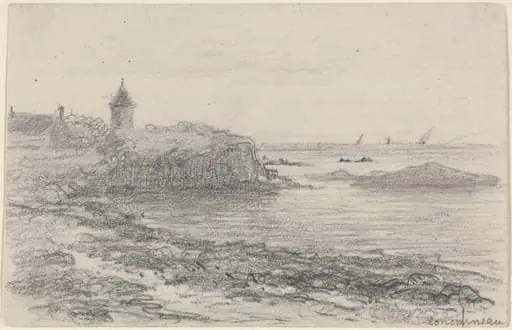 The Coast at Concarneau
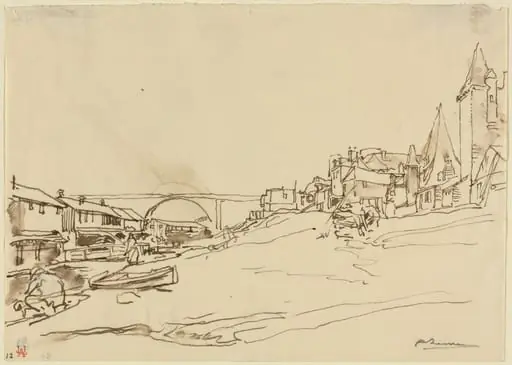 The House of the King of Poland (Angers)
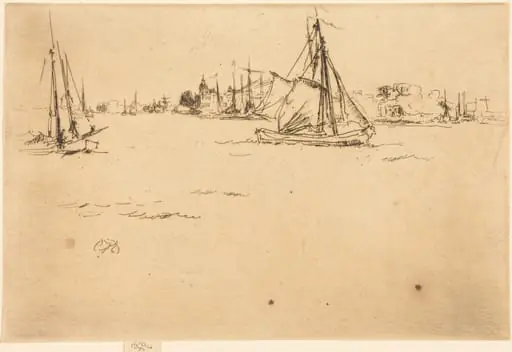 Dordrecht
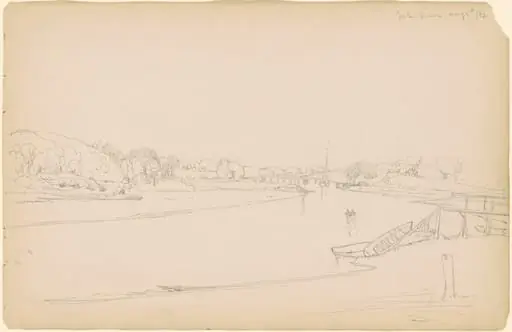 York River
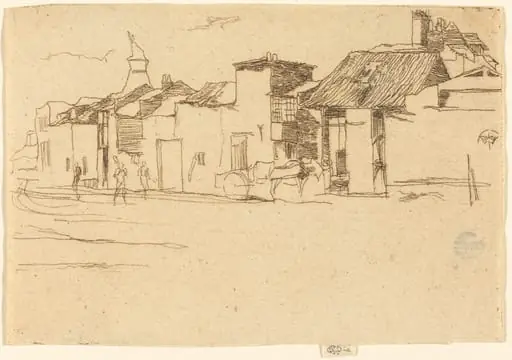 The Old Swan Brewery, Chelsea
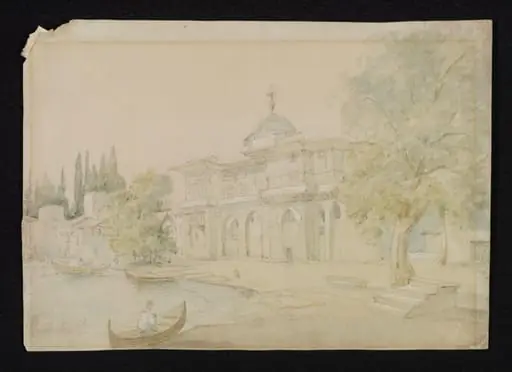 Constantinople
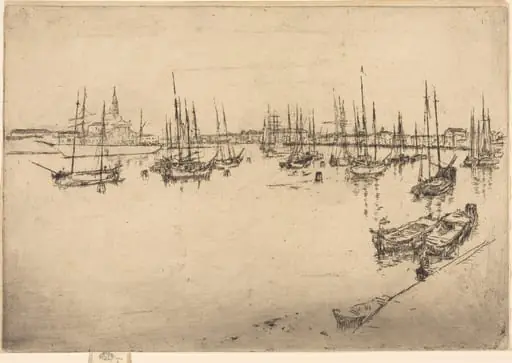 San Giorgio
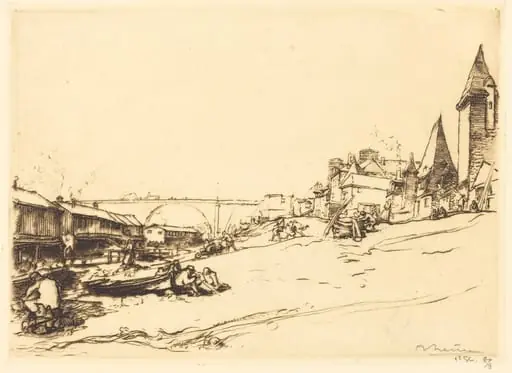 Angers - The House of the King of Poland (Angers - La maison du roi de Pologne)
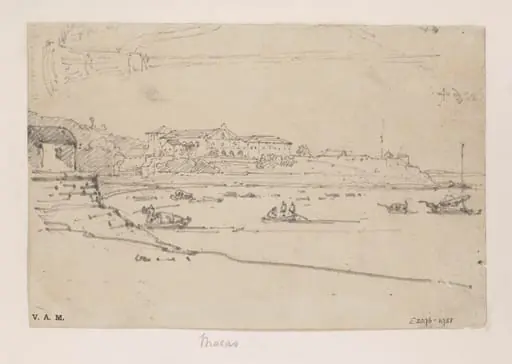 The convent and church of S. Francisco, Macau, seen from across the bay
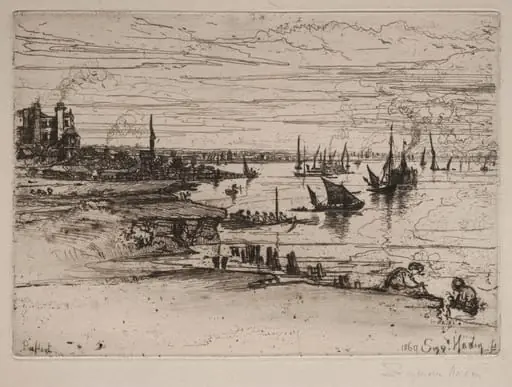 The Inn, Purfleet
 Little Salute