Artwork
Mountain landscape, with cattle and figures
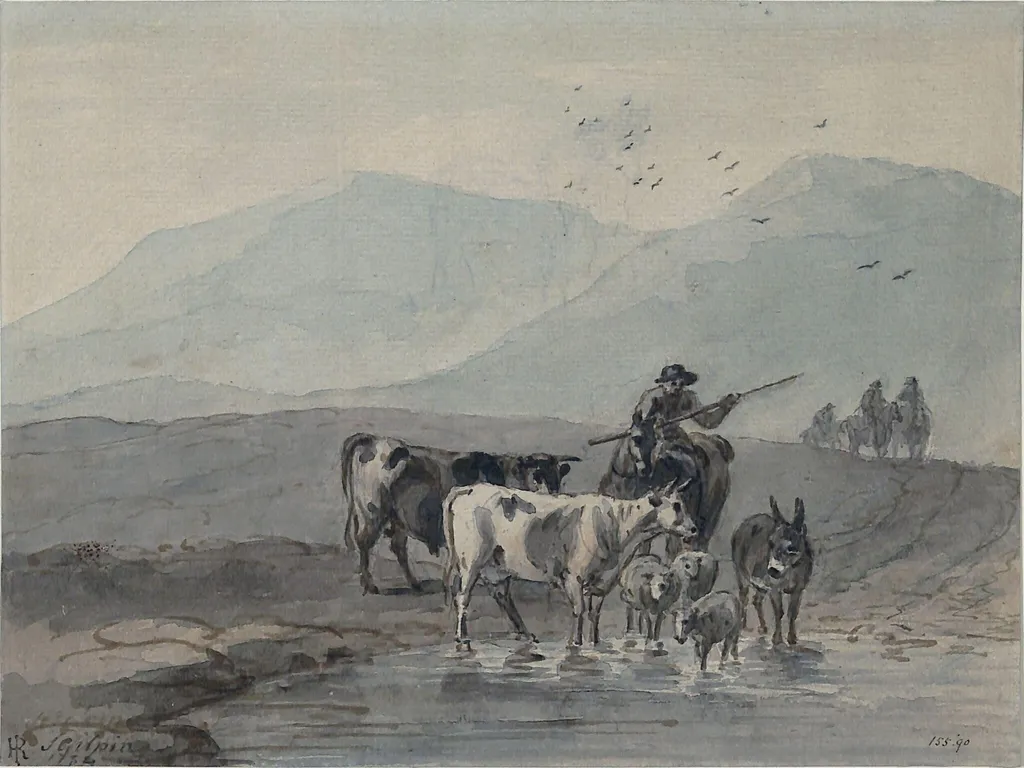
Mountain landscape, with cattle and figures is a watercolor work on paper by the Rococo painting artist Sawrey Gilpin. It dates from 1784 and is held in the collection of the Victoria and Albert Museum. Created in 1784, this watercolour by William Gilpin captures a tranquil rural scene in the British countryside.
About this work
Overview
Created in 1784, this watercolour by William Gilpin captures a tranquil rural scene in the British countryside. The work is signed and dated by the artist, reflecting the personal and observational nature of his practice. Executed in delicate washes, it exemplifies the 18th-century interest in landscape as a subject worthy of quiet contemplation rather than grand narrative.
Subject & Meaning
The composition suggests a pastoral ideal, where daily rural labor unfolds without disruption, aligned with contemporary ideals of natural order and serenity.
The scene portrays a shepherd on horseback guiding a small herd of cattle and sheep across a shallow stream, while a second figure observes from a distance. The absence of dramatic action or human drama emphasizes harmony between people and the land. The composition suggests a pastoral ideal, where daily rural labor unfolds without disruption, aligned with contemporary ideals of natural order and serenity.
Technique & Style
Gilpin employed loose, fluid watercolor washes to suggest form and atmosphere rather than define it precisely. Muted earth tones—ochres, grays, and soft blues—create a subdued palette, while minimal brushwork implies movement in the animals and figures. The sky and distant hills are rendered with faint, blended layers, enhancing the sense of depth and atmospheric recession typical of topographical watercolors of the period.
History & Provenance
The work originates from Gilpin’s extensive travels through Britain’s rural regions, during which he made sketches for later refinement. As a clergyman and writer on aesthetics, he documented landscapes with both scientific interest and emotional sensitivity. This piece likely served as a study or personal record, later preserved within private collections before entering institutional holdings such as the Victoria and Albert Museum.
Context
In the late 18th century, British artists increasingly turned to landscape as a subject independent of historical or mythological themes. Gilpin’s work aligns with the Picturesque movement, which valued natural irregularity and emotional resonance over classical perfection. His watercolors contributed to a growing cultural appreciation for the British countryside as a site of quiet beauty and moral reflection.
Legacy
Gilpin’s watercolors helped shape how later generations perceived the British landscape—not as a backdrop for events, but as a subject in its own right. His emphasis on observation, light, and mood influenced subsequent generations of watercolorists and topographical artists. Though not widely exhibited in his lifetime, his works remain important documents of 18th-century visual culture and environmental awareness.
Own this work as a print
Artist & collection
Artist
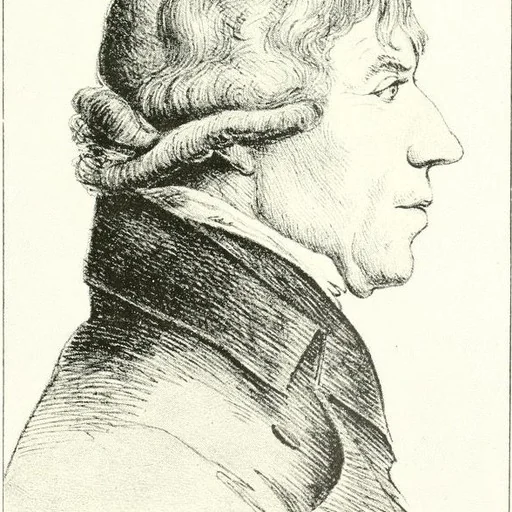
Sawrey Gilpin (30 October 1733 - 8 March 1807) was an English animal painter, illustrator, and etcher who specialised in paintings of horses and dogs. He was made a Royal Academician.

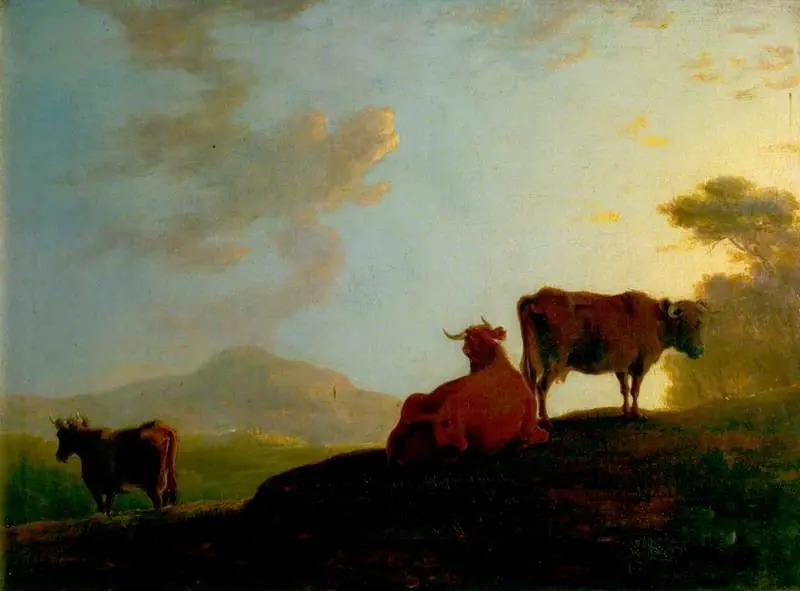
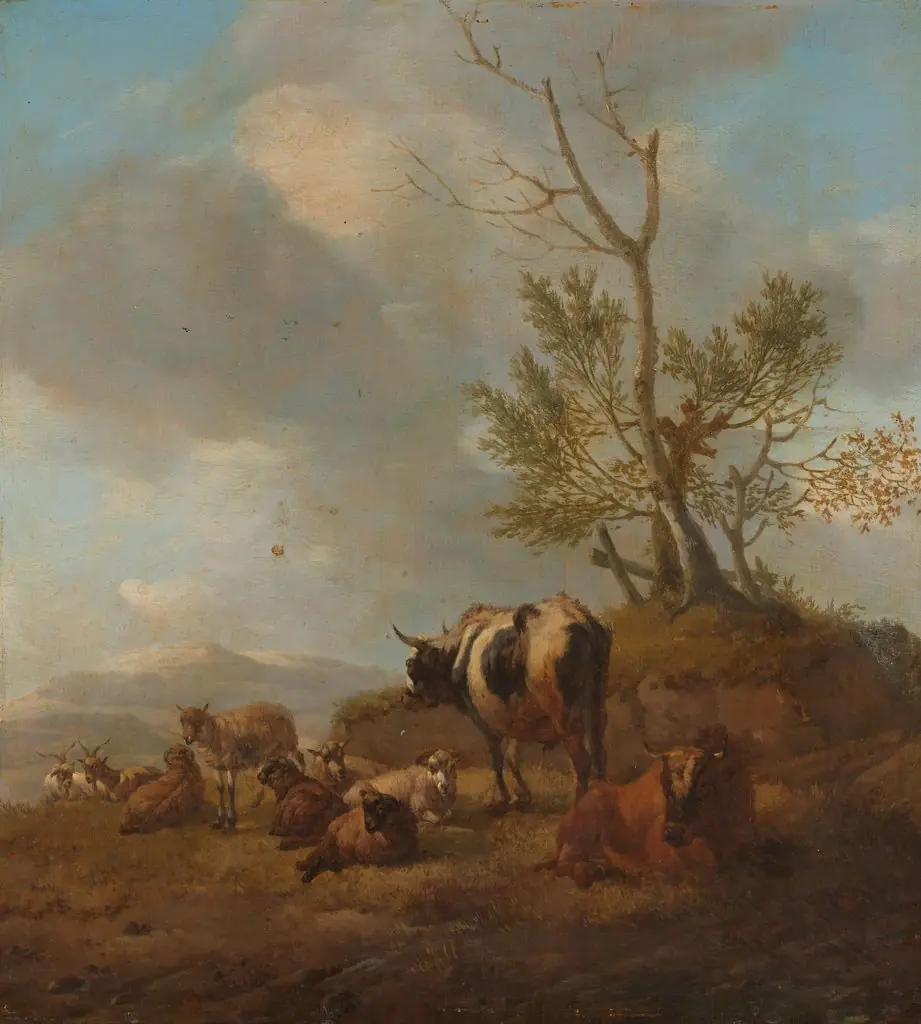 Landscape with cattle
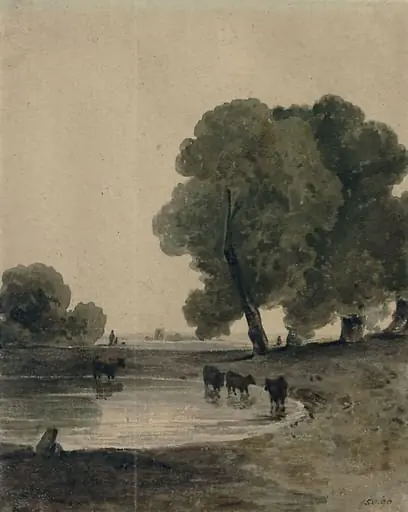 Landscape with cattle
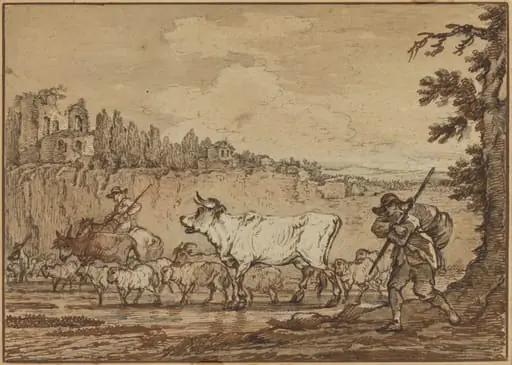 Herdsman Crossing a River
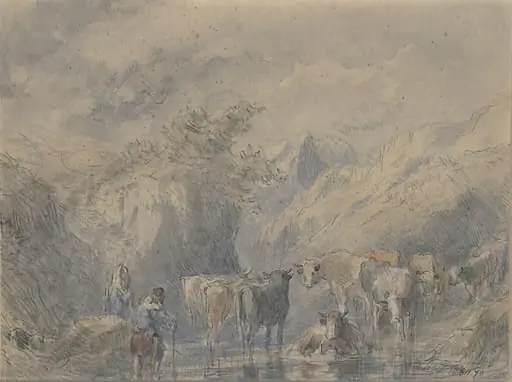 Cattle at a Pool
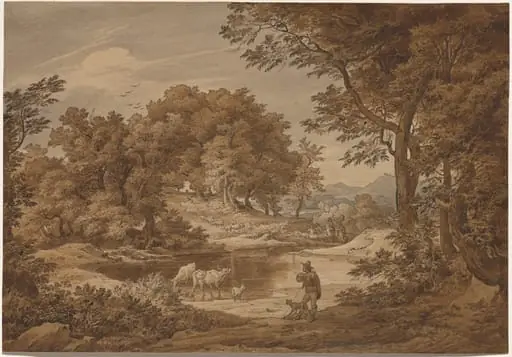 An Italianate Landscape with Shepherds
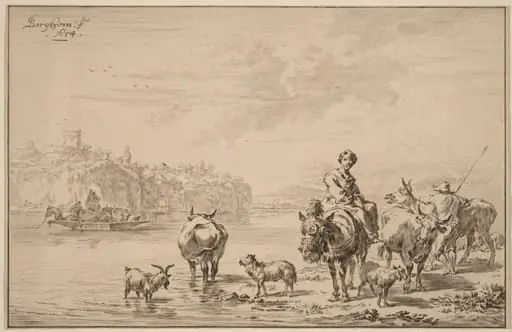 Woman Seated on a Mule
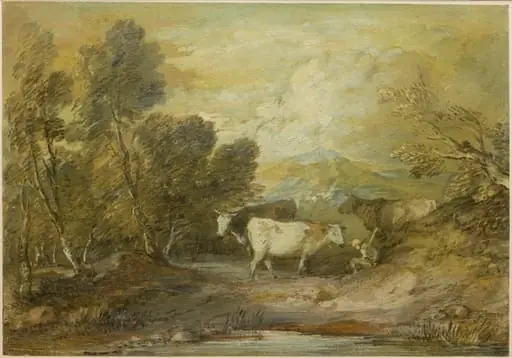 A Herdsman with Three Cows by an Upland Pool
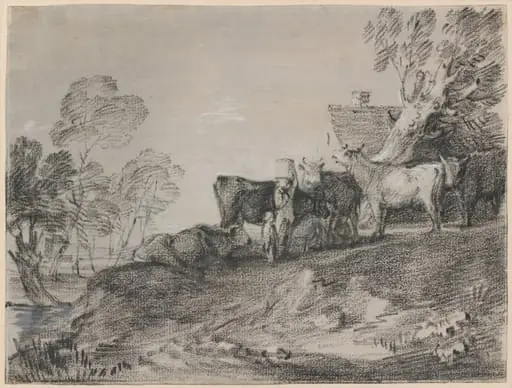 Landscape with Cattle by a Cottage
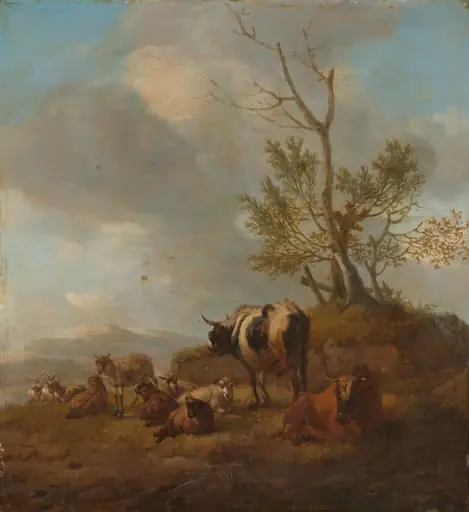 Landscape with Animals
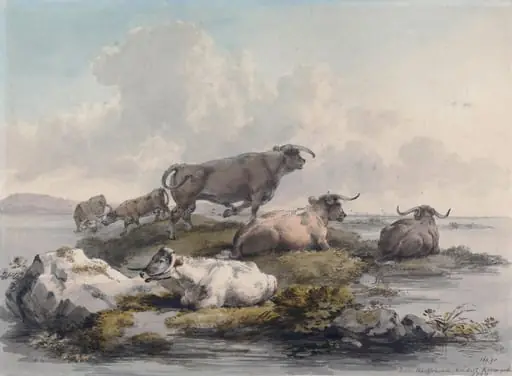 Cattle on rocky ground surrounded by water
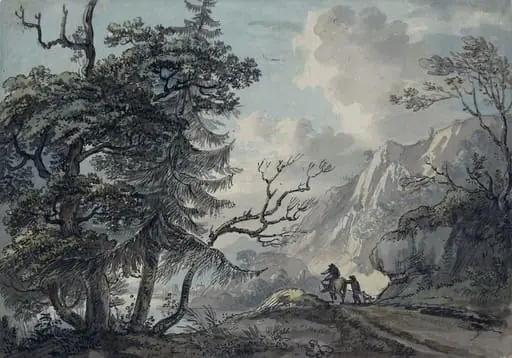 A road in mountainous country, leading to a castle by a lake
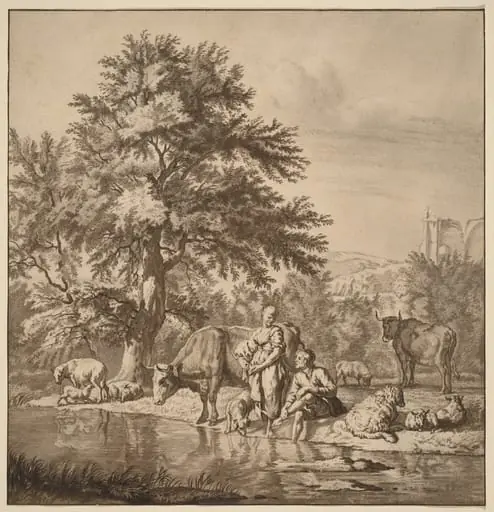 Shepherd and Shepherdess with Their Flock