Artwork
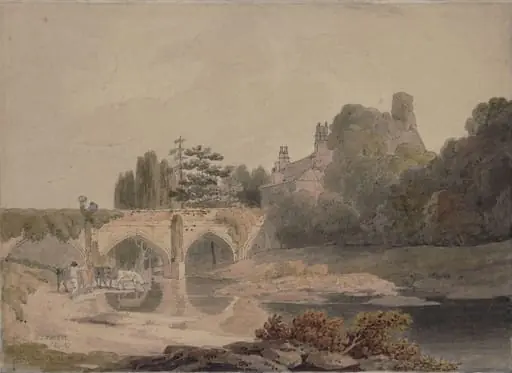
The Bridge, Fountains Abbey, Yorkshire
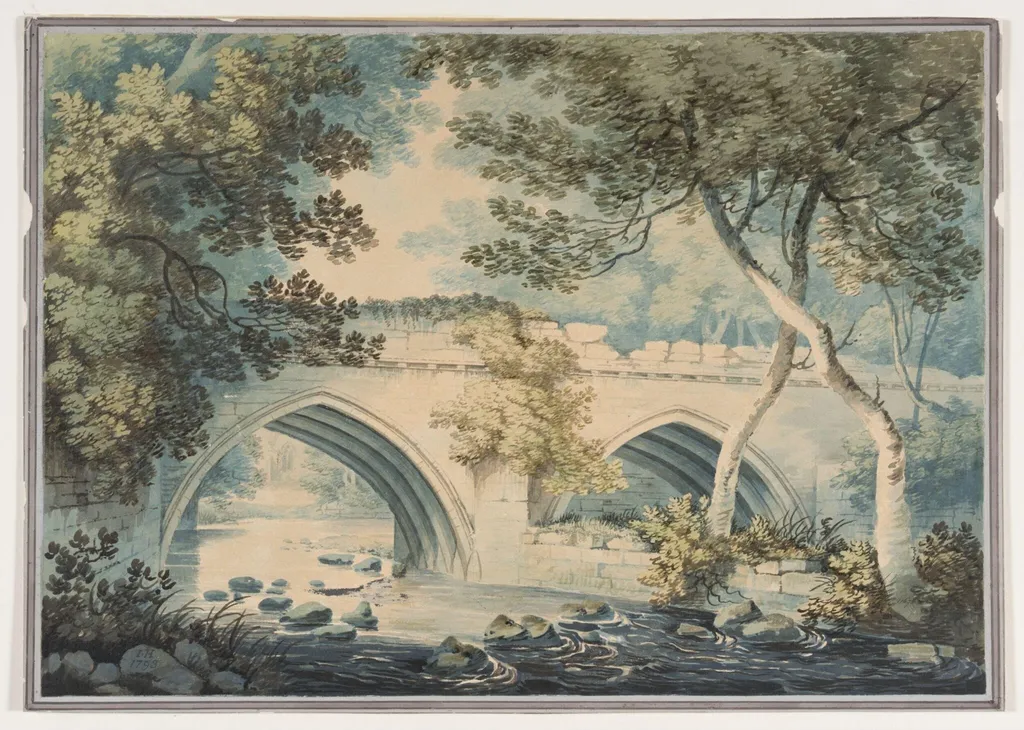
The Bridge, Fountains Abbey, Yorkshire is a watercolor work on paper by the Romanticist artist Joseph Halfpenny. It dates from 1793 and is held in the collection of the Victoria and Albert Museum.
About this work
Overview
Rendered in delicate washes, the piece reflects a quiet, contemplative mood, characteristic of topographical watercolours of the period.
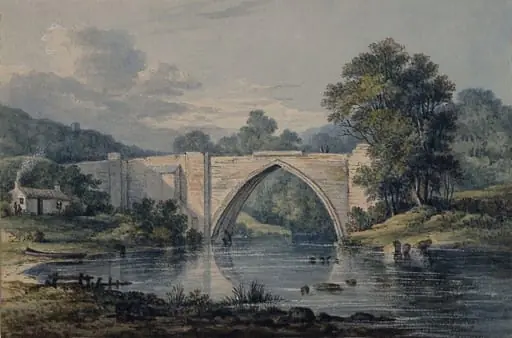
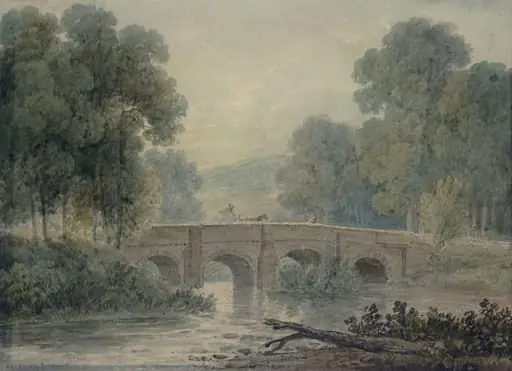
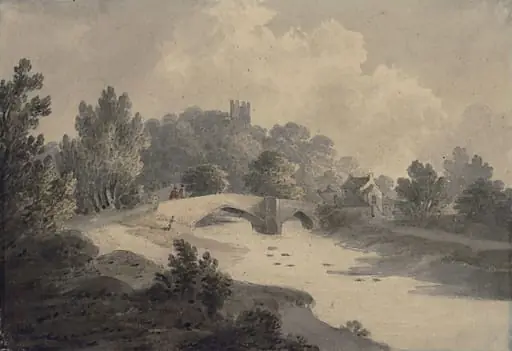
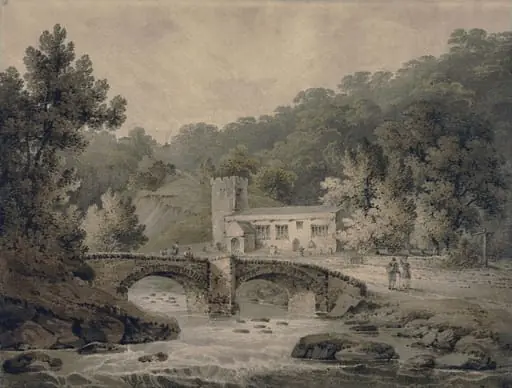
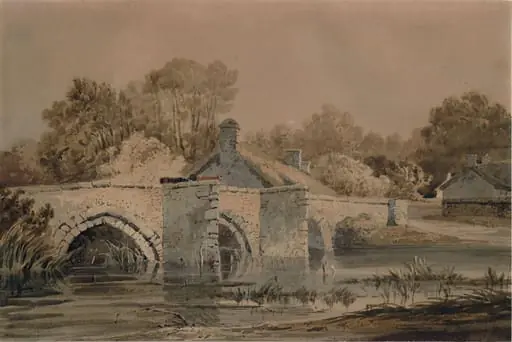
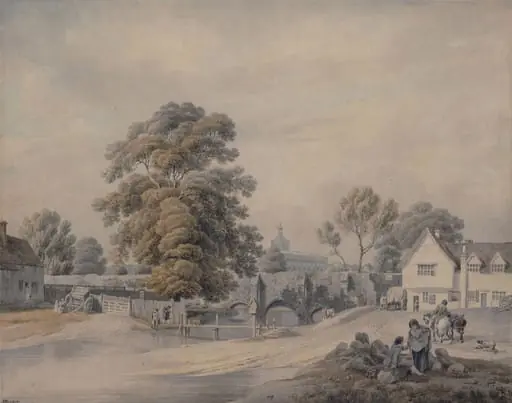
Created in 1793, this watercolour by Joseph Halfpenny captures the stone bridge at Fountains Abbey in North Yorkshire. The work is signed and dated by the artist, confirming its origin and timing. Rendered in delicate washes, the piece reflects a quiet, contemplative mood, characteristic of topographical watercolours of the period. The composition focuses on the bridge’s three arches, framed by natural vegetation and softened by atmospheric light.
Subject & Meaning
The bridge, a structural remnant of the medieval Cistercian monastery, stands as a silent witness to the abbey’s ruined past. Surrounded by overgrown trees and shrubs, it evokes a sense of time passed and nature reclaiming human construction. The stillness of the flowing water and the absence of figures reinforce a tone of solitude, inviting reflection on decay and endurance rather than narrative or drama.
Technique & Style
Halfpenny employed transparent watercolour washes to build subtle tonal gradations, using muted greens, browns, and greys to unify the scene. Light is carefully modulated to suggest volume in the stonework and foliage, while soft edges blur the boundary between land and water. The technique avoids sharp definition, favoring a hazy, atmospheric effect that enhances the quietude of the setting.
History & Provenance
The work originates from a period when antiquarian interest in monastic ruins was growing in Britain. Halfpenny, known for documenting northern English landscapes, likely produced this piece as part of a broader effort to record historic sites. Its survival with the artist’s signature and date suggests it was intended as a finished work, possibly for private collection or scholarly use.
Context
In the late 18th century, ruins like Fountains Abbey attracted artists and travelers drawn to their melancholic beauty. Though not overtly Romantic in sentiment, Halfpenny’s approach aligns with emerging tastes for naturalistic, emotionally resonant landscapes. His focus on quiet observation reflects a shift from grand historical narratives toward intimate, site-specific documentation.
Legacy
Halfpenny’s watercolour contributes to a body of work that preserved the appearance of England’s monastic ruins before widespread restoration or neglect altered them. While not widely exhibited today, it remains a valuable record of how such sites were perceived in the late Georgian era — as places of quiet contemplation, where nature and history intertwined without embellishment.
Artist & collection
Artist
Joseph Halfpenny painted quiet English places in watercolor in the late 1700s. His 1792 view of a summerhouse near Ambleside shows trees, light, and a simple building. A year later he sketched the old stone bridge at…