Artwork
Untitled
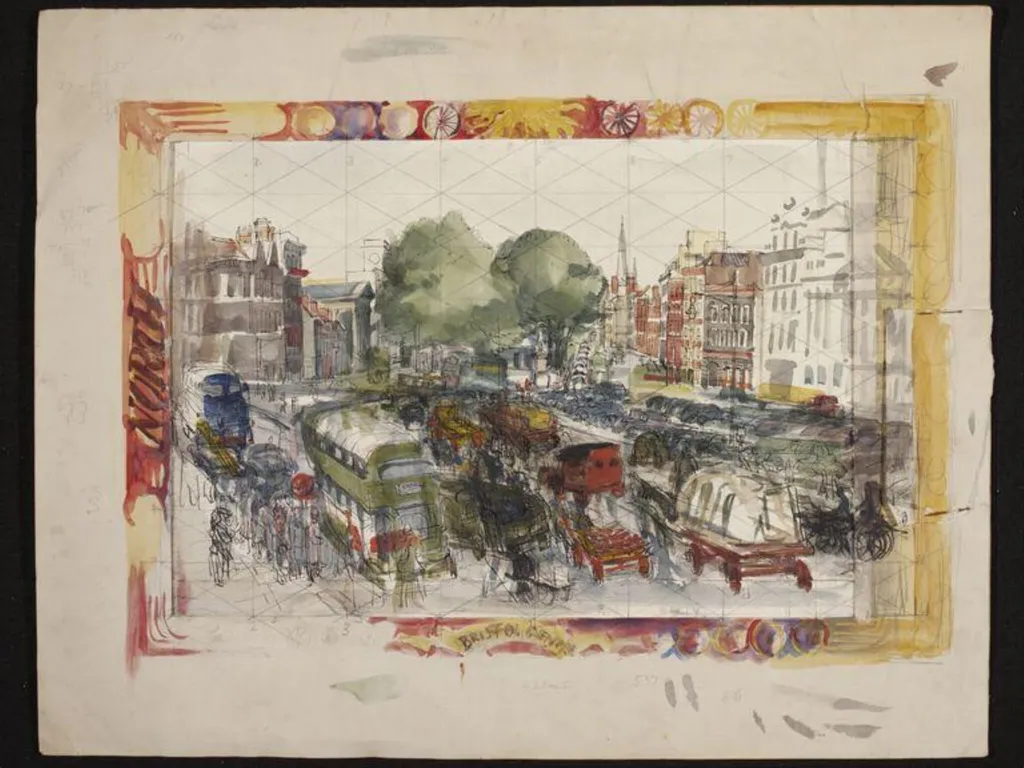
Untitled is a watercolor work on paper by the Abstract Expressionist artist Phyllis E. Ginger. It dates from 1950 and is held in the collection of the Victoria and Albert Museum.
About this work
The lithograph was part of the School Prints scheme, which aimed to give school children an understanding of contemporary art.
This watercolour is by Phyllis E. Ginger, created around 1940-1960. It's a study for a lithograph.
The lithograph was part of the School Prints scheme, which aimed to give school children an understanding of contemporary art. This scheme was set up in 1945 and ended in 1949 due to financial problems.
The School Prints scheme is an interesting part of art history. To learn more, look up the Victoria and Albert Museum.
Overview
This watercolour by Phyllis Ginger was created as a preparatory study for a lithograph produced under the School Prints scheme, launched in 1945. The scheme sought to bring contemporary art into British classrooms through affordable, widely distributed prints. Ginger’s work, dated between 1940 and 1960, reflects her engagement with everyday urban scenes and her role as one of several artists commissioned to contribute to this educational initiative, which ceased in 1949 due to funding constraints.
Subject & Meaning
The watercolour depicts Bristol Town Centre, capturing the rhythm of post-war urban life. Ginger focused on ordinary streetscapes—pedestrians, shopfronts, and architectural details—avoiding idealization in favour of observed reality. This choice aligned with the scheme’s goal of presenting art rooted in lived experience, offering children a visual connection to their own environment rather than distant or abstract subjects.
Technique & Style
Ginger employed loose, fluid watercolour washes to suggest movement and atmosphere, with precise ink lines defining architectural forms and figures. Her approach combined topographical accuracy with a lively, sketch-like energy, characteristic of her broader practice. The composition was designed to translate effectively into lithography, with clear contours and balanced detail to ensure clarity when reproduced at scale.
History & Provenance
The work originated as part of the School Prints initiative, organized by Brenda Rawnsley to democratize art access during post-war austerity. Ginger, then based near Bath, was among the artists invited to contribute. Though the scheme ended in 1949, many of its prints, including this study, were preserved in educational collections and later acquired by institutions such as the Victoria and Albert Museum, where they remain as records of mid-century art education efforts.
Context
Ginger’s involvement in the School Prints scheme connected to her earlier work with the Recording Britain project (1939), which documented vulnerable landscapes ahead of potential wartime destruction. Both initiatives shared a documentary impulse—recording the ordinary before it vanished. Her focus on urban life reflected a broader cultural turn toward valuing everyday scenes as worthy of artistic attention during a time of national rebuilding.
Legacy
Though the School Prints scheme was short-lived, it left a lasting imprint on British art education. Ginger’s watercolours and lithographs continue to be studied as examples of how modernist techniques were adapted for public use. Her contributions, alongside those of other artists, helped normalize the presence of contemporary art in schools and influenced later efforts to integrate visual culture into civic education.
Artist & collection
Artist
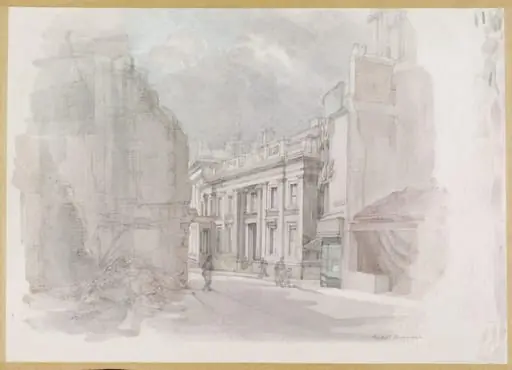
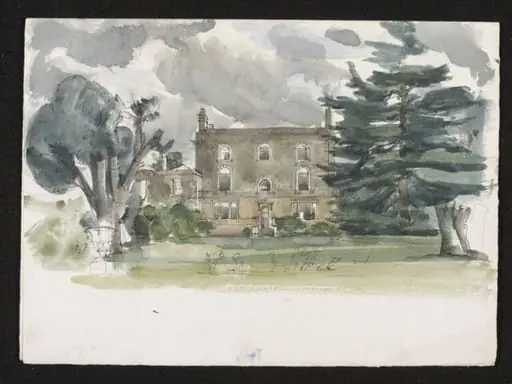
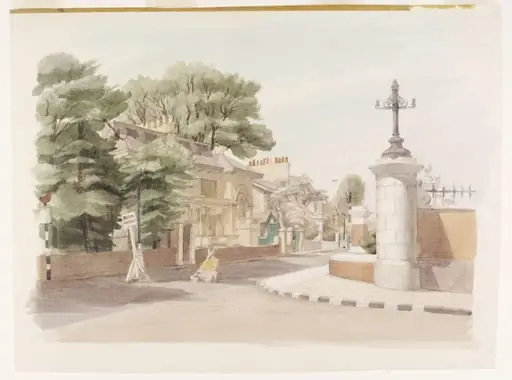
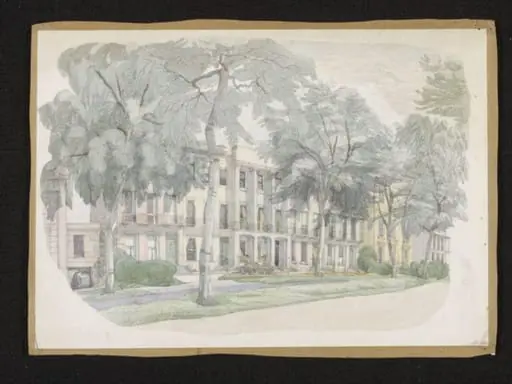
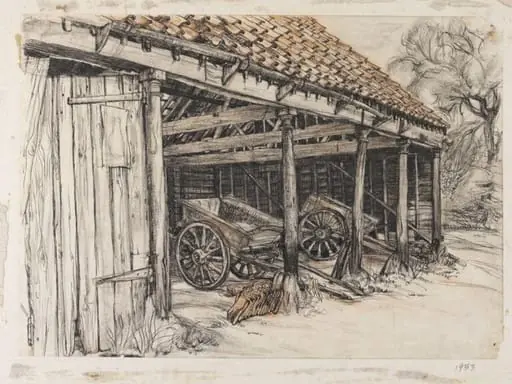
Phyllis E. Ginger painted watercolours of British streets and buildings in the 1940s. Her brush captured Council House in Bristol in 1942 and a Regency terrace lined with tall trees. She also drew barns and farm carts…

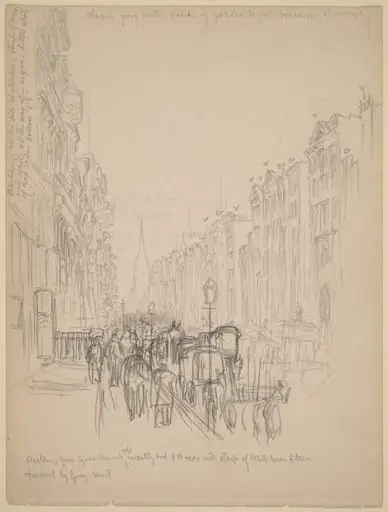 Fifth Avenue Building from Grace Church
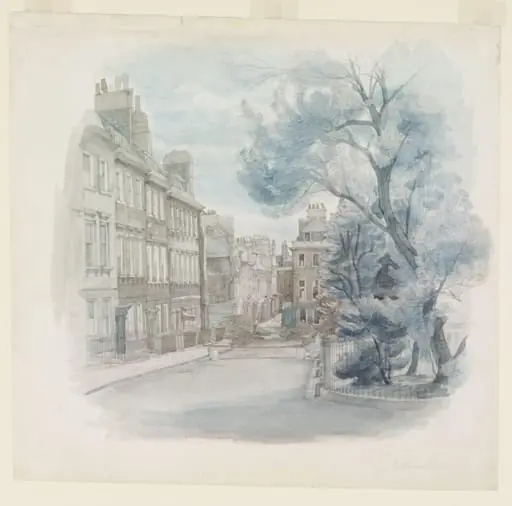 Catharine Place, Bath, Somerset
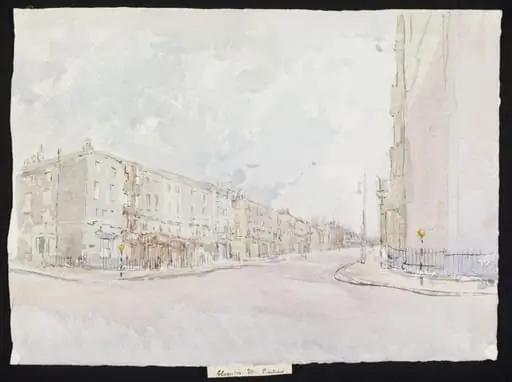 Gloucester Street, Pimlico
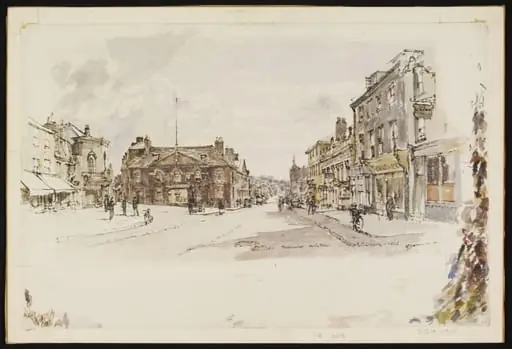 High Street and Rutland Arms, Newmarket
![North Gate [by Thomas Harrison], Chester, by Causer](https://artifactworldgallery.com/img/causer--north-gate-by-thomas-harrison-chester--aa1b0a0e4cef52c8-w320.webp) North Gate [by Thomas Harrison], Chester
North Gate [by Thomas Harrison], Chester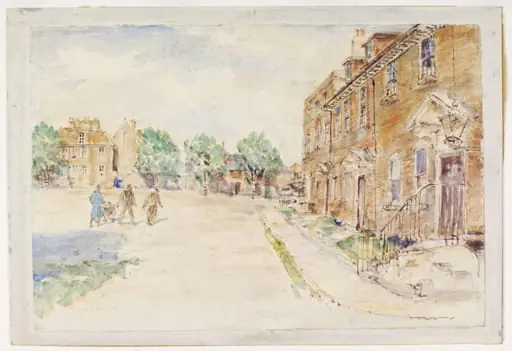 18th century houses at The Butts, Brentford
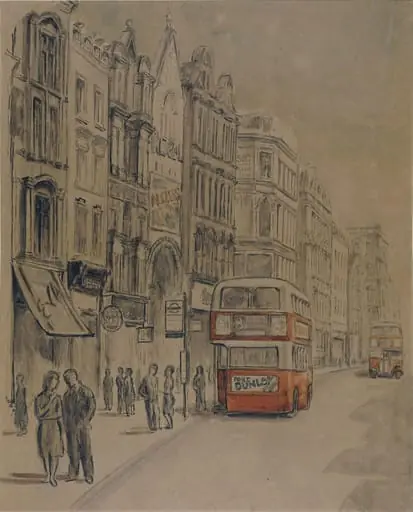 London Street
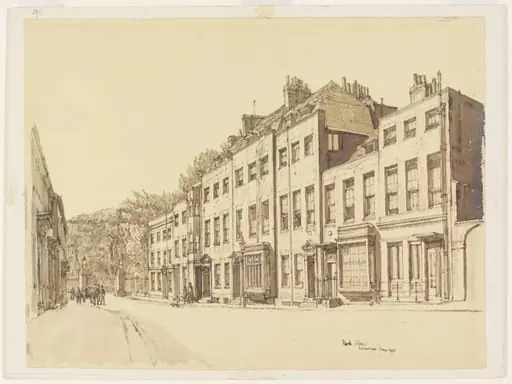 Park Street, Windsor
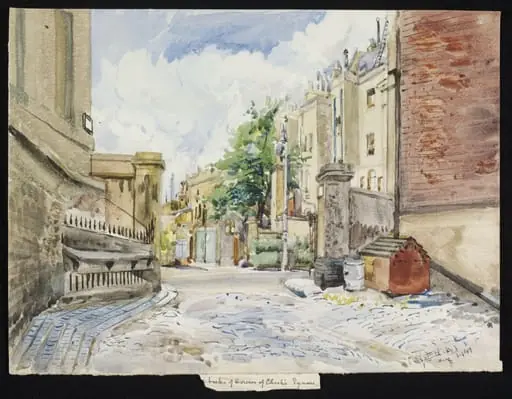 Backs of Houses, Chester Square, S.W.1.
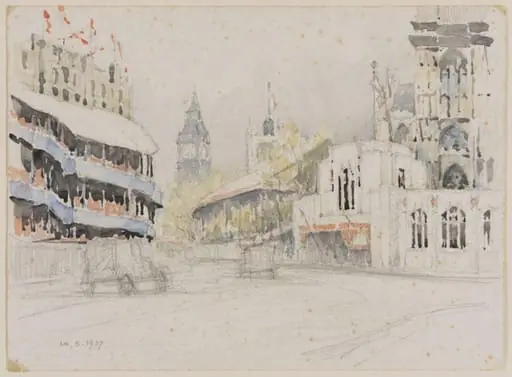 Entrance to Westminster Abbey with Big Ben in the distance
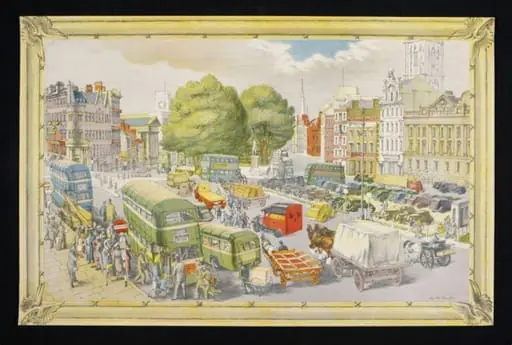 Town Centre