Artwork
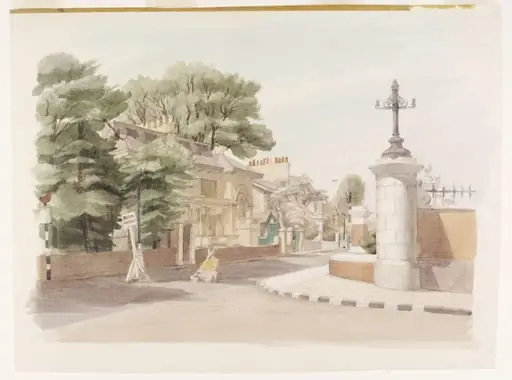
View of Regency terrace with large trees in front
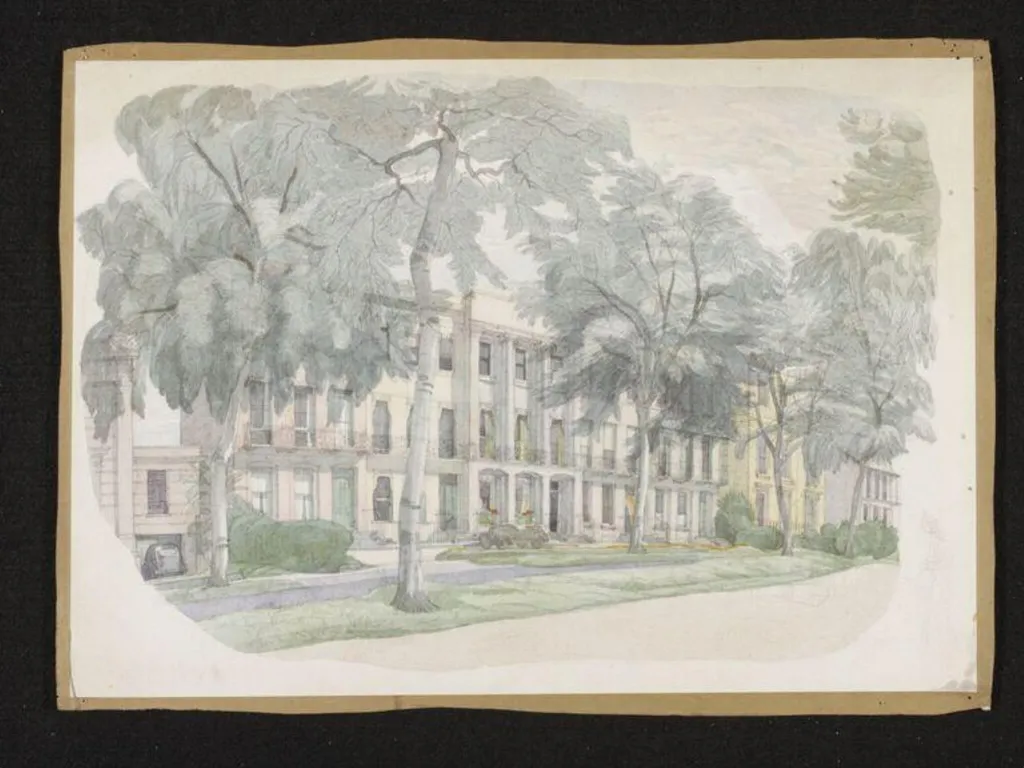
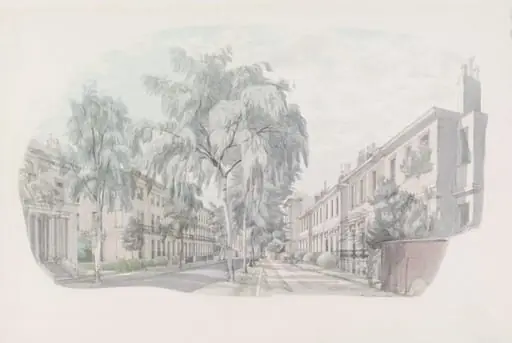
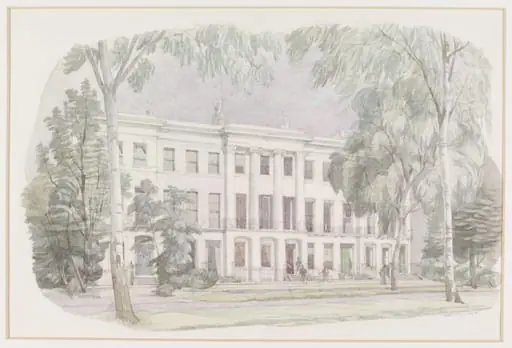
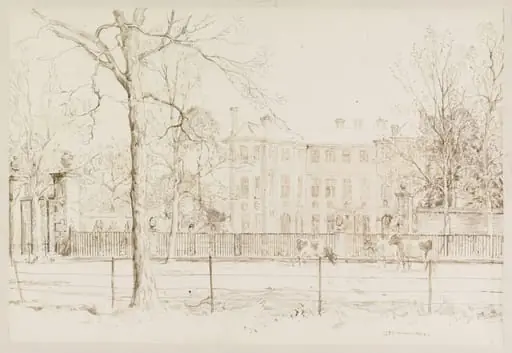
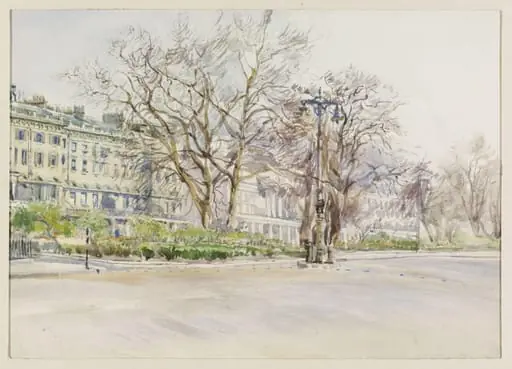
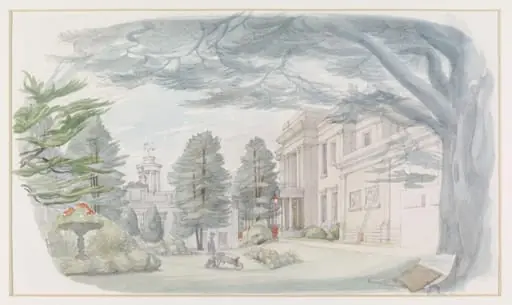
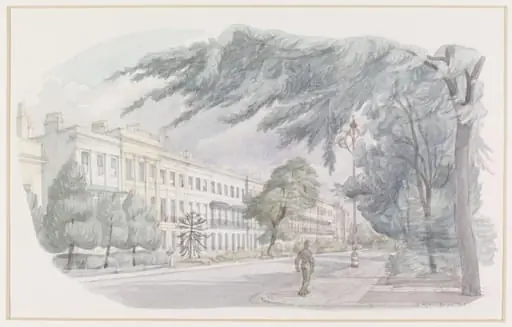
View of Regency terrace with large trees in front is a watercolor work on paper by the Impressionist artist Phyllis E. Ginger. It dates from 1945 and is held in the collection of the Victoria and Albert Museum. This watercolour by Phyllis Ginger depicts a Regency-era terrace flanked by mature trees, rendered in delicate pen and wash.
About this work
Overview
Though not part of the official Recording Britain archive, it reflects the observational approach she developed during that project.
This watercolour by Phyllis Ginger depicts a Regency-era terrace flanked by mature trees, rendered in delicate pen and wash. Though not part of the official Recording Britain archive, it reflects the observational approach she developed during that project. Created in the 1940s, the work captures a quiet urban scene with subtle attention to architectural detail and contemporary life, including two parked cars that anchor the image in its time.
Subject & Meaning
The scene likely portrays a street in Cheltenham, known for its elegant Regency architecture. Ginger’s focus on the terrace’s rhythmic facades and the natural canopy of trees suggests an interest in the harmony between built and natural environments. The presence of modern vehicles introduces a quiet tension between historical form and contemporary use, framing the terrace not as a relic but as a lived-in space.
Technique & Style
Ginger employed precise pen outlines to define architectural elements, layered with translucent watercolour washes to suggest shadow and volume. Her background in illustration informs the clarity of line, while her experience with etching lends a controlled, tonal sensitivity. The composition balances symmetry with natural irregularity, particularly in the positioning of the trees, which soften the rigid geometry of the terrace.
History & Provenance
Phyllis Ginger studied at the Richmond School of Art from 1932 to 1935 and was elected to the Royal Watercolour Society in 1952. From 1944 to 1946, she lived in Saltford near Bath, a period during which she produced several topographical works inspired by the surrounding region. This piece aligns with her activities during the war years, though it was not submitted to the Recording Britain collection.
Context
During the Second World War, the Recording Britain scheme sought to document vulnerable landscapes and architecture. Though this work was not included, it shares the project’s ethos of attentive observation. Ginger’s focus on everyday urban scenes—rather than dramatic destruction—reflects a broader cultural impulse to preserve the ordinary, even amid uncertainty.
Legacy
Ginger’s watercolours contribute to a quiet but significant record of mid-20th-century British topography. Her ability to merge illustrative precision with atmospheric watercolour technique distinguishes her among lesser-known artists of the period. These works offer insight into how regional architecture was perceived and valued during a time of national upheaval.
Artist & collection
Artist
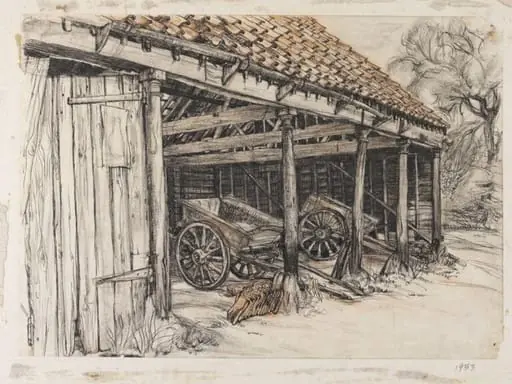
Phyllis E. Ginger painted watercolours of British streets and buildings in the 1940s. Her brush captured Council House in Bristol in 1942 and a Regency terrace lined with tall trees. She also drew barns and farm carts…