Artwork
Catharine Place, Bath, Somerset
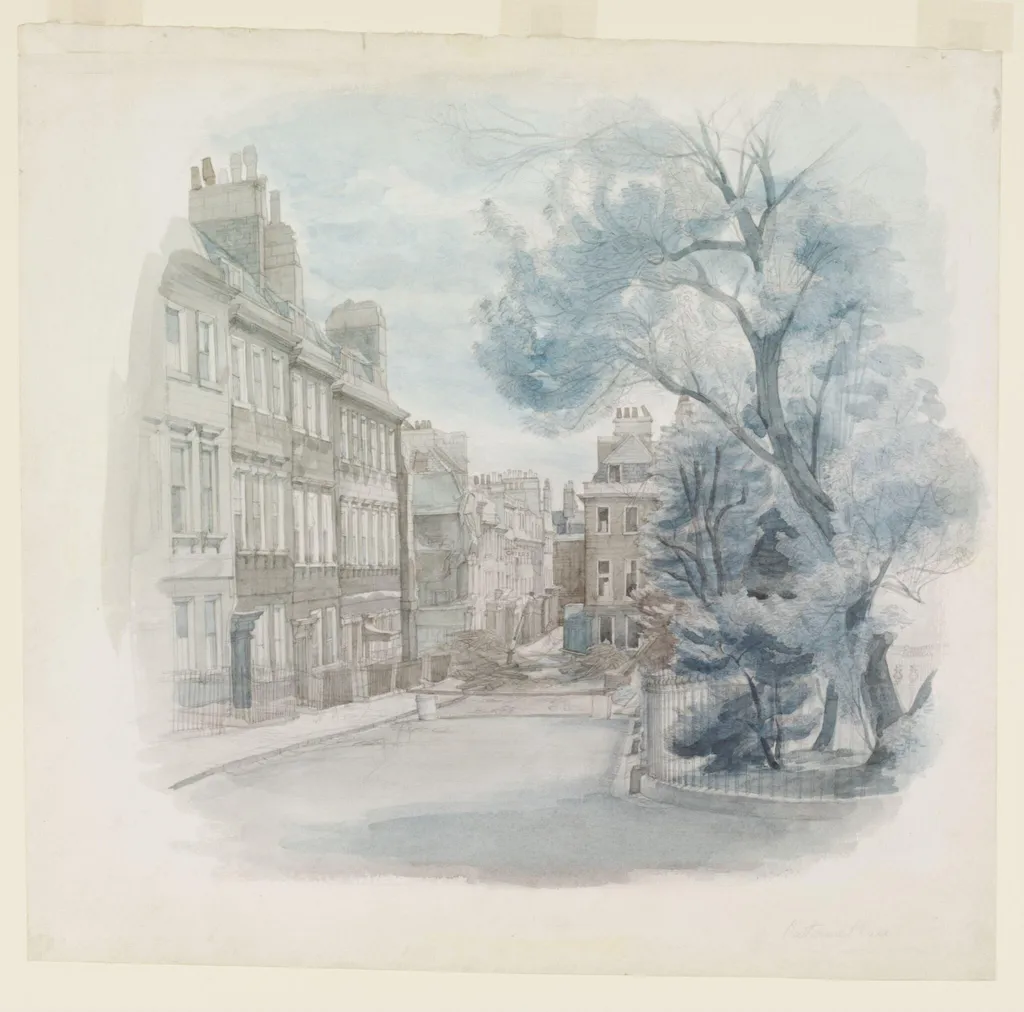
Catharine Place, Bath, Somerset is a watercolor work on paper by the British Romanticist artist Phyllis Ginger. It dates from 1940 and is held in the collection of the Victoria and Albert Museum.
About this work
Overview
Phyllis Ginger’s 1940 watercolour records a bomb‑induced rupture in a Georgian terrace on a Bath street. The composition captures a quiet corner where the war’s destructive impact is evident in the broken façade, set against the city’s characteristic stone architecture.
Subject & Meaning
The image portrays a narrow, light‑stone street lined with three‑storey houses, their large windows and modest balconies juxtaposed with a leafless tree and a low fence. The absence of figures emphasizes the disruption of everyday life caused by the wartime explosion.
Technique & Style
Executed in muted blues and greys, Ginger employs delicate washes that soften edges, allowing distant structures to recede into atmospheric haze. Minimal line work suggests curbs and sidewalks, while the overall palette conveys the somber mood of a city under siege.
History & Provenance
Created for the Recording Britain project, the work was part of a government‑sponsored effort (administered by the Committee for the Employment of Artists in Wartime and funded by the Pilgrim Trust) to document at‑risk British locales between 1940 and 1943. Bath and the wider Somerset region were among the sites selected for this visual archive.
Context
The Recording Britain scheme enlisted 97 artists who produced over 1,500 pieces, capturing market towns, rural scenes, and historic architecture threatened by bombing, invasion, or rapid change. Ginger’s contribution reflects the broader aim of preserving a visual record of Britain’s cultural landscape during World War II.
Artist & collection
Artist
Phyllis Ginger made watercolors and prints of everyday British streets and buildings during the 1940s.

 High Street and Rutland Arms, Newmarket
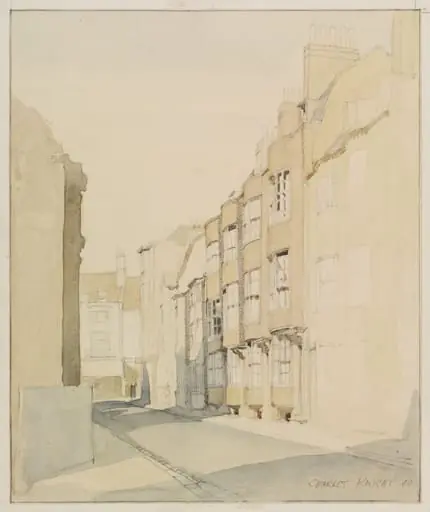 3 - 12, Charles Street, off Brighton Front
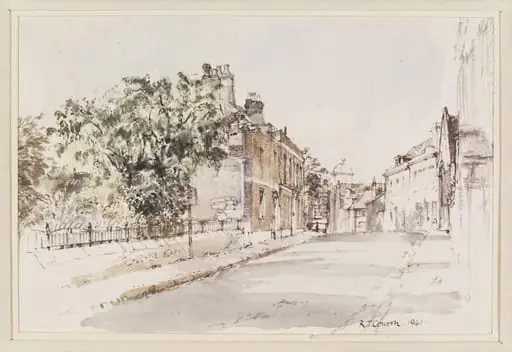 St. Thomas Street, Winchester
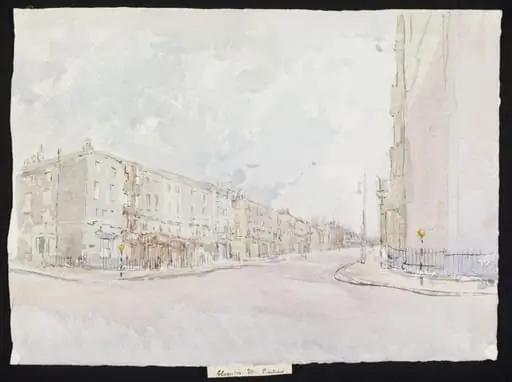 Gloucester Street, Pimlico
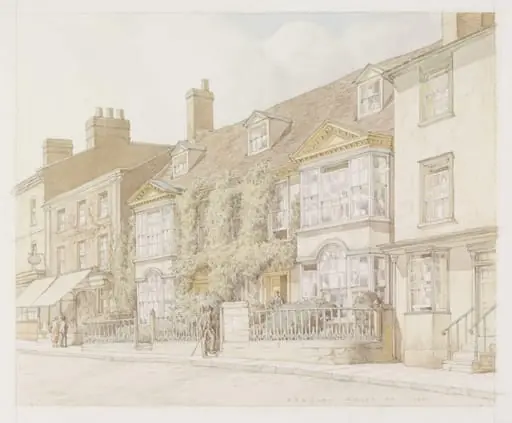 Georgian Houses, Market Hill, Buckingham
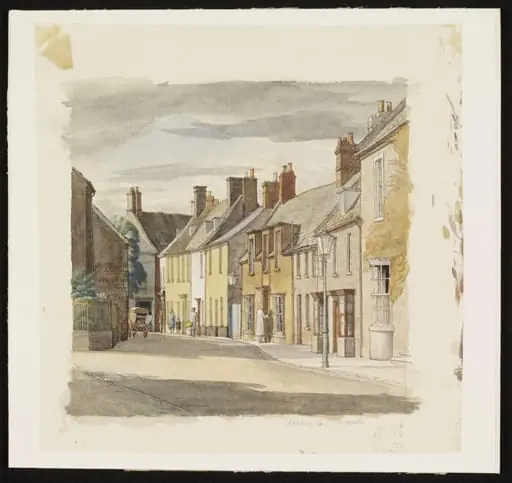 Chancery Lane, Thrapston
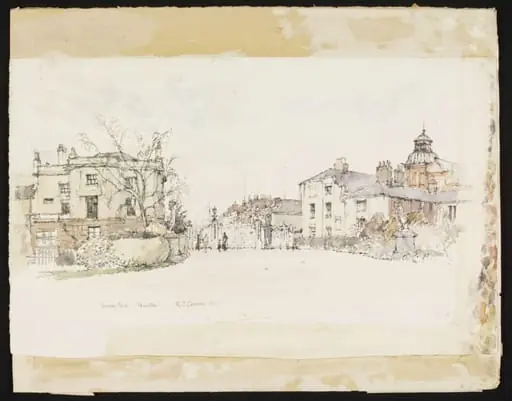 Vivary Park, Taunton
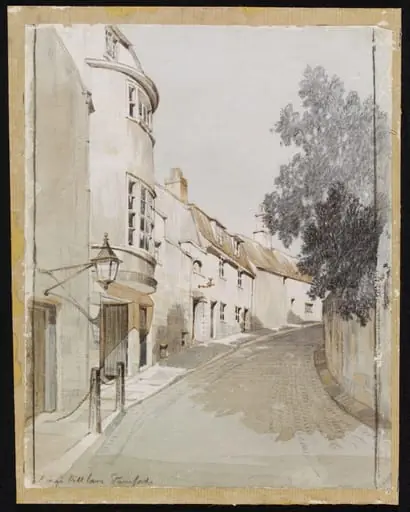 King's Mill Lane, Stamford, Rutlandshire
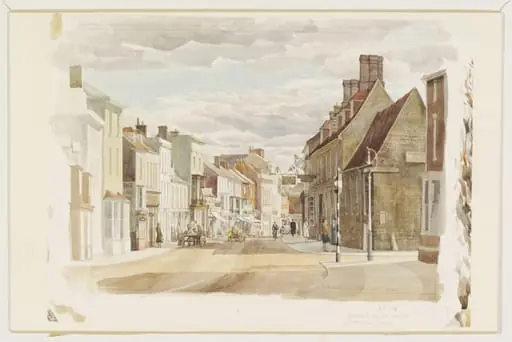 Towcester High Street from the Pomfret Arms Corner, Northamptonshire
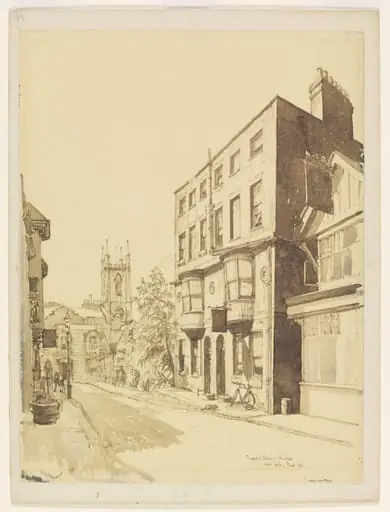 Church Street, (west side) Windsor
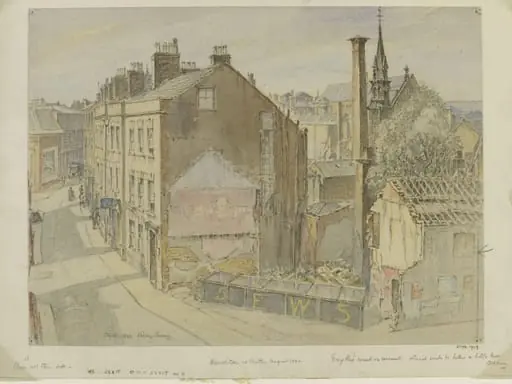 Demolition at Chester 1942
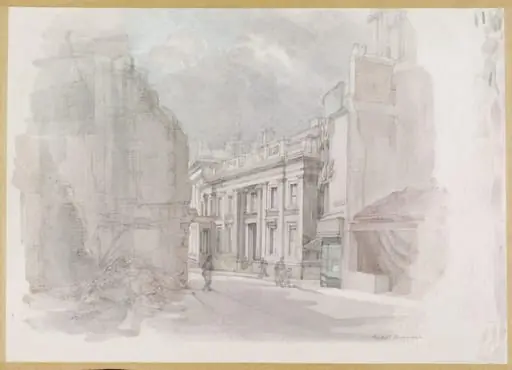 Council House, Bristol