Artwork
Courtesan

Courtesan is an unspecified painting by the Romanticist artist Gion Seitoku. It dates from 1804 and is held in the collection of the Cleveland Museum of Art.
About this work
Overview
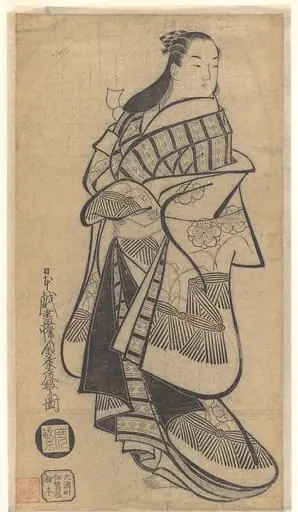
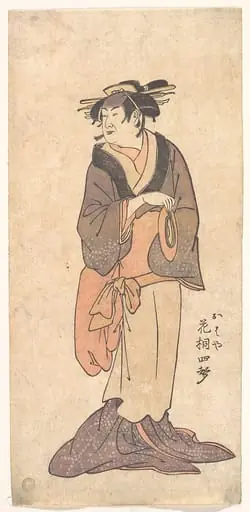
This vertical hanging scroll, formatted for display beside architectural pillars, depicts a courtesan in a poised, sideways stance. Created during Japan’s Edo period, the work reflects the refined aesthetic of urban pleasure quarters. Its narrow proportions suit intimate interior spaces, aligning with a tradition of decorative panel painting favored in domestic and teahouse settings.
Subject & Meaning
The subject is a high-ranking courtesan, identified by her elaborate hairstyle and ornate kimono. Her poised posture and the fan she holds suggest composure and cultivated elegance, traits associated with the pleasure district’s elite. The image does not narrate a specific moment but instead presents an idealized figure embodying beauty, status, and the transient allure of the floating world.
Technique & Style
The painting employs delicate brushwork and subdued tonalities, with soft grays and metallic golds defining the kimono’s pattern. Hair and accessories are rendered with precision, emphasizing texture and detail. The composition avoids depth, favoring flat planes and decorative patterning typical of ukiyo-e portraiture, where surface beauty and symbolic detail outweigh naturalistic space.
History & Provenance
Attributed to the Edo-period artist Seitoku, the work belongs to a genre of single-figure portraits produced for private collectors and urban elites. It entered the Cleveland Museum of Art’s collection in 1985, acquired as part of a broader effort to represent Japanese decorative arts from the 17th to 19th centuries.
Context
Produced during Japan’s period of national seclusion, such images flourished in cities like Edo and Kyoto, where the merchant class embraced cultural patronage. Courtesan portraits served both as personal adornments and as markers of social taste, reflecting the rise of urban leisure culture despite official Confucian values that prioritized austerity.
Legacy
This painting exemplifies the enduring appeal of ukiyo-e portraiture in documenting Edo-period social life. While not widely known outside specialized collections, it contributes to scholarly understanding of how gender, class, and aesthetics intersected in Japanese visual culture, influencing later artistic representations of femininity and urban identity.
Artist & collection