Artwork
Lady with a Parasol
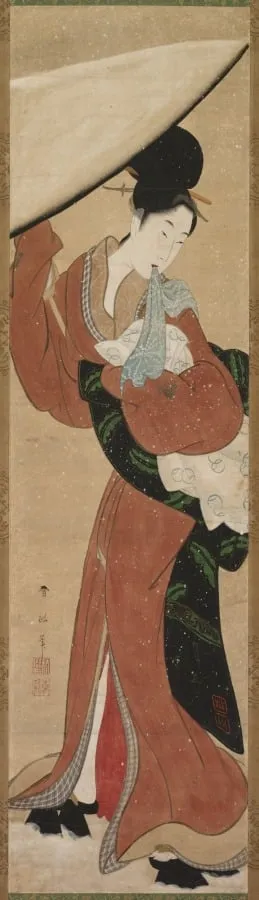
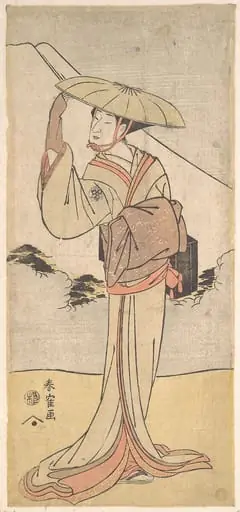
Lady with a Parasol is an unspecified painting by the Romanticist artist Koikawa Harumasa. It dates from 1804 and is held in the collection of the Cleveland Museum of Art. This Edo-period painting captures a woman emerging from a bathhouse, clutching a red parasol as she walks through rain-slicked streets.
About this work
The towel between her teeth was later used in art to hint at intimacy, but here it just looks practical.
A woman in a blue robe clutches a red parasol, her bare feet splashing through rain puddles. Steam rises from her skin—she’s just left the bathhouse.
In Edo Japan, women rarely showed their legs in public. The artist turns a simple errand into something bold. The towel between her teeth was later used in art to hint at intimacy, but here it just looks practical.
To see how other Edo artists painted daily life, look up *japan, edo period (1615–1868)*.
Overview
This Edo-period painting captures a woman emerging from a bathhouse, clutching a red parasol as she walks through rain-slicked streets. Her bare feet splash in puddles, and steam rises from her skin, suggesting recent immersion. The blue robe she wears is modest, yet the exposure of her legs and feet defies conventional norms of public decorum, transforming an ordinary moment into a quiet act of visual defiance.
Subject & Meaning
The figure is not idealized as a courtesan or mythological being but presented as an ordinary woman returning home. The towel held between her teeth serves a practical purpose—keeping her hair dry—rather than signaling eroticism, which became a later artistic convention. Her hurried motion and unadorned demeanor emphasize realism over symbolism, grounding the scene in daily life rather than fantasy.
Technique & Style
The artist employs soft, fluid brushwork to render the steam rising from her skin and the wet sheen on her robe. Contrasts between the vivid red parasol and the muted blue fabric draw attention to her movement. The rain’s texture is suggested through delicate washes, while the puddles reflect ambient light with subtle precision, enhancing the sense of immediacy and atmosphere.
History & Provenance
Created during the Edo period (1615–1868), the work reflects the growing popularity of ukiyo-e depictions of common life. While many such images later romanticized or sexualized female figures, this piece predates those conventions. Its origins are undocumented, but its style aligns with early genre paintings produced for urban audiences seeking relatable imagery over grand narratives.
Context
In Edo Japan, public exposure of a woman’s legs was socially taboo, making this depiction unusual. Bathhouses were communal spaces, but the transition from bath to street was rarely illustrated. The artist’s choice to focus on this liminal moment reflects a shift toward intimate, secular subjects, paralleling broader cultural changes in urban life and the rise of the merchant class as art patrons.
Legacy
Though later artists would imbue similar scenes with erotic undertones, this painting resists such readings. Its significance lies in its restraint—presenting a woman’s private routine without embellishment. It stands as an early example of how everyday moments could be elevated through observation, influencing subsequent generations of genre painters who sought authenticity over ornamentation.
Artist & collection