Artwork
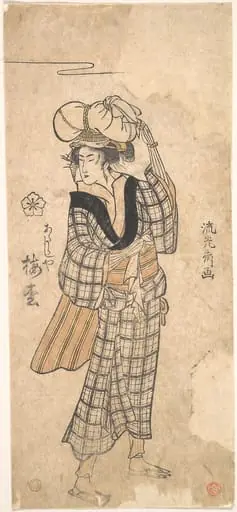
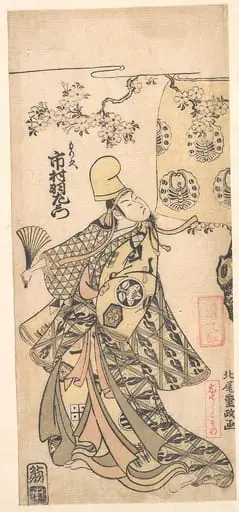
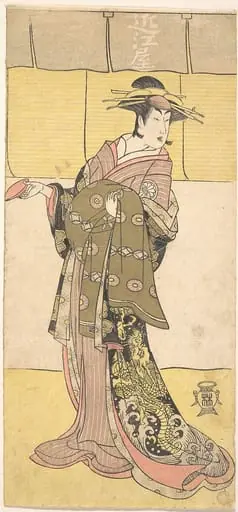
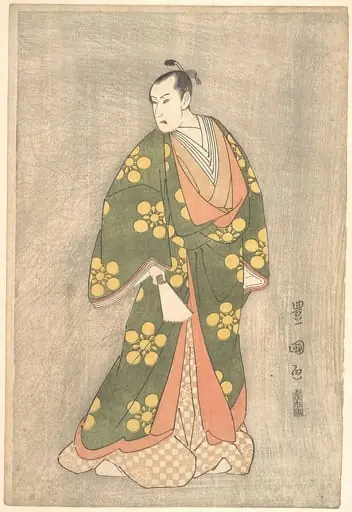
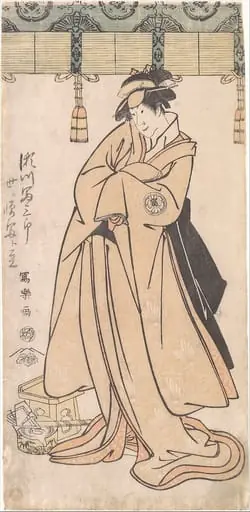
「おはや 花桐四声」(三代目豊松)|The Onnagata Actor Hanagiri Toyomatsu (Shisei) III as Ohaya
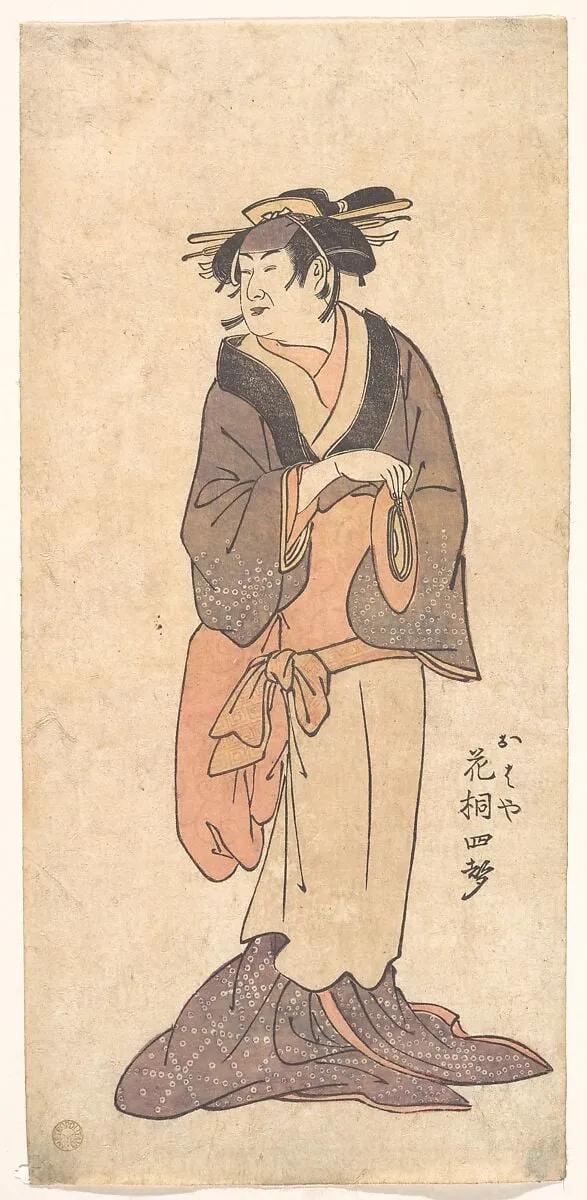
「おはや 花桐四声」(三代目豊松)|The Onnagata Actor Hanagiri Toyomatsu (Shisei) III as Ohaya is an ink print by the Romanticist artist Ryūkōsai Jokei 流光斎如圭. It dates from 1793 and is held in the collection of the Metropolitan Museum of Art.
About this work
Overview
This vertical hosoban print, executed in the vibrant nishiki-e technique, depicts the celebrated Edo‑period onnagata Hanagiri Toyomatsu III in the role of Ohaya. Produced in 1793 by the prolific carver‑publisher Ryūkōsai Jokei, the work is part of the Metropolitan Museum of Art’s collection.
Subject & Meaning
The figure is presented in a flowing kimono of muted pink and gray, the garment’s wide sleeves and obi knot indicating a high‑status female character. The calm, slightly solemn expression and the fan held in one hand convey the poised elegance expected of an onnagata performing a refined courtly role.
Technique & Style
Rendered in multicolored woodblock, the print relies on bold black linework to define facial features and costume details, while subtle shading suggests the soft folds of the robe. The plain background eliminates distraction, focusing attention on the intricate patterning of the kimono and the delicate headpiece.
History & Provenance
Created during the late eighteenth‑century boom in full‑color ukiyo‑e prints, the image reflects Ryūkōsai Jokei’s role in disseminating popular theater imagery. The print entered the Metropolitan Museum of Art’s holdings through a 20th‑century acquisition, where it remains catalogued as an example of Edo theatrical portraiture.
Artist & collection