Artwork
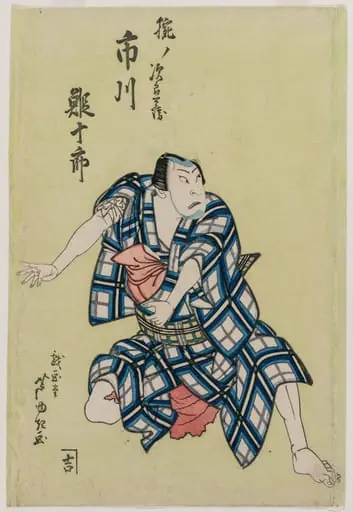
The Actor Ichikawa Danjuro as a Samurai
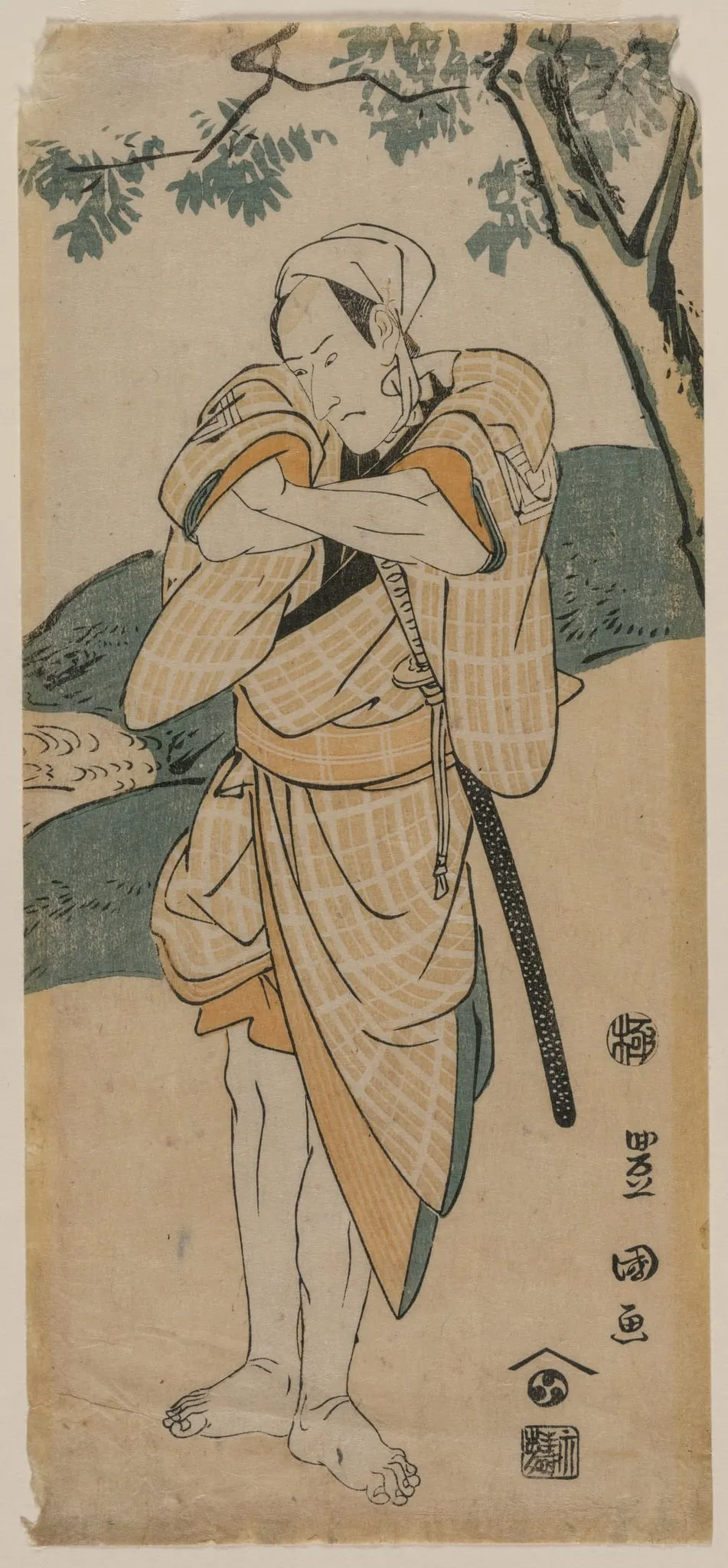
The Actor Ichikawa Danjuro as a Samurai is a print by the Romanticist artist Utagawa Toyokuni I. It dates from 1797 and is held in the collection of the Cleveland Museum of Art. This woodblock print, produced in 1797 by Utagawa Toyokuni, depicts the renowned kabuki actor Ichikawa Danjuro IX in a samurai role.
About this work
Overview
This woodblock print, produced in 1797 by Utagawa Toyokuni, depicts the renowned kabuki actor Ichikawa Danjuro IX in a samurai role. Created during the Edo period, it belongs to the ukiyo-e tradition of popular printmaking. The work is part of the collection at The Cleveland Museum of Art, where it serves as an example of theatrical portraiture in Japanese visual culture.
Subject & Meaning
The absence of dramatic narrative emphasizes character over plot, aligning with the kabuki convention of presenting iconic personas rather than scenes.
The print portrays Ichikawa Danjuro IX embodying a stoic samurai, a role tied to his family’s legacy in kabuki theater. His solemn gaze and upright posture convey inner resolve rather than action, reflecting the actor’s mastery in conveying psychological depth. The absence of dramatic narrative emphasizes character over plot, aligning with the kabuki convention of presenting iconic personas rather than scenes.
Technique & Style
Toyokuni employed fine linework and restrained color to define the actor’s layered robes, featuring a subtle grid pattern that suggests texture without realism. The background is minimal—just suggestive hills and trees—directing focus to the figure. Print techniques such as bokashi (gradated ink) and precise carving enhance the dignity of the form, characteristic of Toyokuni’s mature style in actor portraits.
History & Provenance
The print was made during the height of Toyokuni’s career, when demand for actor prints was strong in Edo. It likely circulated as a commercial print for theater fans. Acquired by The Cleveland Museum of Art in the 20th century, its provenance reflects the broader Western interest in Japanese prints following the Meiji period’s opening to international trade.
Context
In late 18th-century Edo, actor prints were mass-produced souvenirs for kabuki audiences. Ichikawa Danjuro IX was one of the most celebrated performers of his time, and his image carried cultural weight. Toyokuni’s depictions helped solidify the visual identity of leading actors, blending theatrical tradition with popular art in a society where class and performance were tightly interwoven.
Legacy
Toyokuni’s prints of Ichikawa Danjuro influenced later ukiyo-e artists and helped standardize the portrayal of kabuki heroes in woodblock form. While not widely known outside specialist circles today, this print remains a key reference for understanding how performance, identity, and print culture intersected in Edo-period Japan.
Artist & collection

Artist
Toyokuni was a born showman who made sure the energy of Edo’s kabuki stage never faded on paper.

 Bandō Mitsugorō II as Shinbei in the Kabuki Play "Sukeroku"
 Beauty Blotting Her Lip Rouge
 Portrait of Kinokuniya Bunzaemon
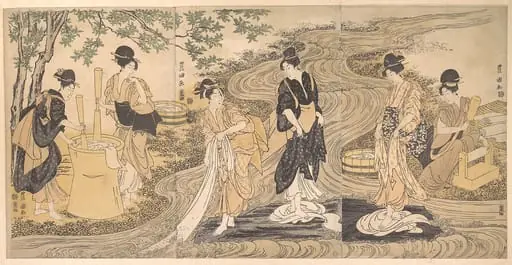 Untitled
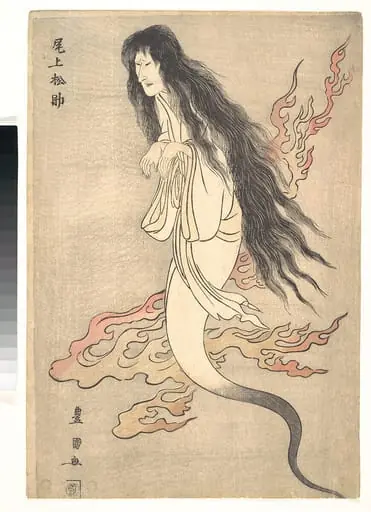 Tokaido Yotsuya Kaidan|Onoe Matsusuke as the Ghost of the Murdered Wife Oiwa, in "A Tale of Horror from the Yotsuya Station on the Tokaido Road"
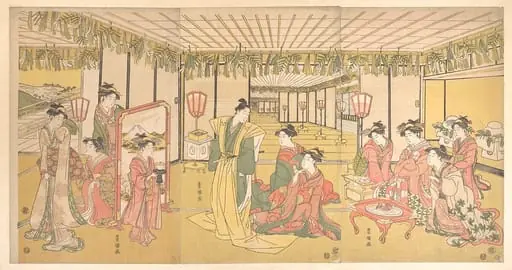 Untitled
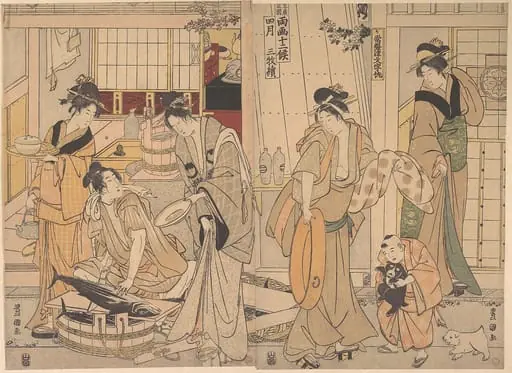 Untitled
 娘道成寺図の錦絵|Print of a Kabuki Dancer from the Maiden of the Dōjōji Temple (Musume Dōjōji)
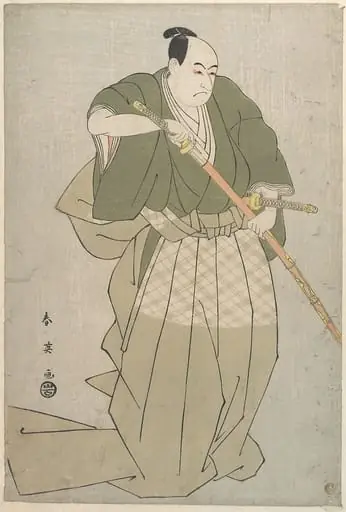 初代市川 男女蔵の桃井若狭之助|The Actor Ichikawa Omezō I as the Young Daimyo Momonoi Wakasanosuke
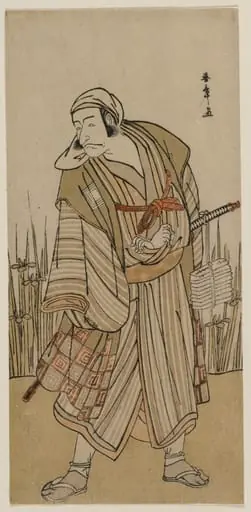 Ichikawa Danjuro V as a Traveller Beside a Clump of Iris
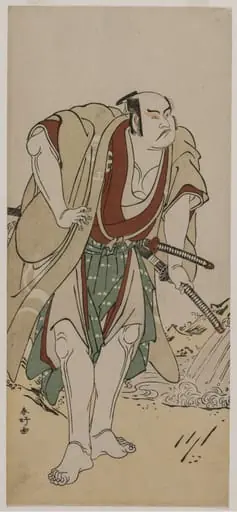 Otani Hiroji III as a Samurai Standing Beside a Stream
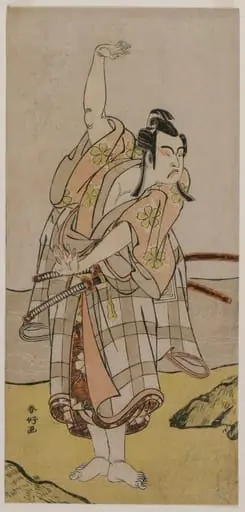 Actor Ichikawa Yaozō II as Sakuramaru
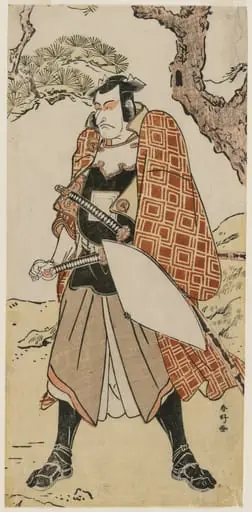 Ichikawa Danjuro V as a Travelling Warrior
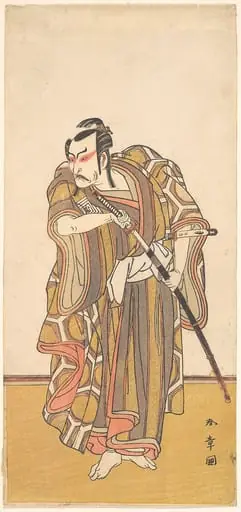 四代目市川團蔵|Kabuki Actor Ichikawa Danzō IV
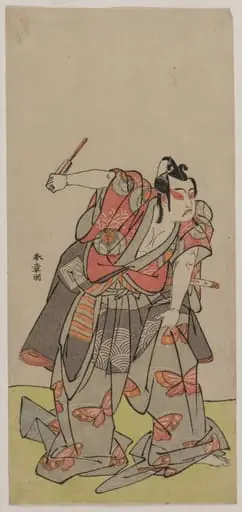 Ichikawa Yaozo II as Soga no Goro
 Ichikawa Ebijuro II as Ude no Jirobei