Artwork
The Virgin and Child with St Elizabeth and the infant Baptist
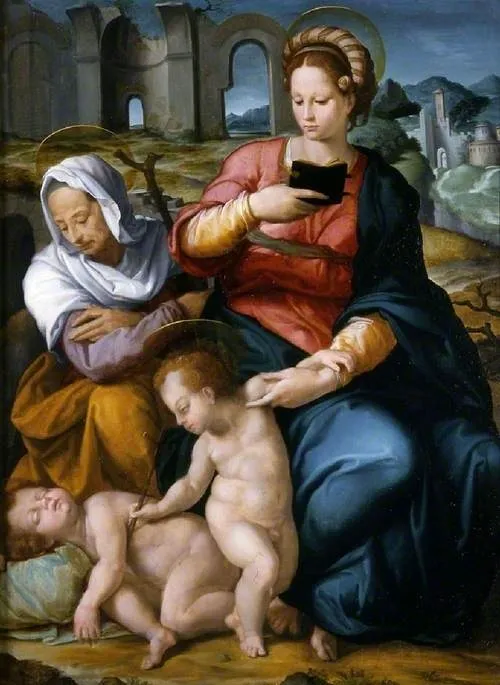
The Virgin and Child with St Elizabeth and the infant Baptist is an oil painting by Jacopino del Conte. It dates from 1550 and is held in the collection of the Fitzwilliam Museum.
About this work
Overview
This oil painting, dated circa 1550, depicts a serene religious scene by Jacopino del Conte, currently housed at the Fitzwilliam Museum.
Subject & Meaning
The painting portrays the Virgin Mary, seated on the ground, cradling the infant Jesus, alongside St Elizabeth with the infant John the Baptist. The composition conveys a moment of gentle interaction, as the baby John reaches out to touch Jesus' foot, symbolizing an early bond between the cousins in Christian theology.
Technique & Style
Characterized by predominantly muted browns and grays, the palette is punctuated by vibrant accents: Mary's red dress and the gold halos encircling Mary, Jesus, and John. The simple, peaceful atmosphere is enhanced by the subtle backdrop of ancient ruins and hills.
History & Provenance
Created around 1550 by Jacopino del Conte, the work's provenance prior to its current location at the Fitzwilliam Museum is not detailed in available information.
Context
This painting reflects the artistic and religious sensibilities of 16th-century Europe, where depictions of sacred family relationships were common. Jacopino del Conte's style, while not widely recognized in broad art historical narratives, contributes to the understanding of lesser-known Renaissance artists.
Legacy
While not a widely celebrated work in broad canonical discussions, it provides insight into the artistic output of its creator and the devotional practices of its time, offering a quiet, introspective example of Renaissance religious art.
Artist & collection


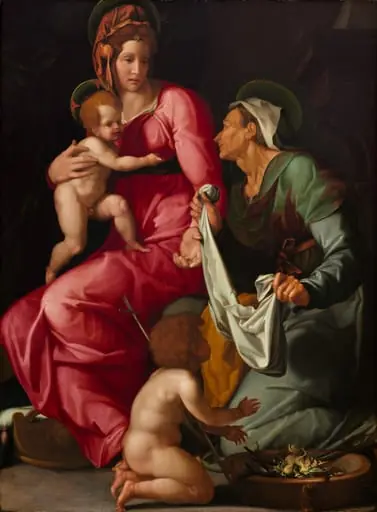
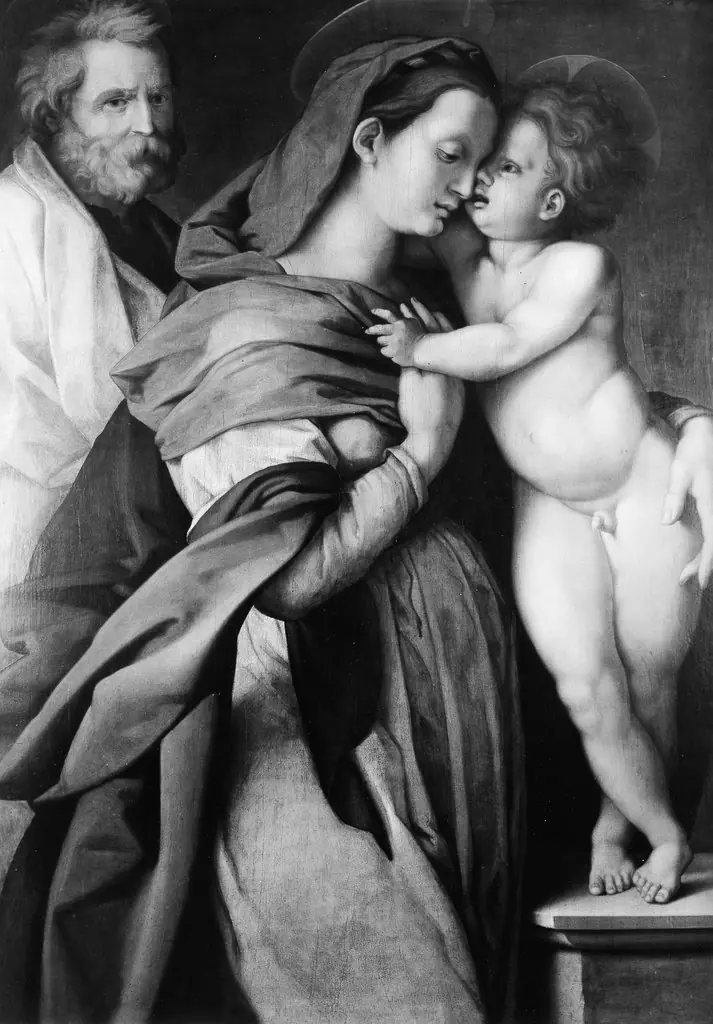
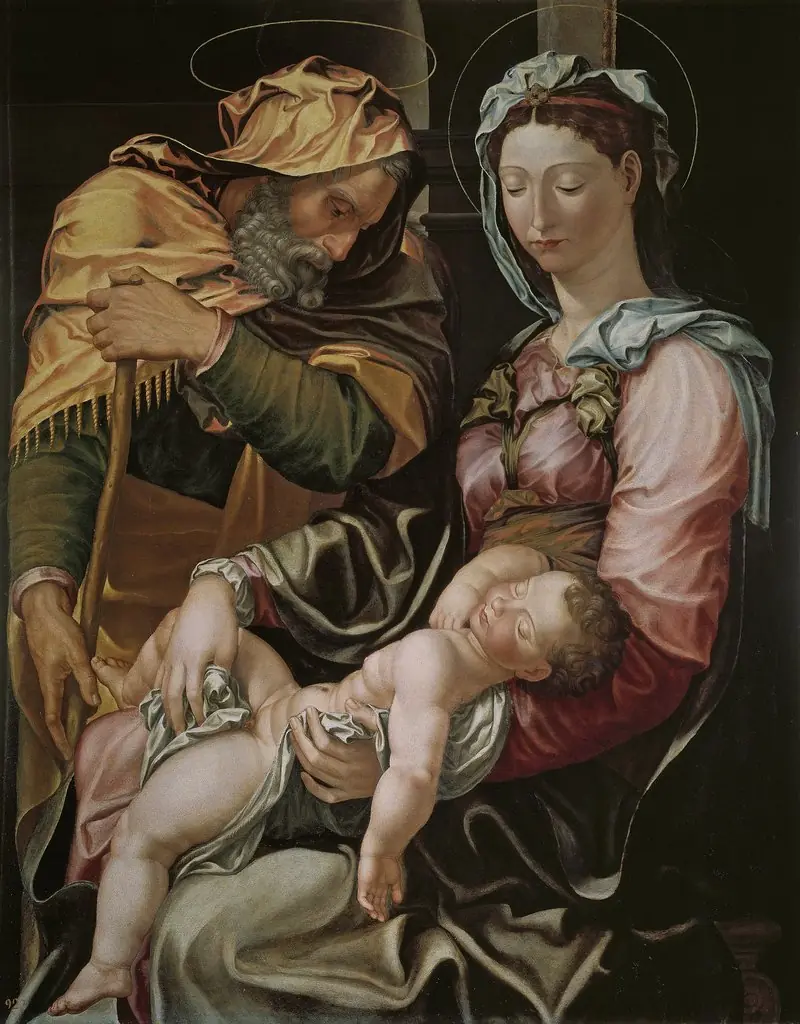
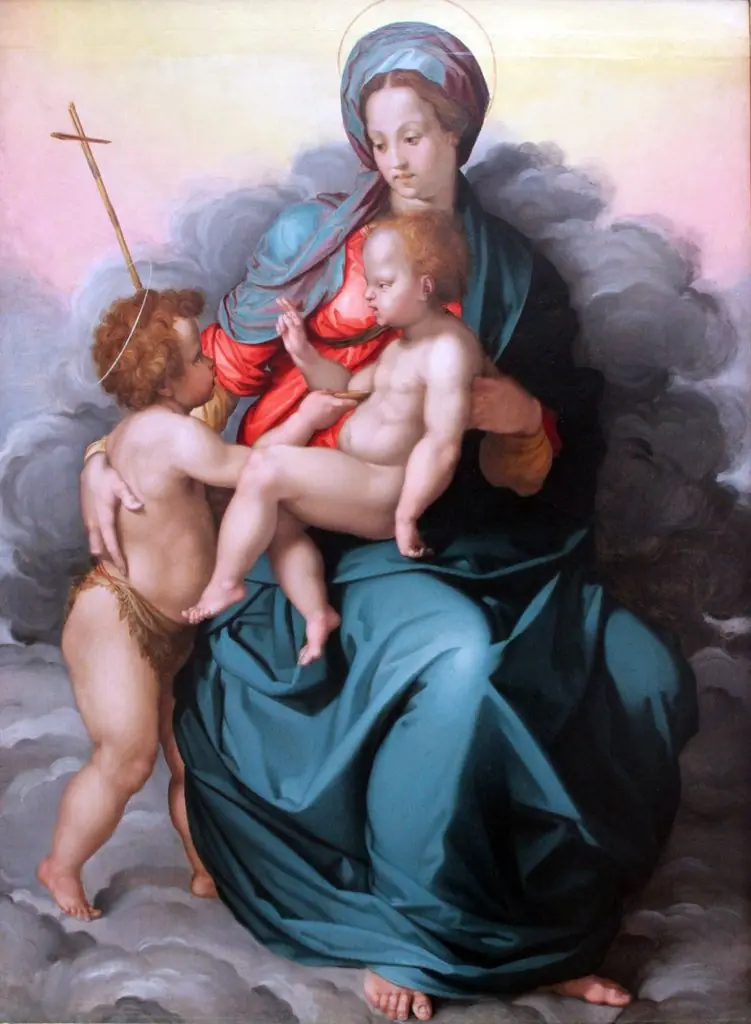
 The Virgin and Child with Saints Elizabeth and John the Baptist
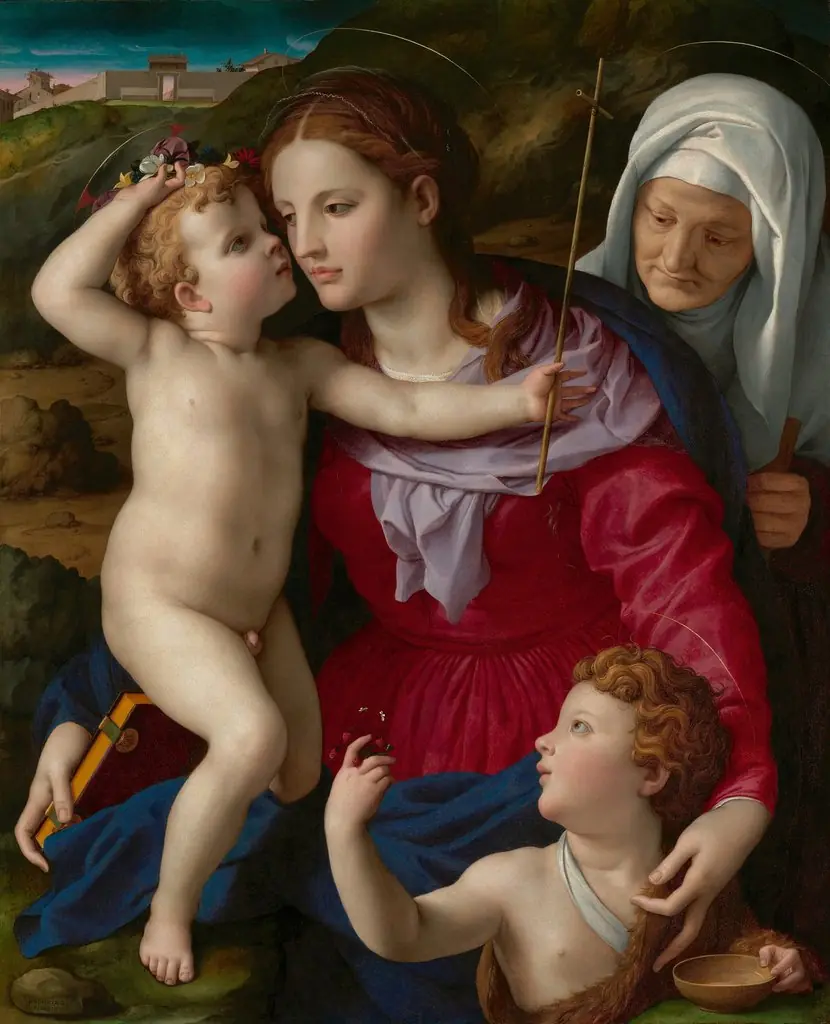 Virgin and Child with Saint Elizabeth and Saint John the Baptist
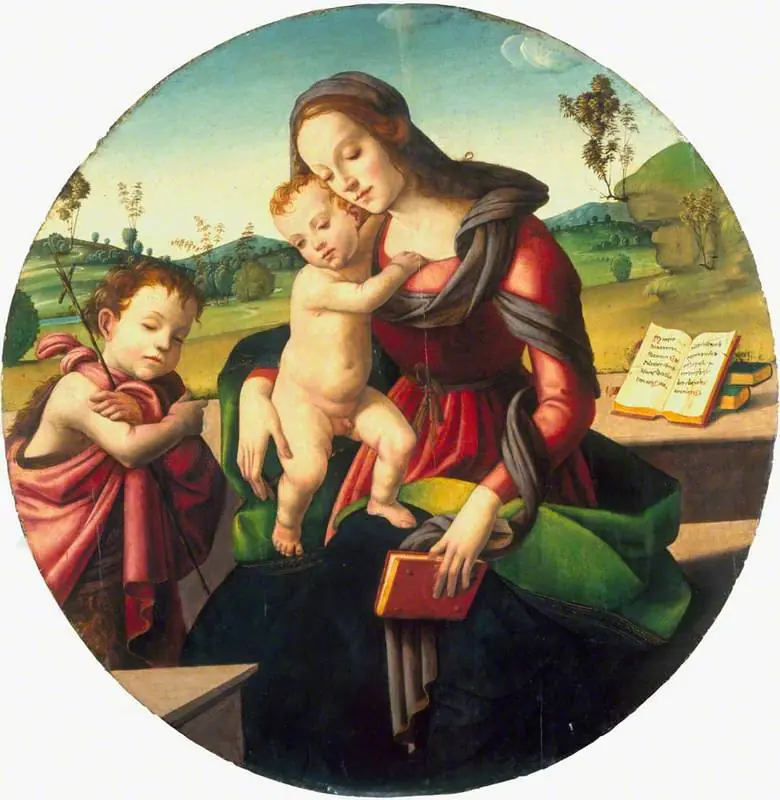 The Virgin and Child with the Infant Saint John the Baptist
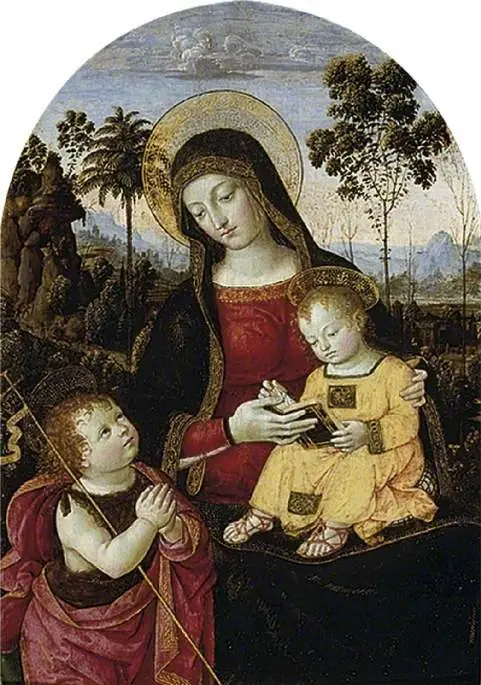 Virgin and Child with St John the Baptist
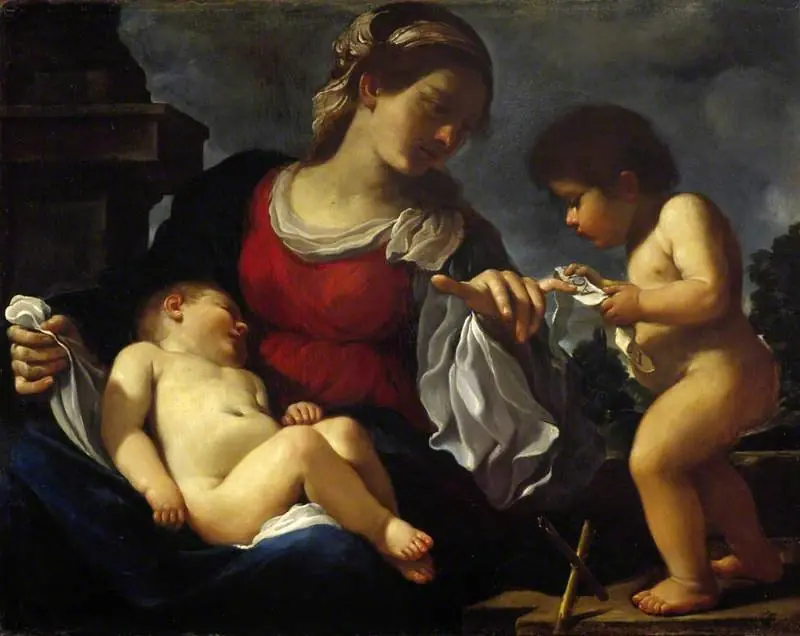 The Virgin and Child with the Infant Saint John the Baptist
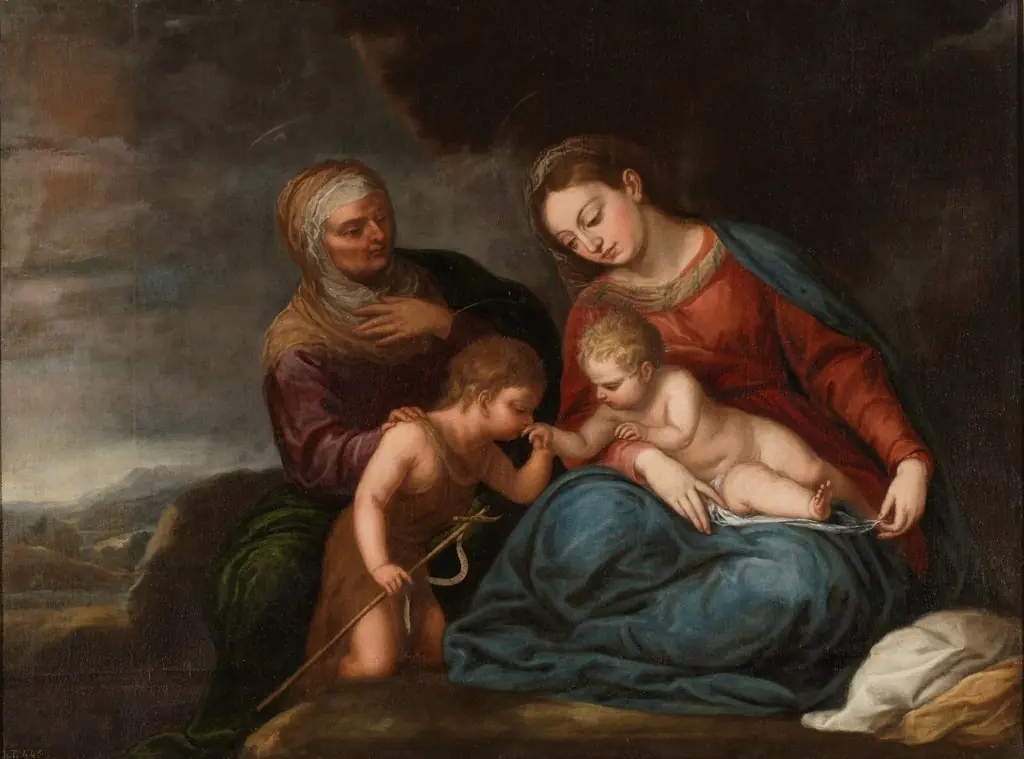 The Virgin and Child with Saints Elizabeth and John
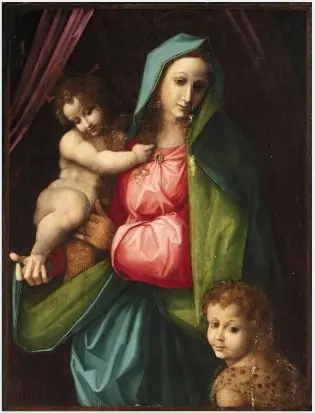 The Virgin and Child with Saint John the Baptist