Artwork
Tempio di Diana
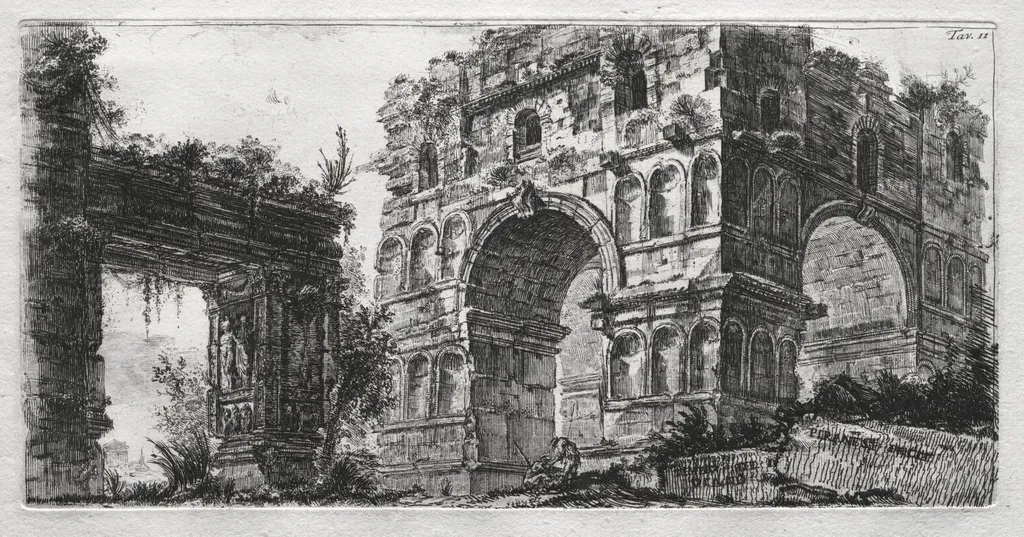
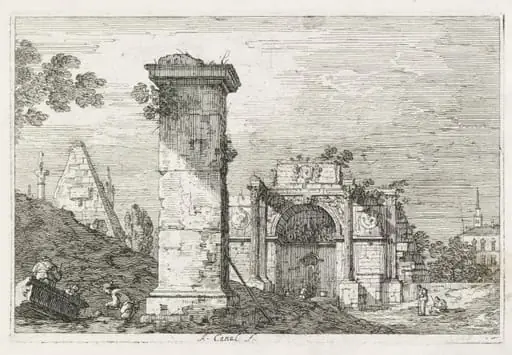
Tempio di Diana is a print by the Baroque artist Giovanni Battista Piranesi. It dates from 1748 and is held in the collection of the Cleveland Museum of Art.
About this work
Overview
The work is part of Piranesi’s early exploration of architectural fantasy and is held in the collection of The Cleveland Museum of Art.
Tempio di Diana is an etching by Giovanni Battista Piranesi, dated to around 1748. Though often described as a painting, it is in fact a print made using the etching technique. The work is part of Piranesi’s early exploration of architectural fantasy and is held in the collection of The Cleveland Museum of Art. It reflects his fascination with ancient Roman structures and their imaginative reconstruction.
Subject & Meaning
The scene portrays an idealized temple dedicated to Diana, the Roman goddess of the hunt and moon. The structure, though inspired by classical antiquity, is not a documented historical site but a composite invention. A solitary figure in the foreground gazes upward, suggesting contemplation or reverence. The temple’s presence amid overgrown vegetation evokes themes of time, decay, and the enduring power of myth.
Technique & Style
Piranesi employed etching to render fine linear detail and dramatic tonal contrasts. Deep shadows and delicate hatching define the temple’s carved surfaces and surrounding foliage, while the hazy background creates atmospheric perspective. The use of chiaroscuro directs focus toward the central arch and the small human form, enhancing the monumentality of the architecture through deliberate light manipulation.
History & Provenance
Created during Piranesi’s formative years in Rome, the print emerged from his study of ancient ruins and his growing reputation as an architectural draftsman. It was likely produced for collectors interested in antiquarian themes. The work entered The Cleveland Museum of Art’s collection through established acquisition channels in the 20th century, where it remains part of their holdings of Italian graphic art.
Context
In the mid-18th century, European intellectuals and artists were captivated by classical antiquity, fueling a revival of interest in Roman architecture. Piranesi’s work responded to this trend, blending archaeological observation with imaginative reconstruction. Tempio di Diana reflects the era’s broader cultural project: reimagining the past not as it was, but as it might have been in the collective imagination.
Legacy
Though not among Piranesi’s most famous works, Tempio di Diana exemplifies his early mastery of architectural fantasy and his influence on Romantic and Neoclassical aesthetics. It contributed to a visual language that shaped how later generations perceived ancient ruins—not as relics, but as evocative spaces charged with memory and mystery.
Artist & collection

Artist
Giovanni Battista (or Giambattista) Piranesi (Italian pronunciation: ; also known as simply Piranesi; 4 October 1720 – 9 November 1778) was an Italian classical archaeologist, architect, and artist, famous for his…


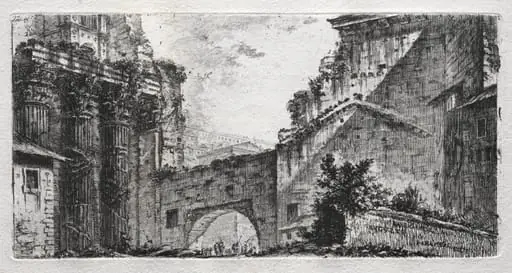 Foro di Augusto
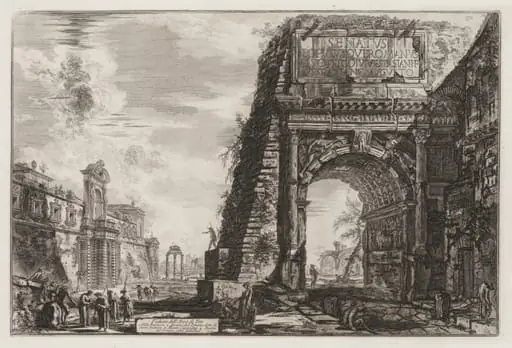 Views of Rome: The Arch or Titus
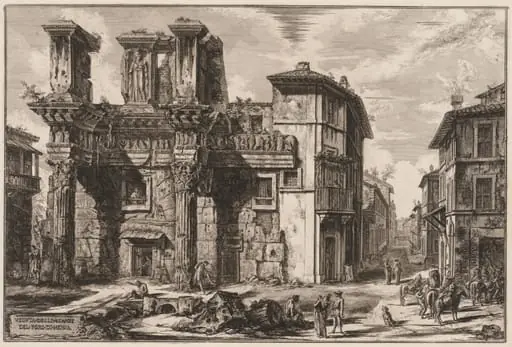 Views of Rome: Forum of Nerva
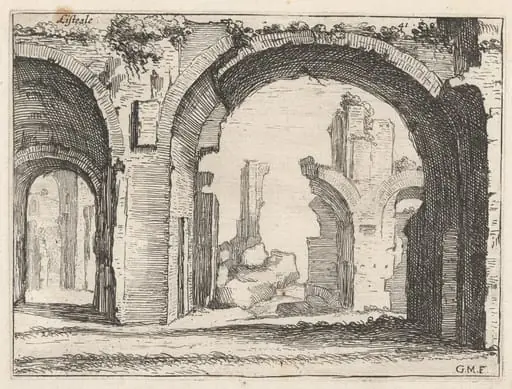 Antonine Baths, or Baths of Caracalla
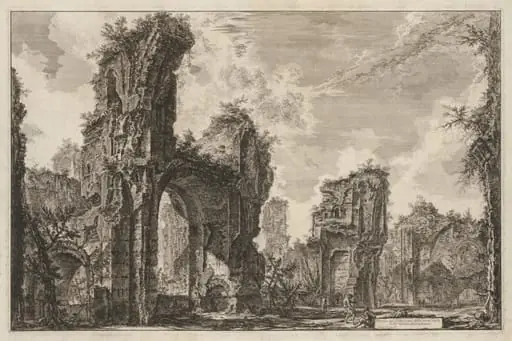 Views of Rome: Rovine del Sisto o sia della gran sala delle Terme Antoniniane
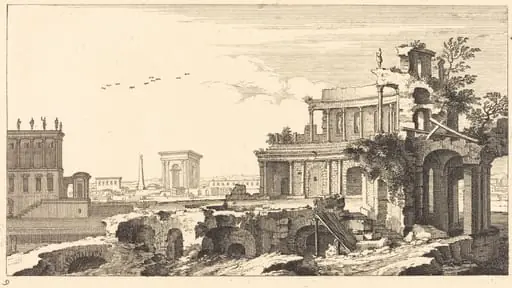 Landscape with Classical Ruins
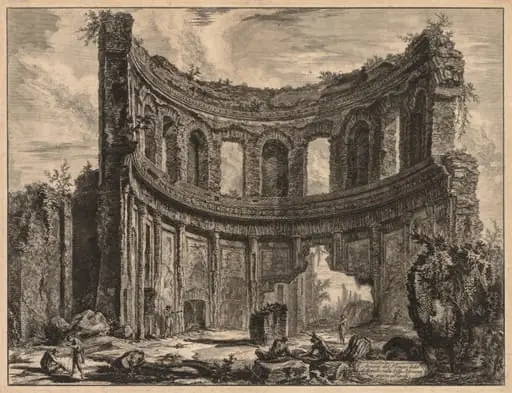 Views of Rome: Remains of the Temple of Apollo near Hadrian's Villa
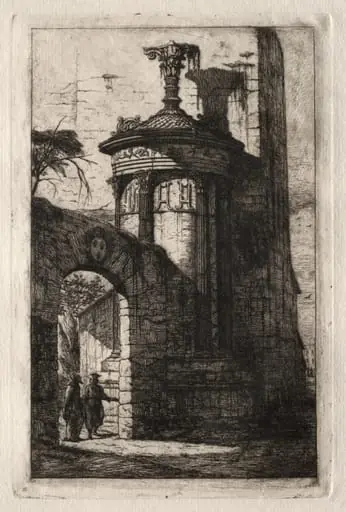 Entrance to the French Capuchin Convent at Athens
 Views: Le Pilier isolè