Artwork
The Prisons
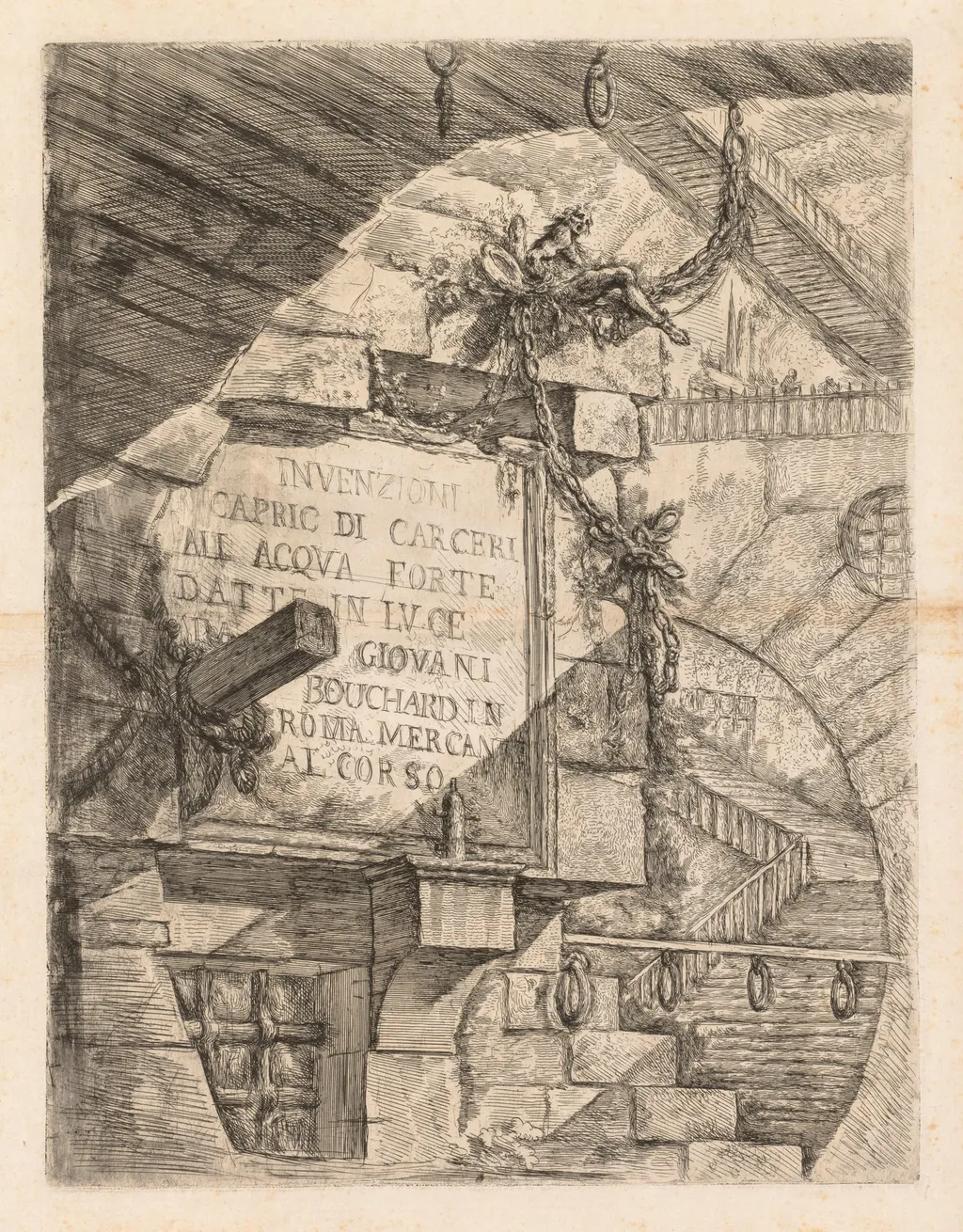
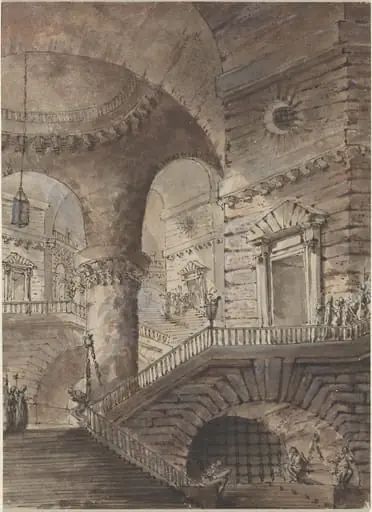
The Prisons is a print by the Baroque artist Giovanni Battista Piranesi. It dates from 1748 and is held in the collection of the Cleveland Museum of Art.
About this work
Overview
These works depict imaginary architectural spaces that evoke the psychological weight of confinement.
The Prisons is a series of etchings by Giovanni Battista Piranesi, first published in 1748. These works depict imaginary architectural spaces that evoke the psychological weight of confinement. Though presented as architectural studies, they are entirely invented. The Cleveland Museum of Art holds one of these prints, which exemplifies Piranesi’s fascination with monumental, labyrinthine structures that defy practical function.
Subject & Meaning
The scene portrays a vast, oppressive prison complex with towering walls, narrow passageways, and iron grates. A solitary figure ascends a ladder, emphasizing isolation and futility. The distant city on the horizon contrasts with the prison’s suffocating scale, suggesting a world beyond reach. The title and inscribed text clarify these are not real sites but psychological inventions, critiquing institutional power through architectural metaphor.
Technique & Style
Piranesi used sharp, precise etching lines to carve deep shadows and intricate textures into copper plates. The contrast between light and dark enhances the sense of depth and disorientation. Massive stone structures loom with exaggerated perspective, creating a visual tension between order and chaos. The meticulous detail invites close viewing, yet the overall composition overwhelms, mirroring the psychological unease of the subject.
History & Provenance
Piranesi produced The Prisons during his early years in Rome, before gaining fame for his antiquarian studies. The series was published in multiple editions between 1745 and 1761. The print held by the Cleveland Museum of Art is part of a later state, likely acquired in the 19th or early 20th century. Its provenance reflects growing 19th-century interest in Romantic-era prints that explored the sublime and the grotesque.
Context
Created during the Enlightenment, The Prisons responds to contemporary debates about justice, architecture, and human rights. While real prisons were being reformed, Piranesi’s visions tapped into fears of unchecked authority and the dehumanizing potential of built environments. His work resonated with writers and artists drawn to the irrational and the sublime, bridging architectural tradition with emerging Romantic sensibilities.
Legacy
Piranesi’s Prisons influenced later generations of artists, architects, and filmmakers drawn to dystopian imagery. Their surreal scale and emotional intensity prefigured 20th-century depictions of alienating urban spaces. Though not intended as social commentary in a literal sense, the prints endure as powerful visual metaphors for entrapment, both physical and psychological, in modern life.
Artist & collection
Artist
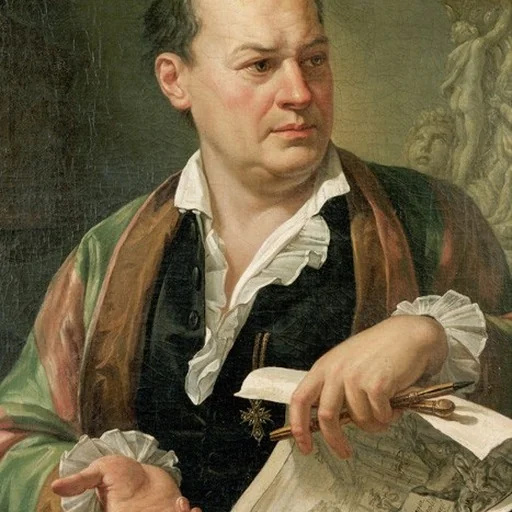
Giovanni Battista (or Giambattista) Piranesi (Italian pronunciation: ; also known as simply Piranesi; 4 October 1720 – 9 November 1778) was an Italian classical archaeologist, architect, and artist, famous for his…

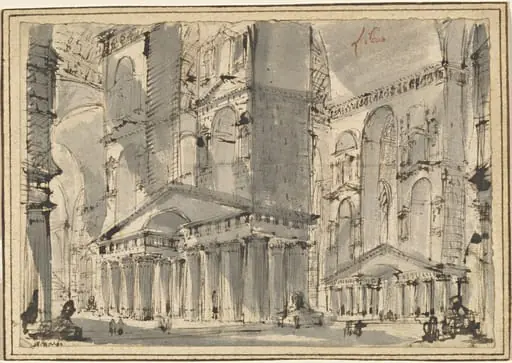
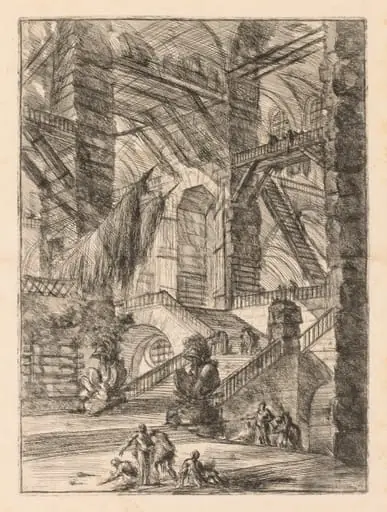 The Prisons: A Vast Interior with Trophies
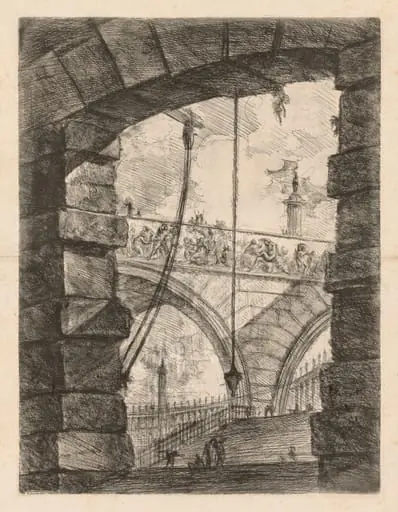 The Prisons: A Lofty Arch with a Frieze
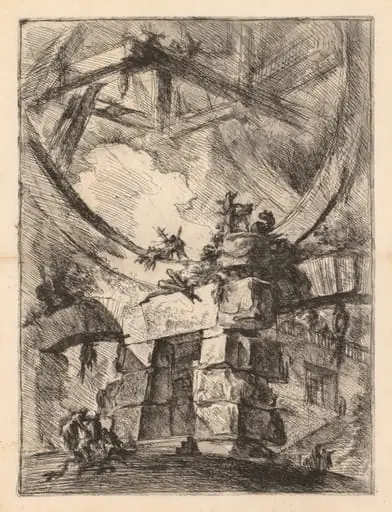 The Prisons: A Prison Door
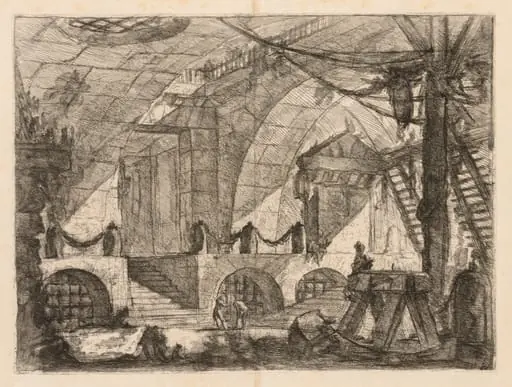 The Prisons: An Arched Chamber with Posts and Chains
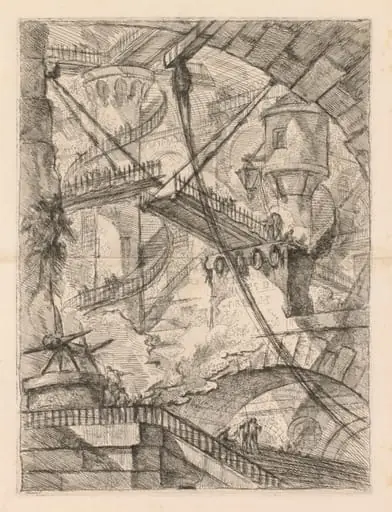 The Prisons: An Immense Interior with a Drawbridge
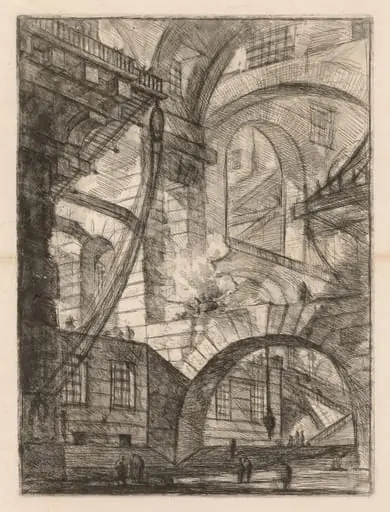 The Prisons: A Perspective of Arches with a Smoking Fire
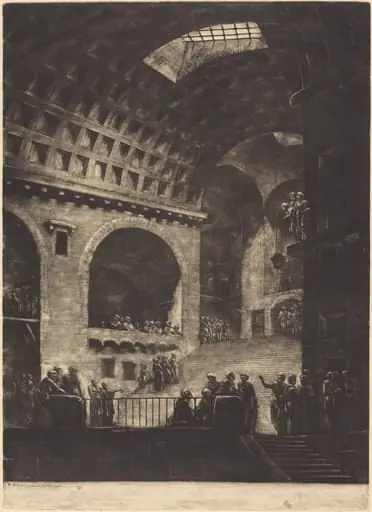 View of a Prison
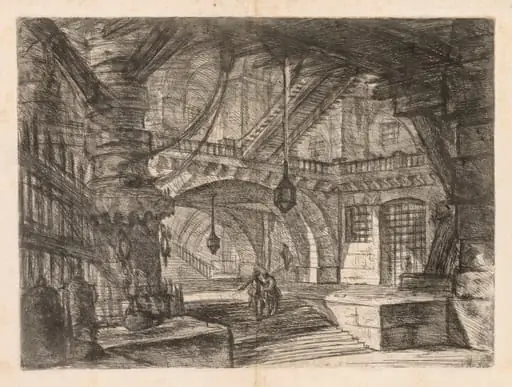 The Prisons: A Wide Hall with Lanterns
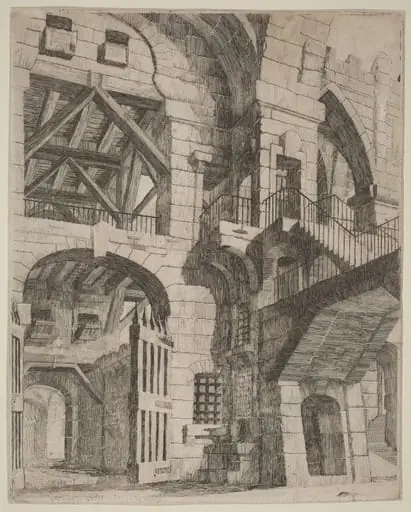 An Imaginary Prison
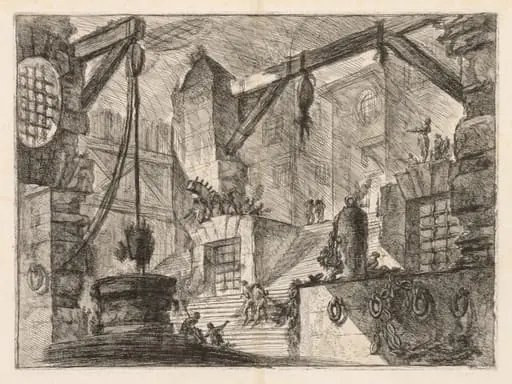 The Prisons: Colonnaded Interior with a Broad Stair
 Roman Prison