Artwork
An Imaginary Prison
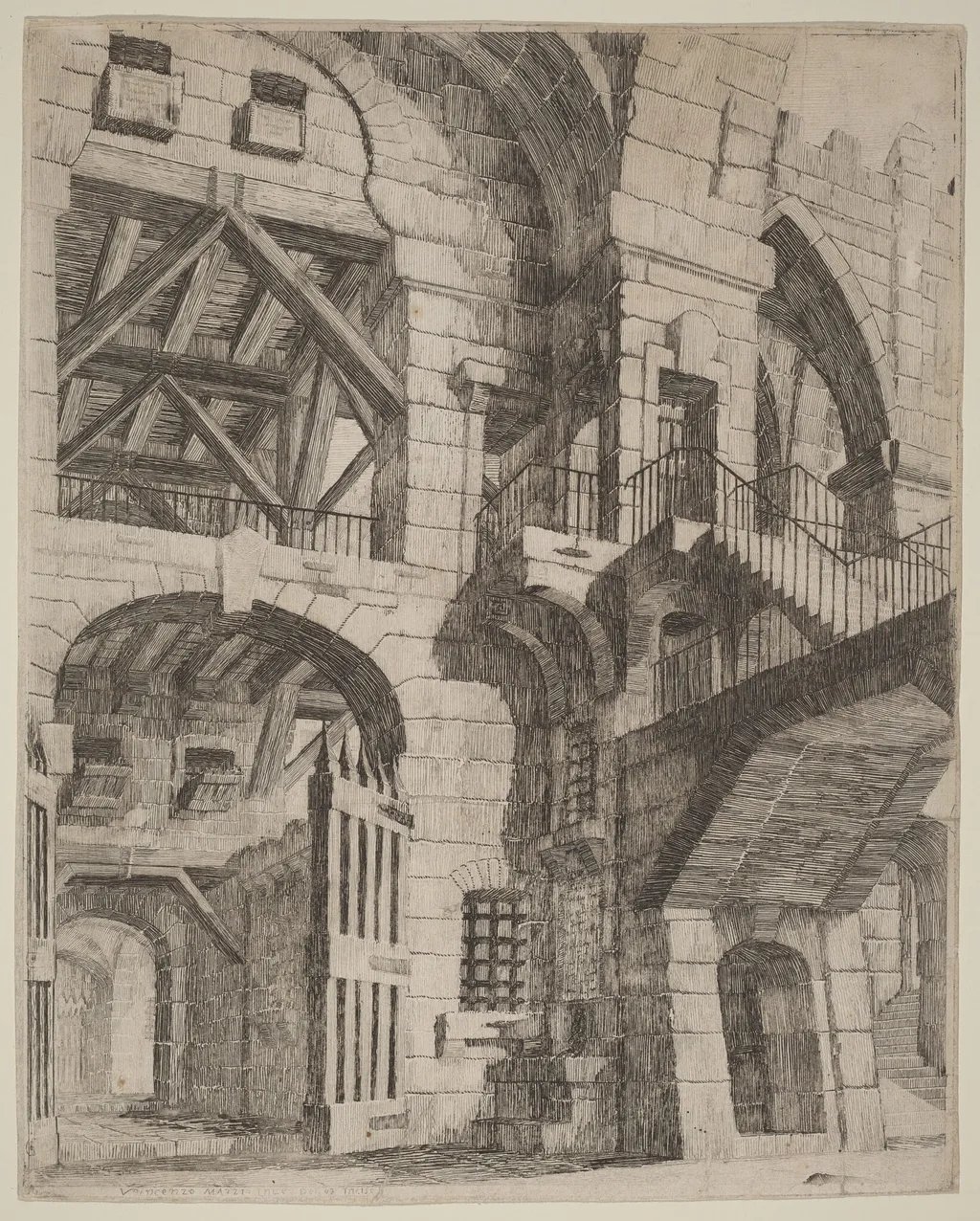
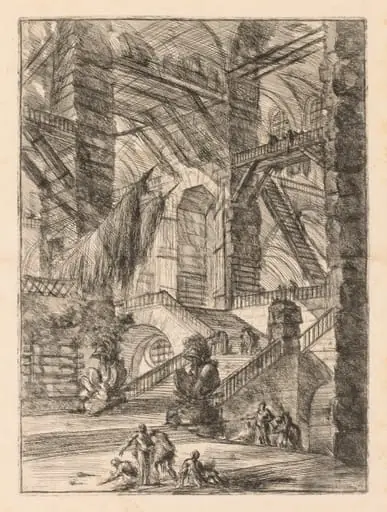
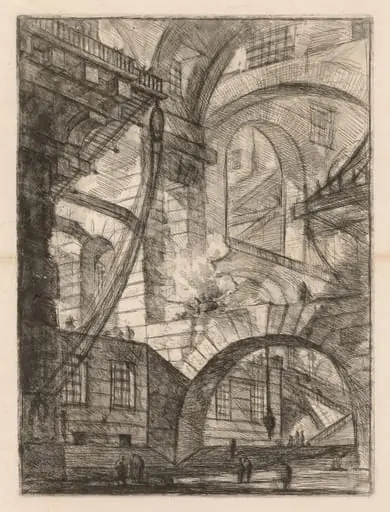
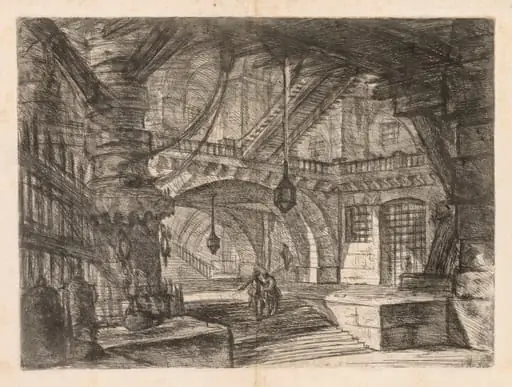
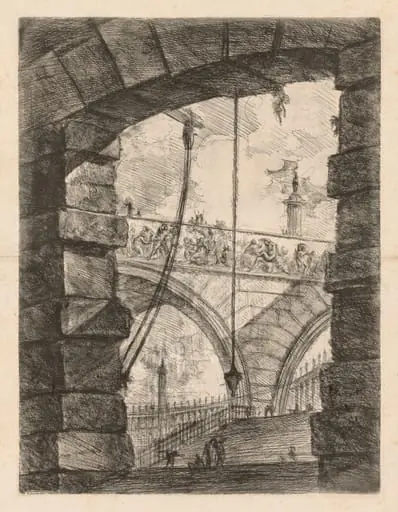
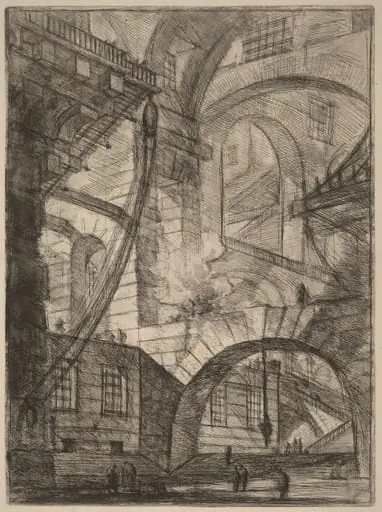
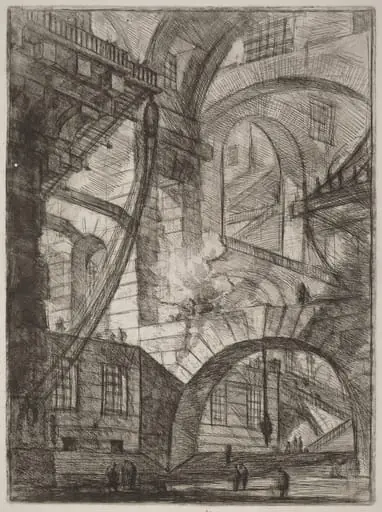
An Imaginary Prison is an ink print by the Baroque artist Vincenzo Mazzi. It dates from 1759 and is held in the collection of the National Gallery of Art.
About this work
Overview
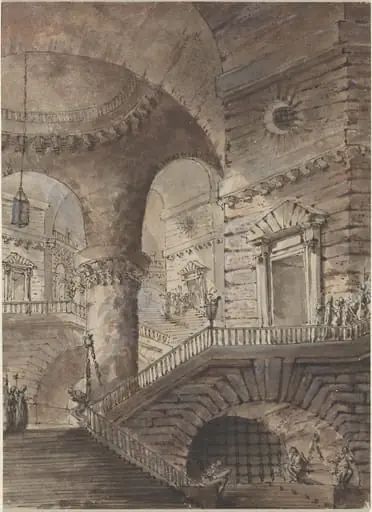
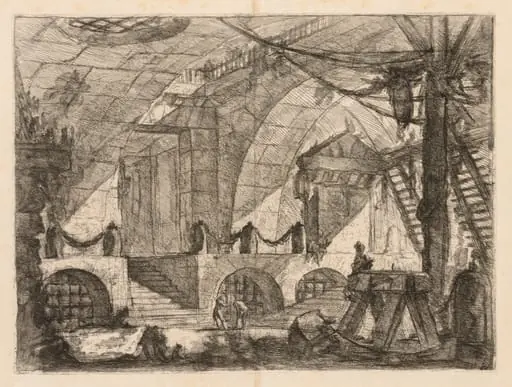
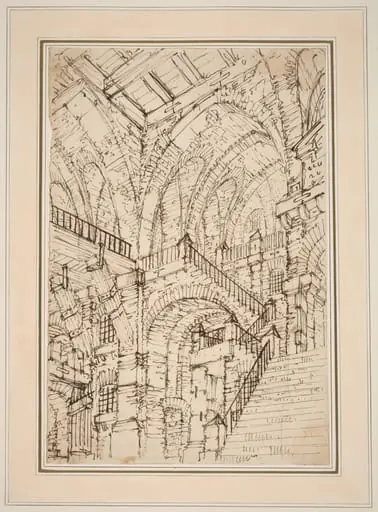
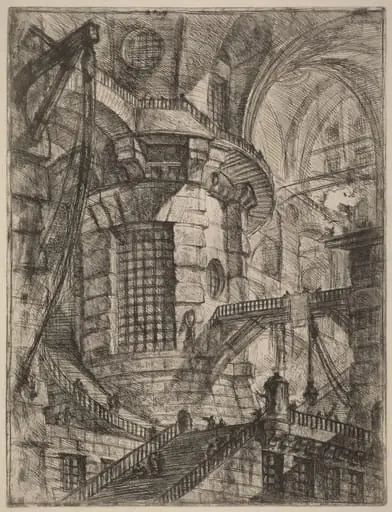
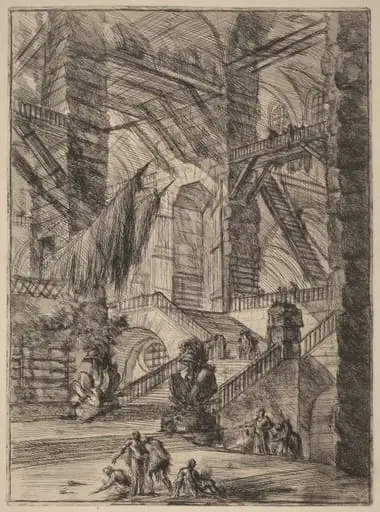
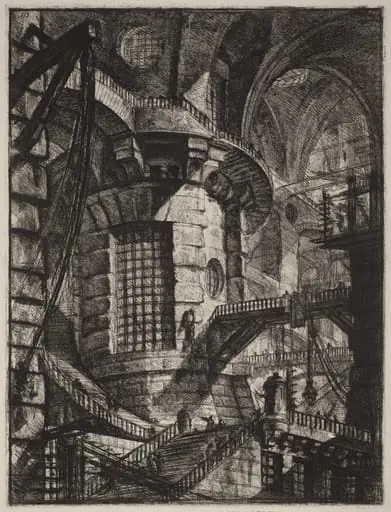
Vincenzo Mazzi’s 1759 etching, titled An Imaginary Prison, presents a meticulously rendered architectural fantasy. Executed on laid paper, the print depicts a massive stone complex of arches, stairways, railings and balconies arranged on several tiers, inviting the viewer to explore its intricate spatial organization.
Subject & Meaning
The composition imagines a monumental penitentiary, its towering blocks and layered passages suggesting both confinement and awe. While the work does not reference a specific real structure, the exaggerated scale and elaborate detailing evoke themes of authority, order, and the psychological weight of imprisonment.
Technique & Style
Mazzi employs bold, precise lines and graduated shading to model the stone surfaces, creating a convincing sense of depth and texture. The use of strong chiaroscuro and careful line work aligns the piece with Baroque sensibilities, emphasizing drama and spatial complexity within the print medium.
History & Provenance
Created in the mid‑18th century, An Imaginary Prison is an example of Mazzi’s printmaking during the late Baroque period. The etching remains documented as part of his oeuvre, though specific ownership records beyond its original publication are limited.
Own this work as a print
Artist & collection