Artwork
The Prisons: An Architectural Medly, with a Man on the Rock in the Foreground
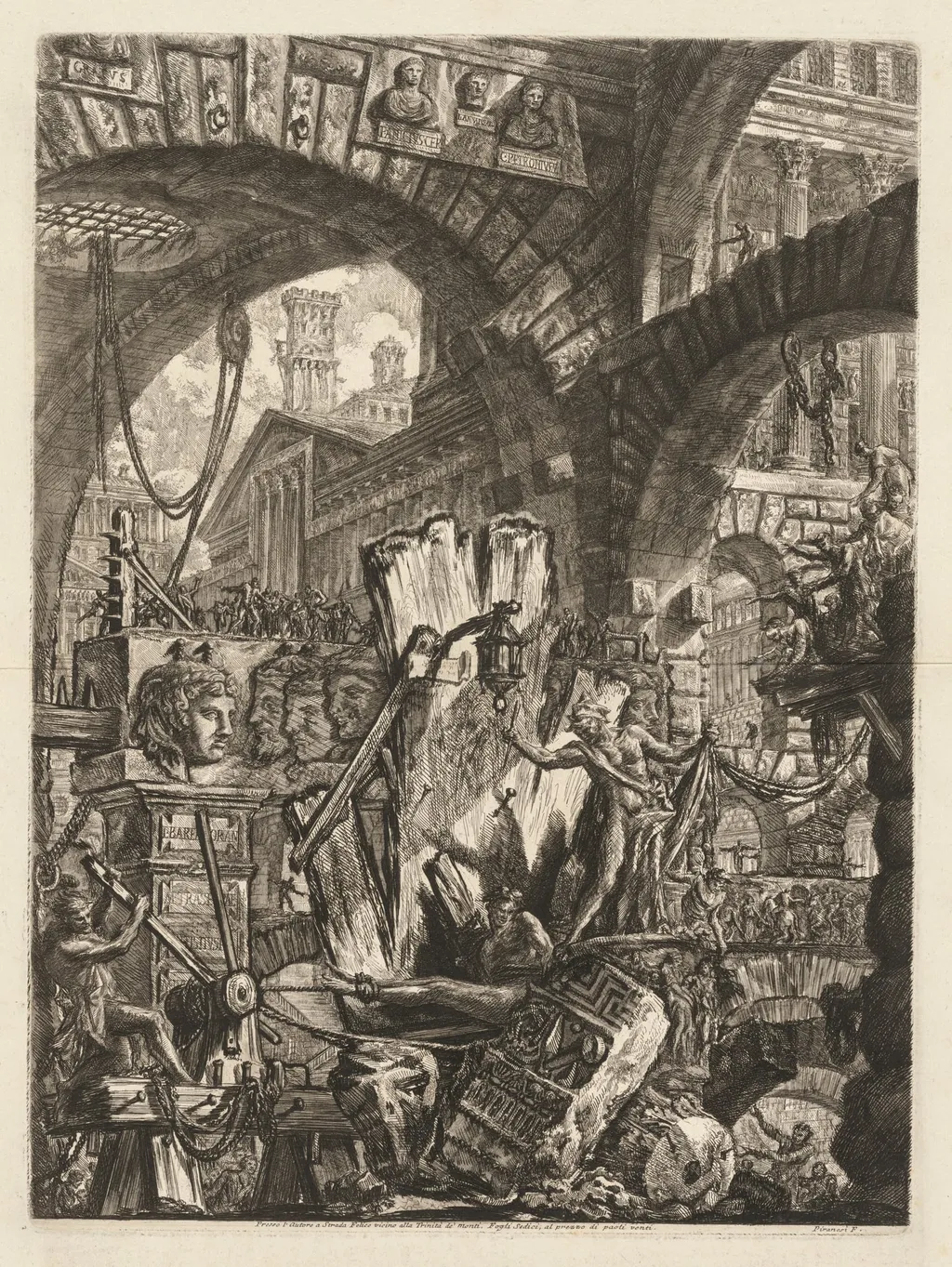
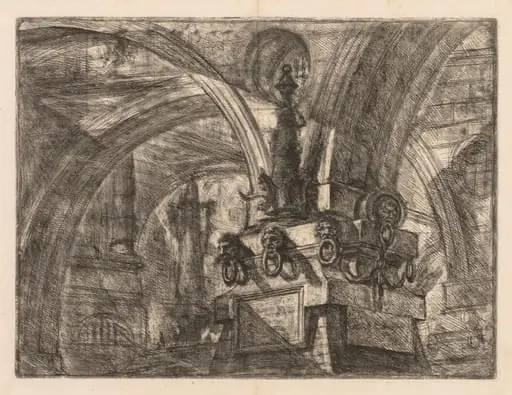
The Prisons: An Architectural Medly, with a Man on the Rock in the Foreground is a print by the Baroque artist Giovanni Battista Piranesi. It dates from 1748 and is held in the collection of the Cleveland Museum of Art.
About this work
Overview
The scene is rendered in etching and engraving, emphasizing scale and spatial complexity rather than literal representation.
Created in 1748 by Giovanni Battista Piranesi, this print belongs to his series known as Le Carceri d'Invenzione. It presents a fantastical architectural landscape, blending real and imagined structures into a labyrinthine environment. The scene is rendered in etching and engraving, emphasizing scale and spatial complexity rather than literal representation. The work is part of the collection at The Cleveland Museum of Art.
Subject & Meaning
A solitary figure sits on a rocky outcrop, dwarfed by towering, labyrinthine architecture. The man’s small scale underscores the overwhelming power of the built environment, suggesting themes of human insignificance amid monumental ruins. The scene evokes contemplation rather than narrative, inviting reflection on time, power, and the persistence of structure beyond human presence.
Technique & Style
Piranesi employed etching and engraving to achieve intricate detail and dramatic tonal contrast. Deep shadows and sharp highlights, characteristic of chiaroscuro, enhance the illusion of depth and volume. Lines are precise yet dynamic, conveying texture in stone, arches, and scaffolding. The composition uses forced perspective to amplify the sense of vertiginous space, typical of Piranesi’s imaginative reconstructions of antiquity.
History & Provenance
This print was produced during Piranesi’s early years in Rome, when he was developing his reputation through architectural fantasies. It was part of the first edition of Le Carceri, published in 1749. The work entered The Cleveland Museum of Art’s collection through established acquisition channels, likely in the 20th century, as part of a broader interest in 18th-century Italian printmaking.
Context
Piranesi’s Carceri emerged amid a European fascination with ruins and the sublime. While contemporaries documented real antiquities, he invented impossible spaces that merged Roman engineering with Gothic fantasy. These prints responded to Enlightenment inquiries into power and decay, offering visual metaphors for the fragility of civilization and the enduring weight of history.
Legacy
The Carceri series influenced Romantic and Surrealist artists, who saw in Piranesi’s visions a precursor to psychological and dreamlike landscapes. His manipulation of scale and perspective became a reference for architects and illustrators exploring the emotional potential of space. Though not widely known in his lifetime, the series gained lasting recognition as a unique fusion of architectural scholarship and imaginative invention.
Artist & collection
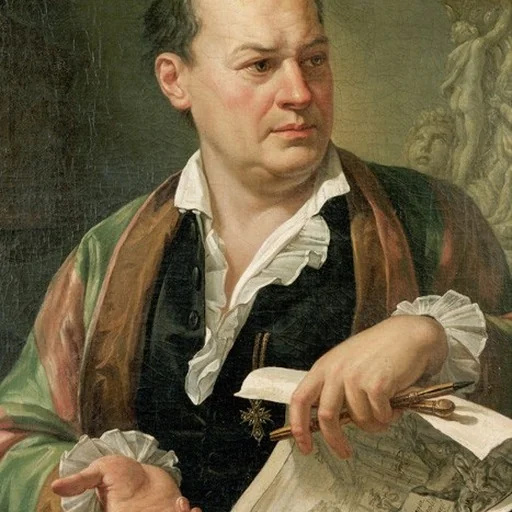
Artist
Giovanni Battista (or Giambattista) Piranesi (Italian pronunciation: ; also known as simply Piranesi; 4 October 1720 – 9 November 1778) was an Italian classical archaeologist, architect, and artist, famous for his…

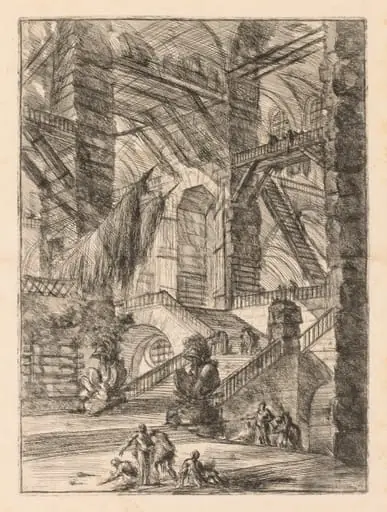 The Prisons: A Vast Interior with Trophies
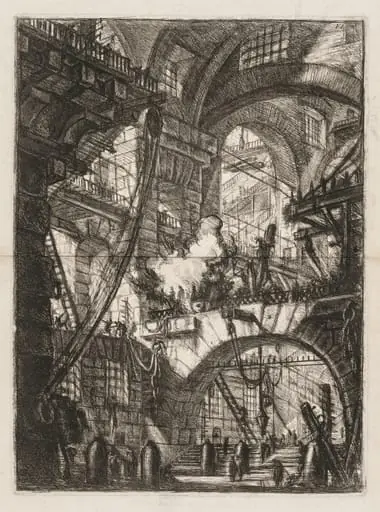 The Prisons: A Perspective of Arches with a Smoking Fire in the Center
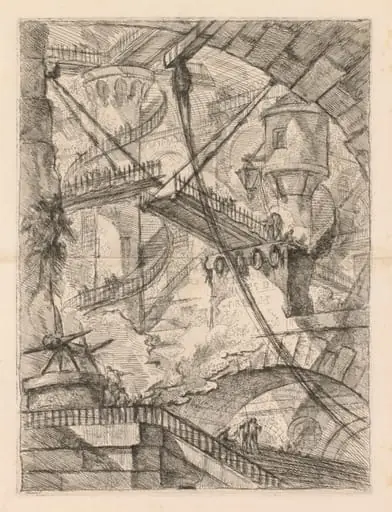 The Prisons: An Immense Interior with a Drawbridge
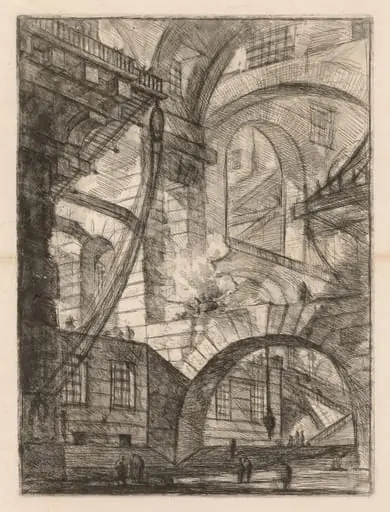 The Prisons: A Perspective of Arches with a Smoking Fire
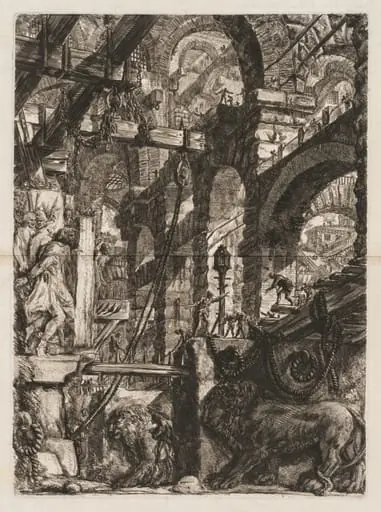 The Prisons: A Perspective of Roman Arches, with Two Lions Carved in Relief on Stone Slabs in the Foreground
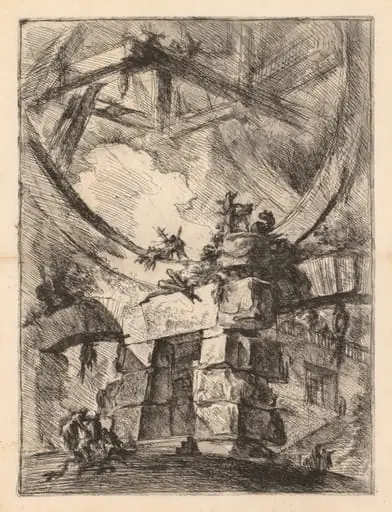 The Prisons: A Prison Door
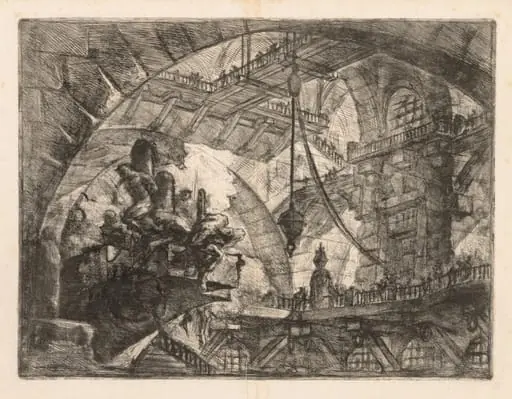 Prisoners on a Projecting Platform, Plate 10
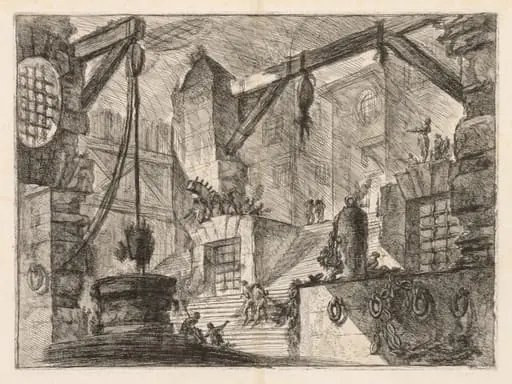 The Prisons: Colonnaded Interior with a Broad Stair
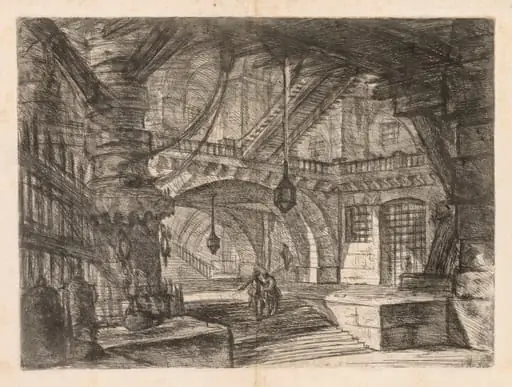 The Prisons: A Wide Hall with Lanterns
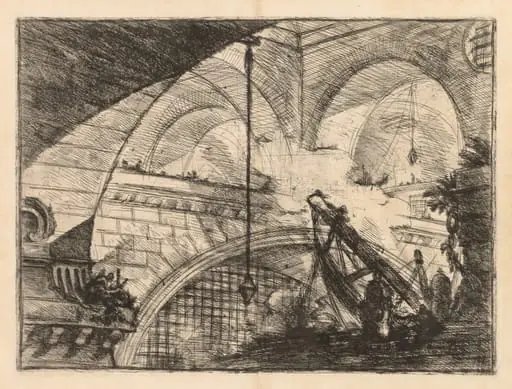 The Prisons: A Series of Galleries with Crane-Like Erection of Beams
 The Prisons: Round Arches Springing from a Square Column