Artwork
Rape of the Sabine Women
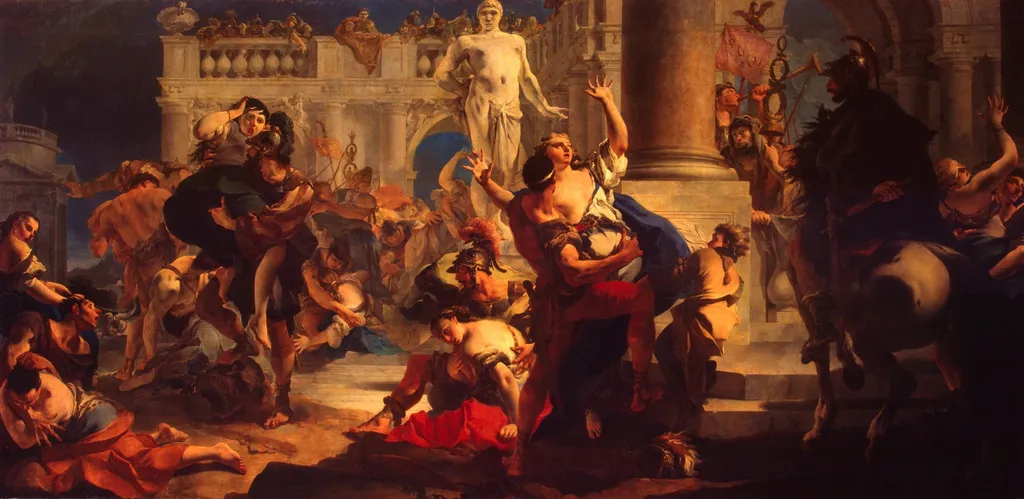
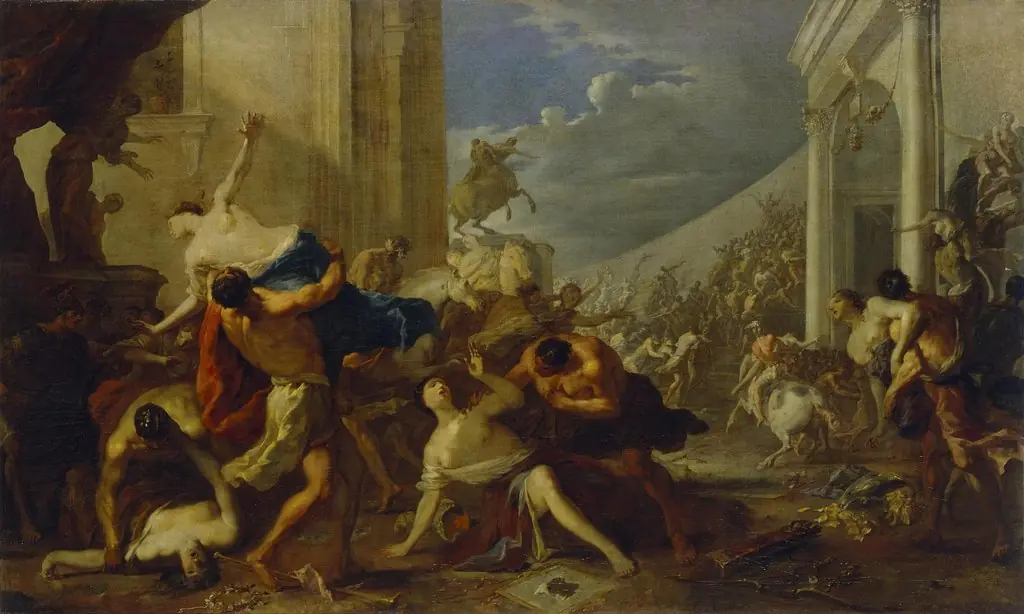
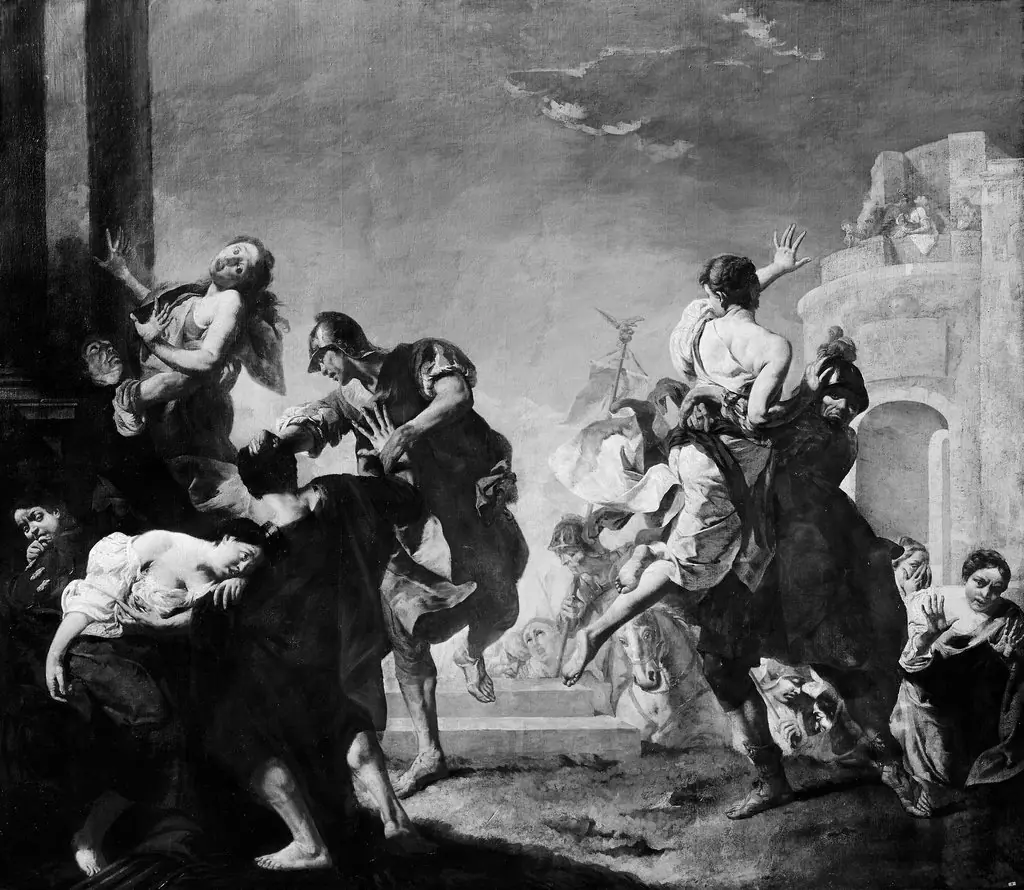
Rape of the Sabine Women is an oil painting by the Rococo painting artist Giovanni Battista Tiepolo. It dates from 1718 and is held in the collection of the Hermitage Museum.
About this work
Overview
Giovanni Battista Tiepolo’s *Rape of the Sabine Women* is an oil painting completed in 1718, depicting a legendary episode from Roman mythology.
Giovanni Battista Tiepolo’s *Rape of the Sabine Women* is an oil painting completed in 1718, depicting a legendary episode from Roman mythology. The work portrays the violent abduction of Sabine women by Roman men, an event said to have occurred shortly after the city’s founding. Executed in Tiepolo’s characteristic dynamic style, the composition captures the turmoil of the scene through swirling figures and dramatic contrasts of light and shadow.
Subject & Meaning
The painting illustrates the mythological mass abduction of Sabine women by Rome’s early male settlers, a narrative intended to explain the integration of the Sabine people into Roman society. Tiepolo’s interpretation emphasizes the chaos and brutality of the event, with figures in various states of struggle, distress, or resistance. The central, serene statue amid the turmoil may suggest the inevitability of fate or the detachment of divine presence from human conflict.
Technique & Style
Tiepolo employs a fluid, energetic brushwork to convey movement and emotion, characteristic of his Rococo approach. The composition relies on stark chiaroscuro, with figures emerging from deep shadows into pools of warm, theatrical light. Architectural elements, such as towering columns and classical statuary, frame the scene, reinforcing the mythological setting while enhancing the sense of scale and drama.
History & Provenance
Painted in 1718, *Rape of the Sabine Women* entered the collection of the State Hermitage Museum, where it remains part of its holdings. Little is documented about its early ownership or commission, though its creation aligns with Tiepolo’s early career, during which he explored historical and mythological themes with increasing ambition. The work’s preservation in a major institution underscores its significance within the artist’s oeuvre.
Context
The painting reflects 18th-century European fascination with classical antiquity, particularly narratives of heroism, conquest, and cultural origin. Tiepolo’s treatment of the Sabine myth aligns with contemporary interpretations that emphasized dramatic storytelling over moralizing judgment. The work also demonstrates the Rococo era’s preference for dynamic, emotionally charged compositions, often drawn from history or mythology to evoke grandeur and spectacle.
Legacy
Tiepolo’s *Rape of the Sabine Women* exemplifies his ability to merge narrative intensity with technical virtuosity, influencing later artists’ approaches to historical subjects. While the painting’s violent theme has prompted modern reconsideration of its depiction, it remains a notable example of 18th-century mythological painting. Its inclusion in the Hermitage’s collection ensures its study as part of the broader tradition of European art engaging with classical antiquity.
Artist & collection

Artist
Giovanni Battista Tiepolo, also known as Giambattista Tiepolo, was an Italian painter and printmaker from the Republic of Venice who painted in the Rococo style, considered an important member of the 18th-century Venetian school.