Artwork
Rape of the Sabine Women
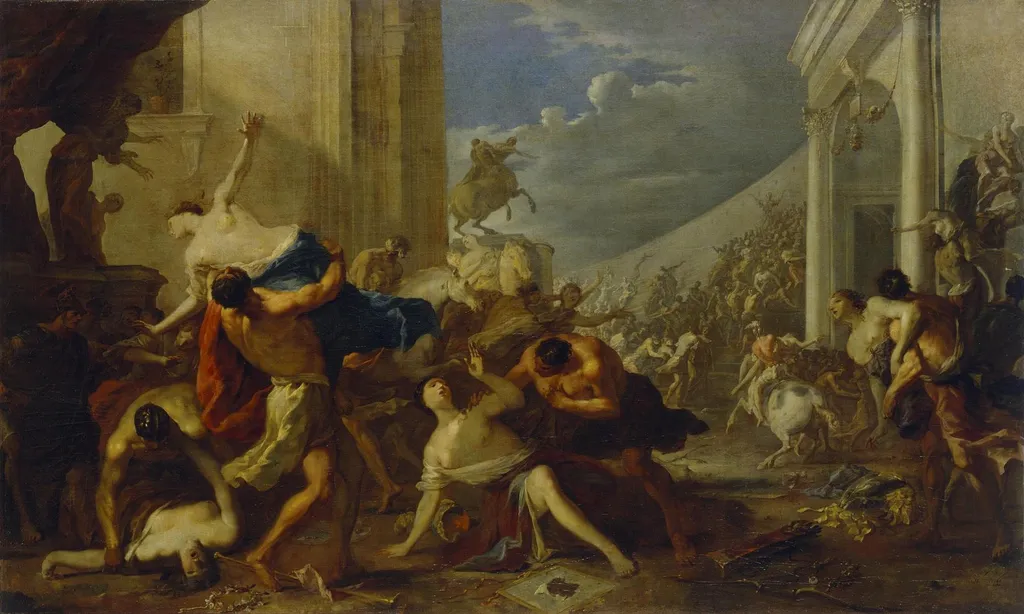
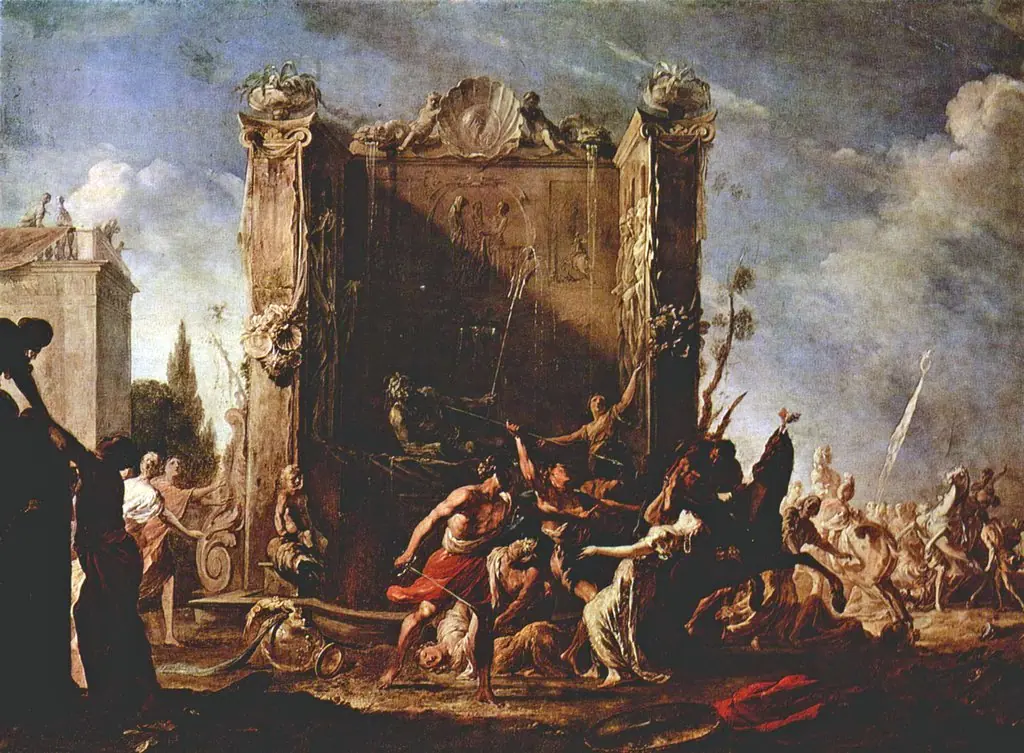
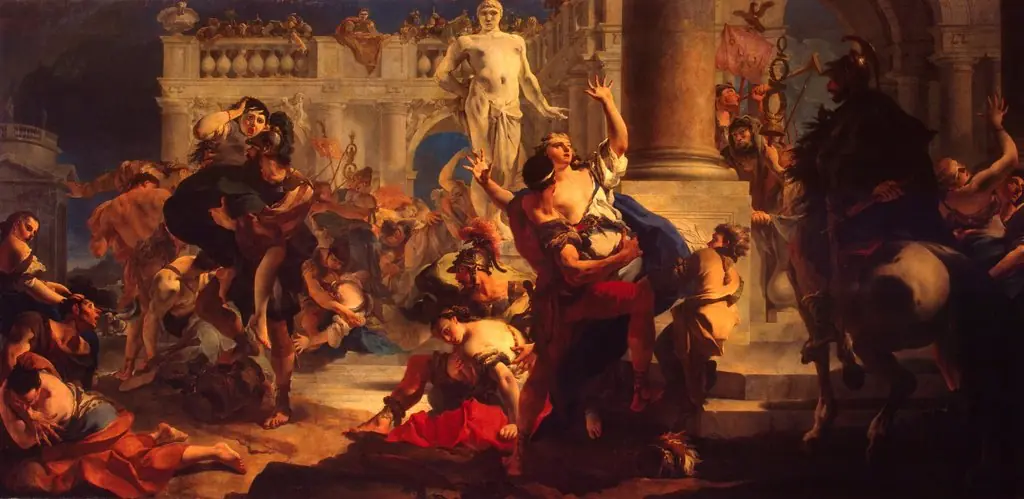
Rape of the Sabine Women is an oil painting by the Early Baroque Italian artist Johann Heinrich Schönfeld. It dates from 1630 and is held in the collection of the Hermitage Museum.
About this work
Overview
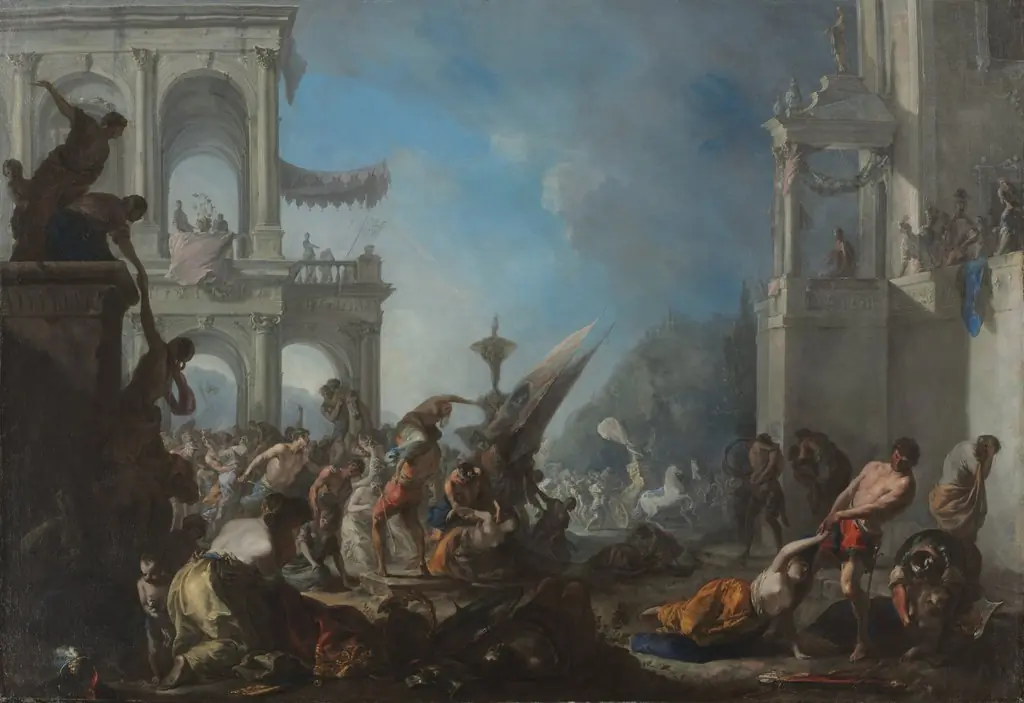
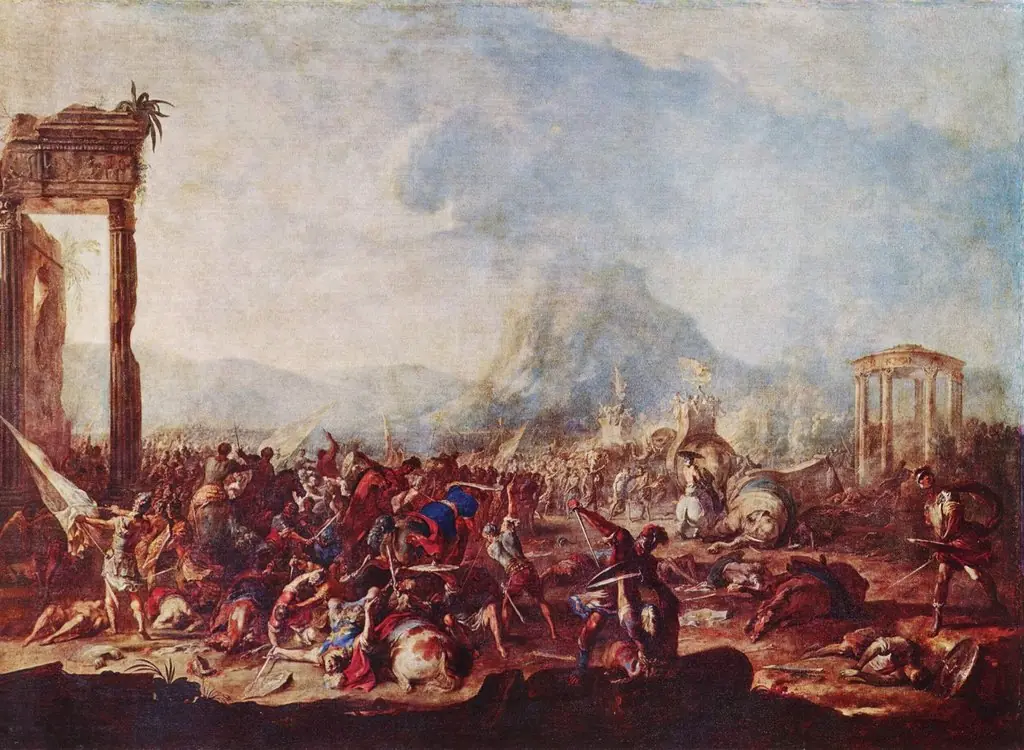
Painted in 1630 by Johann Heinrich Schönfeld, this oil-on-canvas work portrays the mythological event known as the Rape of the Sabine Women. The painting is part of the State Hermitage Museum’s collection and reflects a Baroque interest in intense human drama. Its composition captures a moment of violent upheaval, rendered with heightened emotional tension and dynamic movement.
Subject & Meaning
The scene illustrates the legendary abduction of Sabine women by Roman men, a foundational myth of early Rome.
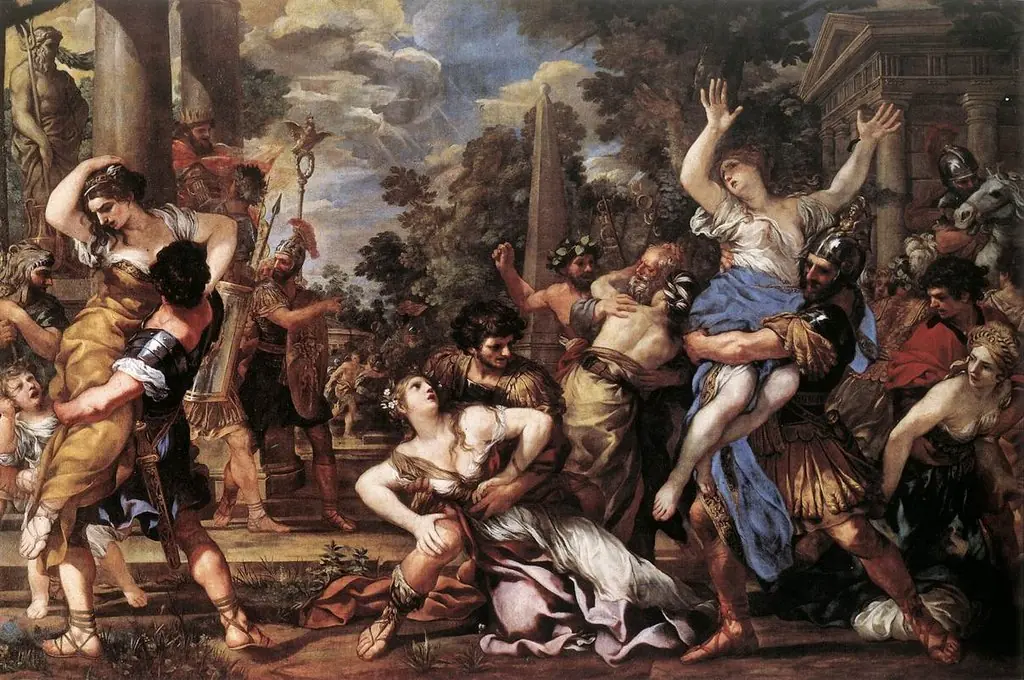
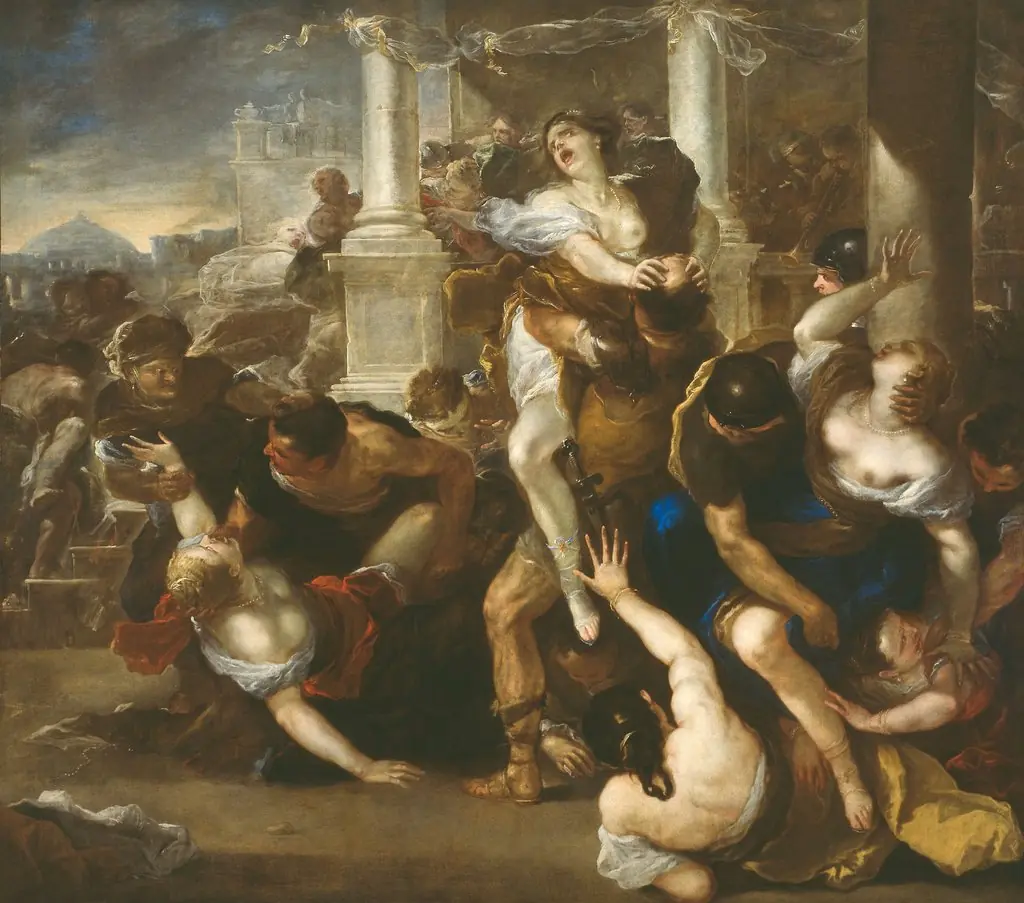
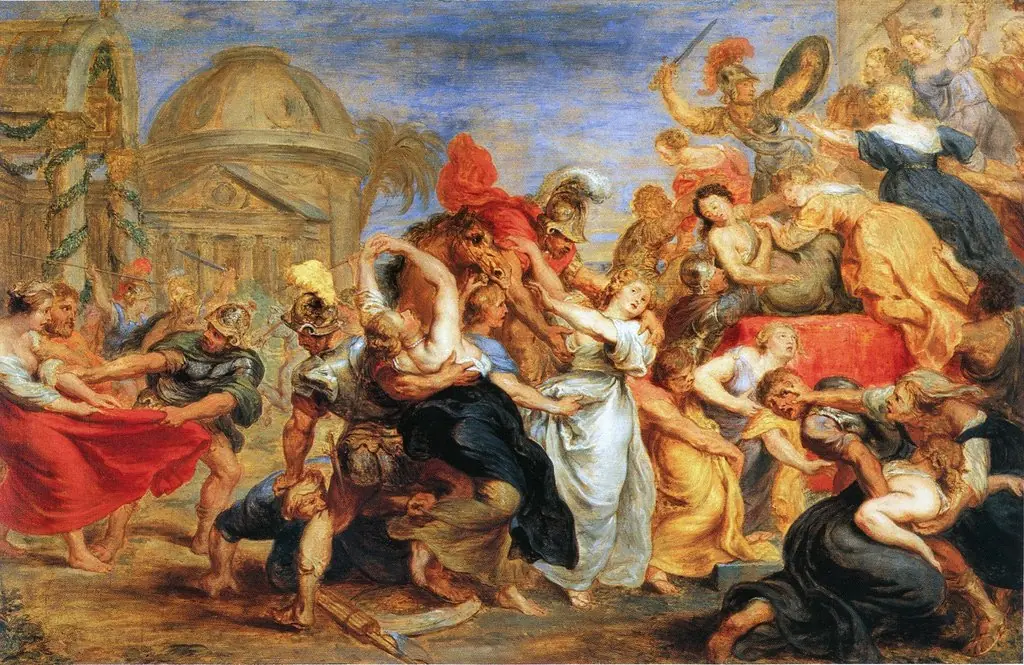
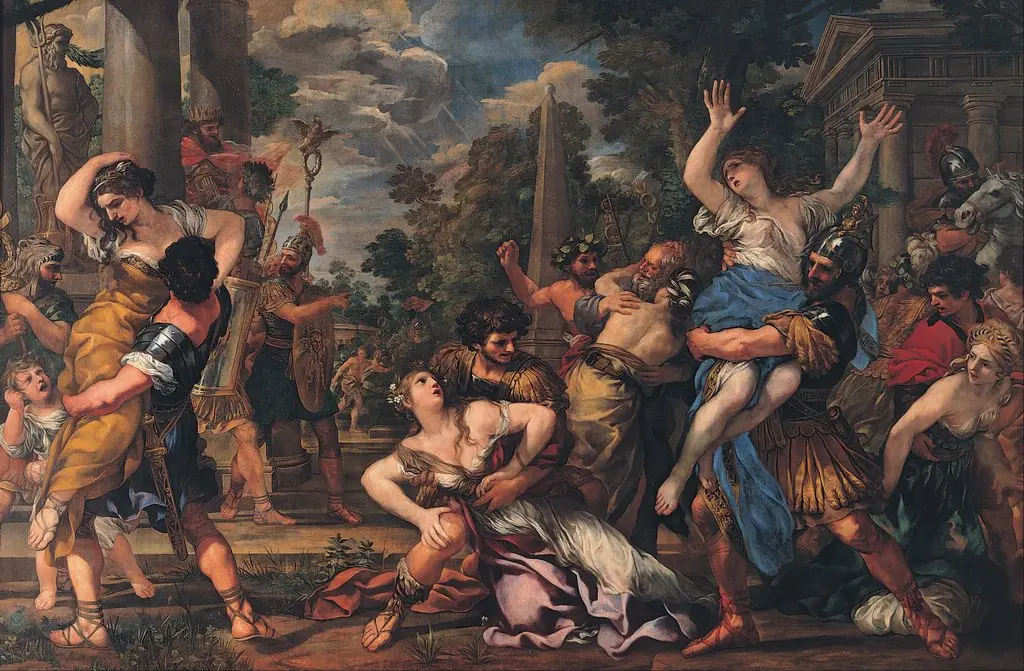
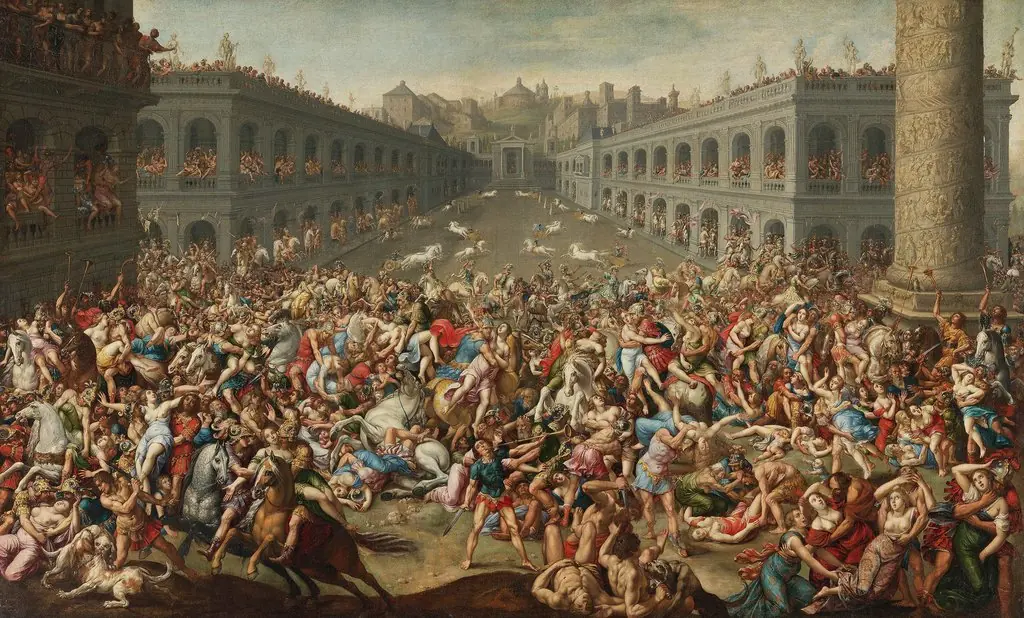
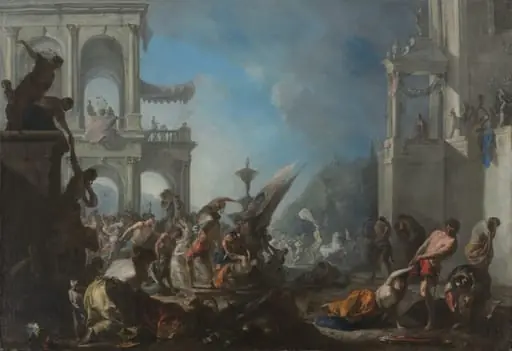
The scene illustrates the legendary abduction of Sabine women by Roman men, a foundational myth of early Rome. Figures are locked in physical struggle: a central man in red drags a woman while another grasps her arm. Surrounding chaos includes naked and disheveled bodies, suggesting disorder and loss of control. The subject was commonly used to explore themes of power, conquest, and the origins of civilization.
Technique & Style
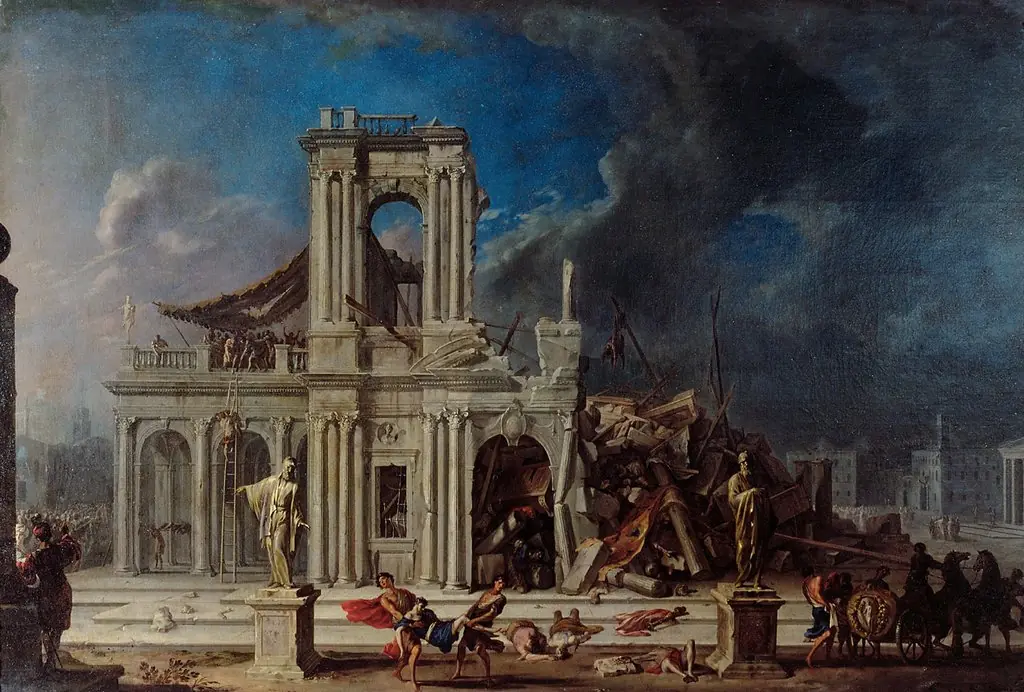
Schönfeld employs chiaroscuro to heighten the drama, using stark contrasts between light and shadow to isolate key figures and actions. Brushwork is energetic, emphasizing the turmoil of the moment. The figures are rendered with muscular tension and exaggerated poses, typical of Baroque sensibilities. Background elements—broken columns and agitated horses—reinforce the sense of collapse and instability.
History & Provenance
The painting entered the Hermitage collection in the 18th or early 19th century, likely through imperial acquisitions of European art. Its attribution to Schönfeld is consistent with stylistic analysis and documentary records from the period. No significant alterations or restorations are documented, preserving its original Baroque character.
Context
Created during the height of Baroque painting in Central Europe, the work aligns with contemporaneous interest in classical narratives rendered with emotional intensity. Schönfeld, influenced by Italian models, adapted mythological subjects to suit Northern European tastes. The painting reflects broader cultural preoccupations with antiquity, violence, and the formation of social order through force.
Legacy
Though not widely reproduced or studied today, the painting remains a representative example of 17th-century German Baroque historiography. It contributes to the visual record of how classical myths were interpreted through the lens of contemporary ideals of heroism, chaos, and divine justice. Its presence in a major museum underscores its enduring role in art-historical discourse.
Artist & collection
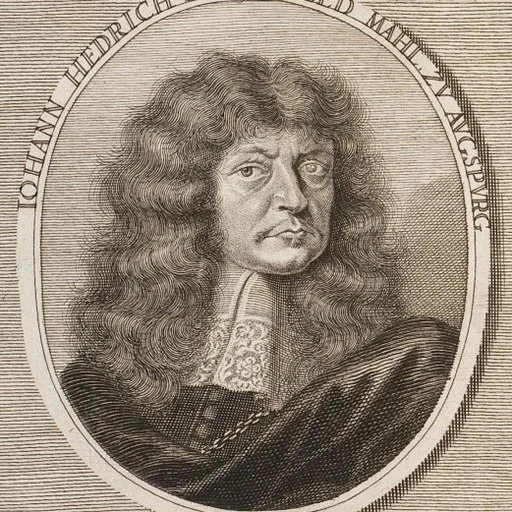
Artist
Johann Heinrich Schönfeld (1609–1684) was an artist, born in Biberach an der Riß.