Artwork
Rape of the Sabines
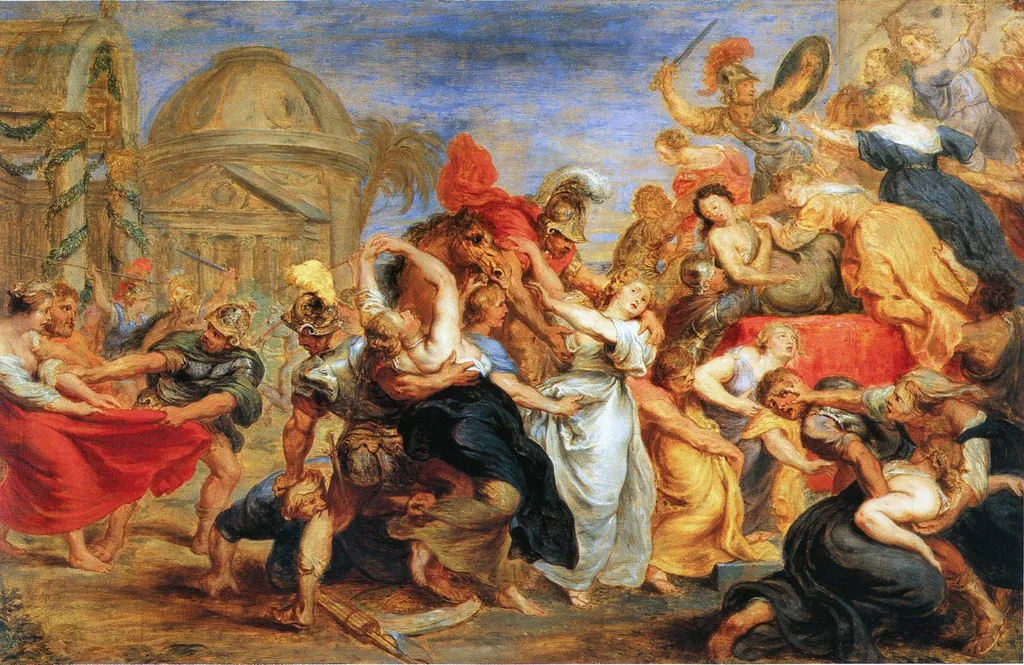
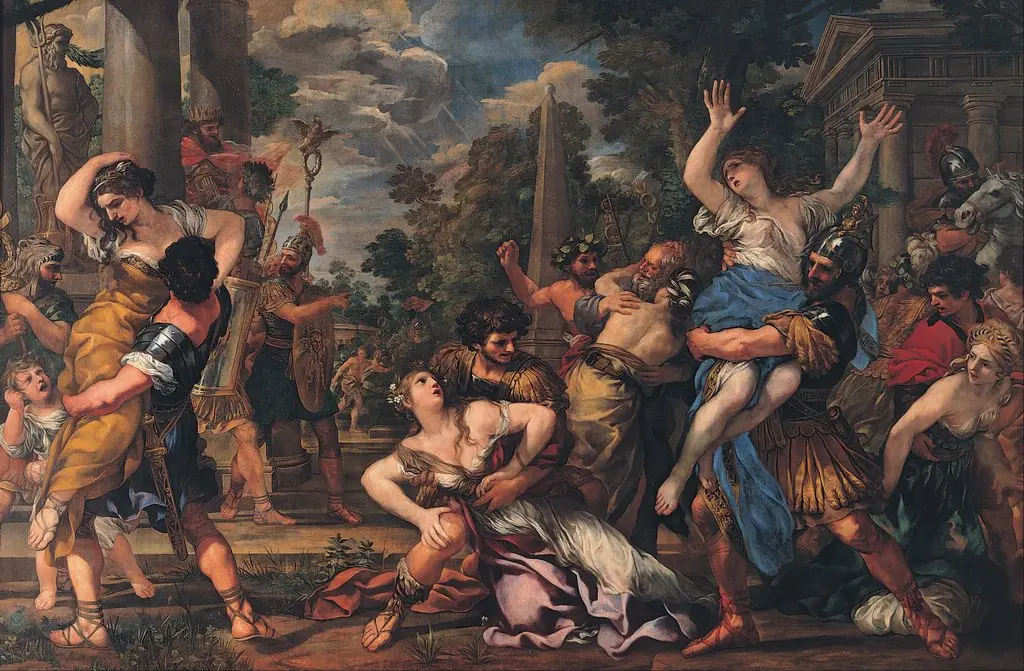
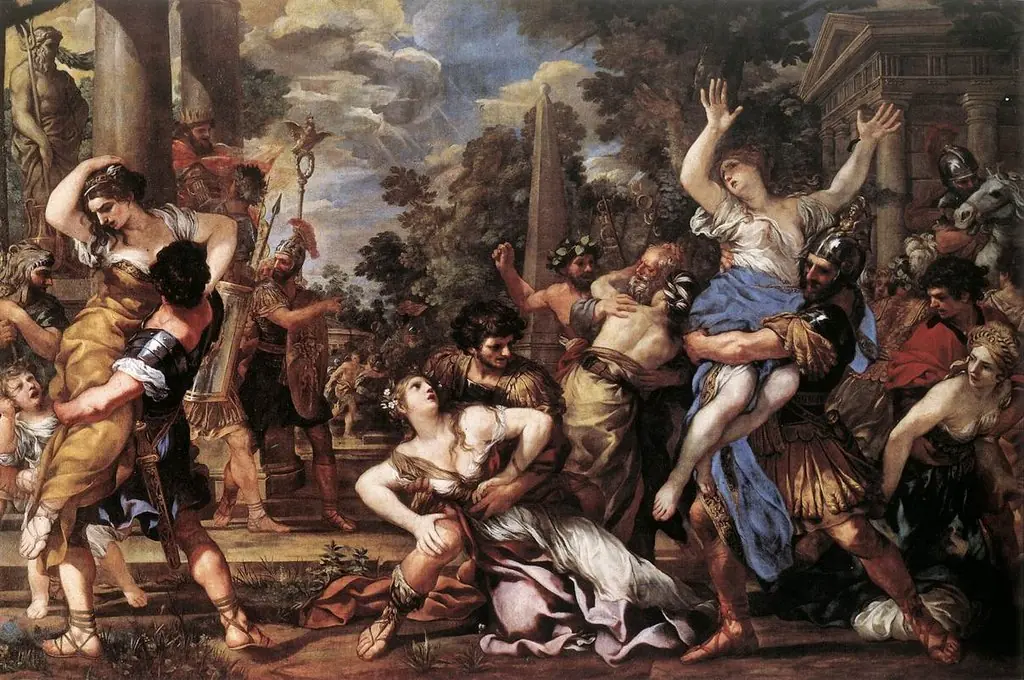
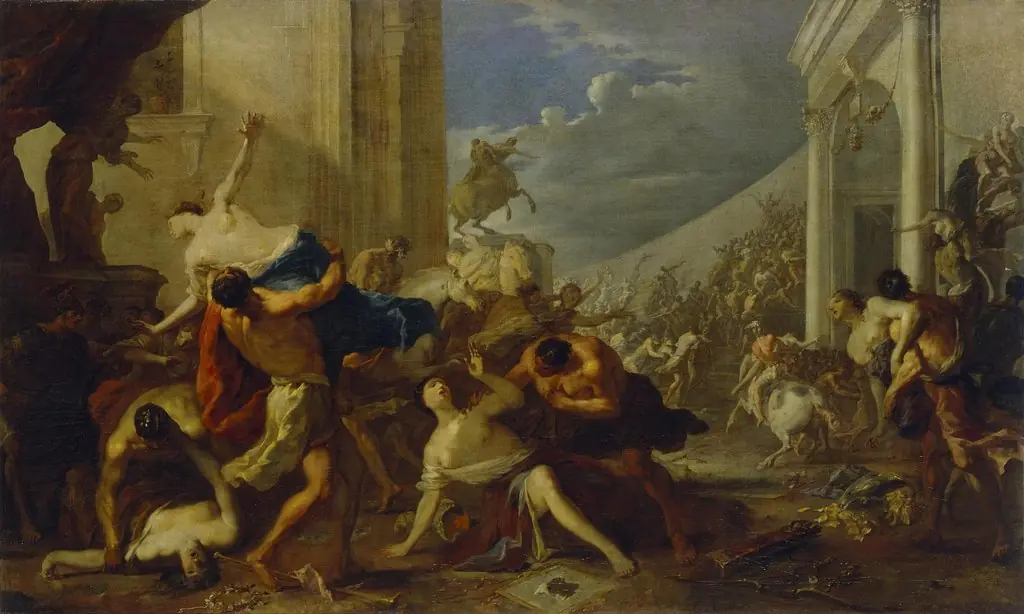
Rape of the Sabines is an unspecified painting by the French Romanticist artist Unknown. It dates from 1850 and is held in the collection of the National Museum of Fine Arts, Argentina. This painting captures a moment of violent upheaval from early Roman legend, rendered with dynamic energy and emotional intensity.
About this work
Overview
The architectural backdrop and clear sky ground the scene in a recognizable, if idealized, ancient setting, reinforcing its historical narrative.
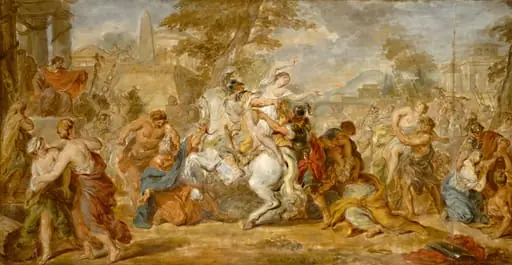
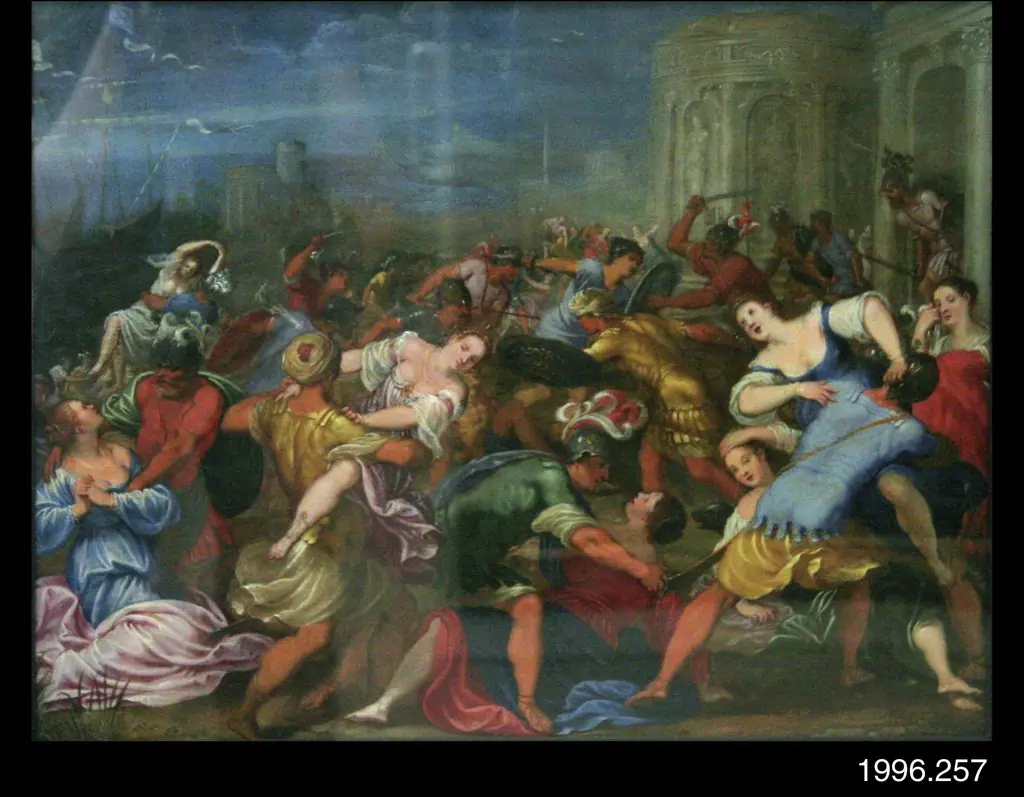
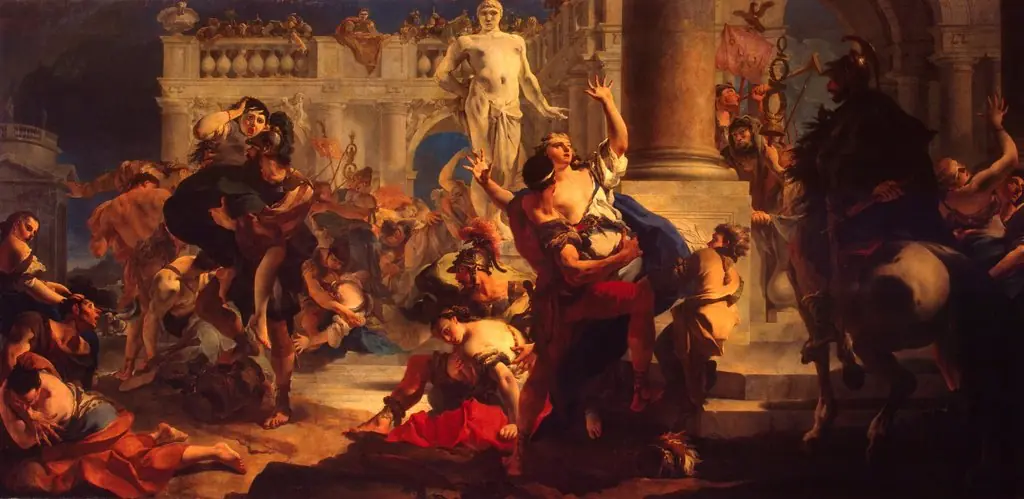
This painting captures a moment of violent upheaval from early Roman legend, rendered with dynamic energy and emotional intensity. A crowded composition of intertwined bodies conveys chaos, while the contrast of light and shadow draws attention to the central struggle. The architectural backdrop and clear sky ground the scene in a recognizable, if idealized, ancient setting, reinforcing its historical narrative.
Subject & Meaning
The scene illustrates the legendary abduction of Sabine women by Roman men, an act intended to secure wives for the fledgling city. The central figures—man, woman, and intervening male—embody the tension between force and resistance. The painting does not glorify the act but presents it as a moment of social rupture, reflecting themes of conquest, survival, and the fragile origins of civilization.
Technique & Style
The artist employs chiaroscuro to model forms with dramatic depth, enhancing the physicality of the struggle. Figures are rendered with muscular tension and fluid motion, typical of Baroque sensibilities. Brushwork is energetic yet controlled, and the spatial arrangement leads the eye through the chaos toward the architectural horizon, balancing movement with compositional order.
History & Provenance
Though the artist is not named in the provided details, the style aligns with early 17th-century Baroque traditions, possibly influenced by Rubens or his circle. The painting likely originated in a European court or private collection, where mythological subjects were favored for their moral and political resonance. Its survival suggests continued interest in classical narratives during the early modern period.
Context
Created during an era when European artists revisited classical antiquity to explore themes of power and order, this work reflects contemporary fascination with Rome’s foundational myths. The depiction of violence as a catalyst for state formation resonated with rulers who saw themselves as heirs to Roman authority, using such imagery to legitimize political ambition.
Legacy
The painting contributes to a broader tradition of Baroque history painting that prioritized emotional impact and physical drama. While not widely known today, it exemplifies how mythological subjects were used to engage with human conflict and social order. Its stylistic choices influenced later artists seeking to convey narrative urgency through movement and contrast.
Artist & collection

Museum
National Museum of Fine Arts, Argentina
Continue through works from the same source collection.
 Domestic Scene
 Giacomo and Cardinal Marco, investing Andrea, Abbot of San Zeno, with his Benefice
 The Nymph of Fontainebleau
 Portrait of a Woman
 Madonna and Child with Saints in the Enclosed Garden
 Venus and Minerva
 Family Group of Four on Sofa
 Wall painting from Room H of the Villa of P. Fannius Synistor at Boscoreale