Artwork
Abduction of the Sabine Women
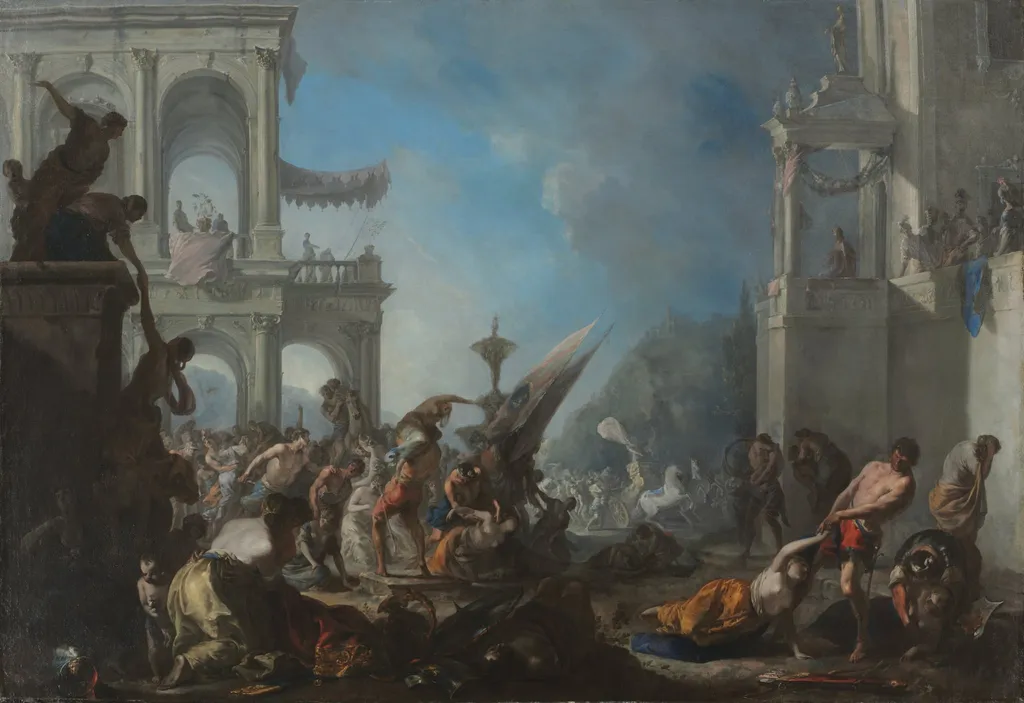
Abduction of the Sabine Women is an unspecified painting by the Baroque artist Johann Heinrich Schönfeld. It dates from 1640 and is held in the collection of the Cleveland Museum of Art.
About this work
The scene mixes real violence with quiet fear—look at the woman in white who’s not fighting back.
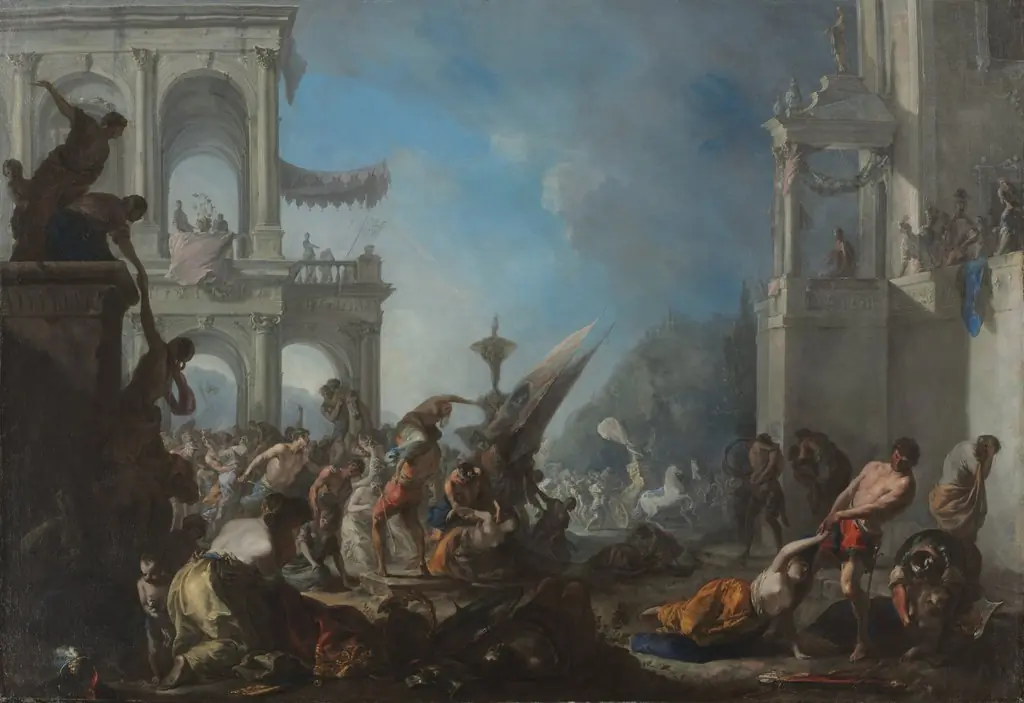
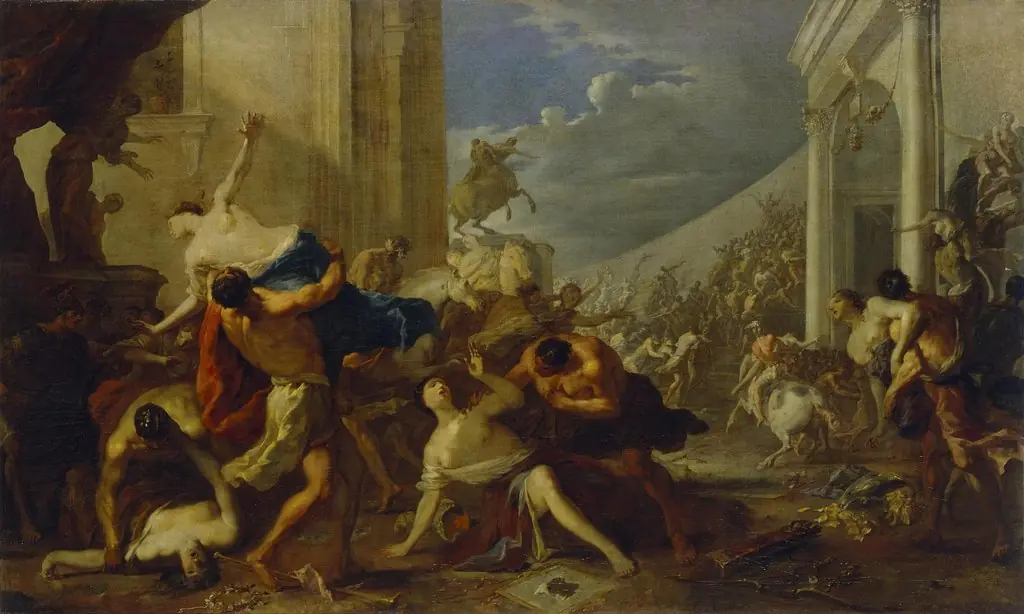
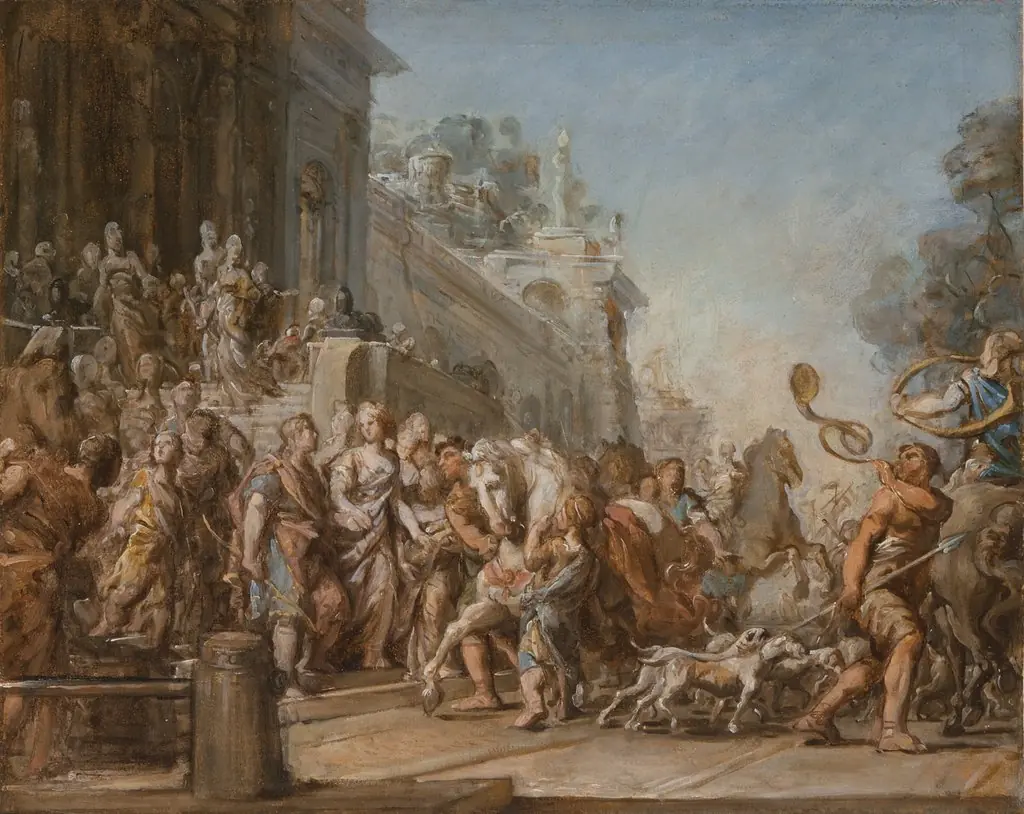
This painting shows Roman soldiers grabbing Sabine women in a dusty Italian square. Men on horseback charge in while women clutch children or plead.
Schönfeld painted this in Naples around 1640. It’s one of four versions he made of this old Roman legend. The scene mixes real violence with quiet fear—look at the woman in white who’s not fighting back.
See how he uses thick oil paint to make the armor and fabric feel heavy. Try searching for Johann Heinrich Schönfeld (German, 1609–1684).
Overview
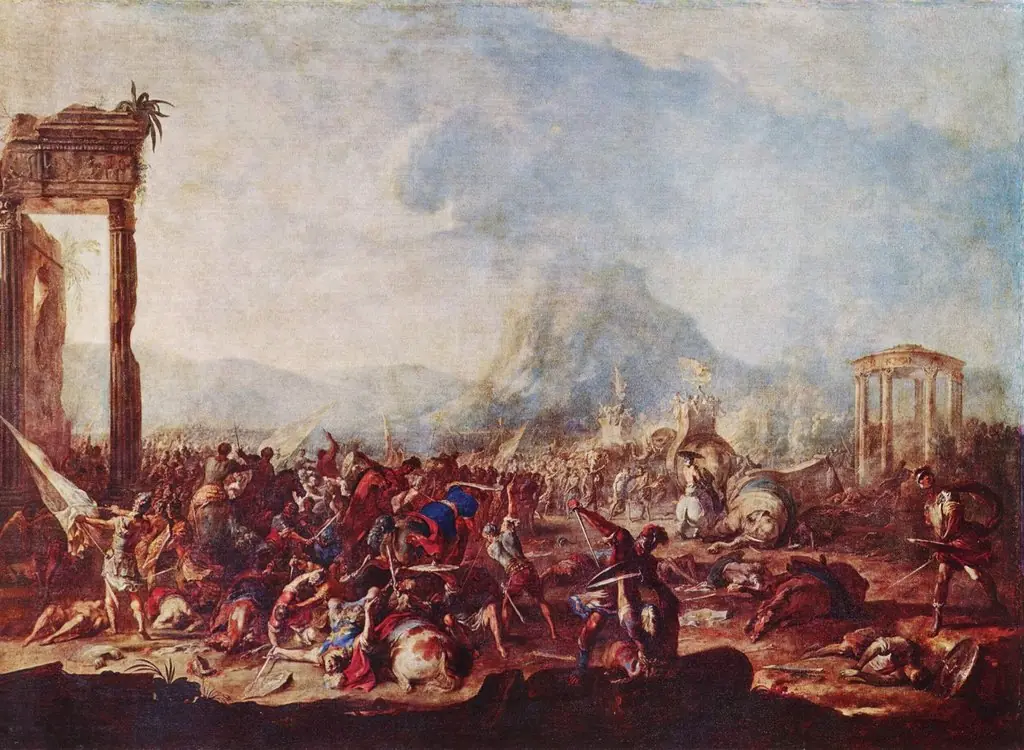
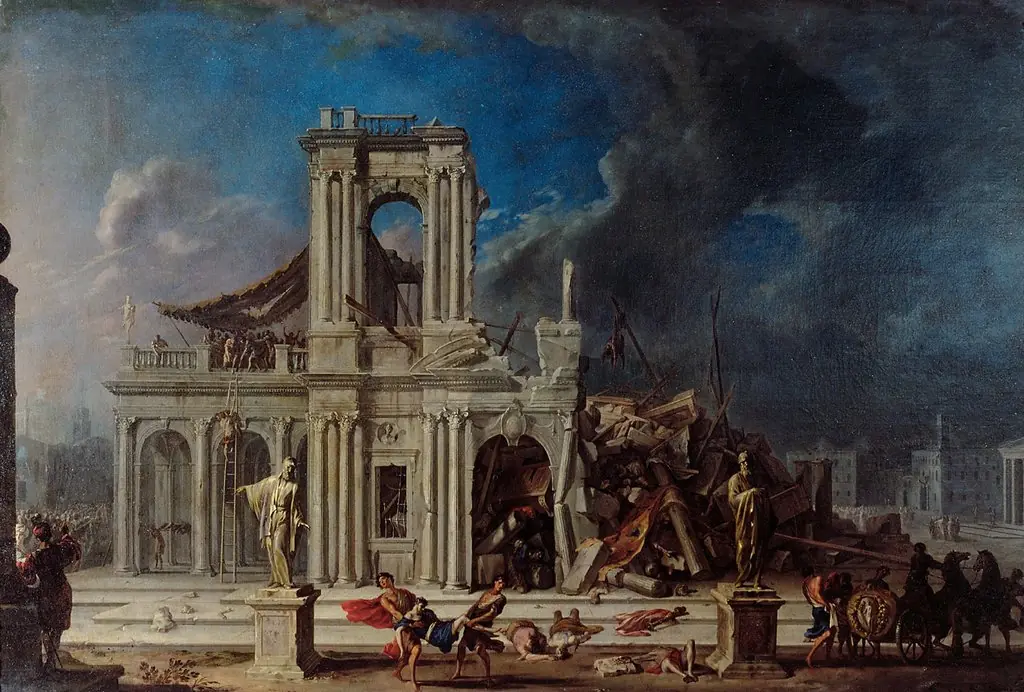
Johann Heinrich Schönfeld’s canvas, executed in Naples around 1640, depicts the legendary Roman seizure of Sabine women. The work belongs to a series of four treatments of the same narrative, two of which reside in the Hermitage Museum and a third remains in a private collection.
Subject & Meaning
The painting illustrates the moment Roman soldiers seize Sabine maidens in a dusty Italian square, while mounted men surge forward. Women clutch children or raise their hands in protest, embodying the tension between force and the women’s later role as peacemakers in the mythic conflict.
Technique & Style
Schönfeld employs a heavy impasto, especially in the rendering of armor and drapery, giving the textures a palpable solidity. The palette of earth tones and muted reds heightens the atmosphere of turmoil, while a stark white figure stands out, emphasizing vulnerability amid the chaos.
History & Provenance
Created during Schönfeld’s Neapolitan period, this version is considered the last of his four Sabine‑women compositions. The other three are split between the Hermitage Museum in St. Petersburg and a private collection, indicating the artist’s sustained interest in the theme throughout his career.
Context
The narrative draws on early Roman lore that recounts the Romans’ abduction of neighboring Sabine women to secure wives, followed by the women’s intervention that halted the ensuing war. In the 17th‑century artistic climate, such classical subjects served both moral instruction and dramatic spectacle.
Own this work as a print
Artist & collection
Artist
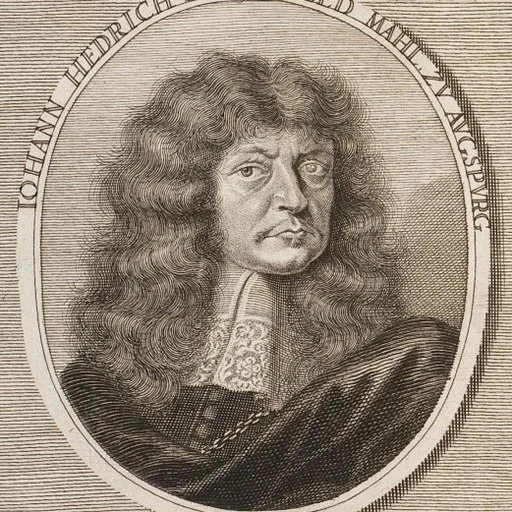
Johann Heinrich Schönfeld (1609–1684) was an artist, born in Biberach an der Riß.