Artwork
El minuet
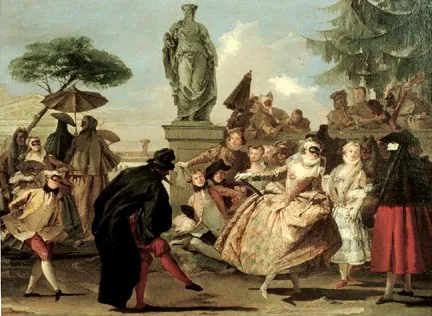
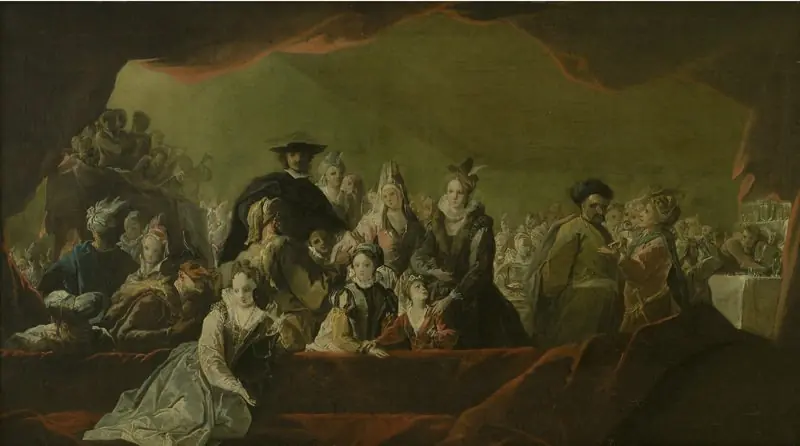
El minuet is an oil painting by the Rococo painting artist Giovanni Domenico Tiepolo. It dates from 1756 and is held in the collection of the Museu Nacional d'Art de Catalunya.
About this work
Overview
It reflects the Rococo aesthetic through its delicate composition and animated figures, distinguishing itself from the grandeur of his father’s work.
Painted in 1756 by Giovanni Domenico Tiepolo, *El minuet* is an oil-on-canvas work that captures a moment of social festivity. It reflects the Rococo aesthetic through its delicate composition and animated figures, distinguishing itself from the grandeur of his father’s work. The painting is part of the permanent collection at the Museu Nacional d'Art de Catalunya, where it contributes to the museum’s representation of 18th-century European genre scenes.
Subject & Meaning
The scene portrays a group of elegantly dressed individuals gathered near a classical statue, engaged in a social dance or performance. The central figures—a man in a black coat and red stockings, and a woman in white—suggest a moment of courtly interaction, possibly a minuet. The setting implies an aristocratic garden party, where movement and gesture convey leisure and refined sociability, typical of mid-18th-century elite culture.
Technique & Style
Tiepolo employs oil paint with fluid brushwork to render textures of fabric, skin, and foliage with subtle precision. Light and shadow are carefully modulated to define form and direct attention, though the contrasts are softer than those in Baroque drama. The composition is asymmetrical and lively, with figures arranged to suggest spontaneous motion, aligning with Rococo’s preference for grace over rigidity.
History & Provenance
Created during Tiepolo’s mature period, the painting likely originated in Venice or its surrounding regions, where the artist was active. It entered the Museu Nacional d'Art de Catalunya’s collection through 19th-century acquisitions, possibly from Spanish noble estates with ties to Italian art. Its presence in Barcelona reflects broader European circulation of Venetian genre painting during the Enlightenment.
Context
In mid-18th-century Europe, genre scenes of aristocratic leisure flourished as expressions of Enlightenment ideals around sociability and refined taste. Tiepolo’s work responds to this trend, drawing from theatrical traditions and the visual language of Venetian painting. Unlike mythological or religious subjects, *El minuet* elevates everyday ritual into art, reflecting shifting cultural priorities in the period.
Legacy
While less celebrated than his father’s monumental frescoes, Giovanni Domenico Tiepolo’s genre works like *El minuet* offer insight into the quieter, more intimate side of Rococo culture. The painting remains a key example of how Venetian artists translated social observation into visual narrative, influencing later genre painters who sought to capture the nuances of human interaction in natural settings.
Artist & collection
Artist
Giovanni Domenico Tiepolo (August 30, 1727 – March 3, 1804) was an Italian painter and printmaker in etching. He was the son of artist Giovanni Battista Tiepolo and elder brother of Lorenzo Baldissera Tiepolo.

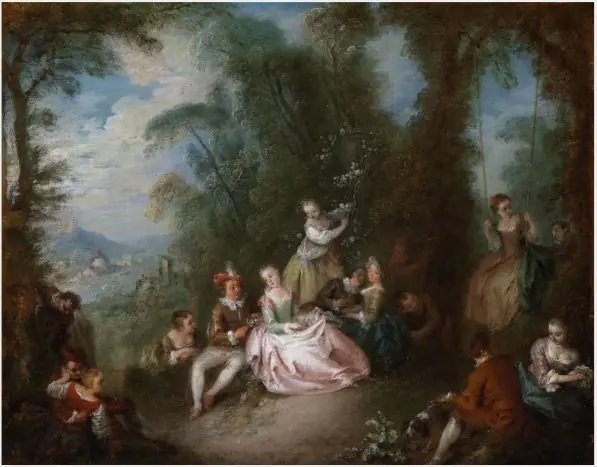 Fête Champêtre
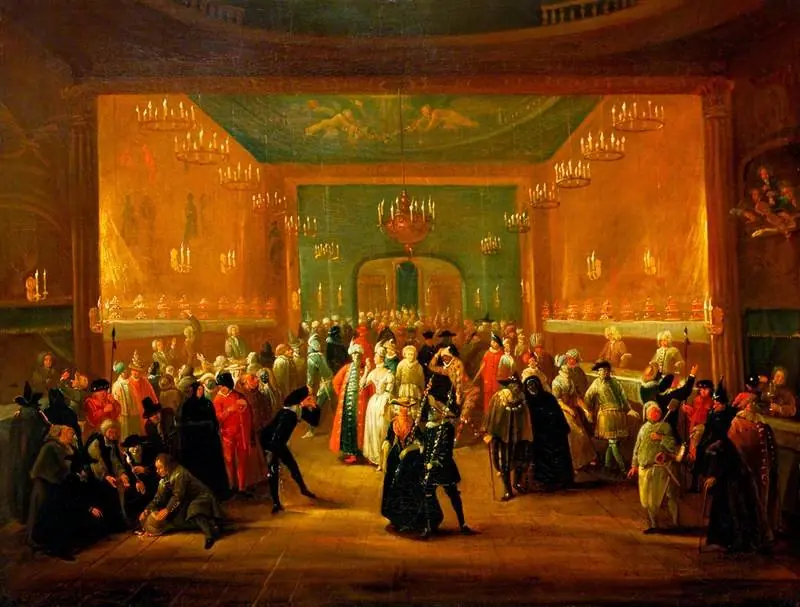 A Masquerade at the King's Theatre, Haymarket
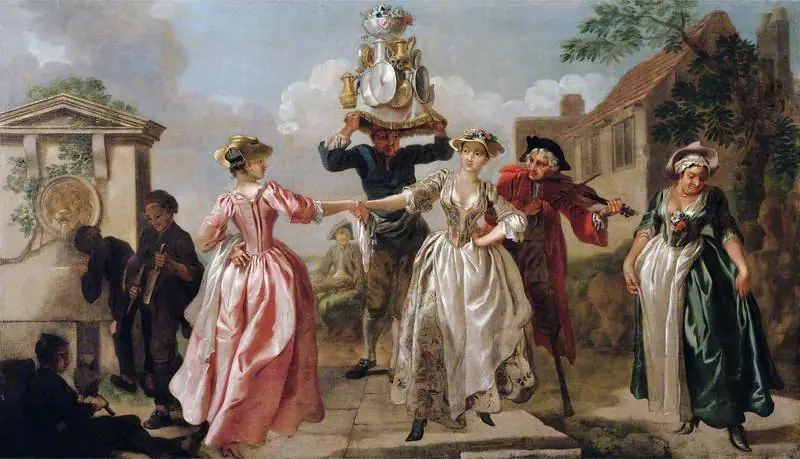 The Milkmaid's Garland (Humours of May Day) (decorative painting for a supper-box at Vauxhall Gardens, London)
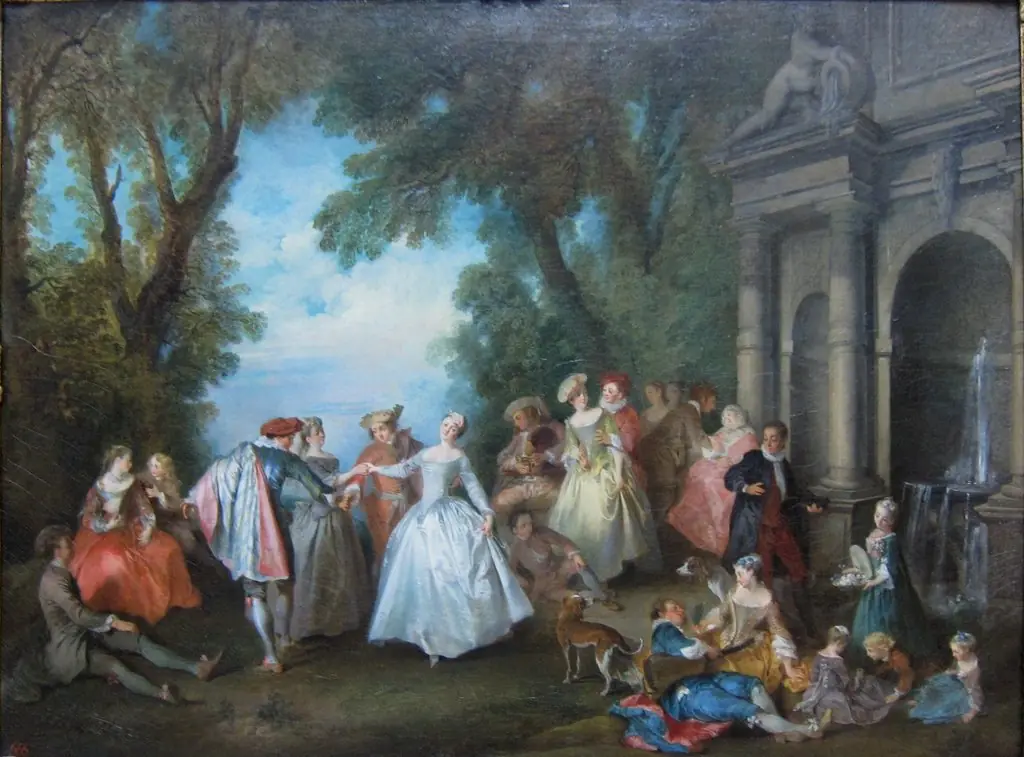 Dance before a Fountain
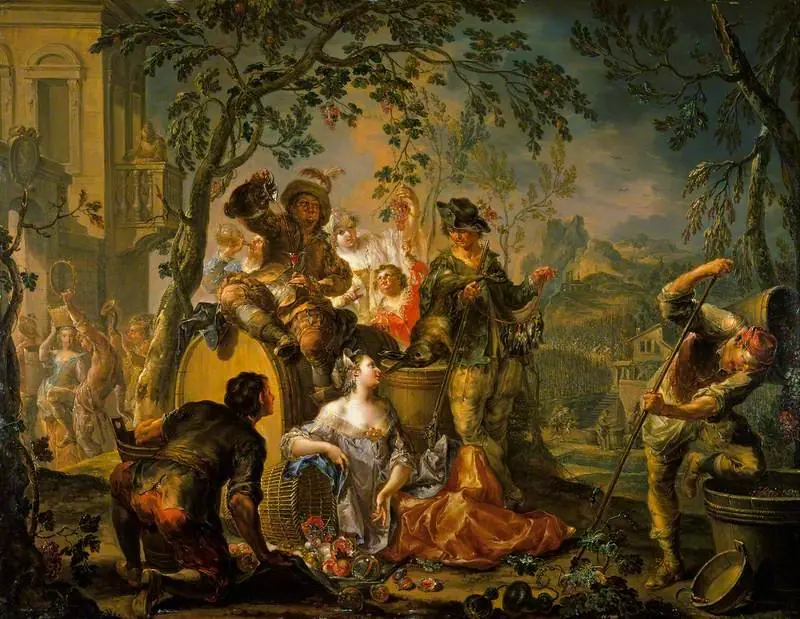 Autumn
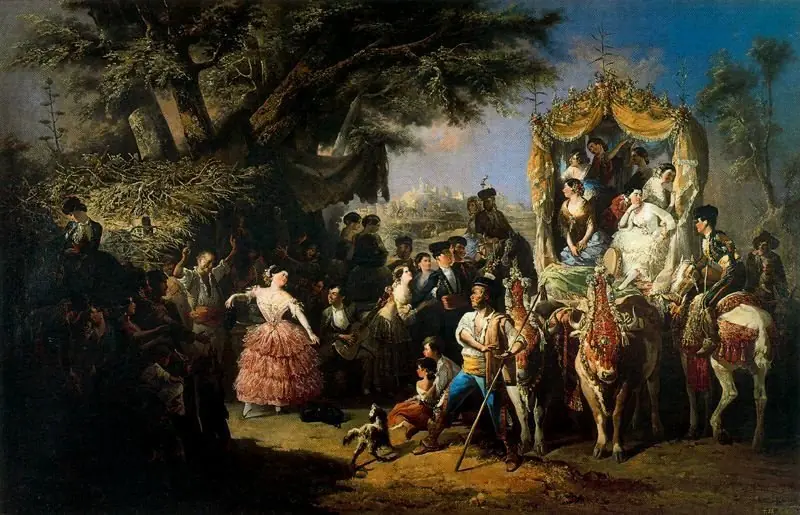 La feria de Santiponce
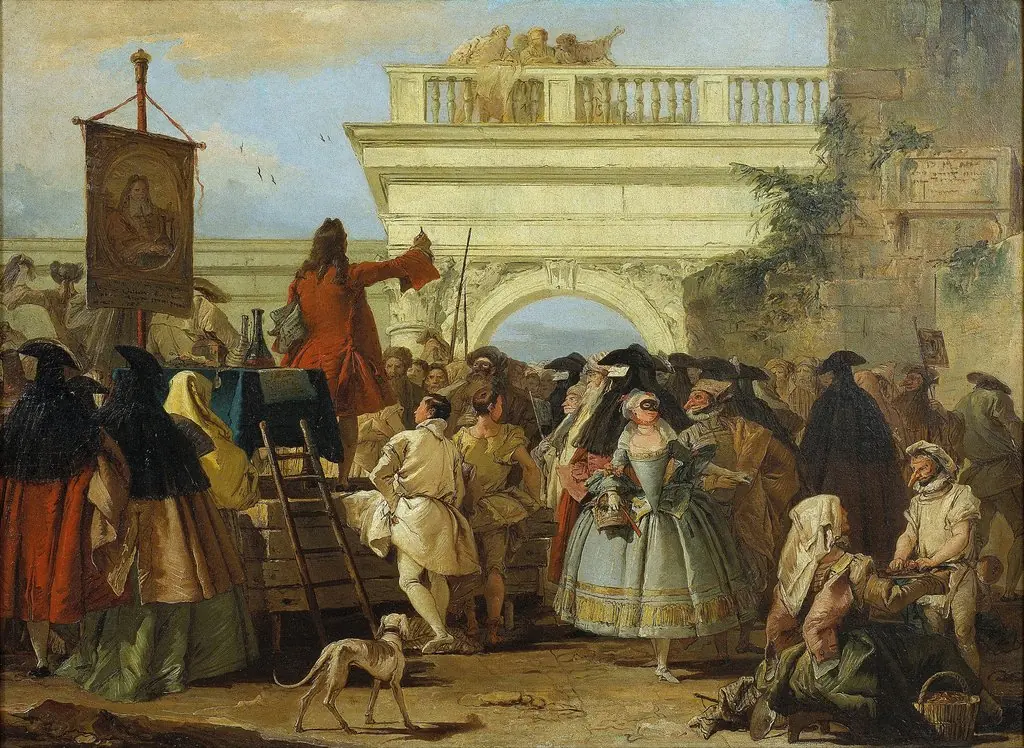 El xarlatà
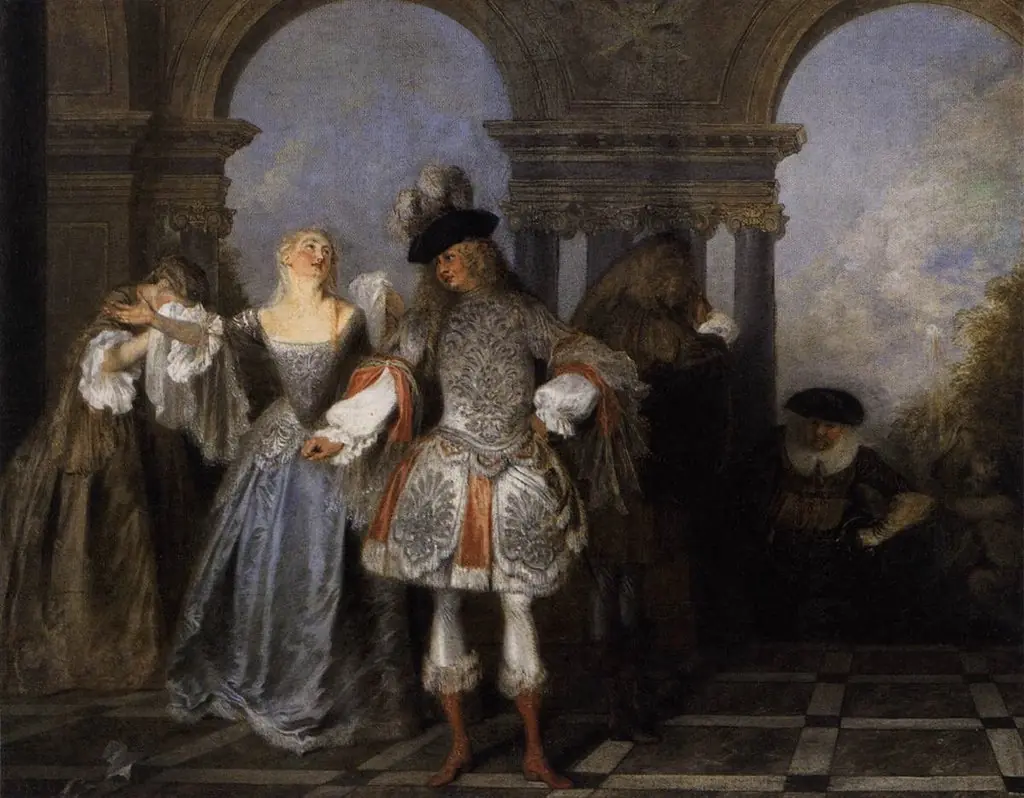 The French Comedians
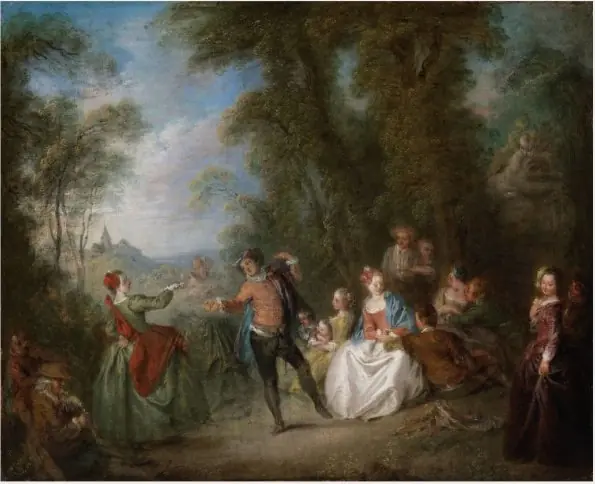 Fête Champêtre
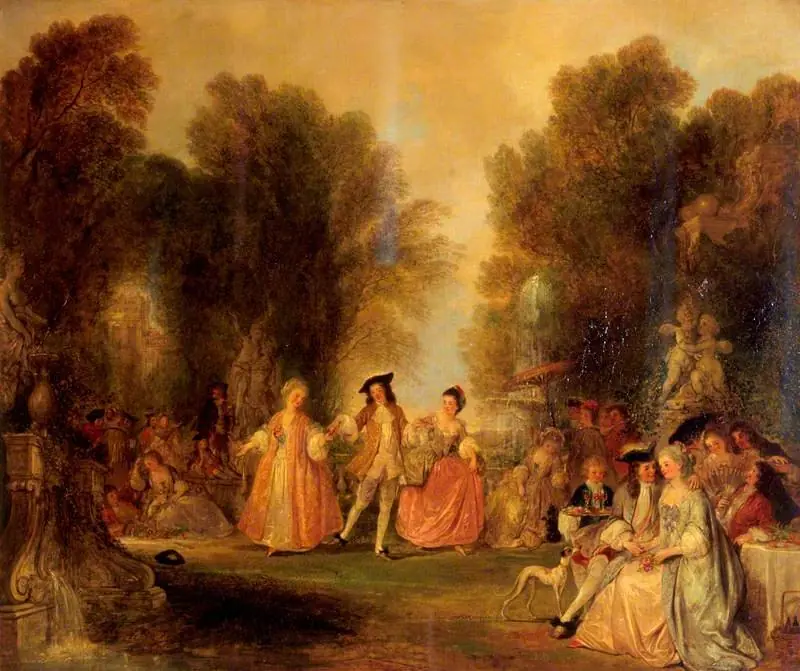 A Garden Scene, in the Manner of Watteau
 A Fancy-Dress Ball