Artwork
Cupid Blindfolded and Two Doves
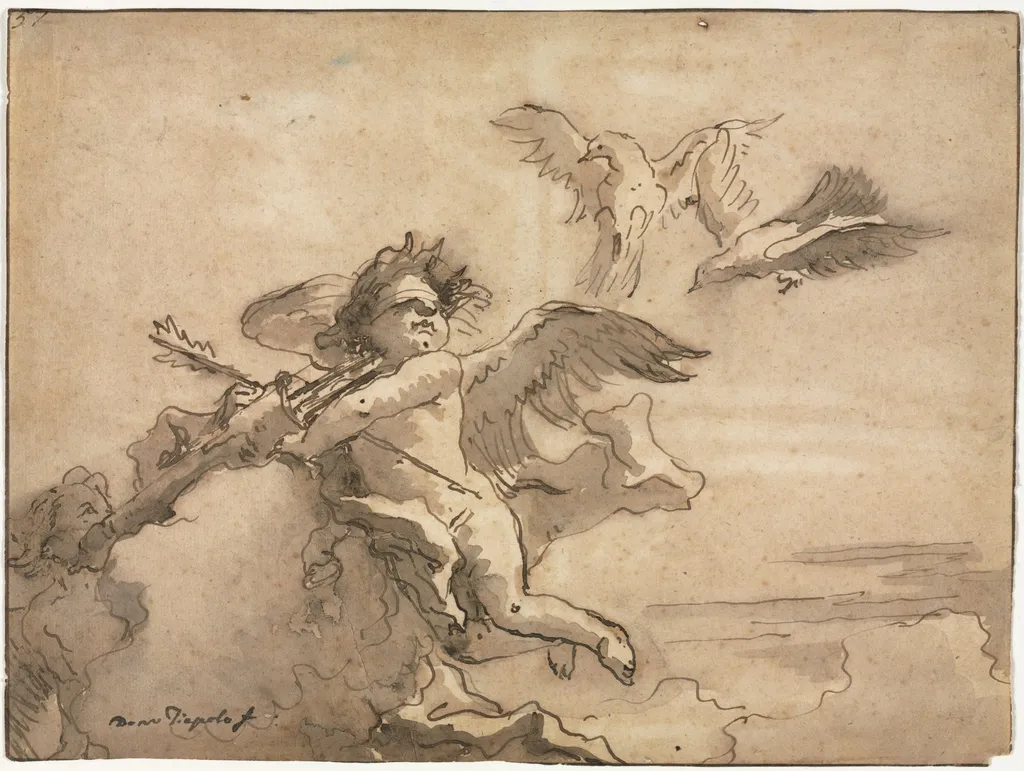
Cupid Blindfolded and Two Doves is a drawing by the Romanticist artist Giovanni Domenico Tiepolo. It dates from 1757 and is held in the collection of the Cleveland Museum of Art.
About this work
Overview
It resides in the Cleveland Museum of Art, part of a broader body of work by Tiepolo that includes etchings and frescoes.
Giovanni Domenico Tiepolo created this drawing in 1757, depicting Cupid blindfolded with two doves nearby. Though sometimes misattributed as an oil painting, it is executed in ink and wash on paper. The work reflects the Rococo sensibility of its time—light, lyrical, and focused on mythological allegory. It resides in the Cleveland Museum of Art, part of a broader body of work by Tiepolo that includes etchings and frescoes.
Subject & Meaning
Cupid, the Roman god of desire, is shown with his eyes concealed, a traditional symbol of love’s irrationality. The two doves, often associated with Venus, reinforce themes of affection and tenderness. The absence of narrative action invites contemplation rather than storytelling. The blindfold suggests love’s unpredictability, while the quiet presence of the birds softens the myth’s potential for chaos, emphasizing its gentle, elusive nature.
Technique & Style
Tiepolo employed fine ink lines and subtle washes to model form with delicate gradations of tone. The softness of the shading avoids harsh contrasts, creating a hazy, atmospheric quality. His brushwork is precise yet fluid, capturing the texture of feathers and fabric with minimal strokes. The composition is intimate, with figures centered and framed by empty space, enhancing the sense of quiet introspection.
History & Provenance
The drawing entered the Cleveland Museum of Art’s collection in the 20th century, acquired as part of a larger group of Tiepolo family works. It was likely made during the artist’s early career, possibly as a preparatory study or independent composition. Unlike his father’s grand frescoes, this piece reflects a more personal, intimate mode of expression, consistent with Tiepolo’s interest in domestic and mythological vignettes.
Context
Produced during the height of the Rococo era in Venice, the work aligns with a cultural fascination with mythological subjects rendered in tender, decorative forms. Tiepolo’s output often diverged from his father’s monumental style, favoring smaller-scale works that explored emotion and subtlety. This drawing fits within a broader trend among Venetian artists to humanize classical figures through understated, lyrical treatments.
Legacy
Though less celebrated than his father’s oeuvre, Giovanni Domenico Tiepolo’s drawings like this one contributed to the evolution of 18th-century graphic art. His ability to convey psychological nuance with minimal means influenced later generations of draftsmen. The work remains a quiet example of how myth could be reimagined not as spectacle, but as a contemplative moment.
Artist & collection
Artist
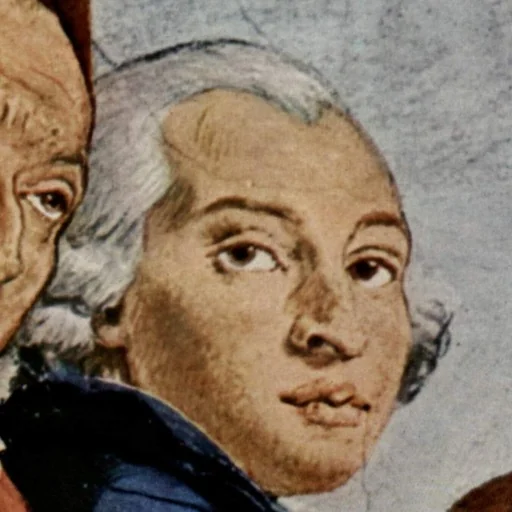
Giovanni Domenico Tiepolo (August 30, 1727 – March 3, 1804) was an Italian painter and printmaker in etching. He was the son of artist Giovanni Battista Tiepolo and elder brother of Lorenzo Baldissera Tiepolo.

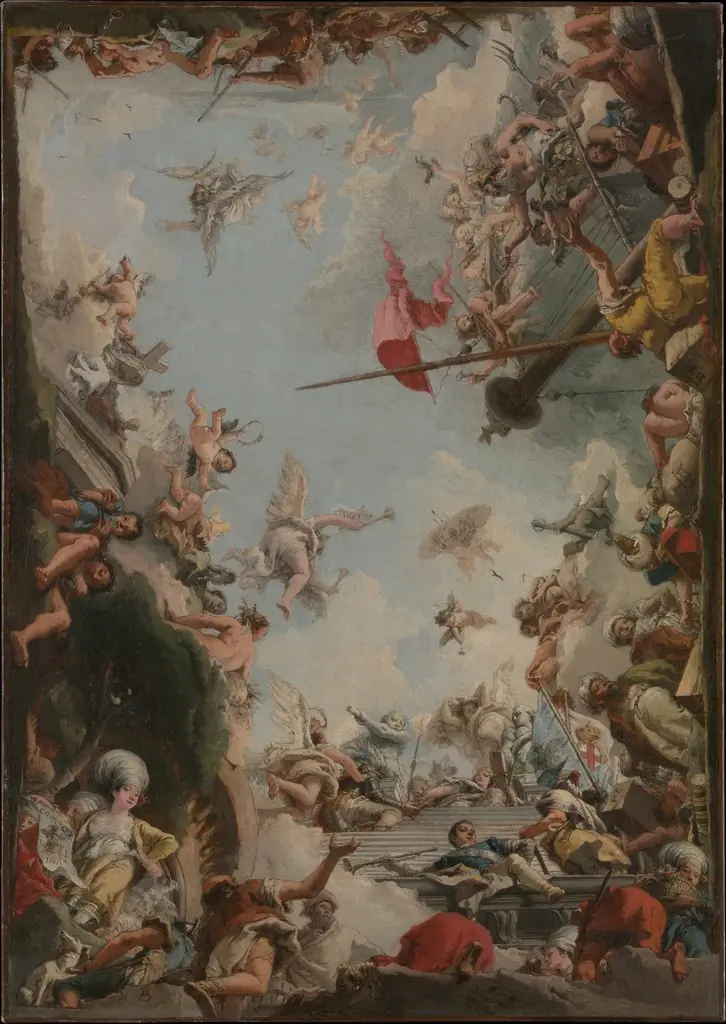
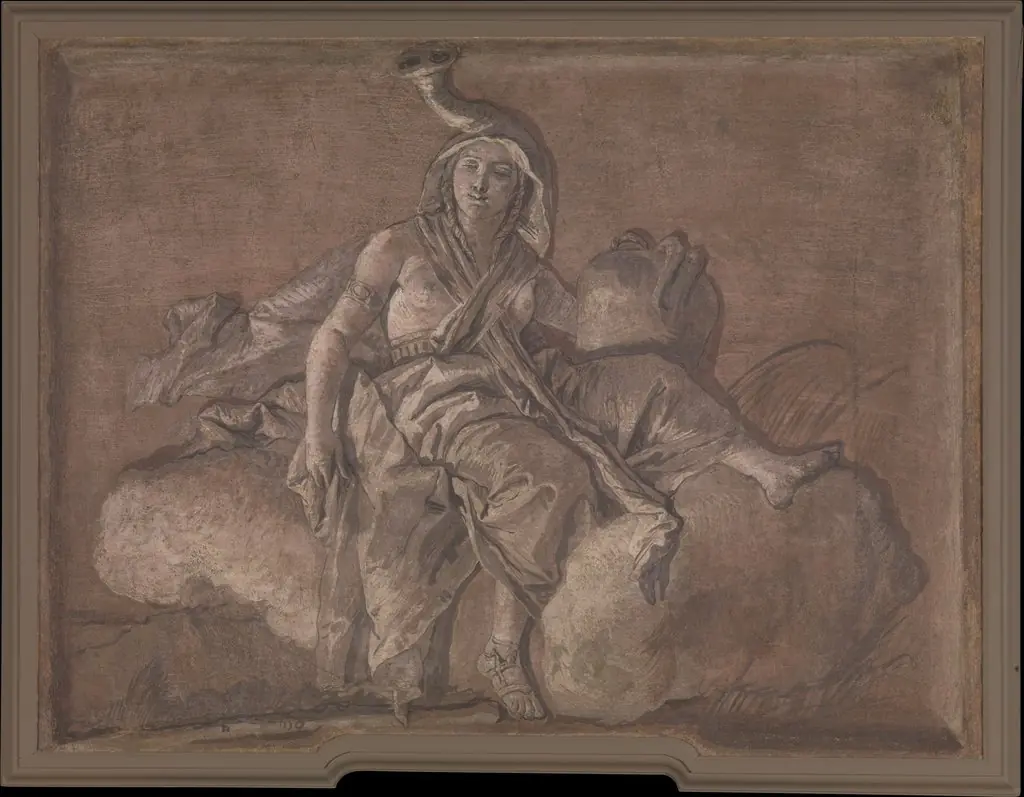
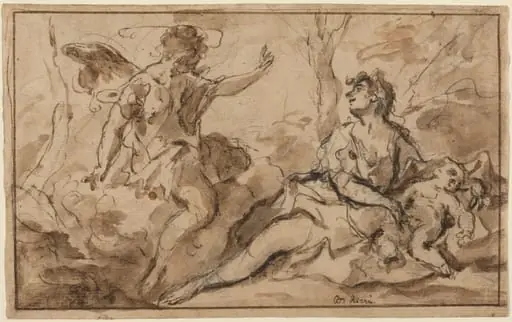 The Angel Appearing to Hagar and Ishmael
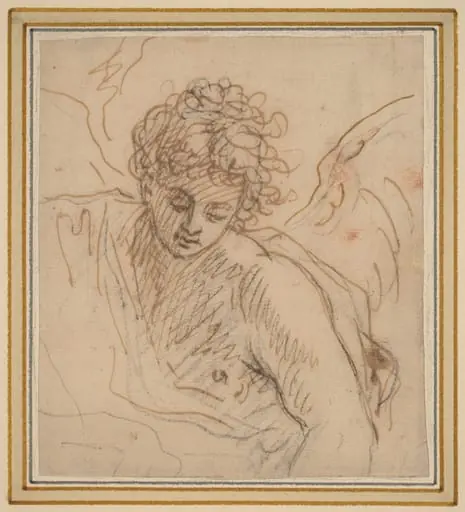 An Angel
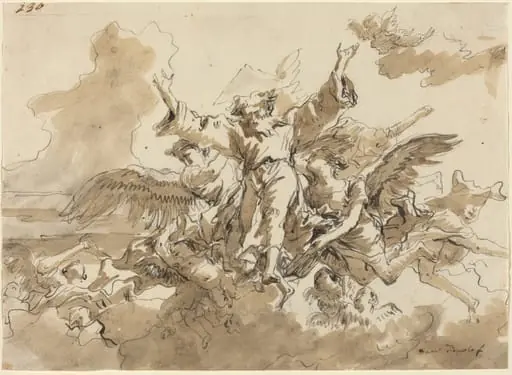 Creation of the Universe
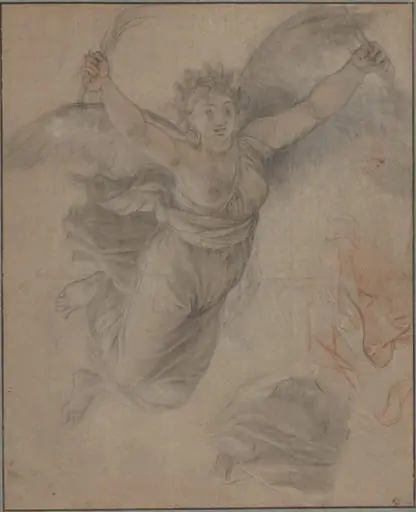 An Allegorical Female Figure
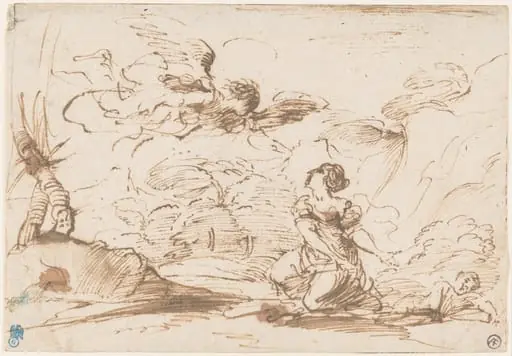 The Angel Appearing to Hagar and Ishmael in the Wilderness
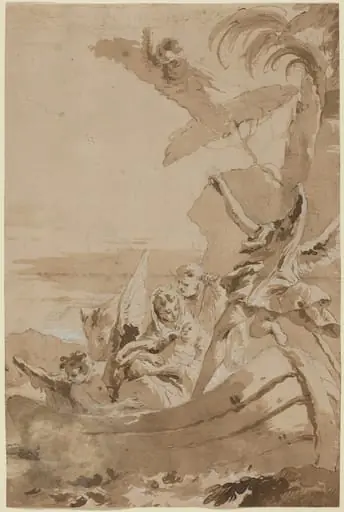 The Flight into Egypt with the Holy Family and Two Angels in a Skiff
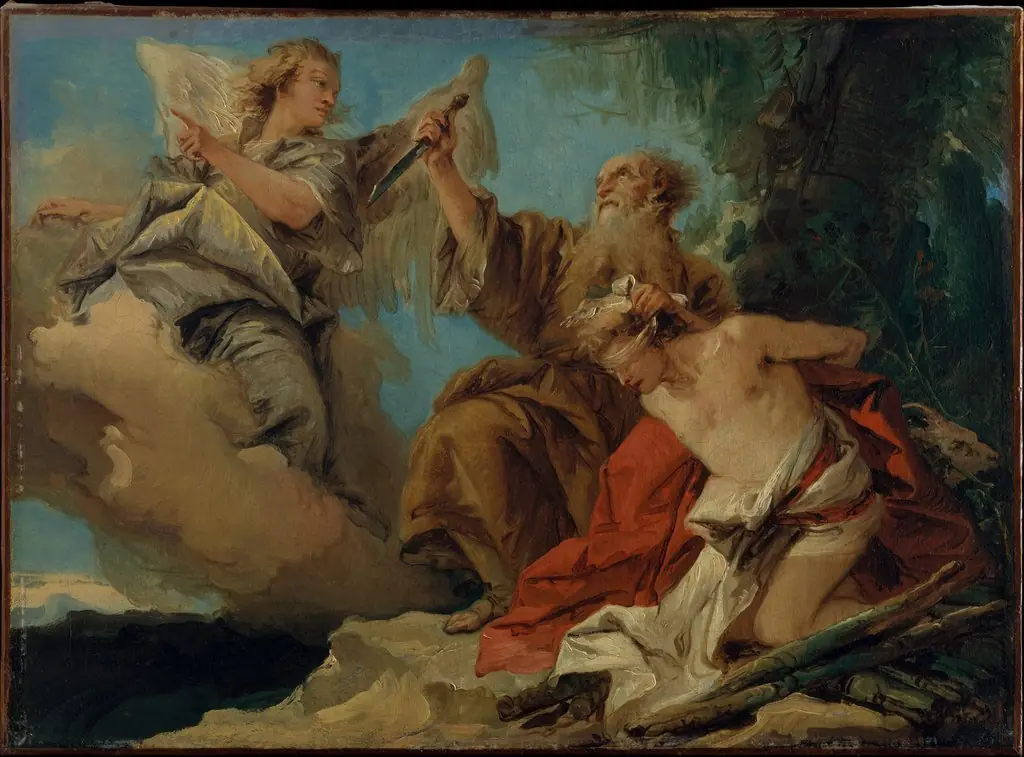
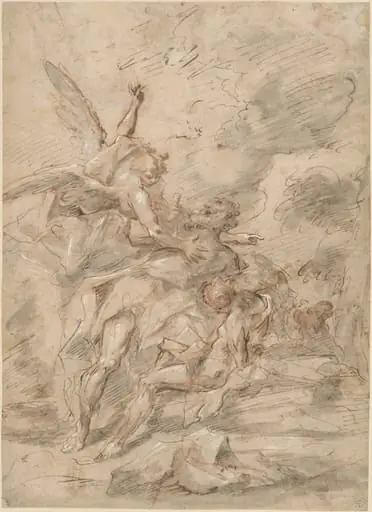 The Sacrifice of Isaac
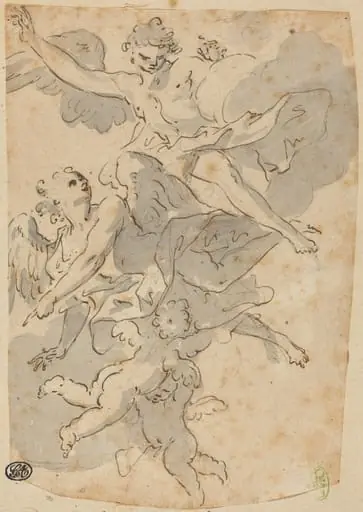 Angels and Putti
![Penitent Magdalene with Angels in a Landscape [recto], by Donato Creti](https://artifactworldgallery.com/img/donato-creti--penitent-magdalene-with-angels-in-a-landscape-recto--329b67c038e377df-w320.webp) Penitent Magdalene with Angels in a Landscape [recto]
Penitent Magdalene with Angels in a Landscape [recto]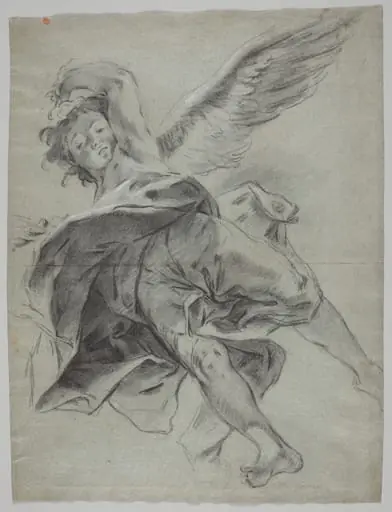 A Flying Angel (recto)
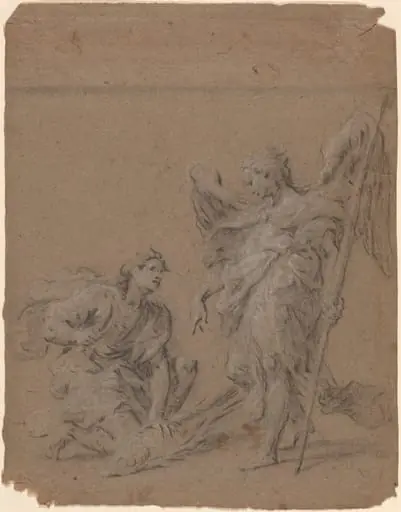 Tobias and the Angel
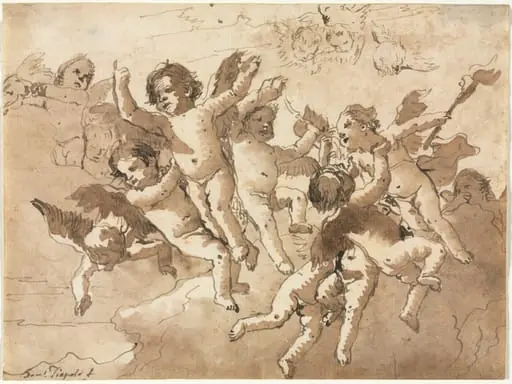 Cupid in the Clouds with Attendant Cherubs