Artwork
Angels and Putti
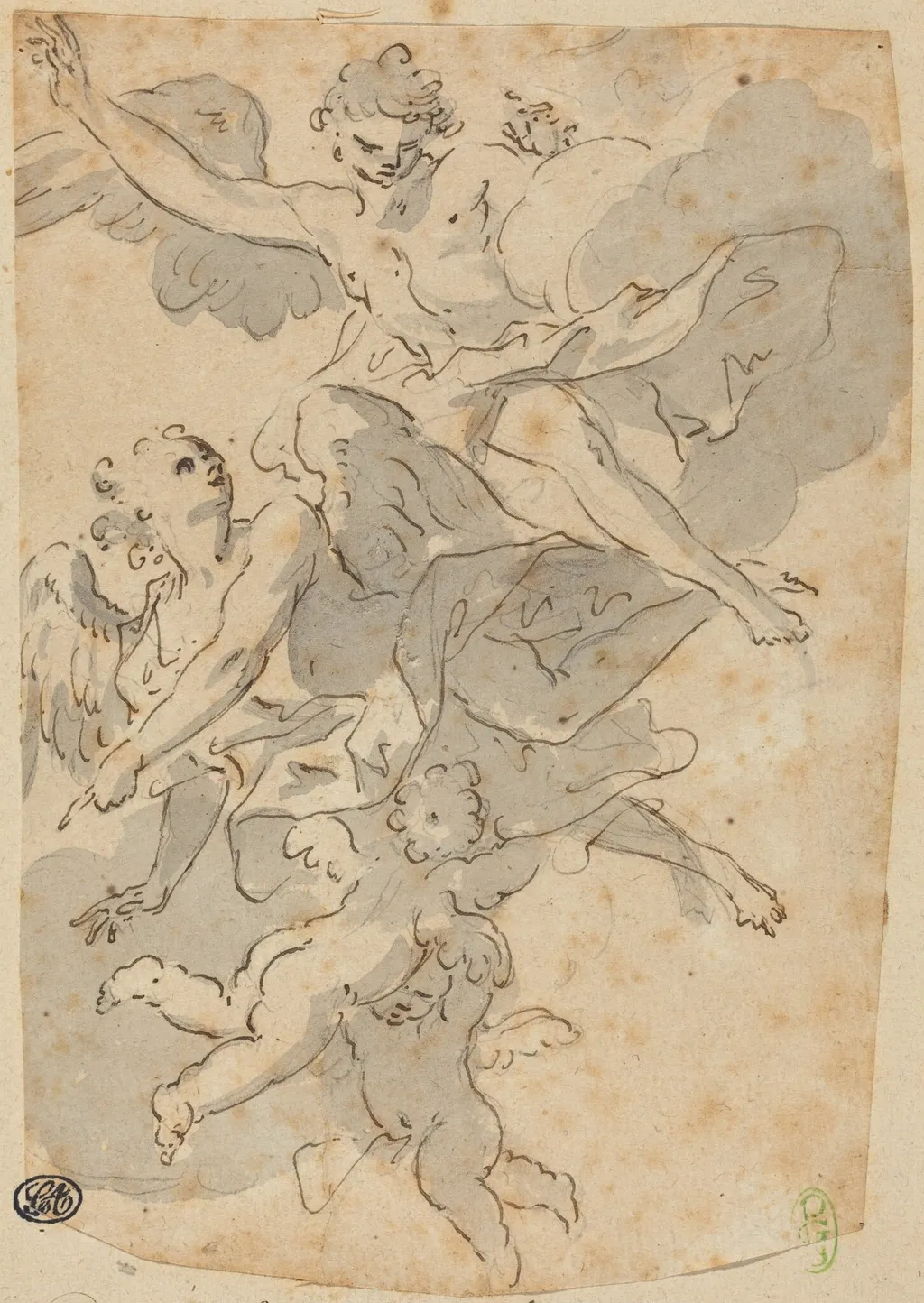
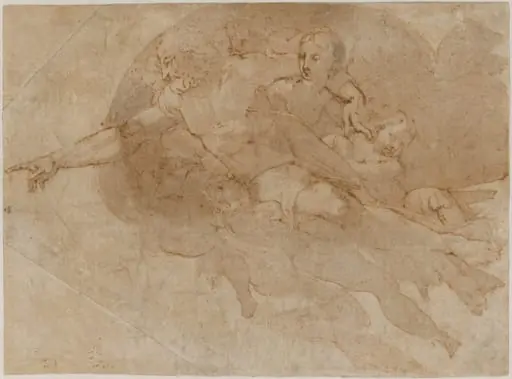
Angels and Putti is an ink drawing by the Baroque artist Giovanni Battista Crosato. It dates from 1722 and is held in the collection of the National Gallery of Art.
About this work
Overview
Created in 1722 by Giovanni Battista Crosato, this drawing depicts a group of angels and putti in a dynamic, airborne composition.
Created in 1722 by Giovanni Battista Crosato, this drawing depicts a group of angels and putti in a dynamic, airborne composition. Executed in pen and brown ink with gray wash over charcoal, the work is mounted on a support backing. Its fluid lines and atmospheric tonality reflect the expressive drawing practices of early 18th-century Italian artists, emphasizing motion and lightness over rigid form.
Subject & Meaning
The figures—angels and putti—engage in a lively, unstructured interaction, suggesting celestial play rather than sacred narrative. Putti, often symbolic of divine love or earthly joy, are rendered with childlike abandon, while the angels hover with gentle grace. The absence of a clear doctrinal context shifts focus to the emotional resonance of heavenly whimsy, a common theme in Baroque decorative arts.
Technique & Style
Crosato employed loose, rapid pen strokes to define forms, layered with diluted gray wash to suggest volume and shadow. Charcoal underdrawing provided structural guidance, later softened by the wash to blur edges and enhance movement. This technique, typical of preparatory or autonomous drawings of the period, prioritizes spontaneity and atmospheric effect over precise detail.
History & Provenance
The drawing was executed in 1722, likely as a study or independent work for decorative projects, common in Venetian studios of the time. It was later mounted on a secondary support, a standard conservation practice to stabilize fragile paper. No documented ownership history prior to modern collections is known, though its style aligns with works produced for ecclesiastical or aristocratic patrons in northern Italy.
Context
In early 18th-century Venice, artists like Crosato often produced drawings for ceiling decorations or altarpiece designs, where figures in motion conveyed divine presence. The playful arrangement of putti echoed trends in Rococo decorative schemes, blending Baroque energy with emerging lightness. Such works were valued for their compositional inventiveness and technical fluency, even when not destined for public display.
Legacy
Crosato’s drawing exemplifies the vitality of Italian draftsmanship during a transitional phase between Baroque grandeur and Rococo delicacy. While not widely reproduced, it remains a representative example of how artists used ink and wash to capture fleeting, ethereal movement. Its preservation offers insight into the working methods of lesser-known but skilled practitioners of the period.
Artist & collection


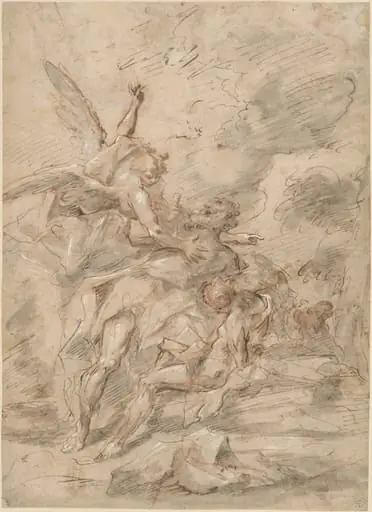 The Sacrifice of Isaac
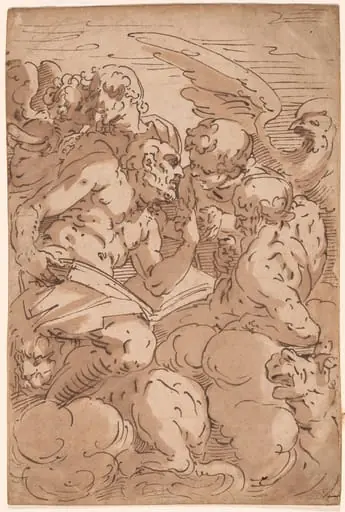 The Four Evangelists
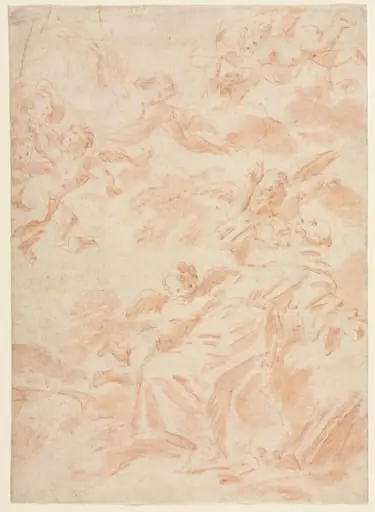 The Stigmatization of Saint Francis
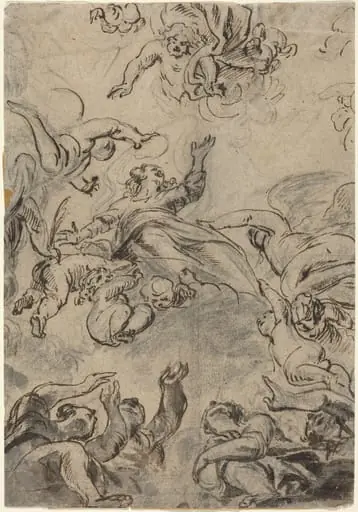 The Assumption of the Virgin
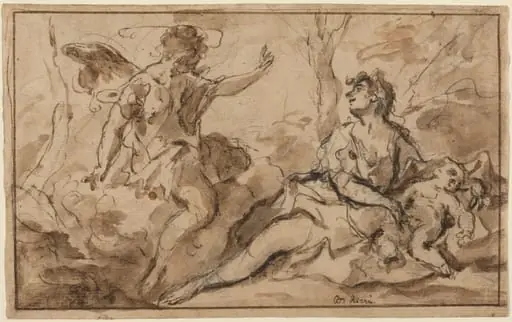 The Angel Appearing to Hagar and Ishmael
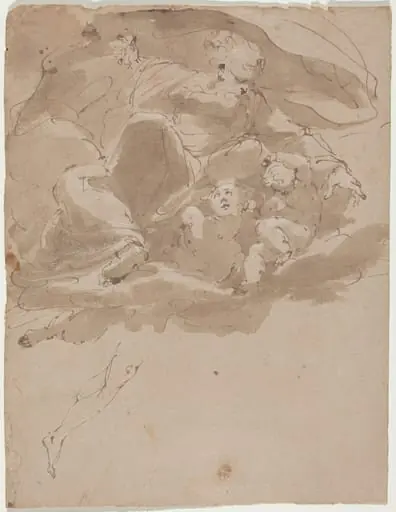 God the Father with Angels
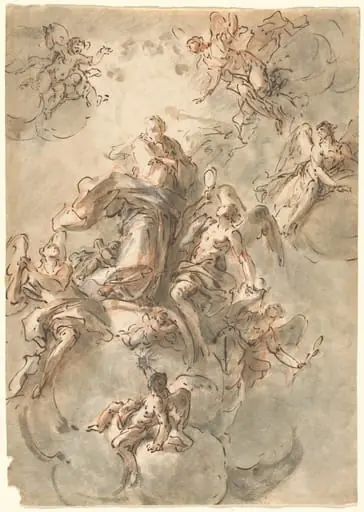 Virgin of the Immaculate Conception
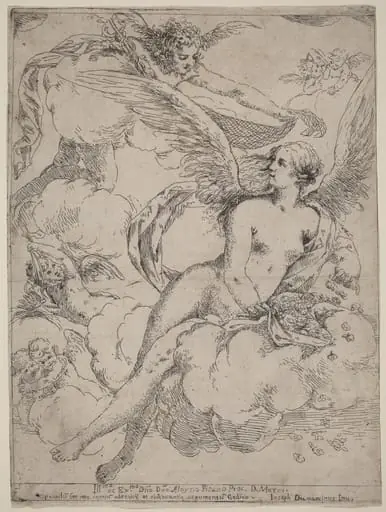 Flora and Mercury
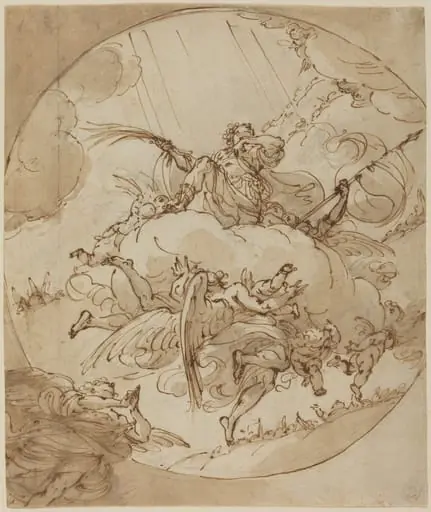 The Apotheosis of San Vitale
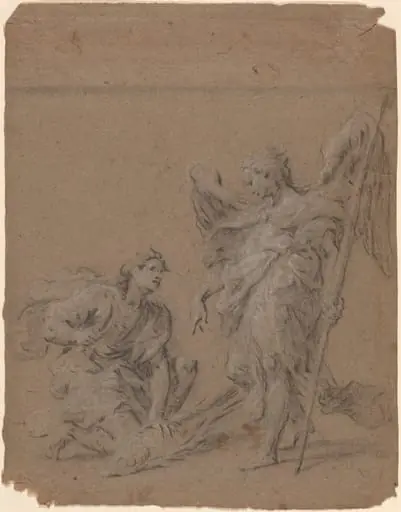 Tobias and the Angel
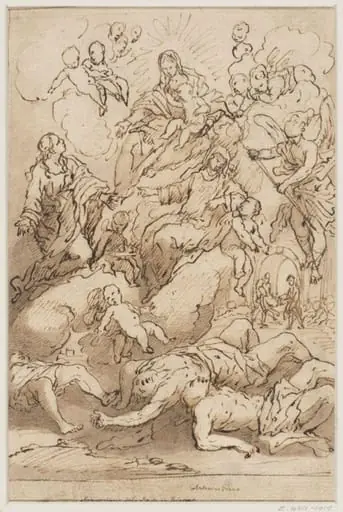 Anniversary of the Plague at Palermo
 God the Father in Glory