Artwork
God the Father with Symbol of the Trinity
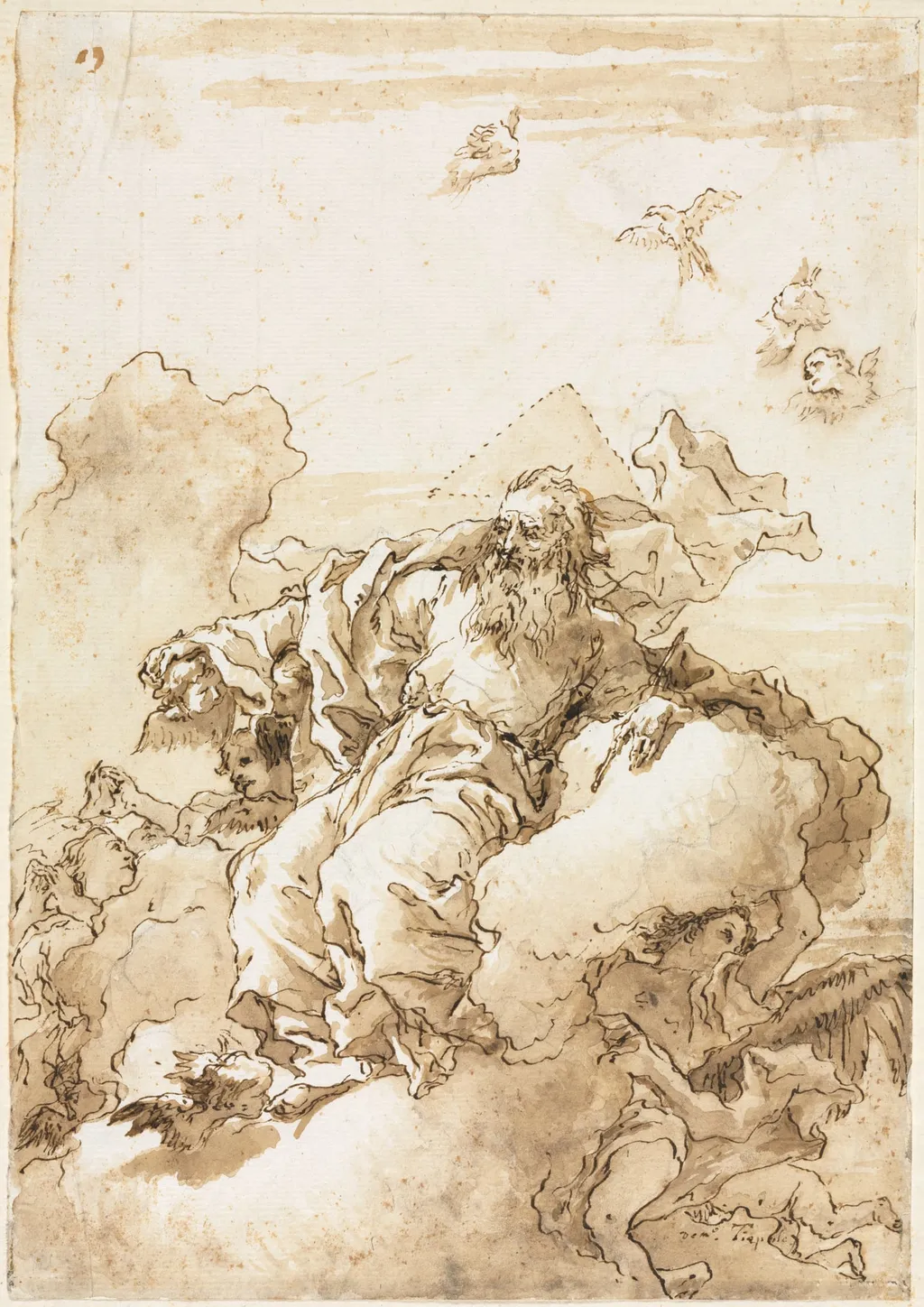
God the Father with Symbol of the Trinity is a drawing by the Romanticist artist Giovanni Domenico Tiepolo. It dates from 1758 and is held in the collection of the Cleveland Museum of Art.
About this work
Overview
Created in 1758 by Giovanni Domenico Tiepolo, this drawing is a devotional image of God the Father within the framework of Christian trinitarian symbolism.
Created in 1758 by Giovanni Domenico Tiepolo, this drawing is a devotional image of God the Father within the framework of Christian trinitarian symbolism. Executed in the late Baroque style, it reflects the religious visual language of 18th-century Venice, where sacred themes were often rendered with elegance and atmospheric refinement. The work belongs to a series of theological compositions produced during Tiepolo’s mature period, following his training under his father, Giovanni Battista Tiepolo.
Subject & Meaning
The central figure is God the Father, depicted as an aged, bearded man seated on a cloud, dressed in a flowing white robe. His raised right hand conveys blessing, while his left holds a scepter, signifying divine authority. A dove hovers nearby as the symbol of the Holy Spirit, and a triangular form above represents the Trinity. Together, these elements visually articulate the doctrine of one God in three persons, a common theme in Catholic iconography of the period.
Technique & Style
Tiepolo employs subtle chiaroscuro to model the figure with gentle volume, avoiding harsh contrasts in favor of a luminous, ethereal quality. Soft transitions between light and shadow, achieved through layered washes, suggest a hazy celestial realm. The use of delicate ink and washes, combined with minimal but precise linework, creates a sense of weightlessness, aligning with the spiritual subject matter and the Venetian tradition of atmospheric draftsmanship.
History & Provenance
The drawing was produced during a period when Tiepolo was actively engaged in religious commissions for Venetian churches and private patrons. It likely served as a preparatory study or independent devotional piece, possibly intended for a chapel or collector’s cabinet. Its survival in good condition suggests it was carefully preserved, though its early ownership remains undocumented in public records.
Context
In mid-18th-century Venice, religious imagery remained central to artistic production despite growing secular influences. Tiepolo’s work responds to a demand for spiritually resonant, visually refined compositions that balanced doctrinal clarity with aesthetic grace. His approach, less theatrical than his father’s, emphasized quiet contemplation, reflecting broader shifts in devotional taste toward intimacy over grandeur.
Legacy
This drawing exemplifies Giovanni Domenico Tiepolo’s ability to distill complex theological concepts into serene, visually coherent forms. While less widely known than his father’s grand frescoes, his smaller-scale works like this one influenced later generations of Venetian draftsmen who valued clarity, restraint, and atmospheric nuance in religious art.
Artist & collection
Artist
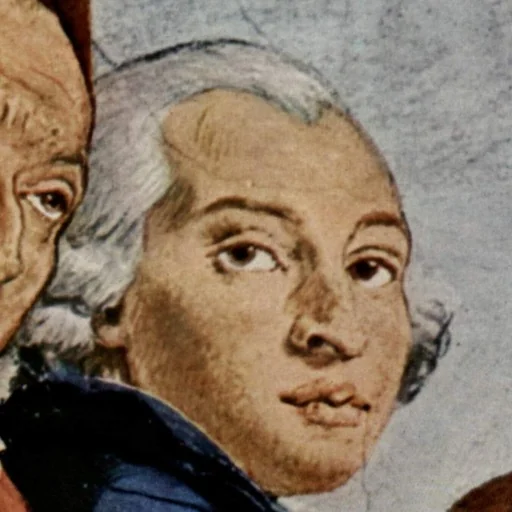
Giovanni Domenico Tiepolo (August 30, 1727 – March 3, 1804) was an Italian painter and printmaker in etching. He was the son of artist Giovanni Battista Tiepolo and elder brother of Lorenzo Baldissera Tiepolo.

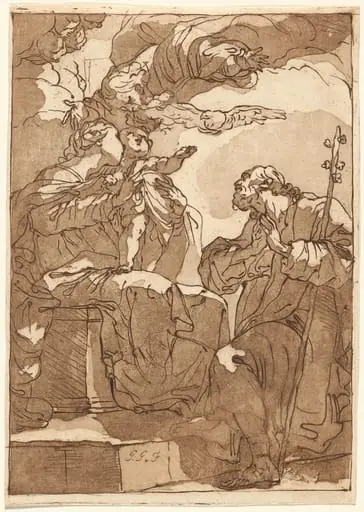 The Holy Family with God the Father
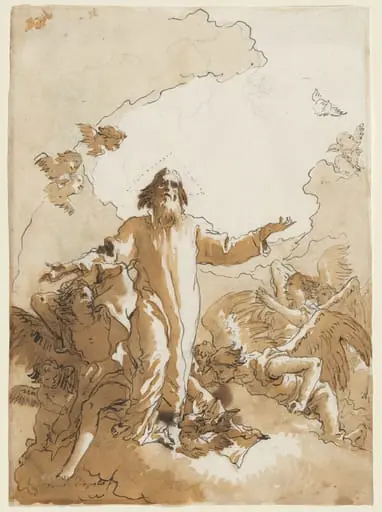 God the Father Standing in Clouds Surrounded by Angels and Putti
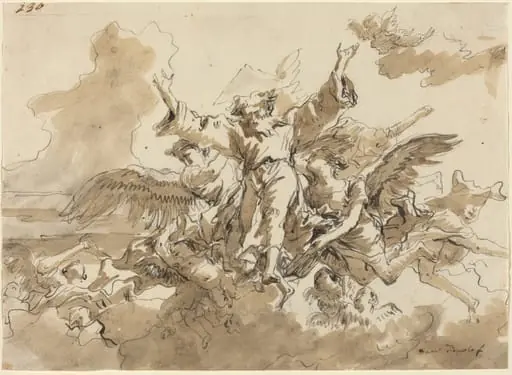 Creation of the Universe
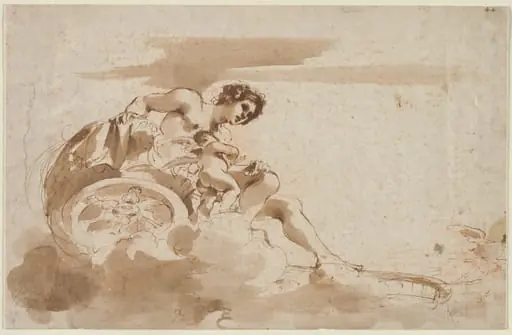 Venus and Cupid in a Chariot
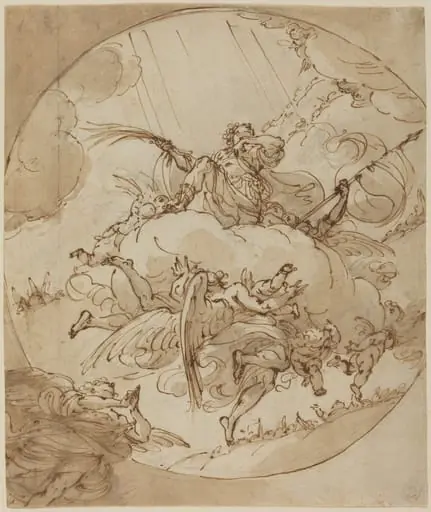 The Apotheosis of San Vitale
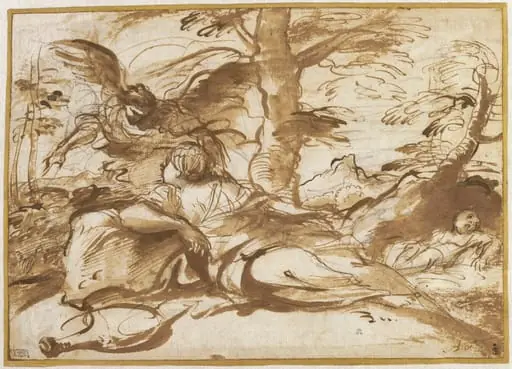 The Angel Appearing to Hagar in the Desert (recto)
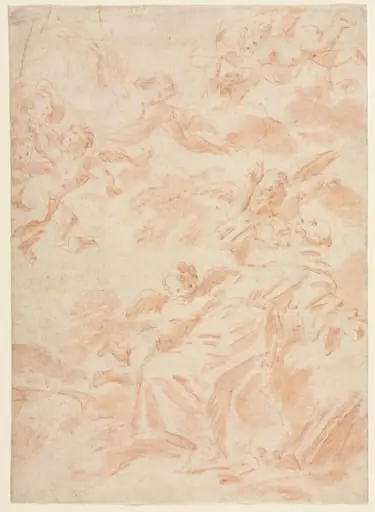 The Stigmatization of Saint Francis
![The Ecstasy of Saint Francis [recto], by Sebastiano Ricci](https://artifactworldgallery.com/img/sebastiano-ricci--the-ecstasy-of-saint-francis-recto--5f53f9b59775e5dd-w320.webp) The Ecstasy of Saint Francis [recto]
The Ecstasy of Saint Francis [recto]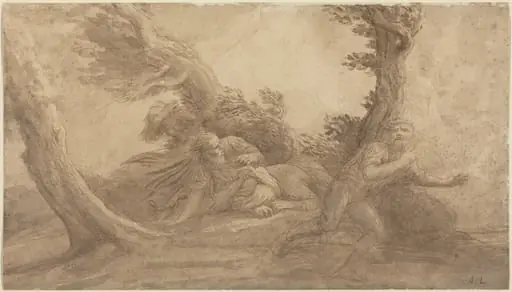 Clap of Thunder
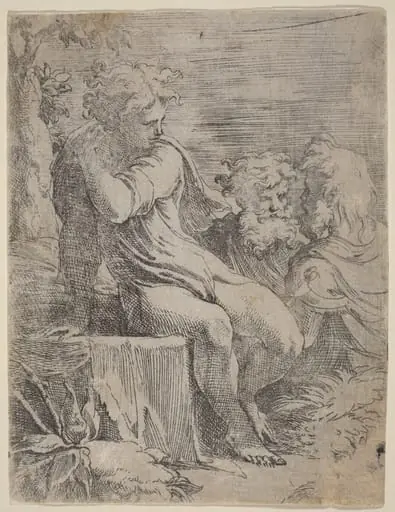 The Boy and Two Old Men