Artwork
The Fountains of Rome (Le fontane di Roma), Book IV, plate 7: Fountain of the Tiburtine Sibyl (Fontana della Sibilla Tiburtina)
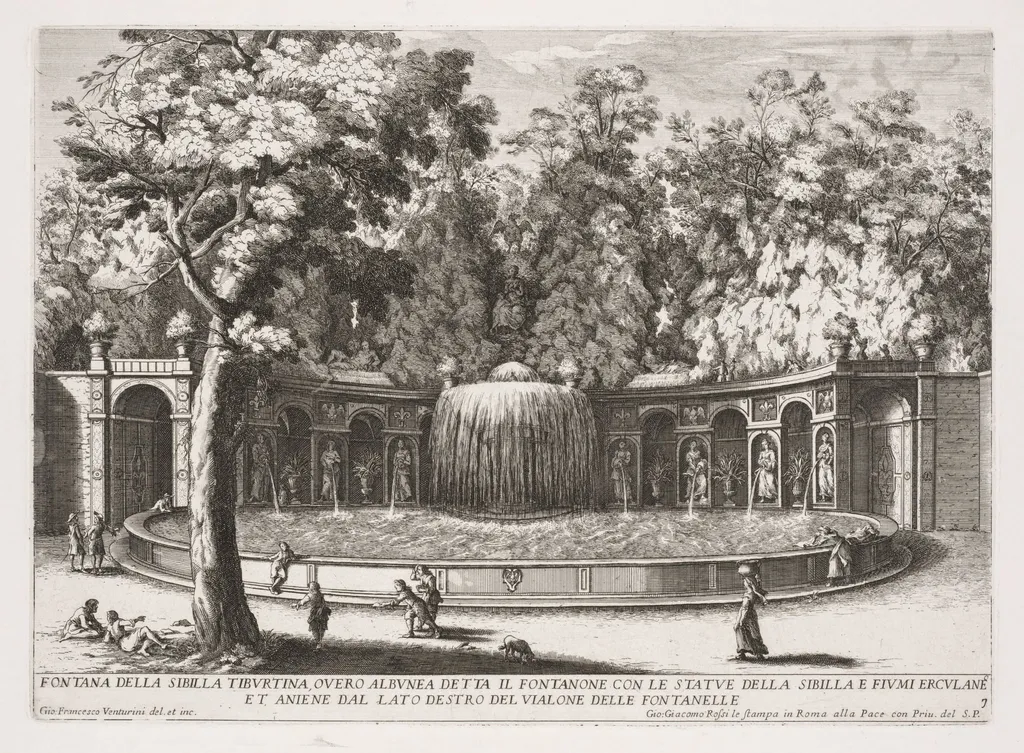
The Fountains of Rome (Le fontane di Roma), Book IV, plate 7: Fountain of the Tiburtine Sibyl (Fontana della Sibilla Tiburtina) is a print by the Baroque artist Giovanni Francesco Venturini. It dates from 1688 and is held in the collection of the Cleveland Museum of Art.
About this work
Overview
Created in 1688 by Giovanni Francesco Venturini, this etching is the seventh plate in Book IV of his series Le fontane di Roma.
Created in 1688 by Giovanni Francesco Venturini, this etching is the seventh plate in Book IV of his series Le fontane di Roma. It depicts the Fountain of the Tiburtine Sibyl, one of Rome’s many Renaissance-era water features. The work belongs to a larger project documenting the city’s fountains through precise, detailed engravings, reflecting a scholarly interest in Roman antiquities and urban design.
Subject & Meaning
The print portrays the statue of the Tiburtine Sibyl, a prophetic figure from classical mythology, positioned above a fountain basin. Her presence links the site to ancient Roman religious traditions, where oracles were believed to channel divine knowledge. The fountain thus serves as both a public utility and a symbolic monument, merging pagan legacy with early modern civic identity.
Technique & Style
Venturini employed fine-line etching to render architectural textures and sculptural details with clarity. The composition emphasizes verticality, drawing the eye from the basin up to the statue and surrounding buildings. Delicate hatching defines stone surfaces and foliage, while precise perspective anchors the scene in a recognizable Roman setting, characteristic of topographical printmaking of the period.
History & Provenance
The print was produced as part of Venturini’s multi-volume survey of Roman fountains, commissioned to record the city’s waterworks for an educated European audience. It entered the collection of the Cleveland Museum of Art through established acquisition channels, likely in the 20th century, as part of broader efforts to preserve European graphic arts from the Baroque era.
Context
In late 17th-century Rome, documenting ancient and Renaissance monuments was a scholarly pursuit tied to antiquarianism and the Grand Tour. Venturini’s series responded to growing interest in Rome’s urban fabric among travelers and intellectuals. His prints served as both records and souvenirs, contributing to a visual canon of the city’s architectural heritage.
Legacy
Venturini’s etchings provided a reference for later topographers and architects studying Roman water systems. Though not widely known today, his work influenced the documentation of public monuments in the 18th century. The series remains a valuable resource for historians examining how Baroque Rome perceived and preserved its classical past through printed imagery.
Artist & collection

Artist
Giovanni Francesco Venturini (1650–1710) was an Italian printmaker of the Baroque period.

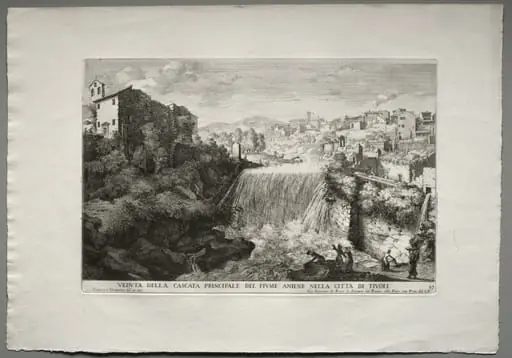 The Fountains of Rome (Le fontane di Roma), Book IV, plate 27: View of the Principal Cascade of the River Aniene in the City of Tivoli (Veduta della Cascata Principale del Fiume Aniene nelle citta di Tivoli)
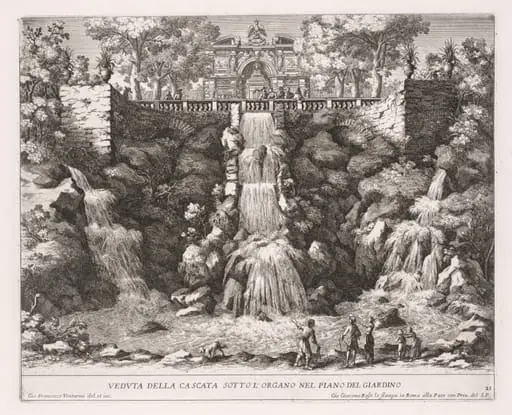 The Fountains of Rome (Le fontane di Roma), Book IV, plate 21: View of the Cascade below the Organ from the Garden (Veduta della Cascata Sotto L'Organo nel Piano del Giardino)
 H Beard Print Collection
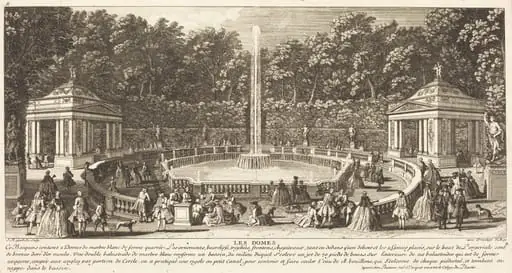 Les Domes
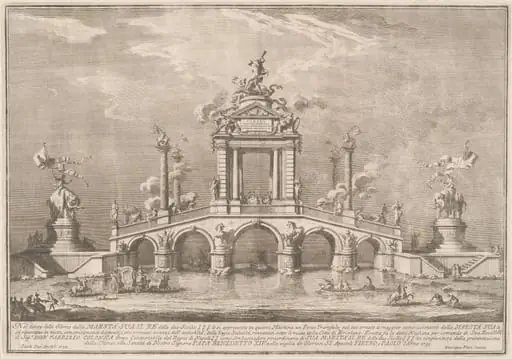 The Prima Macchina for the Chinea of 1755: A Triumphal Bridge with Antiquities from Herculaneum
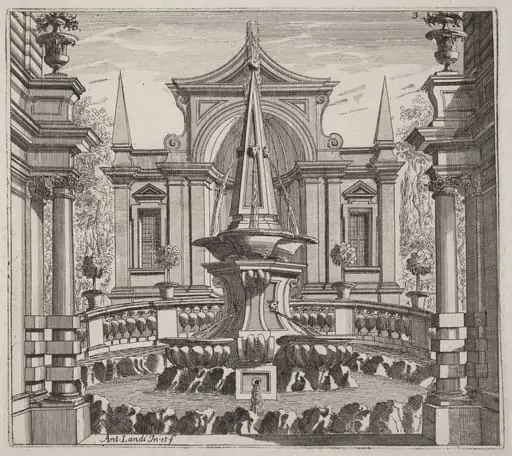 Fantastic Garden with a Fountain and a Garden Pavilion
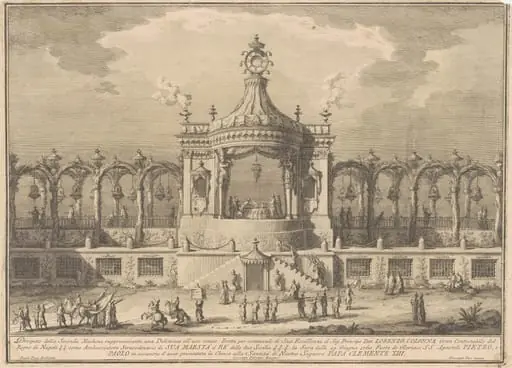 The Seconda Macchina for the Chinea of 1760: A Chinoiserie Pavilion
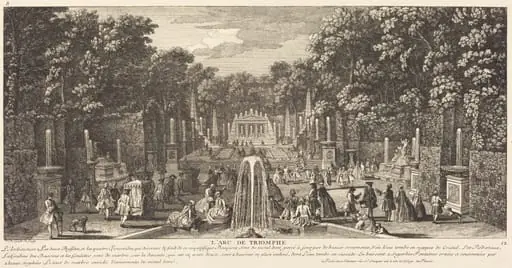 L'Arc de Triomphe
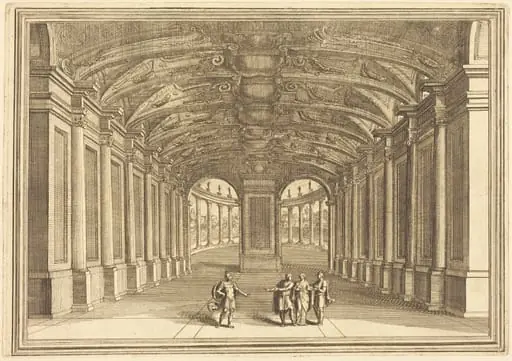 Il Greco in Troia: Plate 10
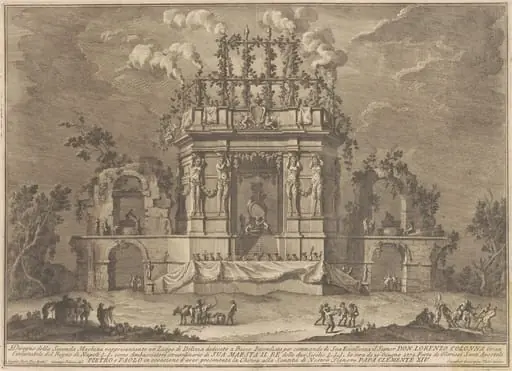 The Seconda Macchina for the Chinea of 1771: A Pleasure Palace Dedicated to Bacchus
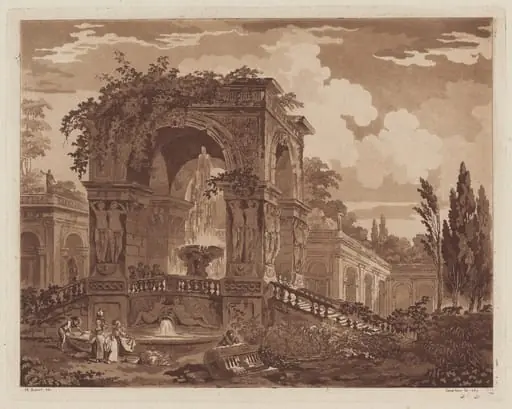 View of an Antique Fountain
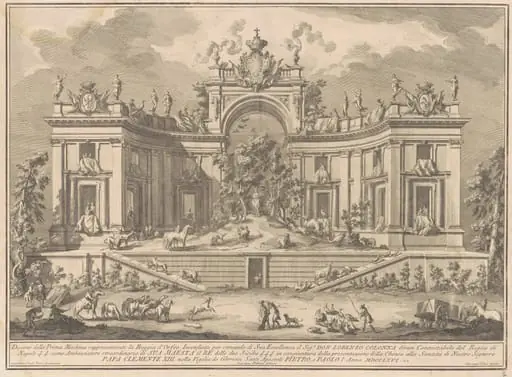 The Prima Macchina for the Chinea of 1766: The Palace of Orpheus
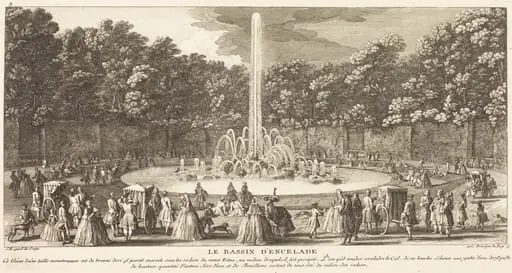 Le Bassin d'Encelade