Artwork
The Prima Macchina for the Chinea of 1766: The Palace of Orpheus
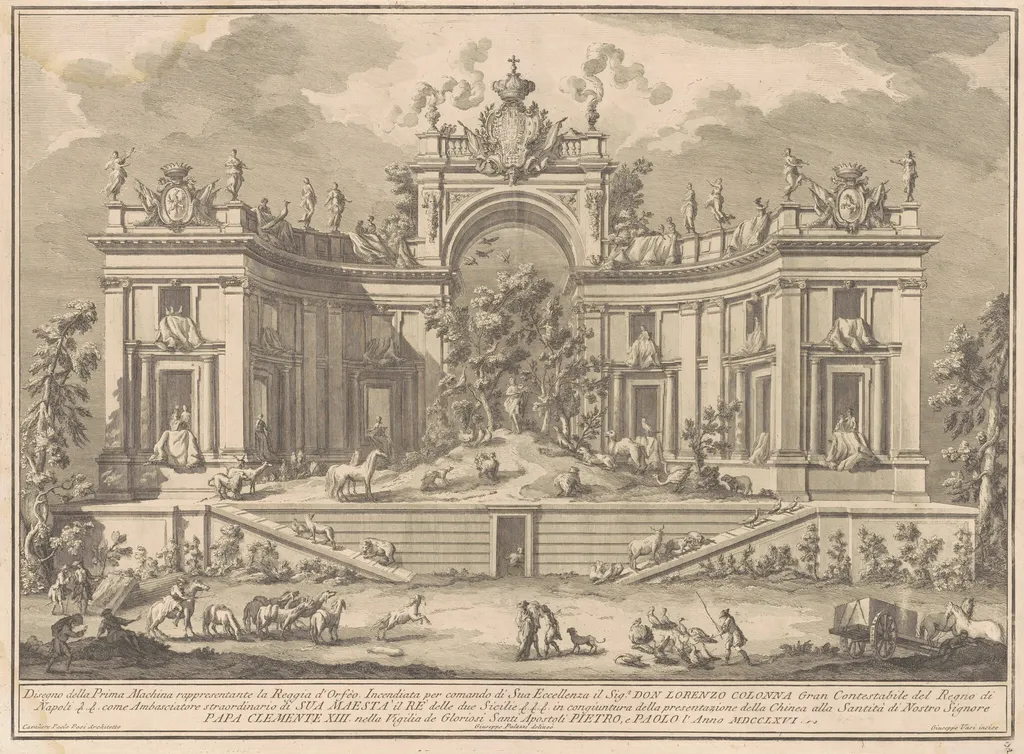
The Prima Macchina for the Chinea of 1766: The Palace of Orpheus is an ink print by the Romanticist artist Giuseppe Vasi. It dates from 1766 and is held in the collection of the National Gallery of Art.
About this work
The building has a big archway in the center, and the whole scene looks like a stage set with precise lines and shading.
This drawing shows a grand, imaginary palace with tall columns and statues on the roof. In front of it, people and animals move around a courtyard filled with trees and fountains. The building has a big archway in the center, and the whole scene looks like a stage set with precise lines and shading.
The text at the bottom explains this was built for a special event in 1766. It’s not a real place—just a temporary design made for a celebration.
If you like this kind of detailed drawing, look up etching to see how artists create these precise lines.
Overview
Giuseppe Vasi’s 1766 etching, titled *The Prima Macchina for the Chinea of 1766: The Palace of Orpheus*, presents a fanciful architectural composition. Rendered in fine line work, the print depicts an elaborate, fictional palace framed by a bustling courtyard populated with figures, animals, trees and fountains, all arranged with a theatrical precision.
Subject & Meaning
The imagined structure, named after the mythic musician Orpheus, combines monumental columns, a central arch, and rooftop statues, suggesting a celebration of artistic harmony. The surrounding activity—processions of people and beasts—evokes a festive atmosphere, underscoring the work’s role as a visual program for a specific public event.
Technique & Style
Executed as an etching, Vasi employed delicate incisions to achieve crisp outlines and subtle shading, allowing the architectural elements to recede into depth while maintaining clarity. The composition’s linear rigor and balanced perspective reflect the 18th‑century Italian tradition of architectural fantasy prints.
History & Provenance
Created for the 1766 Chinea, a ceremonial tribute to the Pope, the image functioned as a temporary design rather than a depiction of an existing building. The print was likely distributed among organizers and participants to convey the intended spectacle of the celebration.
Context
The Chinea ceremony, an annual presentation of a horse and gifts from the Kingdom of Naples to the papacy, often featured elaborate pageantry. Vasi’s etching fits within this tradition, providing a visual framework for the event’s theatrical set‑pieces and underscoring the interplay between art, politics, and public festivity in mid‑century Rome.
Artist & collection

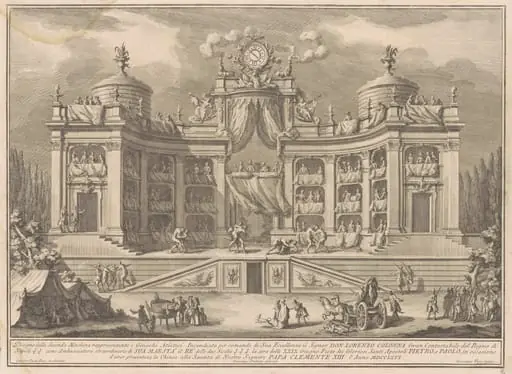 The Seconda Macchina for the Chinea of 1766: A Theater for Athletic Games
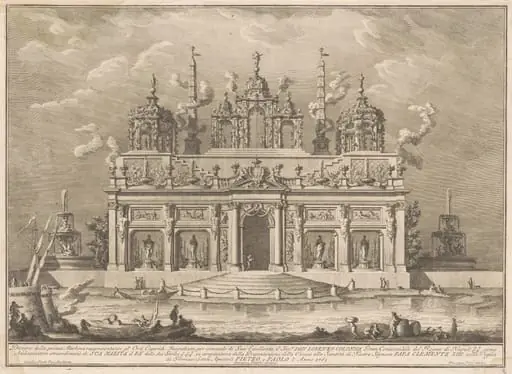 The Prima Macchina for the Chinea of 1765: The Garden of the Hesperides
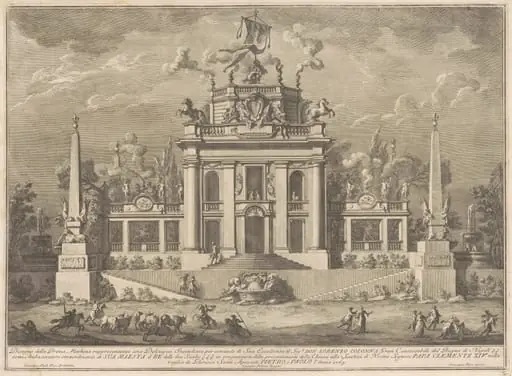 The Prima Macchina for the Chinea of 1769: A "Deliziosa"
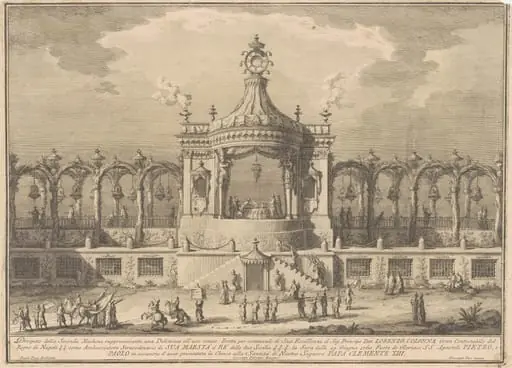 The Seconda Macchina for the Chinea of 1760: A Chinoiserie Pavilion
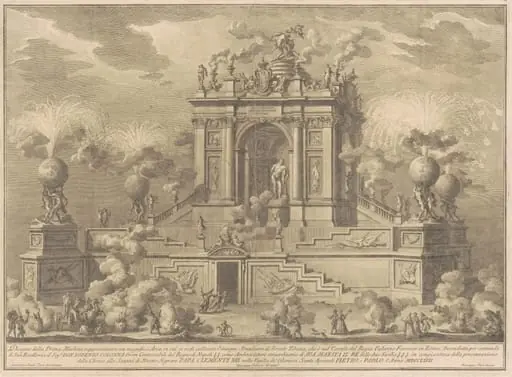 The Prima Macchina for the Chinea of 1767: A Triumphal Arch with the Farnese Hercules
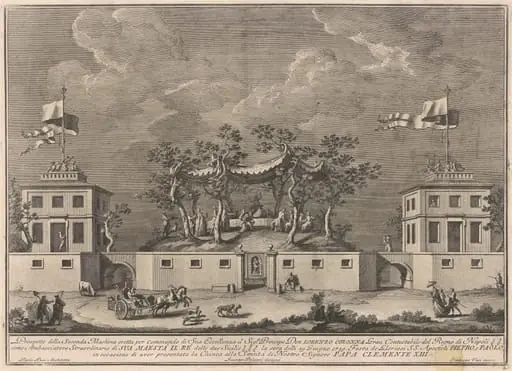 The Seconda Macchina for the Chinea of 1759: A "Deliziosa" with a Bacchanal
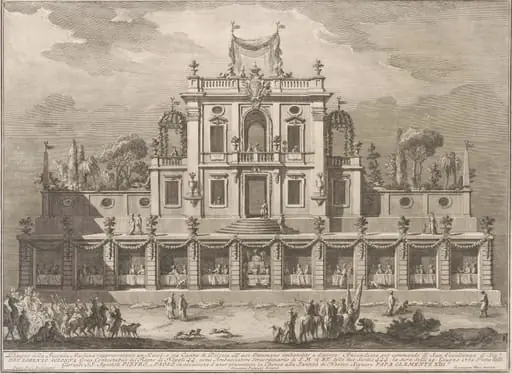 The Seconda Macchina for the Chinea of 1762: A Kiosk, or Pleasure-House in Ottoman Style
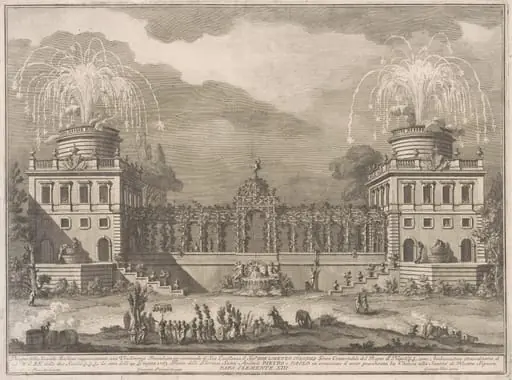 The Seconda Macchina for the Chinea of 1763: The Grape Harvest
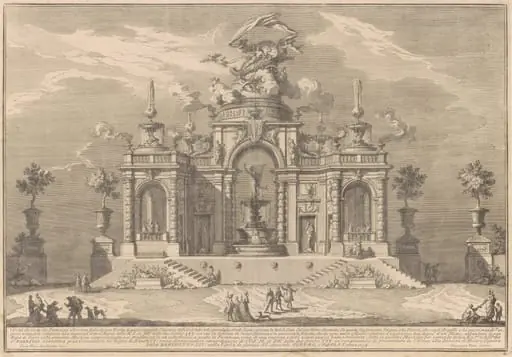 The Prima Macchina for the Chinea of 1754: The Palace of Venus in Cyprus
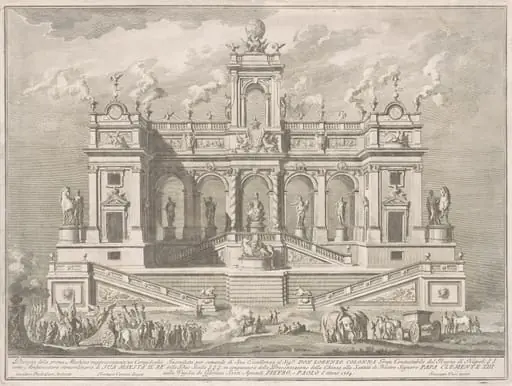 The Prima Macchina for the Chinea of 1764: A Capitol Building
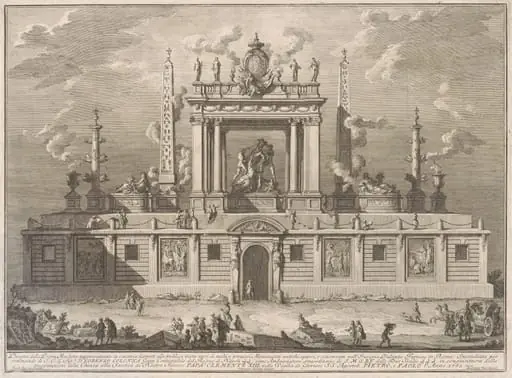 The Prima Macchina for the Chinea of 1762: The Farnese Bull and Other Antiquities from Palazzo Farnese
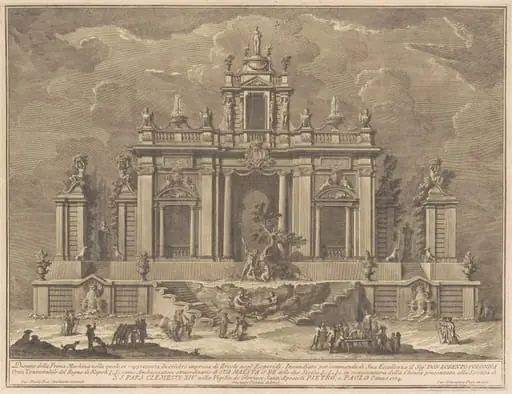 The Prima Macchina for the Chinea of 1774: Hercules and the Dragon in the Garden of the Hesperides
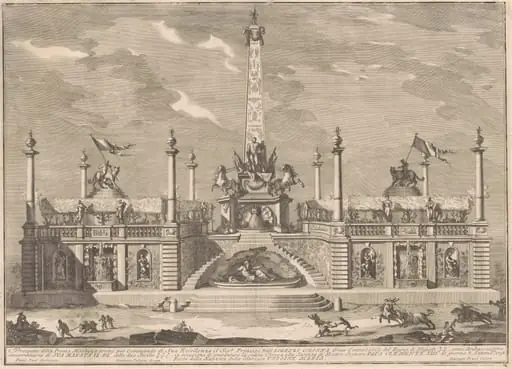 The Prima Macchina for the Chinea of 1758: A "Deliziosa" with Hanging Gardens
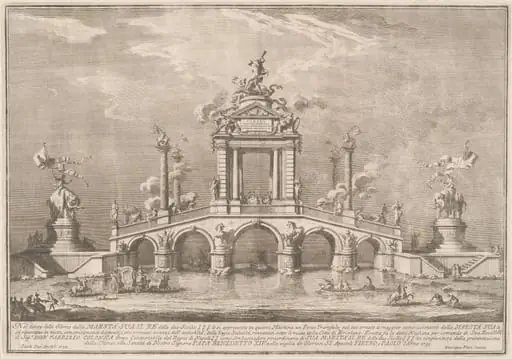 The Prima Macchina for the Chinea of 1755: A Triumphal Bridge with Antiquities from Herculaneum
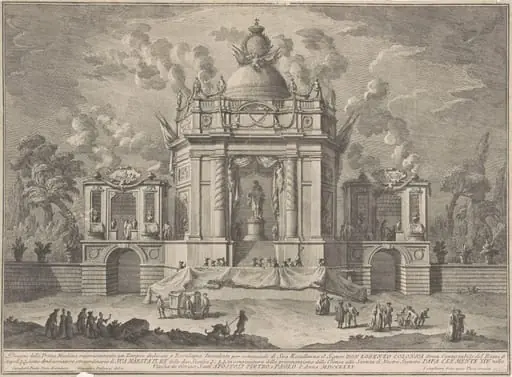 The Prima Macchina for the Chinea of 1771: The Temple of Asclepius
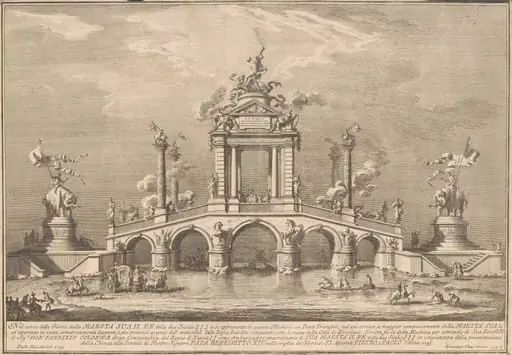 The Prima Macchina for the Chinea of 1755: A Triumphal Bridge with Antiquities from Herculaneum
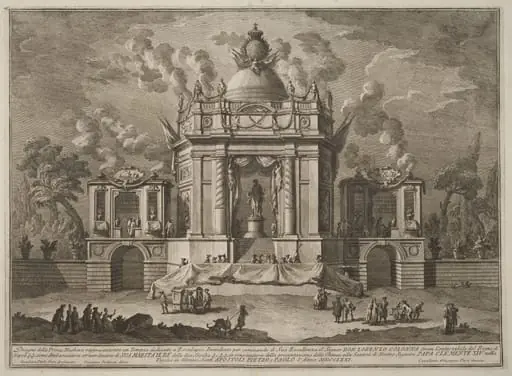 The Prima Macchina for the Chinea of 1771: The Temple of Asclepius