Artwork
The Seconda Macchina for the Chinea of 1771: A Pleasure Palace Dedicated to Bacchus
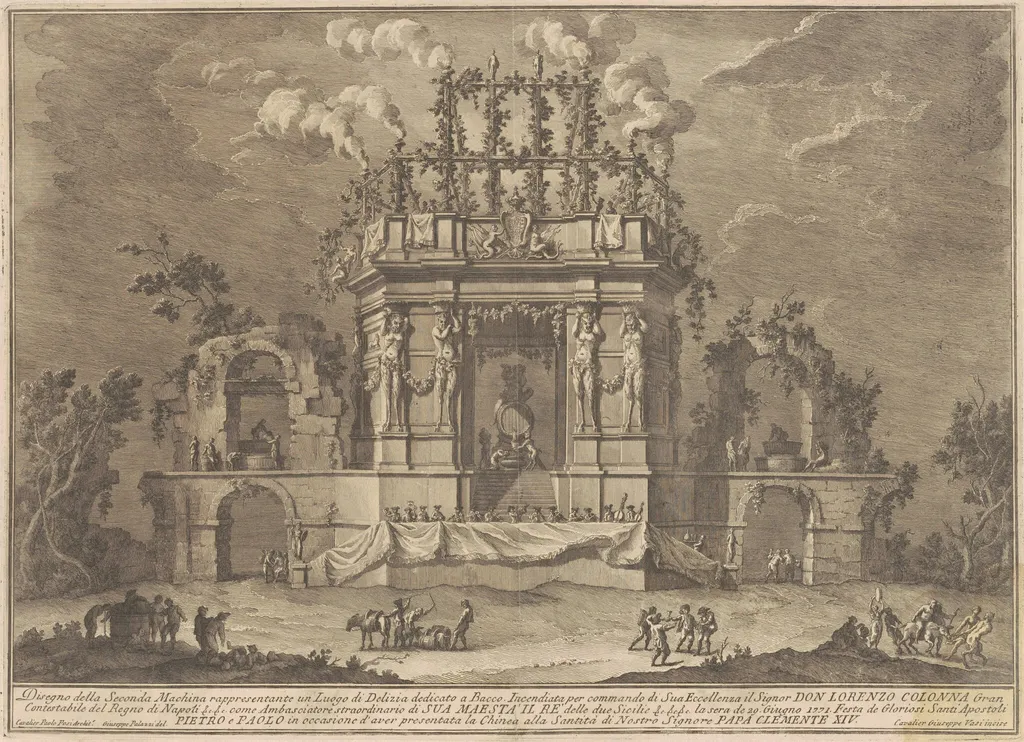
The Seconda Macchina for the Chinea of 1771: A Pleasure Palace Dedicated to Bacchus is an ink print by the Romanticist artist Giuseppe Vasi. It dates from 1771 and is held in the collection of the National Gallery of Art.
About this work
The text at the bottom says this was built for a celebration in 1771, dedicated to Bacchus, the god of wine.
This drawing shows a giant, fake palace built for a party. It’s made of stone arches, columns, and statues of people holding things like wreaths. At the center sits a long table covered with a white cloth, surrounded by tiny figures. Around the base, workers carry tools and animals, while others climb the structure.
The text at the bottom says this was built for a celebration in 1771, dedicated to Bacchus, the god of wine. The whole thing looks temporary—like a stage set for a big event.
Want to see more? Check out how artists used etching to create detailed prints like this one.
Overview
The Seconda Macchina for the Chinea of 1771: A Pleasure Palace Dedicated to Bacchus is an etching by Giuseppe Vasi, created in 1771.
Subject & Meaning
The etching depicts a large, ephemeral structure dedicated to Bacchus, the god of wine, built for a festive celebration. The palace features arches, columns, and statues, with a central banquet table and surrounding figures.
Technique & Style
The print showcases Vasi's use of etching to capture intricate details, such as the ornate architecture and tiny figures, conveying a sense of grandeur and temporariness.
Context
The structure was built for the Chinea celebration in 1771, a significant event that featured elaborate, temporary constructions.
Artist & collection

 The Seconda Macchina for the Chinea of 1766: A Theater for Athletic Games
 The Prima Macchina for the Chinea of 1765: The Garden of the Hesperides
 The Prima Macchina for the Chinea of 1769: A "Deliziosa"
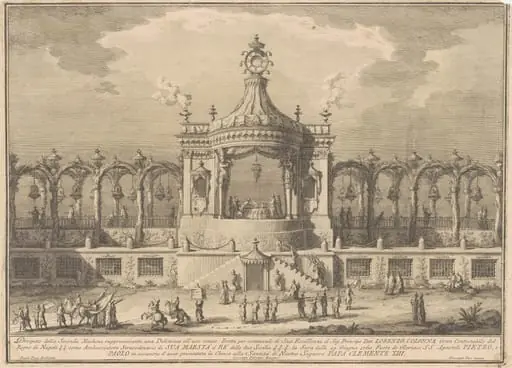 The Seconda Macchina for the Chinea of 1760: A Chinoiserie Pavilion
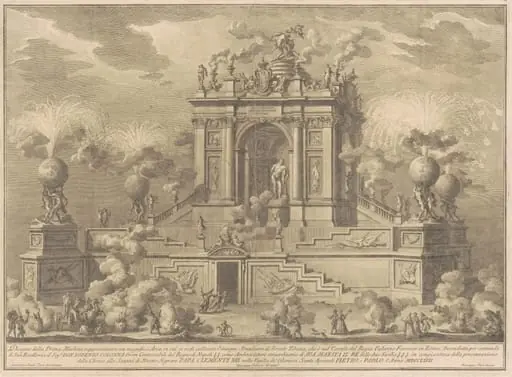 The Prima Macchina for the Chinea of 1767: A Triumphal Arch with the Farnese Hercules
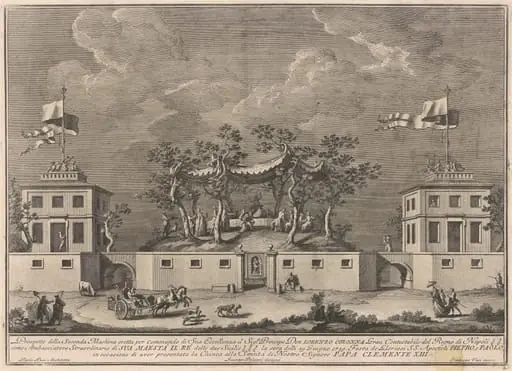 The Seconda Macchina for the Chinea of 1759: A "Deliziosa" with a Bacchanal
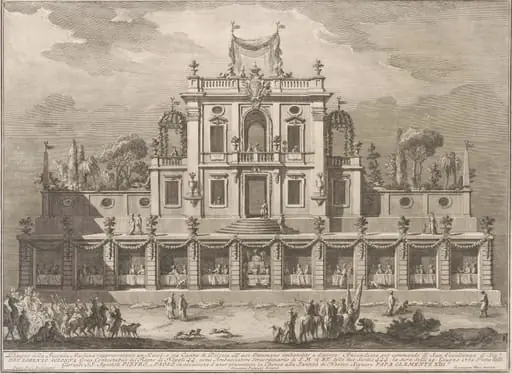 The Seconda Macchina for the Chinea of 1762: A Kiosk, or Pleasure-House in Ottoman Style
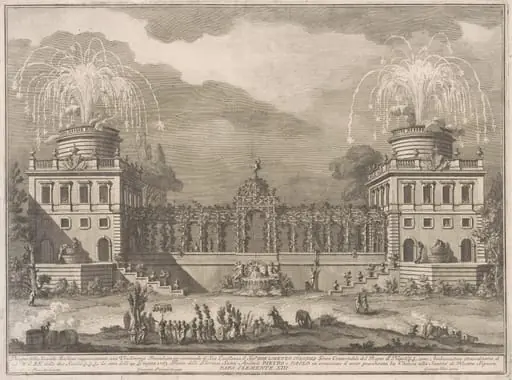 The Seconda Macchina for the Chinea of 1763: The Grape Harvest
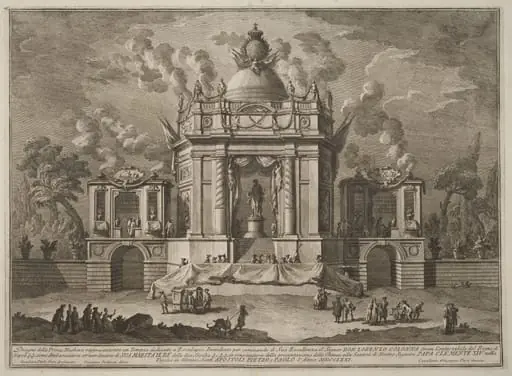 The Prima Macchina for the Chinea of 1771: The Temple of Asclepius
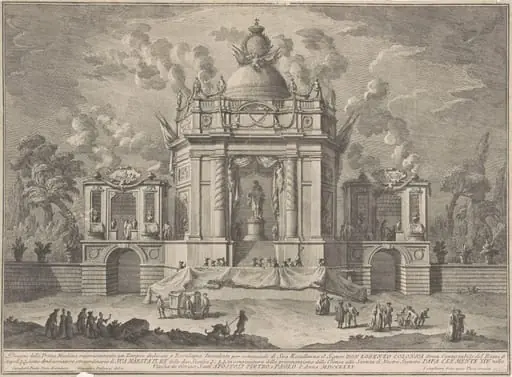 The Prima Macchina for the Chinea of 1771: The Temple of Asclepius
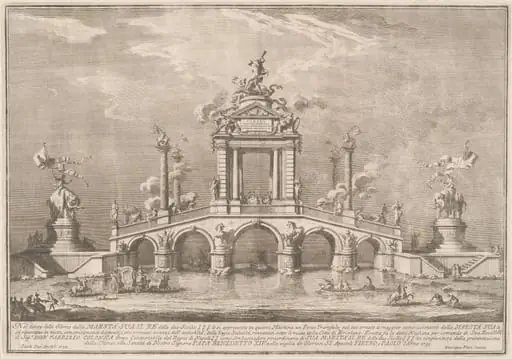 The Prima Macchina for the Chinea of 1755: A Triumphal Bridge with Antiquities from Herculaneum
 The Prima Macchina for the Chinea of 1773: The Temple of Peace
 The Prima Macchina for the Chinea of 1755: A Triumphal Bridge with Antiquities from Herculaneum
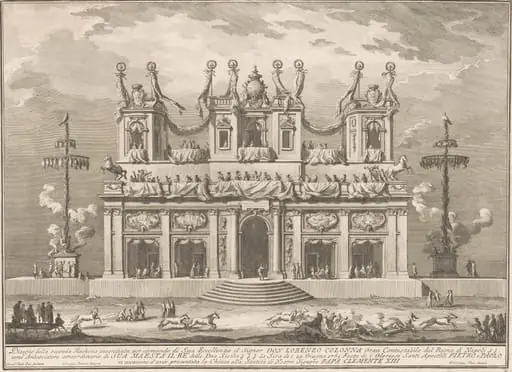 The Seconda Macchina for the Chinea of 1765: A Decorated Building with Cockaigne Poles
 The Prima Macchina for the Chinea of 1773: The Temple of Peace
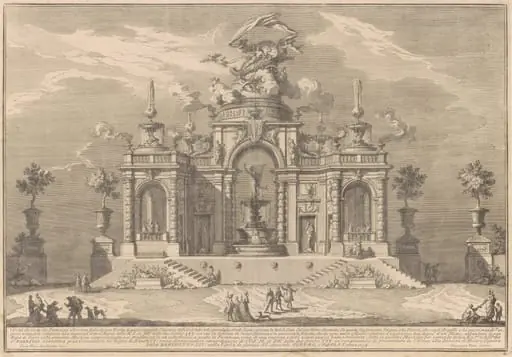 The Prima Macchina for the Chinea of 1754: The Palace of Venus in Cyprus
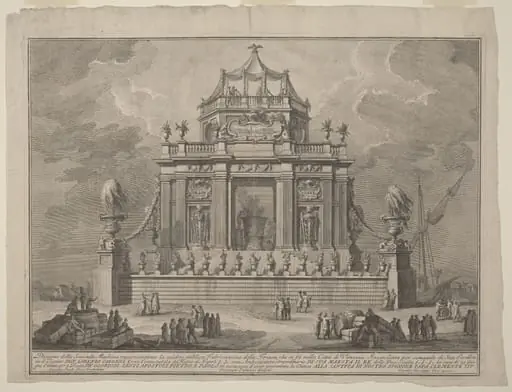 The Seconda Macchina for the Chinea of 1773: The Preparation of Theriac in Venice
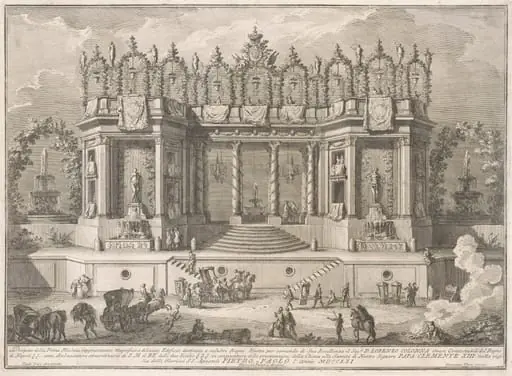 The Prima Macchina for the Chinea of 1761: The Salubrious Baths
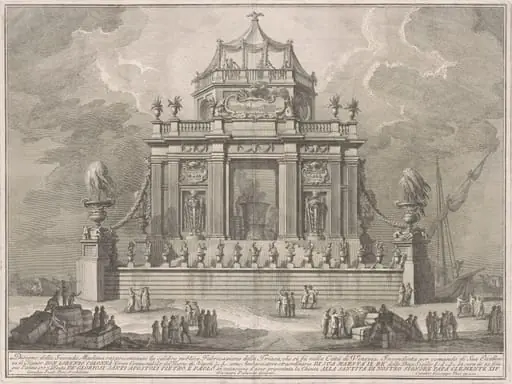 The Seconda Macchina for the Chinea of 1773: The Preparation of Theriac in Venice