Artwork
Interior of the Pantheon, Rome
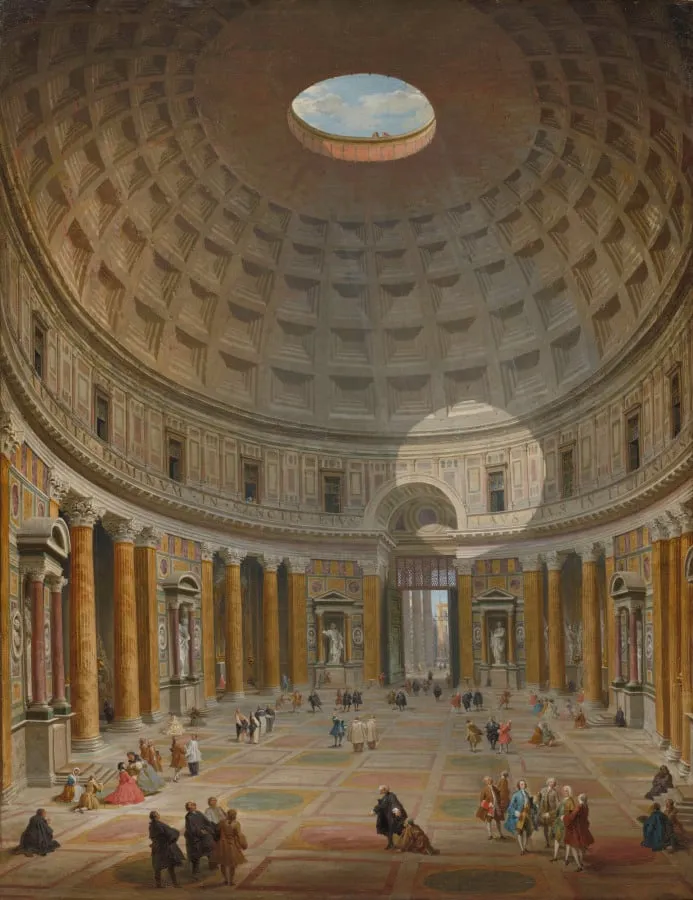
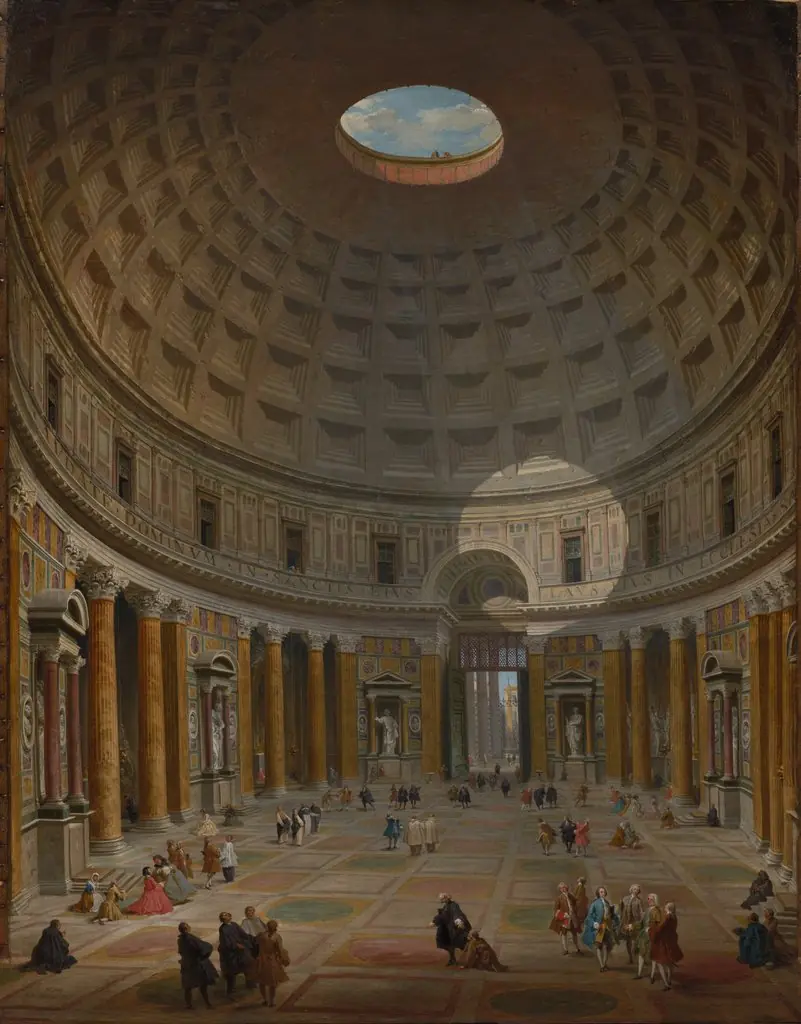
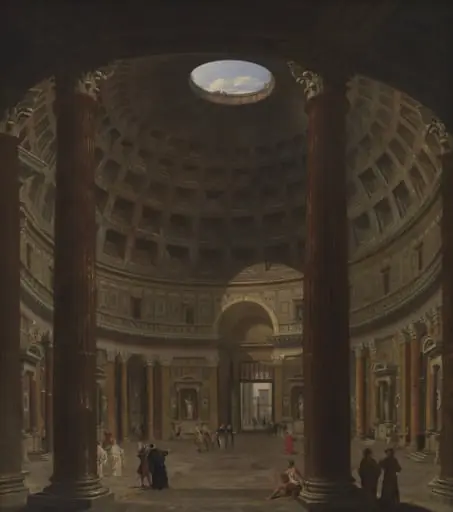
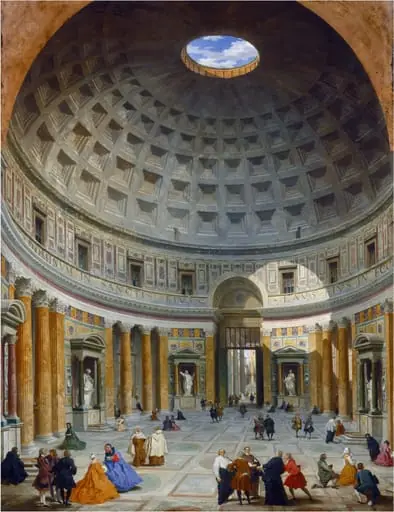
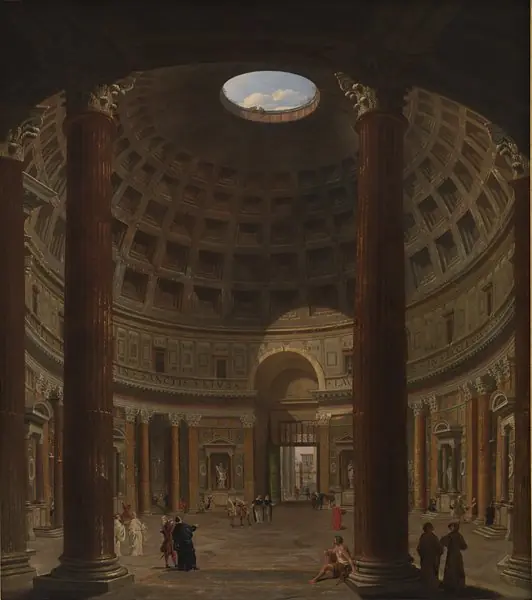
Interior of the Pantheon, Rome is an unspecified painting by the Baroque artist Giovanni Paolo Panini. It dates from 1747 and is held in the collection of the Cleveland Museum of Art.
About this work
You see the inside of the Pantheon in Rome—sunlight streaming through the big round skylight, people chatting, praying, or just standing around.
You see the inside of the Pantheon in Rome—sunlight streaming through the big round skylight, people chatting, praying, or just standing around.
Panini painted this in 1747, when the building was both a church and a tourist spot. He fills the space with tiny figures: nobles in fancy clothes, visitors sketching, even a dog sniffing the floor. The mix shows how the Pantheon worked as a public place, not just a monument.
Look up more paintings of Italy, 18th century to see how artists pictured its famous sites.
Overview
The canvas captures the interior of Rome’s Pantheon, its massive oculus admitting a shaft of daylight that illuminates a bustling scene beneath the dome. Figures of varied rank and purpose—clergy, aristocrats, travelers, and artists—populate the space, some engaged in prayer, others in conversation or sketching. The composition conveys the building’s dual identity as a sacred site and a popular public venue in mid‑18th‑century Rome.
Subject & Meaning
By juxtaposing devout worshippers with curious visitors, the work reflects the Pantheon’s role as a shared civic arena where religious ritual coexists with social display. The inclusion of a dog and informal gestures underscores the everyday, almost democratic, character of the space, suggesting that the monument functions as a communal gathering point rather than an exclusive sanctuary.
Technique & Style
Executed in 1747, the painting employs a finely detailed, almost miniature approach to populate the vast interior, allowing each figure to be distinguished despite the crowded composition. Panini’s handling of light—bright rays streaming from the oculus—creates a natural chiaroscuro that models the marble surfaces and highlights the architectural grandeur while maintaining a lively, narrative atmosphere.
History & Provenance
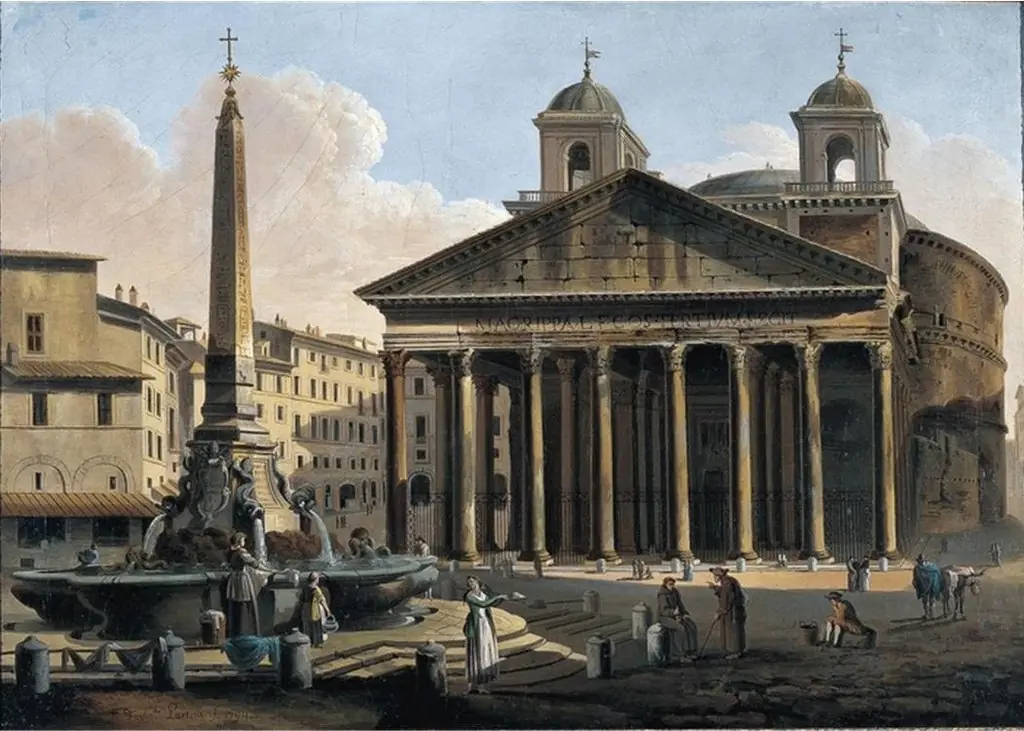
The Pantheon, originally erected as a Roman temple under Emperor Hadrian around AD 125, was consecrated as a Christian church in 609 and underwent significant restoration in the early 1700s. By the mid‑18th century, it served both as an active place of worship and a major attraction for travelers, a status that the painting documents at the time of its creation.
Context
Panini’s interior scene belongs to a broader 18th‑century Italian tradition of depicting iconic ruins and monuments for a growing market of Grand Tour participants. The work records the Pantheon’s contemporary function as the venue for the city’s principal art fair, illustrating how the ancient structure was integrated into the cultural and commercial life of Rome.
Artist & collection
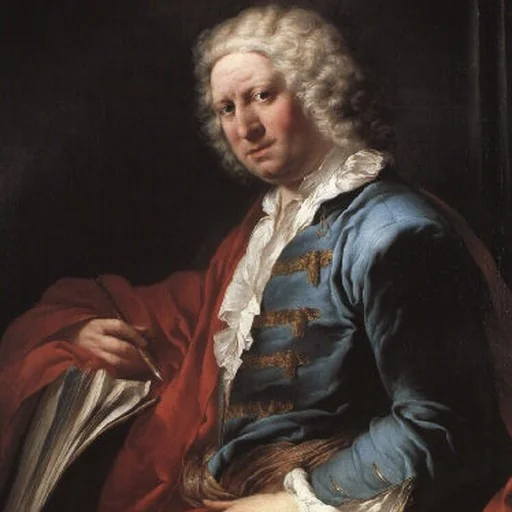
Artist
Giovanni Paolo, also known as Gian Paolo Panini or Pannini (17 June 1691 – 21 October 1765), was an Italian Baroque painter and architect who worked in Rome and is primarily known as one of the vedutisti ("view painters").