Artwork
The allegory of Fire
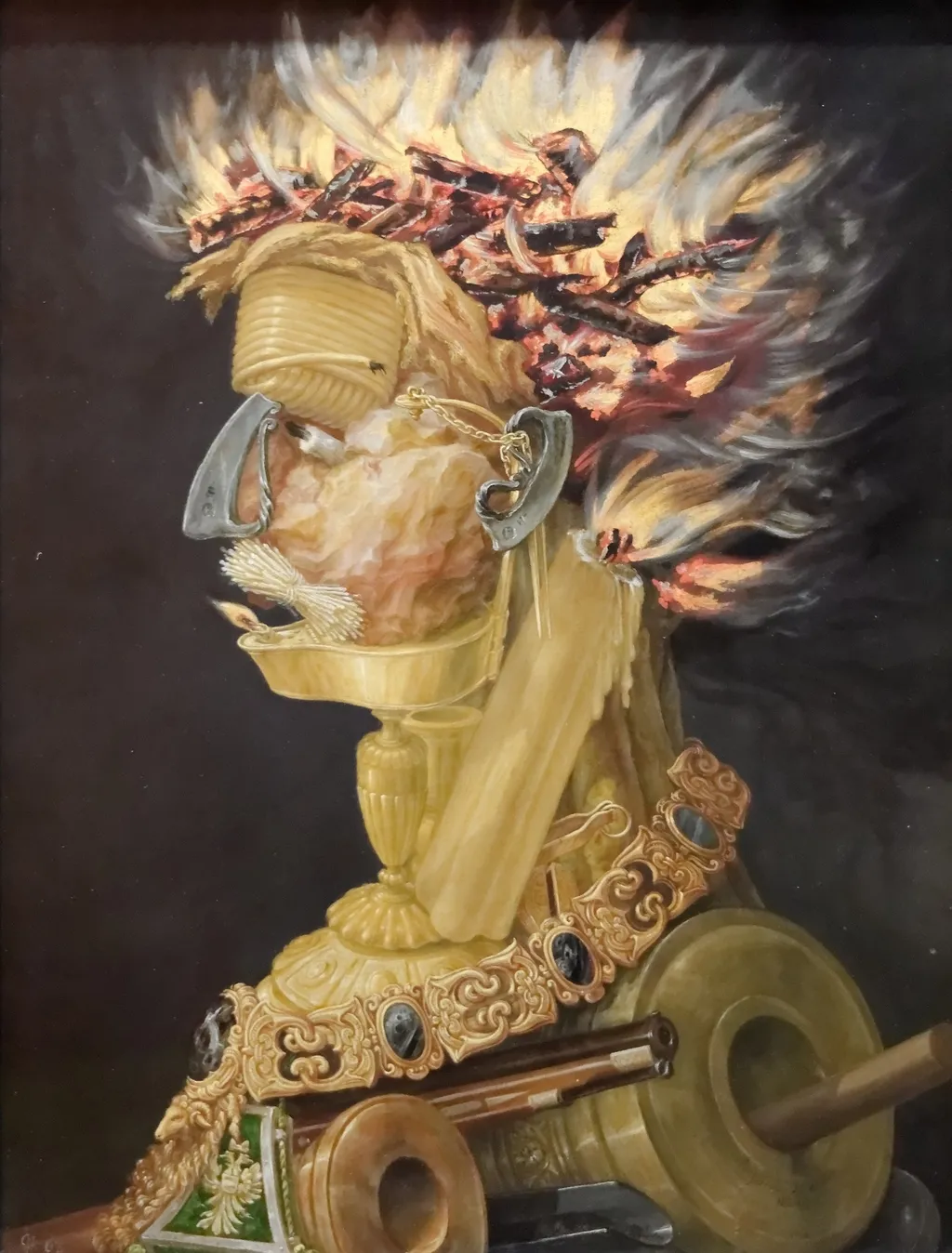
The allegory of Fire is an unspecified painting by the Mannerist artist Giuseppe Arcimboldo. It dates from 1566 and is held in the collection of the Kunsthistorisches Museum.
About this work
Overview
Giuseppe Arcimboldo’s *The Allegory of Fire* (1566) is a Mannerist painting that assembles a human likeness from a collection of combustible items. The composition presents a face whose features are rendered in flames, crowned by a ring of fire and set against a backdrop of yellow drapery and a jeweled golden collar. The work is part of the Kunsthistorisches Museum’s collection in Vienna.
Subject & Meaning
The image functions as an allegorical representation of fire, translating the element’s volatile character into a portrait format. By constructing the visage from burning motifs, Arcimboldo visualizes the transformative power of fire, suggesting both its destructive capacity and its role as a source of illumination and energy within the symbolic hierarchy of the four classical elements.
Technique & Style
Arcimboldo employs his characteristic composite‑head method, arranging disparate objects—here, flames, orange and red tongues, and metallic accents—to suggest anatomical features. The painting’s exaggerated proportions, vivid coloration, and intricate detail reflect Mannerist tendencies toward artificiality and intellectual play, while the illusion of melting flesh underscores the painter’s interest in visual paradox.
History & Provenance
Created during Arcimboldo’s service as court painter to Holy Roman Emperors Ferdinand I, Maximilian II, and Rudolf II, the work formed part of the imperial collection. It later entered the holdings of the Kunsthistorisches Museum, where it remains on display, illustrating the artist’s role within the Habsburg court and his contributions beyond the more familiar composite portraits.
Context
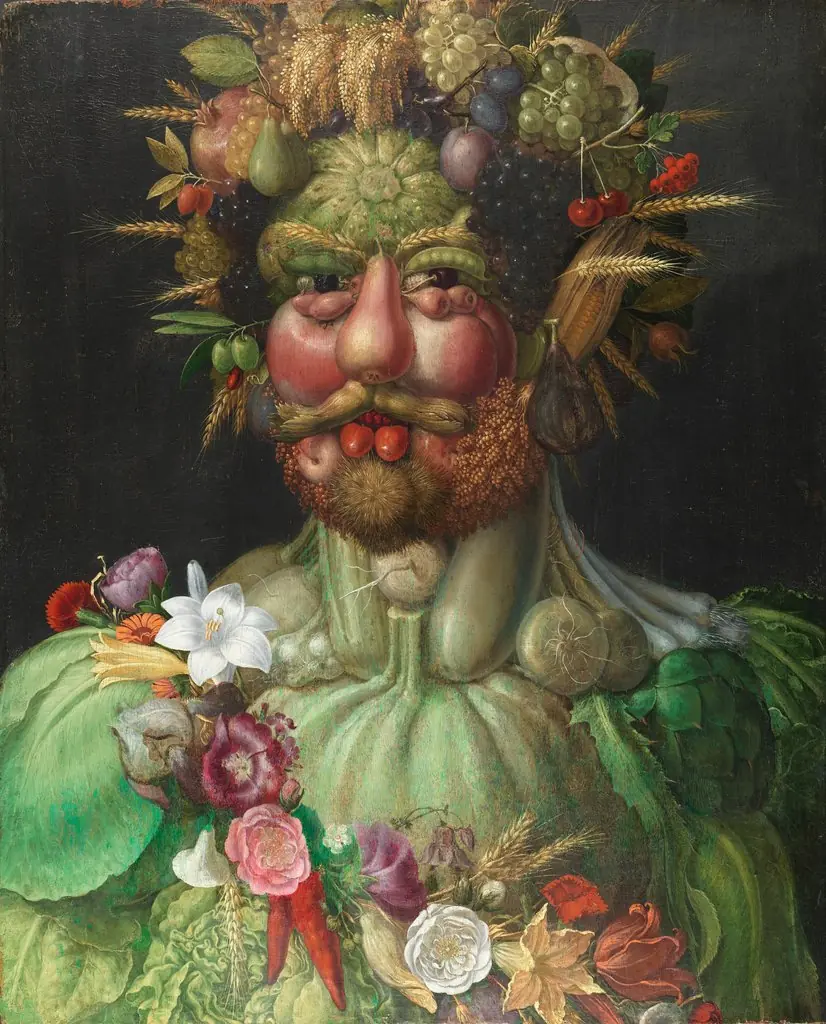
The painting belongs to a series of elemental allegories that complement Arcimboldo’s better‑known series of heads composed of fruits, vegetables, and objects.
The painting belongs to a series of elemental allegories that complement Arcimboldo’s better‑known series of heads composed of fruits, vegetables, and objects. While primarily celebrated for those whimsical portraits, he also produced religious commissions and naturalistic animal studies, demonstrating a versatile output that catered to the eclectic tastes of the late‑Renaissance imperial patrons.
Own this work as a print
Artist & collection
Artist
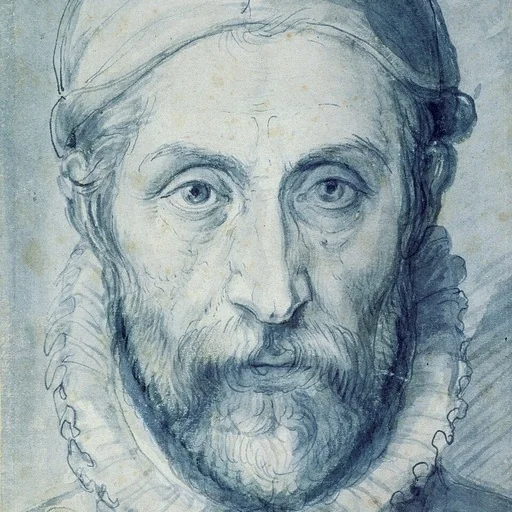
Giuseppe Arcimboldo, also spelled Arcimboldi (Italian: ; 5 April 1527 – 11 July 1593), was an Italian Mannerist painter best known for creating imaginative portrait heads made entirely of objects such as fruits, vegetables, flowers, fish…

 Metsästysasetelma
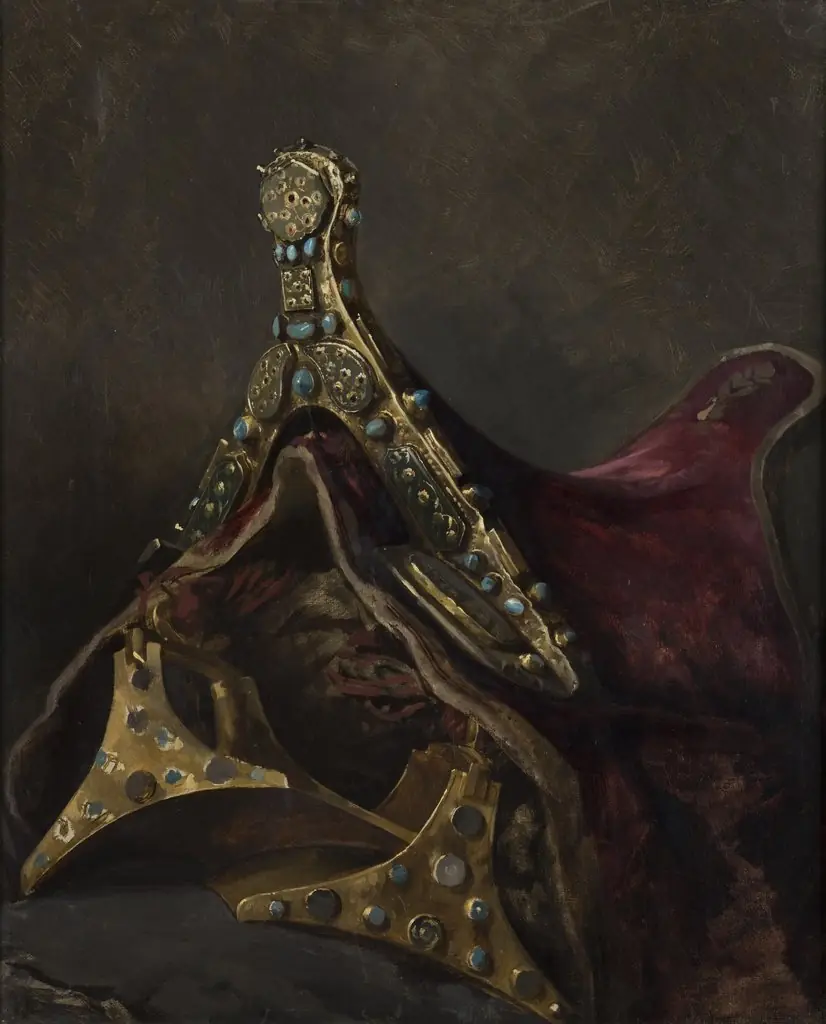 Study of Stirrups and a Saddle
 Rebhühner und Jagdgerät
 The Interior of the Tomb of King Casimir the Great
 Pluto
Pluto Woman Holding a Shawl
 Visions of the Hereafter: Hell
 Studium zbroi Stefana Batorego
 Pluto
Pluto Study of an Ornamental Escuffas
 Păsări moarte cu cocoș de munte; pandant; Păsări și iepure mort
 Saint Maurice