Artwork
Pluto
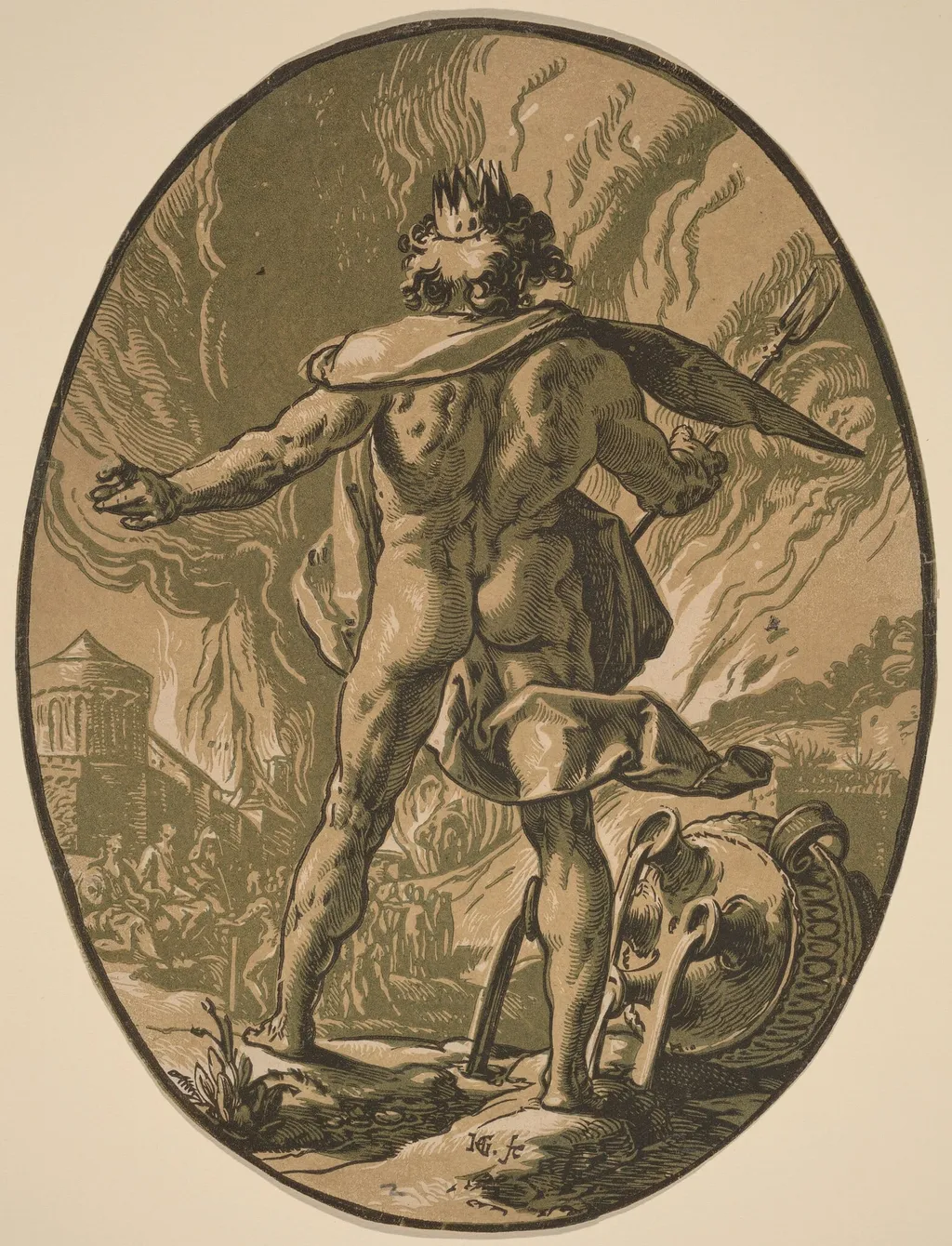
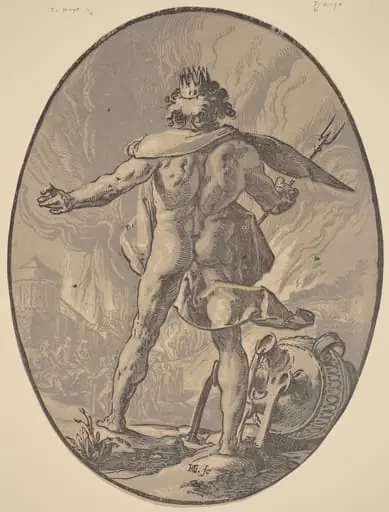
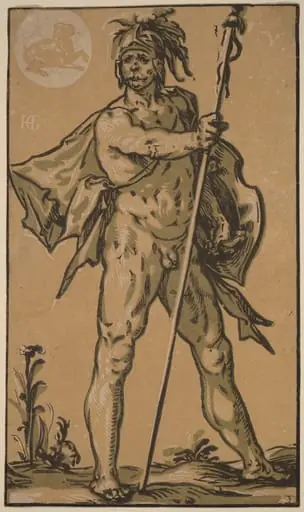
Pluto is an ink print by the Renaissance artist Hendrik Goltzius. It dates from 1589 and is held in the collection of the National Gallery of Art.
About this work
Overview
Hendrick Goltzius's 'Pluto' is a print created in 1589 using the chiaroscuro woodcut technique on laid paper. It is a representation of the Roman god of the underworld.
Subject & Meaning
The print depicts Pluto, a figure from Roman mythology associated with the underworld. The dark, shadowy rendering of the god is characteristic of his role.
Technique & Style
Goltzius employed chiaroscuro, a technique that utilizes strong contrasts between light and dark to create depth. The use of sepia-ochre, green, and black inks on laid paper adds to the dimensional effect of the image.
History & Provenance
Created by Hendrick Goltzius, a prominent figure in the Northern Mannerism movement, 'Pluto' showcases the artist's technical skill and intricate composition style, hallmarks of his work as a leading Dutch engraver of the early Baroque period.
Artist & collection
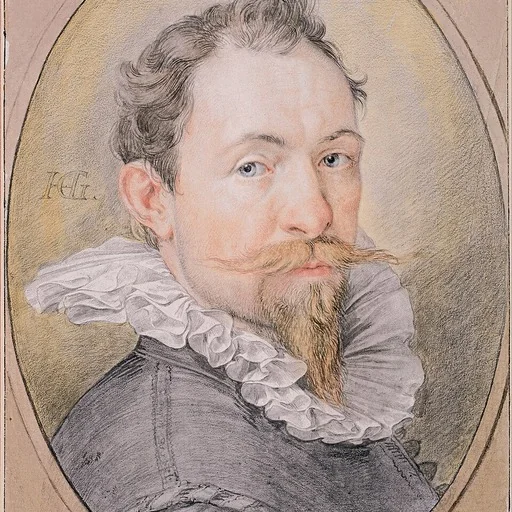
Artist
Hendrick Goltzius (German: , Dutch: ; né Goltz; January or February 1558 – 1 January 1617) was a German-born Dutch printmaker, draftsman, and painter.