Artwork
Monumental Vaulted Hall with Staircase
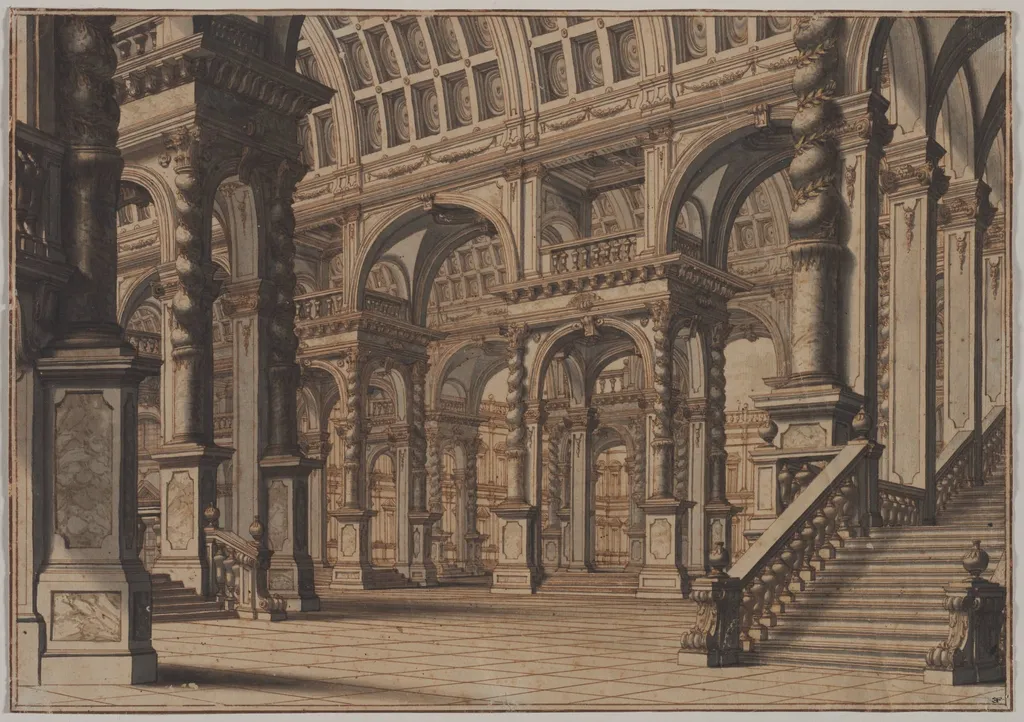
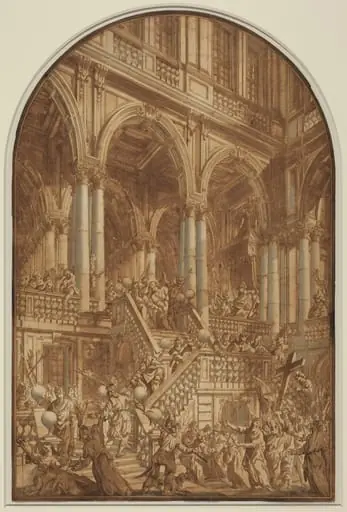
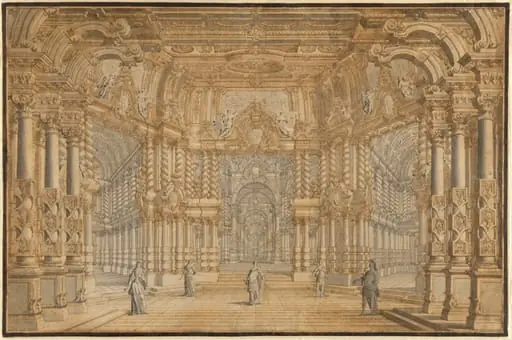
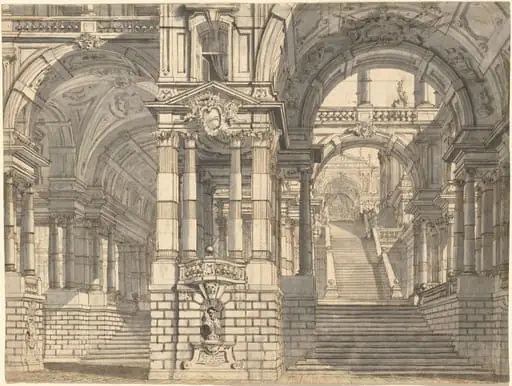
Monumental Vaulted Hall with Staircase is a drawing by the Baroque artist Giuseppe Galli Bibiena. It dates from 1738 and is held in the collection of the Cleveland Museum of Art.
About this work
Overview
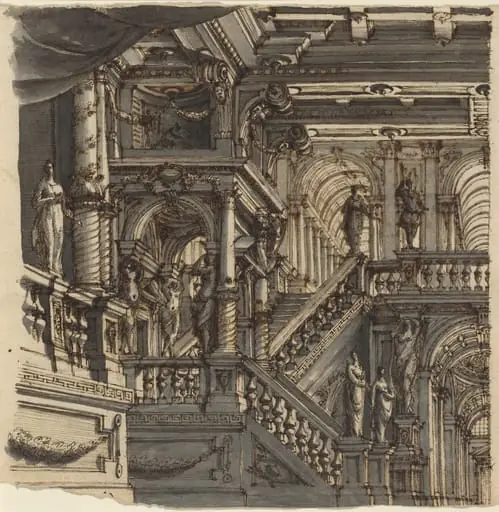
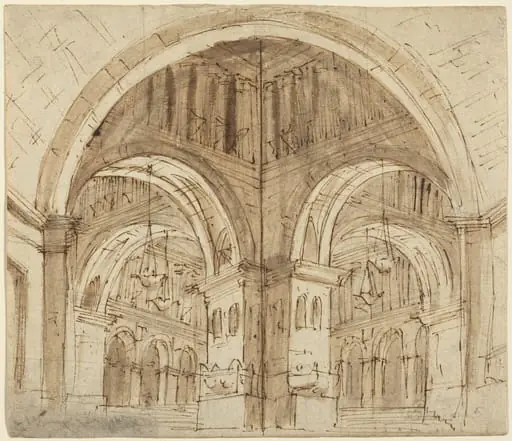
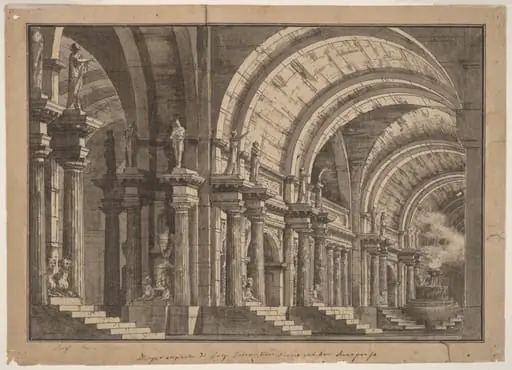
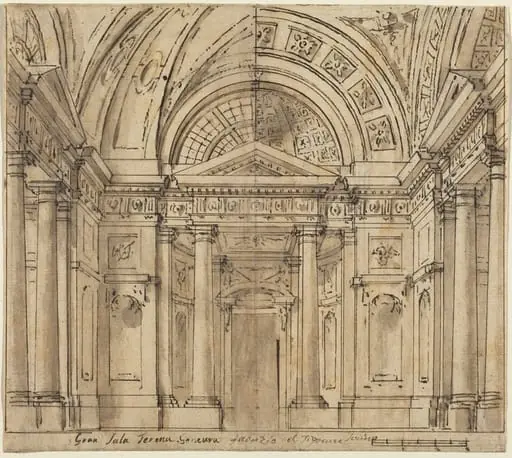
Created in 1738 by Giuseppe Galli Bibiena, this drawing depicts an imaginary interior space of monumental scale. Executed in ink and wash, it presents a theatrical architectural vision rather than a documented structure. The work resides in the collection of The Cleveland Museum of Art, where it exemplifies the Bibiena family’s specialization in illusionistic stage and architectural design.
Subject & Meaning
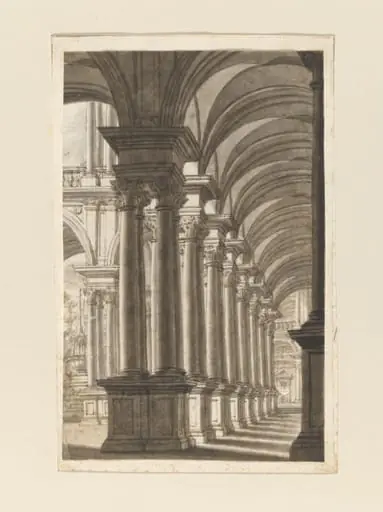
The drawing portrays a vast, vaulted hall dominated by rhythmic arches, towering columns, and ornate wall treatments. A grand staircase anchors the composition, suggesting ceremonial movement through space. The architecture is not functional but symbolic—intended to evoke authority, order, and the sublime, reflecting the Baroque fascination with spatial drama and hierarchical grandeur.
Technique & Style
Perspective is rigorously constructed, with receding vaults and diminishing columns guiding the eye toward a distant vanishing point.
Galli Bibiena employed precise ink lines and graded washes to model forms and suggest depth. Perspective is rigorously constructed, with receding vaults and diminishing columns guiding the eye toward a distant vanishing point. The interplay of light and shadow enhances the illusion of volume, while decorative motifs on walls and ceilings are rendered with meticulous detail, characteristic of theatrical design conventions of the period.
History & Provenance
The drawing emerged from the workshop of the Bibiena family, renowned for their architectural designs for European courts and opera houses. Likely produced as a preparatory study or presentation piece, it entered the Cleveland Museum of Art’s collection in the 20th century. Its survival reflects the enduring interest in Baroque stage design as both artistic and technical achievement.
Context
In early 18th-century Europe, architectural drawings like this were vital for courtly entertainment and ceremonial spaces. The Bibienas served Habsburg and other royal patrons, designing sets and interiors that merged real architecture with illusion. This work aligns with a tradition of speculative architecture, where fantasy and engineering converged to impress audiences and reinforce political prestige.
Legacy
Giuseppe Galli Bibiena’s drawings influenced later generations of scenographers and architects by demonstrating how perspective could manipulate perception. Though not built, such works preserved the aesthetic ideals of Baroque spectacle. Today, they serve as key documents for understanding how architecture was imagined, communicated, and experienced in an era before photographic representation.
Artist & collection

Artist
Giuseppe Galli Bibiena (5 January 1696 - 12 March 1757), Italian designer, became the most distinguished artist of the Galli da Bibiena family.