Artwork
A Monumental Vaulted Hall with a Smoking Altar
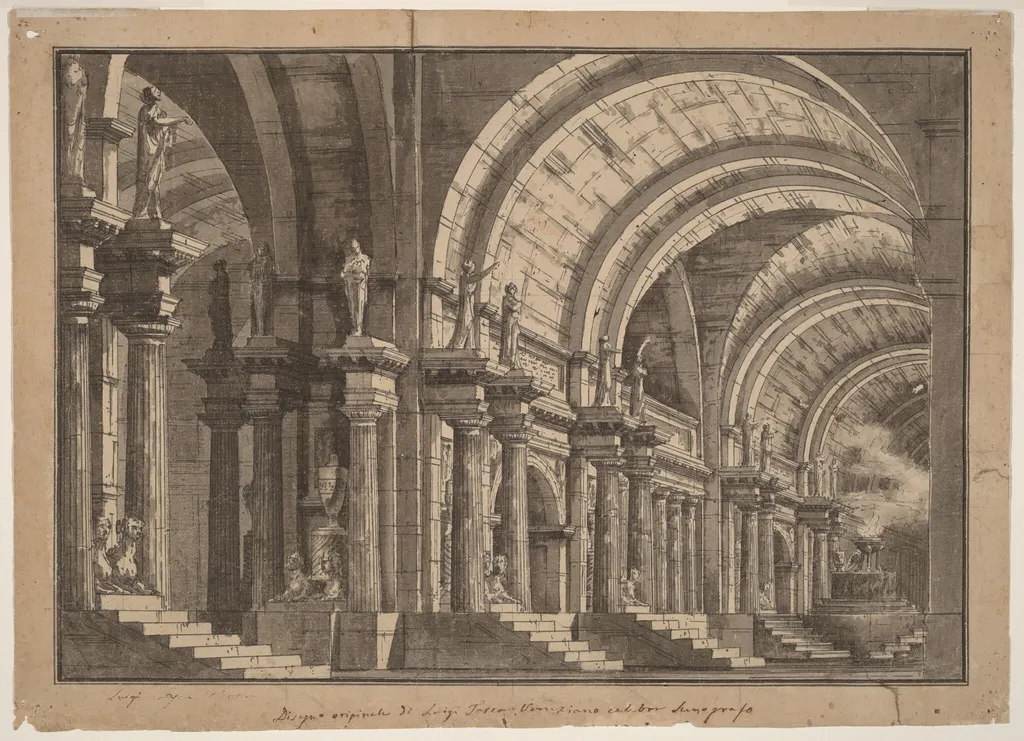
A Monumental Vaulted Hall with a Smoking Altar is an ink drawing by the Romanticist artist Luigi Tasca. It dates from 1814 and is held in the collection of the National Gallery of Art.
About this work
Overview
The vaulted ceiling arches overhead, emphasizing the room’s grandeur.
Luigi Tasca’s 1814 drawing, titled A Monumental Vaulted Hall with a Smoking Altar, depicts an expansive interior space rendered in pen, ink and wash over graphite. The composition centers on a long hall framed by soaring arches and columns, punctuated by statuary on pedestals and a modest altar from which a wisp of smoke ascends. The vaulted ceiling arches overhead, emphasizing the room’s grandeur.
Subject & Meaning
The scene suggests a ceremonial setting, the altar’s smoke implying an ongoing rite or offering. Statues placed in niches and on pedestals reinforce a classical ambience, while the architectural elements—arched openings, carved wall details, and lofty vault—convey a sense of solemnity and ritual importance within an imagined sacred or public space.
Technique & Style
Tasca employs fine pen work combined with ink wash to model the stone surfaces, using cross‑hatching and tonal gradations to suggest depth and texture. The wash creates atmospheric shadows that delineate the curvature of the vault and the volumetric presence of the columns, while the graphite underdrawing provides structural guidance for the intricate architectural details.
History & Provenance
Created in 1814, the drawing is a product of early‑nineteenth‑century academic drawing practices in Italy. While specific ownership records are limited, the work has been catalogued among Tasca’s architectural studies, reflecting his interest in monumental interiors and the interplay of light, shadow, and ritual symbolism.
Artist & collection


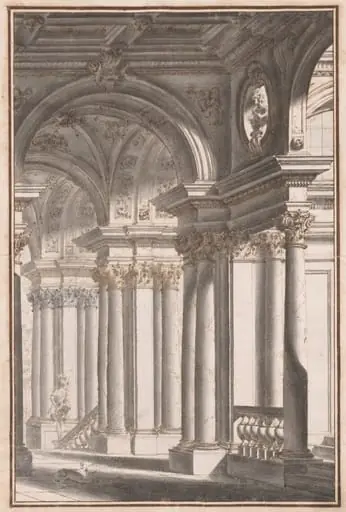 Architectural Capriccio with a Soldier and Dog
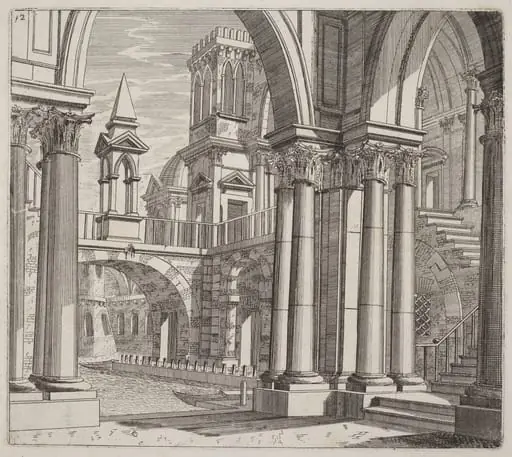 Architectural Fantasy with Buildings, Stairways, and Portals beside a Canal
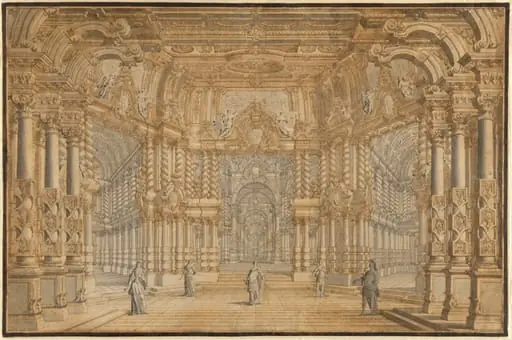 A Stage Design for an Opera with Actors
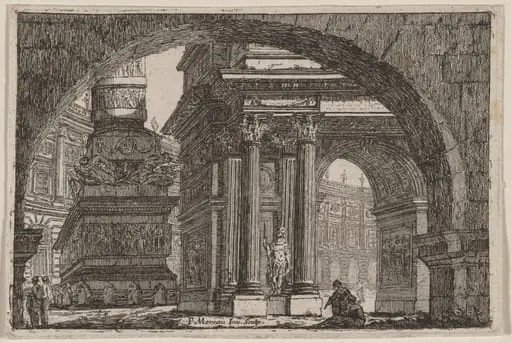 Ancient Forum Seen Beneath an Arch
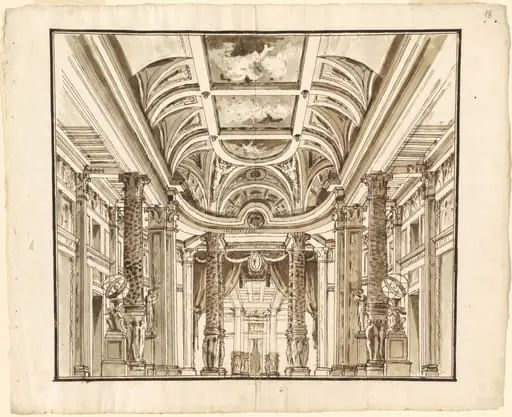 Fantasy of a Great Hall with Basketweave Columns
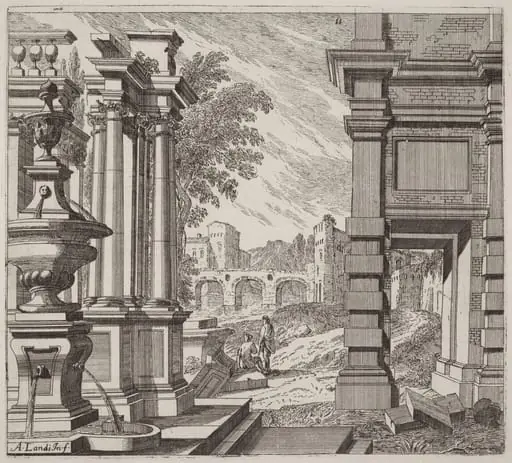 Architectural Fantasy with a Fountain, Classical Ruins, and a Bridge
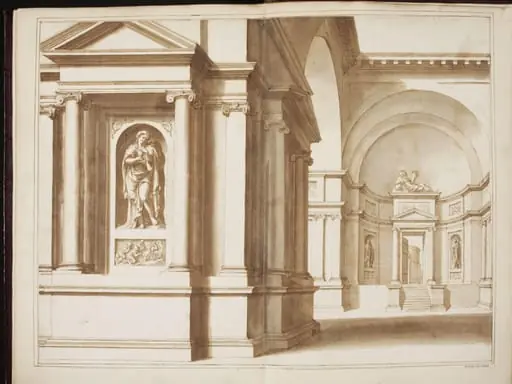 Interior of a Palazzo with Classical Sculptures in Niches and above a Door
 Capriccio: A Palace with a Courtyard by the Lagoon
 Il Greco in Troia: Plate 10
 Architectural Fantasy with Arched Gateways