Artwork
A Stage Design for an Opera with Actors
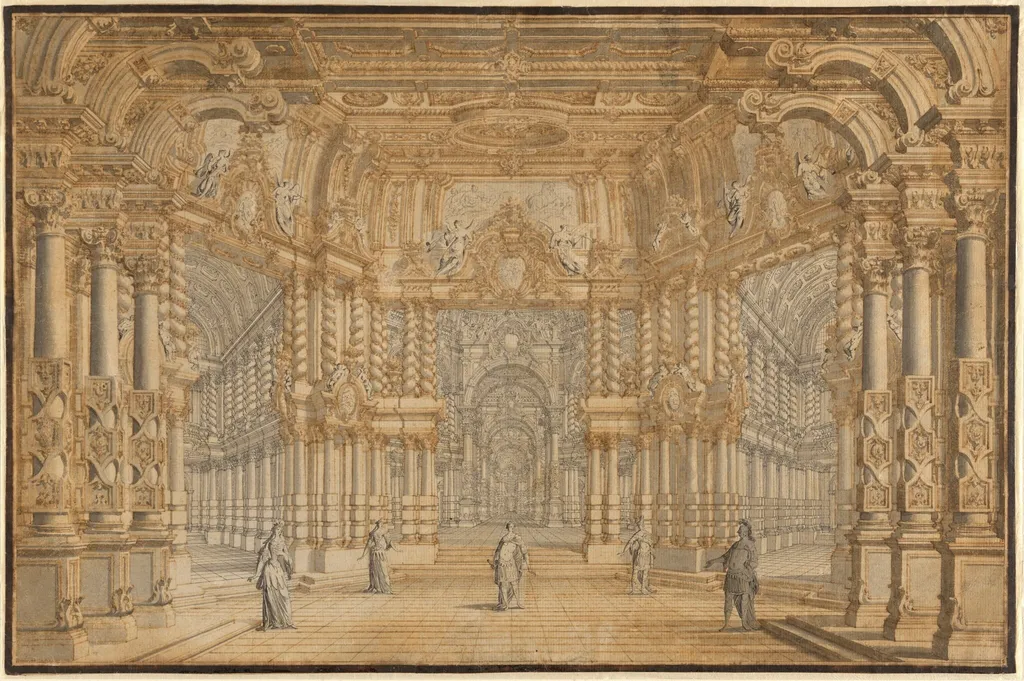
A Stage Design for an Opera with Actors is an ink drawing by the Baroque artist Giuseppe Galli Bibiena. It dates from 1750 and is held in the collection of the National Gallery of Art.
About this work
Overview
Created in 1750 by Giuseppe Galli Bibiena, this drawing is a theatrical design executed in pen and ink with gray and brown wash on laid paper. It served as a preparatory study for an operatic stage setting, reflecting the artist’s role in shaping visual narratives for performance. The work is mounted on a backing, indicating its function as a working model rather than a finished artwork.
Subject & Meaning
The scene portrays a mythologically inspired stage interior with towering columns, arched recesses, and celestial figures floating above. Actors in period dress move through the space, suggesting a narrative unfolding in a grand, imagined architecture. The inclusion of angels and ornamental details evokes divine presence, aligning with the elevated themes common in 18th-century opera.
Technique & Style
Bibiena employed fine pen lines and layered washes to simulate depth and texture, using cross-hatching to model shadows on stone surfaces and drapery.
Bibiena employed fine pen lines and layered washes to simulate depth and texture, using cross-hatching to model shadows on stone surfaces and drapery. The illusion of three-dimensional space was achieved through precise perspective and graduated tonal values, techniques essential for translating two-dimensional designs into immersive stage environments. The paper’s laid texture subtly enhances the tactile quality of the rendered architecture.
History & Provenance
As a member of the renowned Galli da Bibiena family, Giuseppe specialized in theatrical design for European courts. This drawing likely originated as a commission for an opera house, possibly in Vienna or Prague, where the family frequently worked. Its preservation suggests it was valued as a record of design practice, though its exact provenance before modern collections remains undocumented.
Context
In mid-18th-century Europe, opera was a dominant cultural form, and stage design was integral to its spectacle. Bibiena’s work exemplifies the era’s emphasis on illusionistic scenery, where architecture and light were manipulated to enhance drama. His designs bridged art and engineering, influencing both scenic practice and the public’s perception of theatrical space.
Legacy
Bibiena’s drawings helped standardize the use of perspective and tonal modeling in stage design, setting precedents for future generations of theatrical artists. While his sets were temporary, these preparatory works endured as documents of a transient art form. Today, they offer insight into the technical ingenuity behind 18th-century performance aesthetics.
Artist & collection

Artist
Giuseppe Galli Bibiena (5 January 1696 - 12 March 1757), Italian designer, became the most distinguished artist of the Galli da Bibiena family.

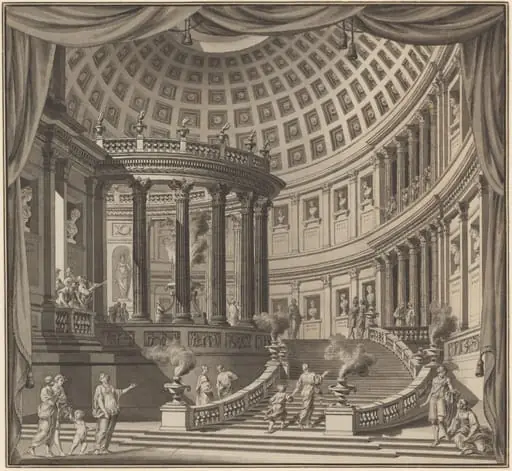 Design for a Stage Curtain: The Interior of an Elaborate Temple Dedicated to Illustrious Men
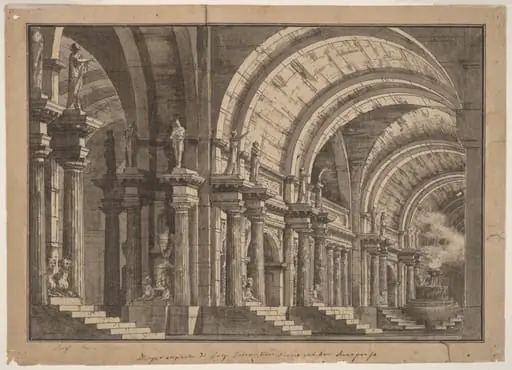 A Monumental Vaulted Hall with a Smoking Altar
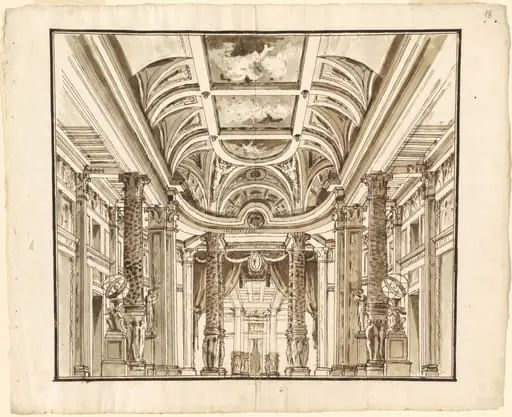 Fantasy of a Great Hall with Basketweave Columns
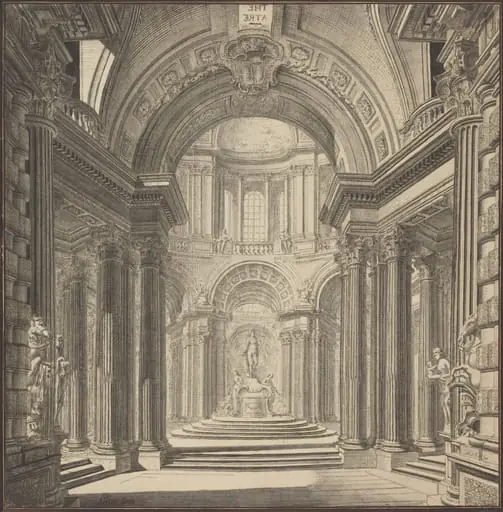 Interior of a Temple
 Architectural Capriccio with a Soldier and Dog
 The Interior of Saint Peter's, Rome
 Untitled
 Perspectival View of the Salon of the Palazzo Spinola, Genoa
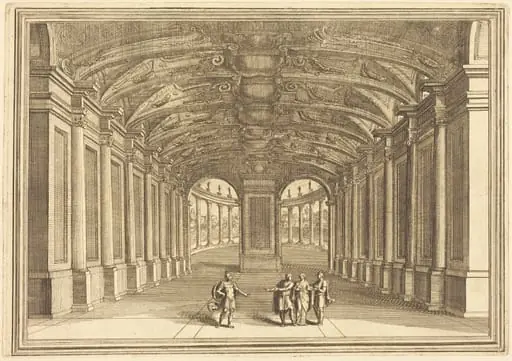 Il Greco in Troia: Plate 10
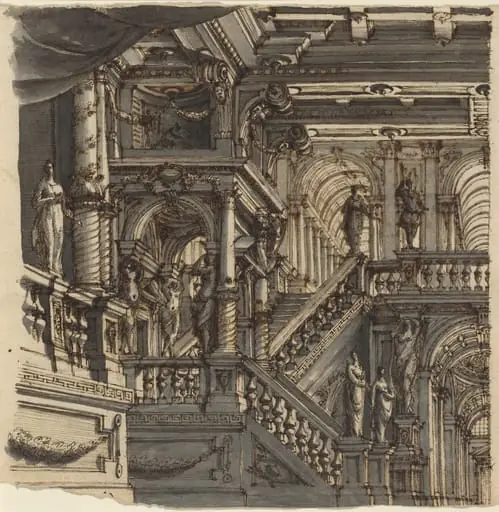 An Elaborate Staircase in a Palace
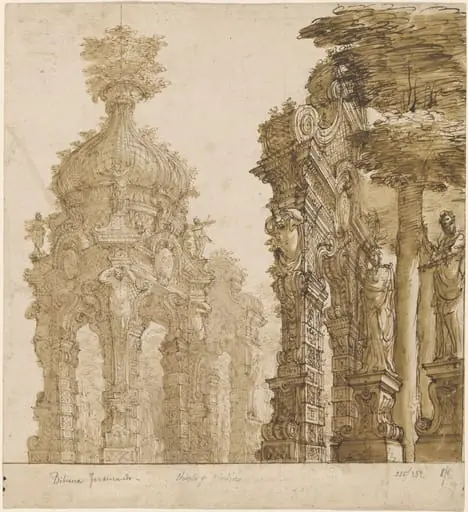 Stage Design of Garden Pavilions