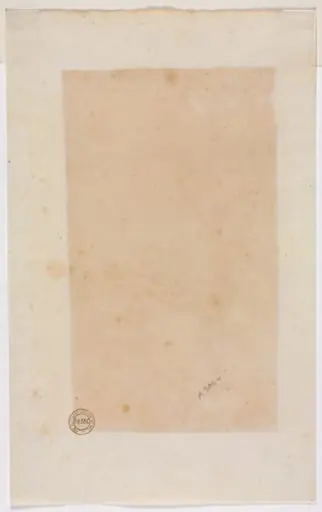
Artwork
Untitled
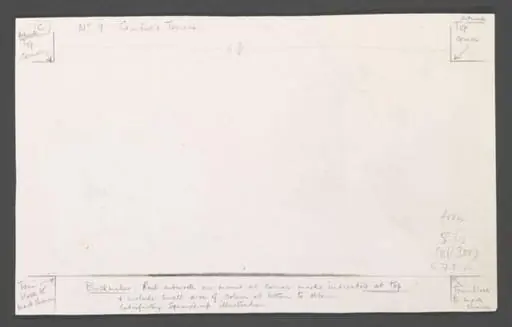
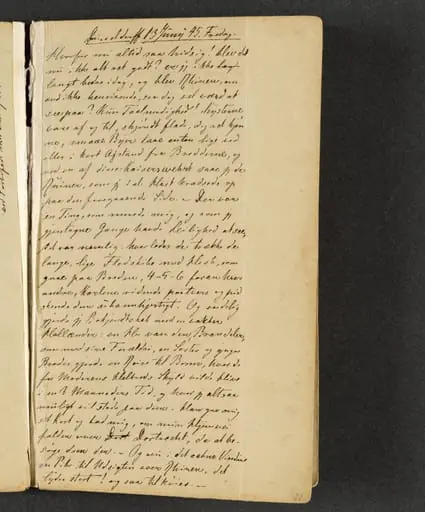
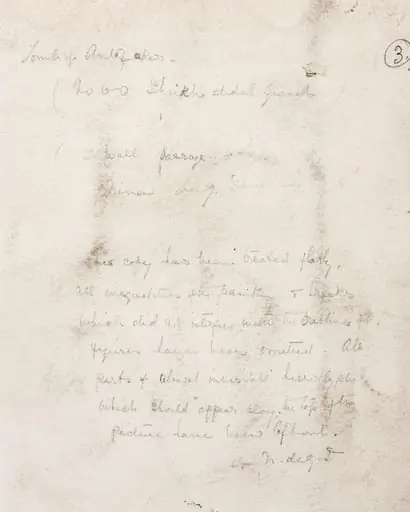
Untitled is a drawing by the Impressionist artist Edward William Godwin. It dates from 1851 and is held in the collection of the Victoria and Albert Museum.
About this work
Overview
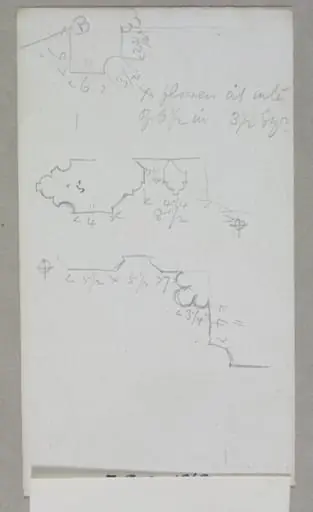
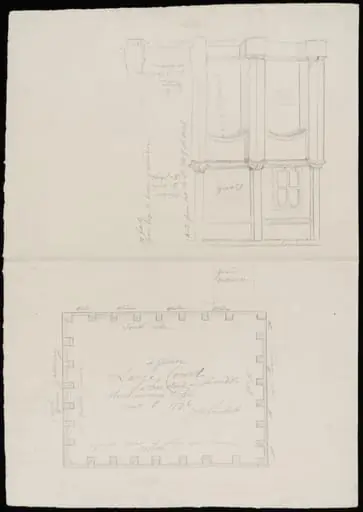
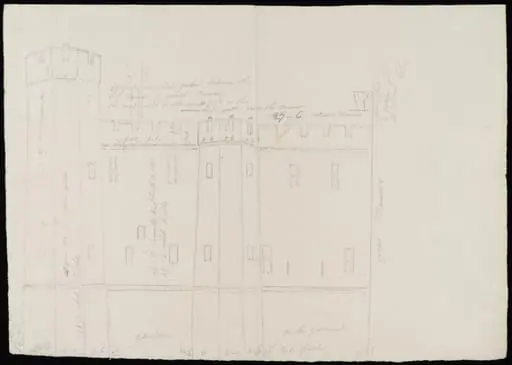
This small, faded drawing by Edward William Godwin, dated 1851, is one of 191 loose sheets from his personal sketchbooks spanning 1851 to 1884.
This small, faded drawing by Edward William Godwin, dated 1851, is one of 191 loose sheets from his personal sketchbooks spanning 1851 to 1884. Originally created in collaboration with James Hine for W. C. Burder’s publication on Bristol’s architectural heritage, it combines schematic plans with isolated architectural details. The paper shows signs of age—yellowed edges, faint ink—and bears marginal notations unrelated to architecture, suggesting the sheet was reused or annotated privately.
Subject & Meaning
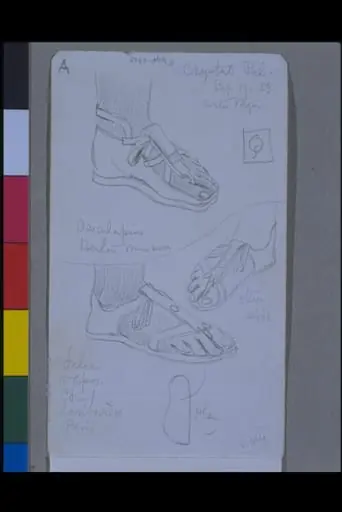
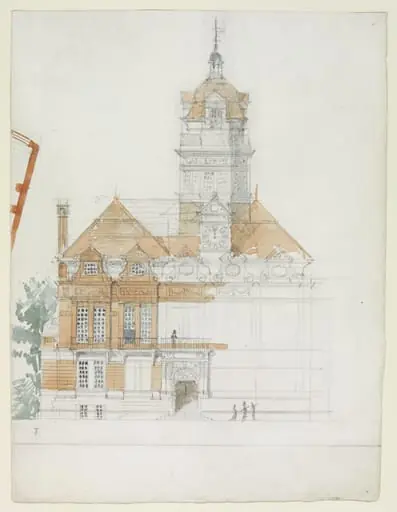
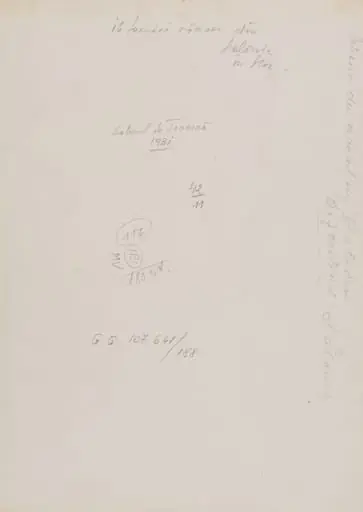
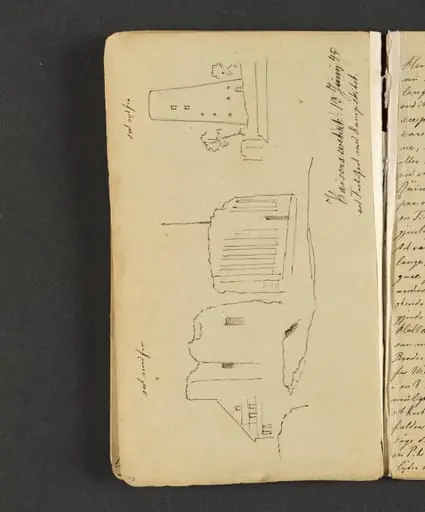
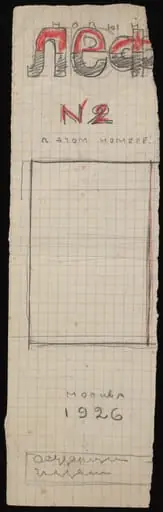
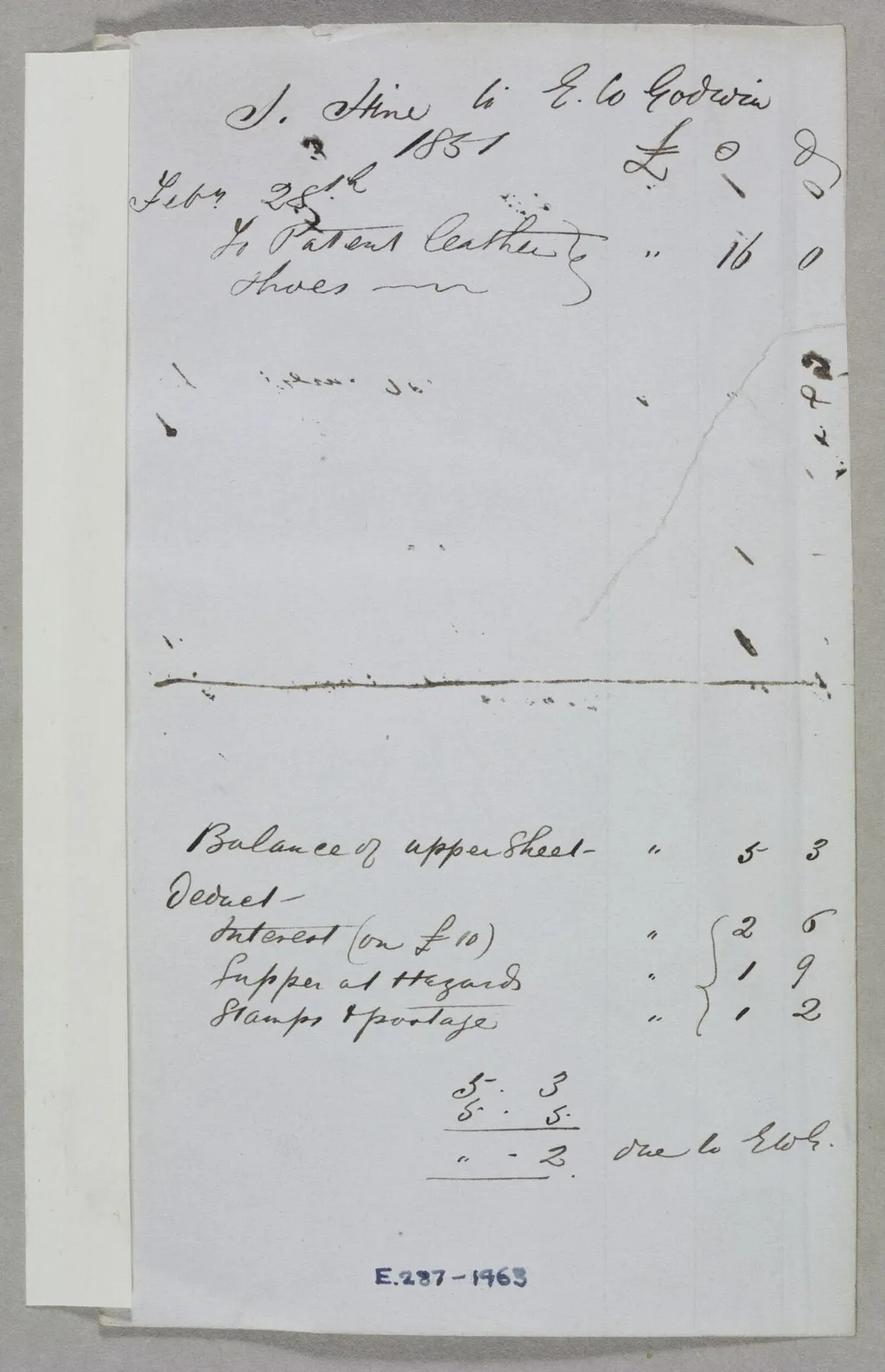
The central focus is a rudimentary building plan and fragments of architectural forms, likely intended for documentation in a regional study of historic structures. However, the margins contain unrelated handwritten notes—references to patent leather shoes, monetary sums, and phrases like 'Balance of upper sheet'—indicating the paper served dual purposes. These additions imply the sheet was part of a personal ledger or daily record, blurring the line between professional work and private life.
Technique & Style
Godwin’s architectural sketches are rendered in thin, uneven ink lines, with minimal shading and no perspective refinement. The plan is schematic, not to scale, suggesting rapid notation rather than polished drafting. The marginalia, in a different hand, appear hastily scrawled, with crossed-out figures and fragmented phrases. The contrast between the architectural draft and the casual notes reveals the practical, utilitarian nature of the sheet as a working document.
History & Provenance
The drawing originated in Godwin’s personal sketchbooks, later compiled as part of a collaborative project with James Hine for Burder’s 1850s publication on Bristol’s architecture. Its survival as a loose leaf suggests it was removed from its original binding, possibly during or after the book’s production. The marginal annotations, unrelated to the architectural content, hint at its reuse in domestic or financial contexts, though its exact path to institutional collection remains undocumented.
Context
In the early 1850s, architectural documentation often relied on field sketches compiled into published volumes. Godwin, then a young designer, worked alongside surveyors to record historic buildings before rapid urban change erased them. The presence of personal notes on the same sheet reflects the informal, multifunctional use of paper in professional practice—where architectural study and daily recordkeeping coexisted on the same surface.
Legacy
This fragmentary sheet offers insight into the working methods of 19th-century architectural surveyors, revealing how professional and personal records intertwined. While not a finished design, it preserves the raw material behind published works. Its survival as a standalone item, with traces of private use, enriches understanding of how such documentation was produced, stored, and repurposed beyond its original intent.
Artist & collection
Artist
Edward William Godwin was a bit of a mystery. He liked to draw. One interesting thing about him is that he dated his drawings, so we can see how his style changed over time. Check out his 1855 drawing to see his early…