Artwork
Untitled
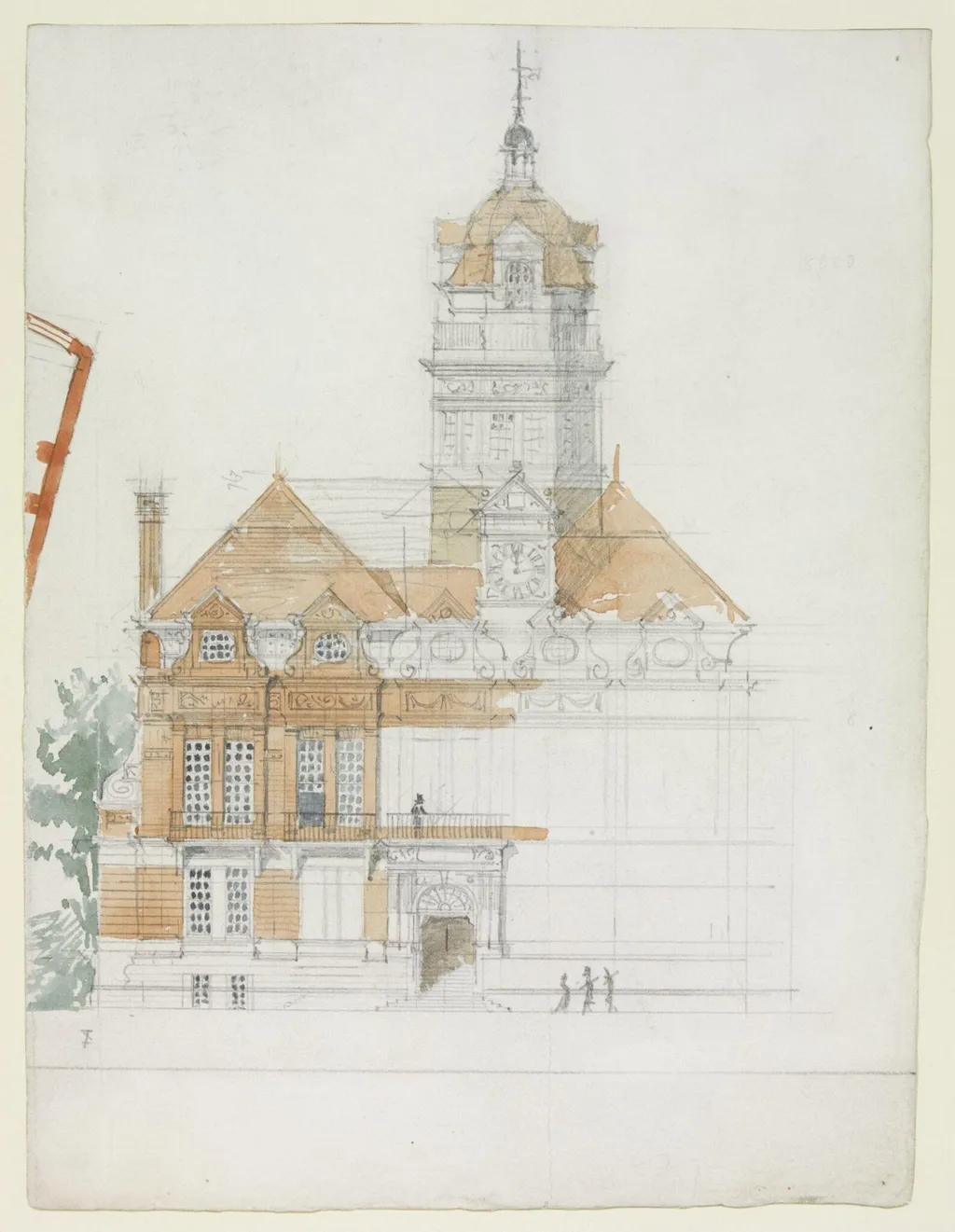
Untitled is a drawing by the Impressionist artist Edward William Godwin. It dates from 1876 and is held in the collection of the Victoria and Albert Museum.
About this work
Overview
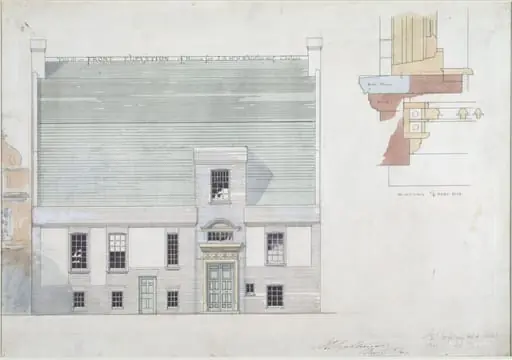
A pencil drawing depicting a partial elevation of a civic building, likely a town hall, with a prominent clock tower and steeply pitched roof.
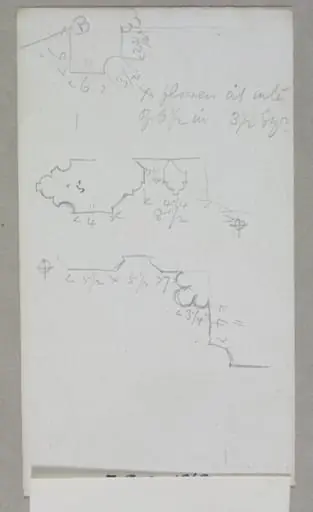
A pencil drawing depicting a partial elevation of a civic building, likely a town hall, with a prominent clock tower and steeply pitched roof. The composition is incomplete, with only key architectural elements rendered in light, tentative strokes. The reverse side holds faint preparatory sketches for decorative motifs, suggesting this was part of a broader design process rather than a finished presentation.
Subject & Meaning
The drawing appears to be a study for an architectural project, possibly intended for public use. The inclusion of a clock tower and ornate windows implies civic function and aesthetic ambition. The unfinished state suggests it was an exploratory phase, where form and detail were being tested before final execution, reflecting a design ethos focused on functionality and refined ornamentation.
Technique & Style
Executed in delicate pencil, the drawing relies on light hatching and sparse cross-hatching to suggest volume and texture, particularly around the building’s base. Large areas remain untouched, emphasizing negative space and structural clarity. The lines are precise but restrained, avoiding heavy shading in favor of subtle tonal gradations that preserve the drawing’s airy, provisional character.
History & Provenance
The drawing is connected to William Watt’s 1877 publication on E. W. Godwin’s furniture designs, indicating its origin within a circle of late 19th-century British designers. A related sketch in sketchbook E.242-1963, page 13, confirms its place in a broader set of architectural and decorative studies, likely made during Godwin’s active period of design experimentation.
Context
Produced during a time when architectural and decorative arts were increasingly integrated, the drawing reflects the influence of the Aesthetic Movement’s emphasis on harmony between structure and ornament. Such sketches were common among designers who worked across disciplines, treating buildings and furnishings as unified compositional fields.
Legacy
Though not a completed work, the drawing preserves the iterative nature of design practice in the late Victorian era. Its survival alongside related materials offers insight into how architects and designers refined ideas through incremental sketches, revealing the quiet, methodical process behind more polished public works.
Artist & collection
Artist
Edward William Godwin was a bit of a mystery. He liked to draw. One interesting thing about him is that he dated his drawings, so we can see how his style changed over time. Check out his 1855 drawing to see his early…

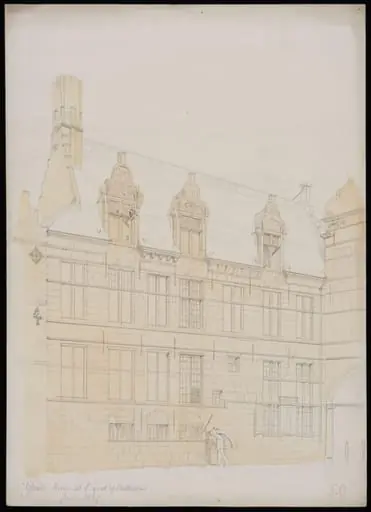 House at the E. end of the Cathedral, Ypres.
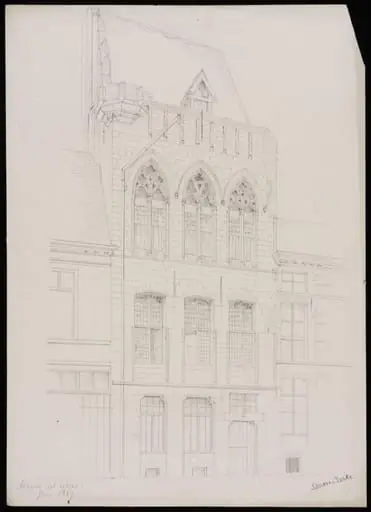 House at Ypres
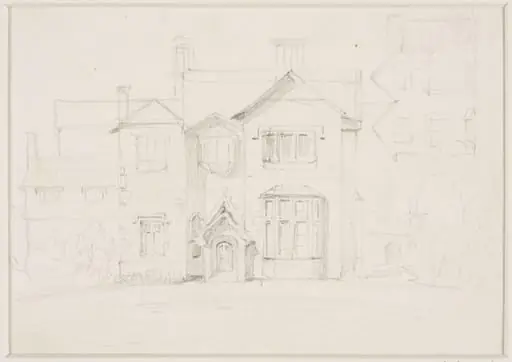 Front of a house
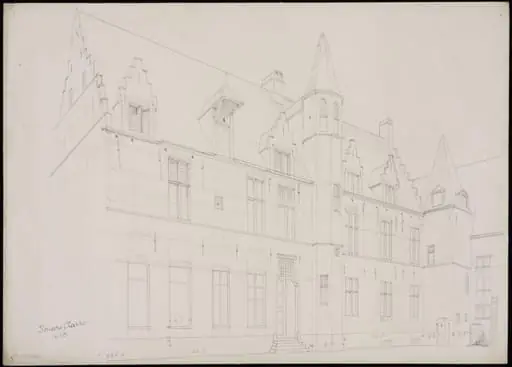 House at Mechlin, formerly a convent
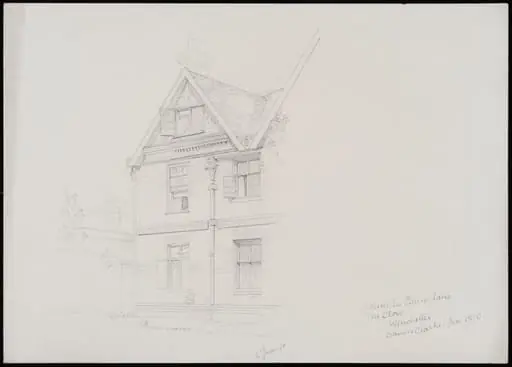 Houses in Canon Lane, The Close, Winchester
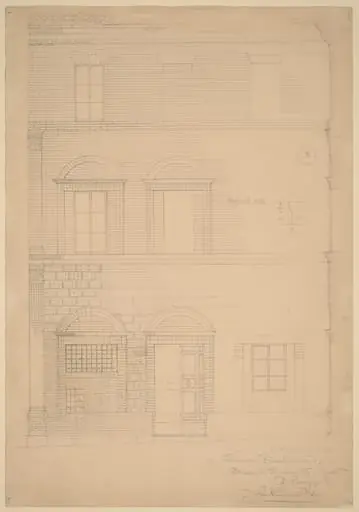 Siena Brickwork
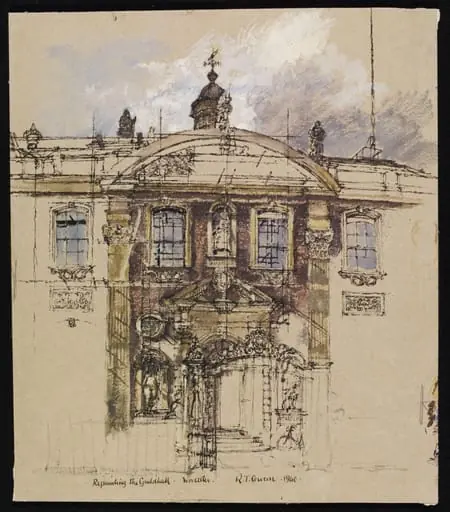 The Guildhall, Worcester
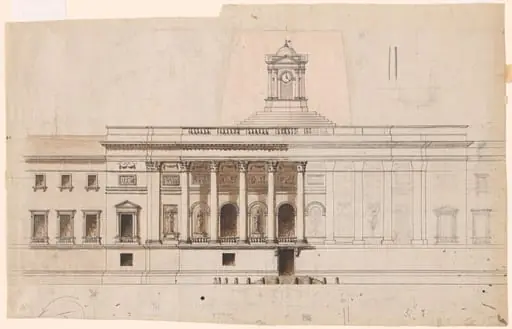 Architectural Study
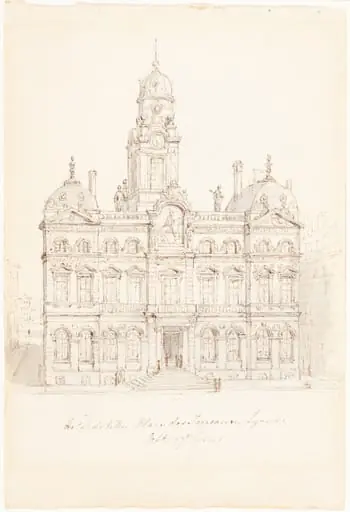 Hôtel de Ville, Place des Terreaux, Lyons
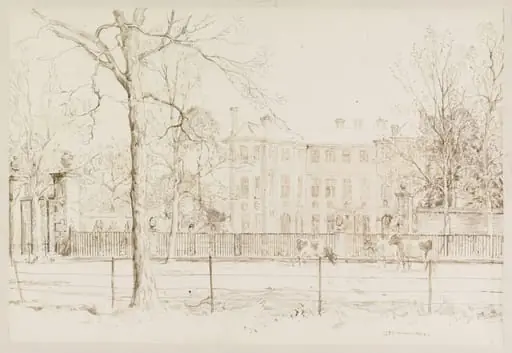 Ham House
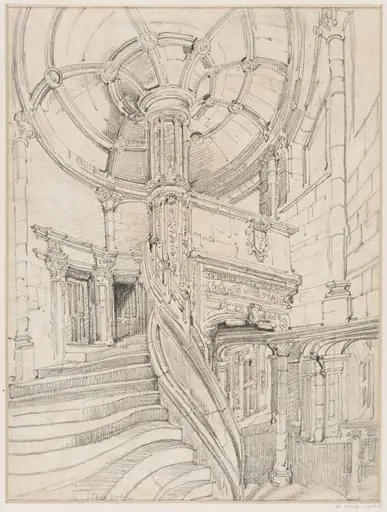 Staircase of Francis I, Château de Blois