Artwork
View of the Village of Maaslins (Vue de la ville de Maaslins (Hollande))
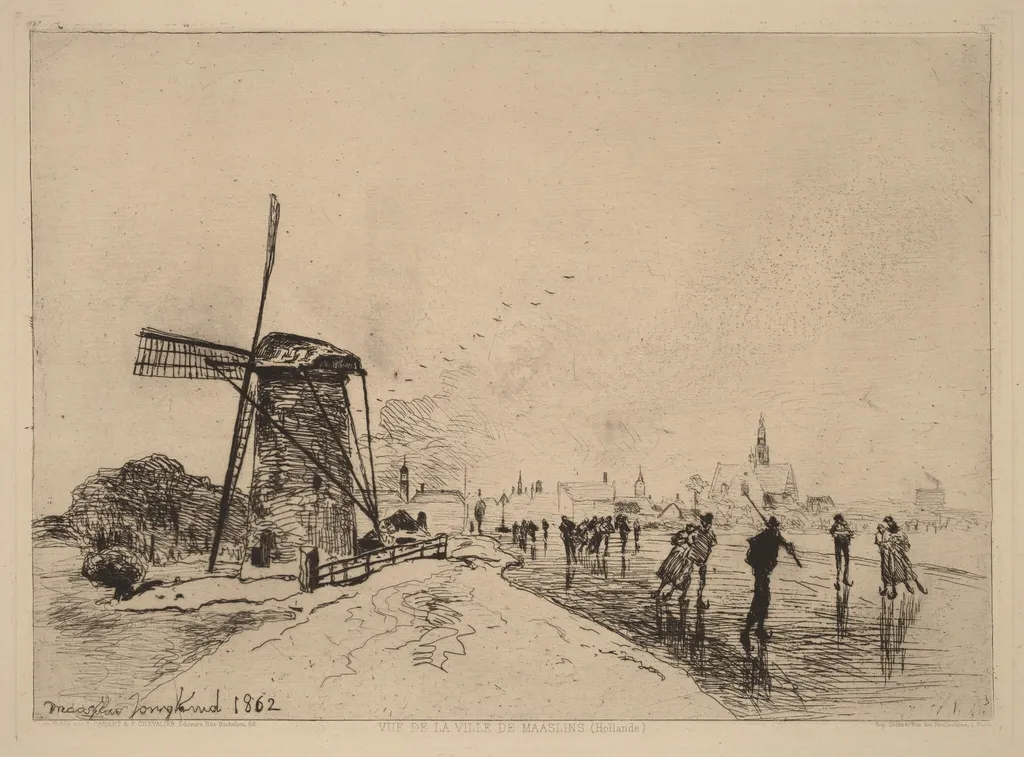
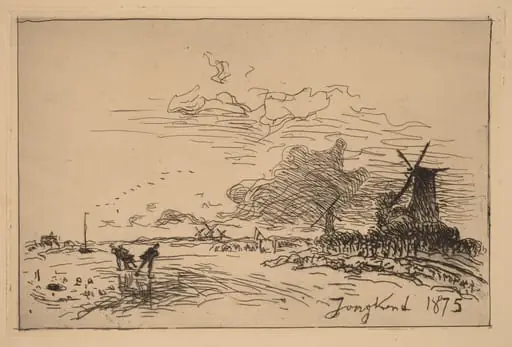
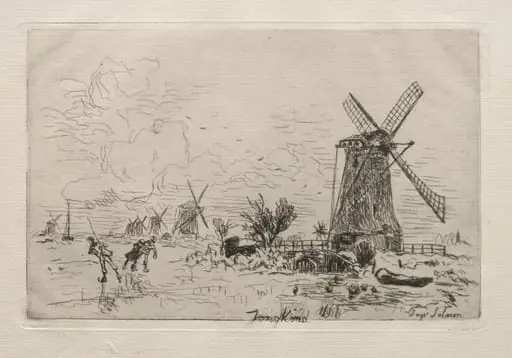
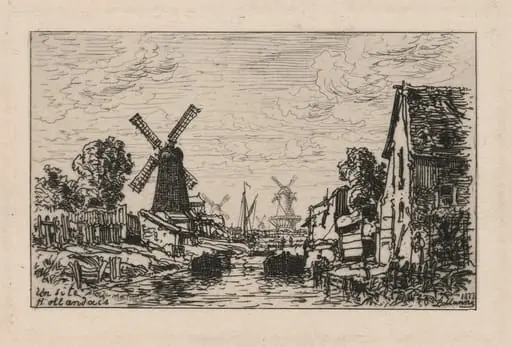
View of the Village of Maaslins (Vue de la ville de Maaslins (Hollande)) is an ink print by the Impressionist artist Johan Barthold Jongkind. It dates from 1862 and is held in the collection of the National Gallery of Art.
About this work
Overview
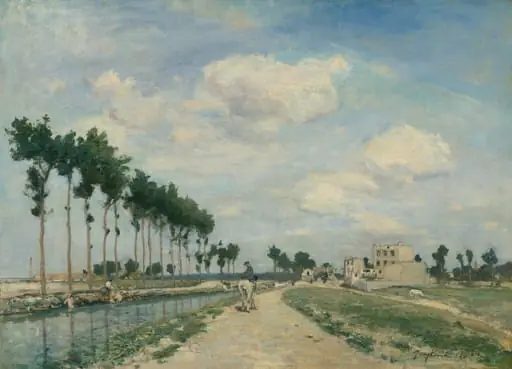
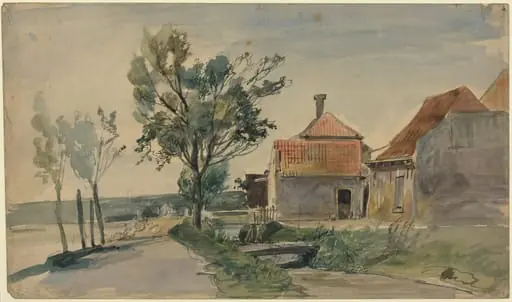
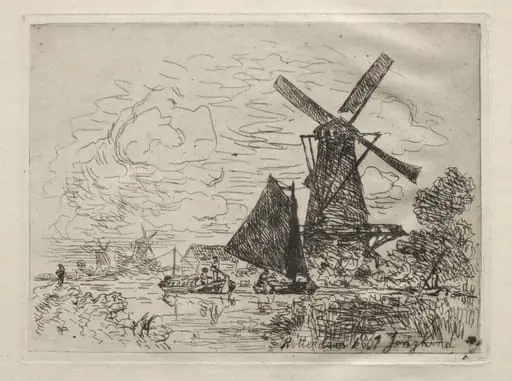
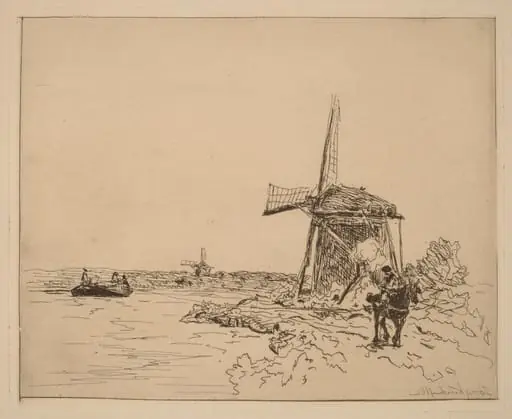
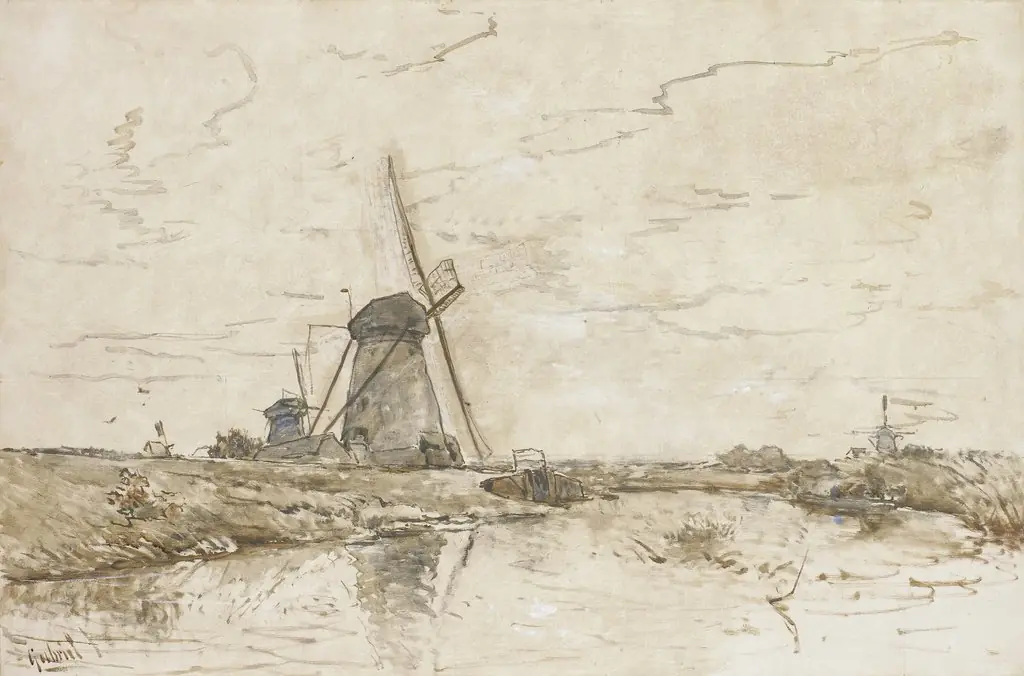
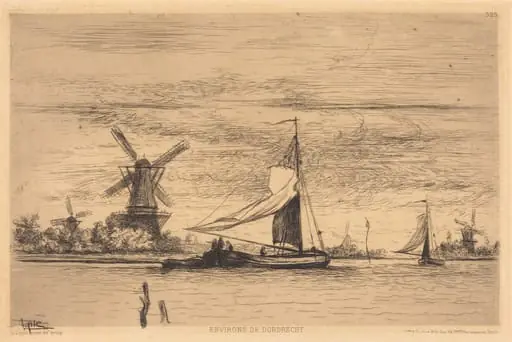
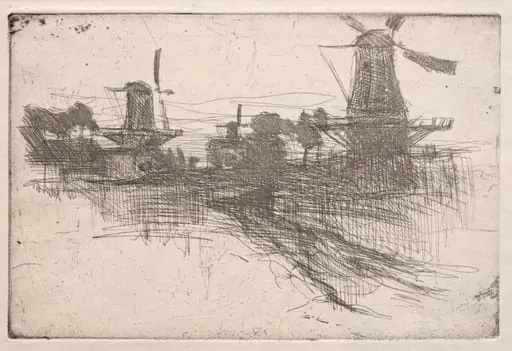
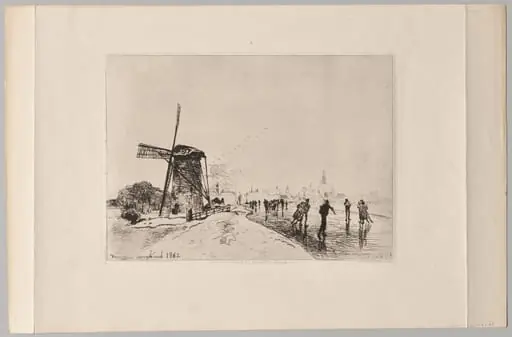
Johan Barthold Jongkind’s 1862 print, titled View of the Village of Maaslins, presents a tranquil Dutch settlement rendered in black‑and‑white. The composition is dominated by a broad sky that occupies roughly half of the surface, while the lower half depicts modest houses, windmills and a waterway that anchor the scene in a typical Holland landscape.
Subject & Meaning
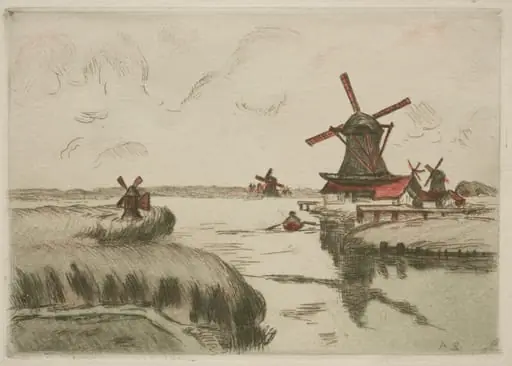
The image captures a quiet moment in a riverside village, emphasizing the relationship between built structures and the surrounding environment. The presence of windmills and the reflective water suggest a working landscape, while the expansive sky conveys a sense of openness and atmospheric calm.
Technique & Style
Jongkind combined traditional etching with drypoint, incising fine lines into a copper plate before inking and printing. The drypoint work adds delicate, velvety edges that soften the architectural forms, while the etching provides clearer structural lines, together creating a nuanced, atmospheric effect without the use of color.
History & Provenance
Created in 1862, the print belongs to the period when Jongkind was exploring the Dutch countryside as a source of inspiration for his landscape studies. The work is catalogued among his early prints that document his interest in light and atmosphere, and it has been referenced in scholarly surveys of 19th‑century European printmaking.
Artist & collection