Artwork
A Foxglove in Bloom
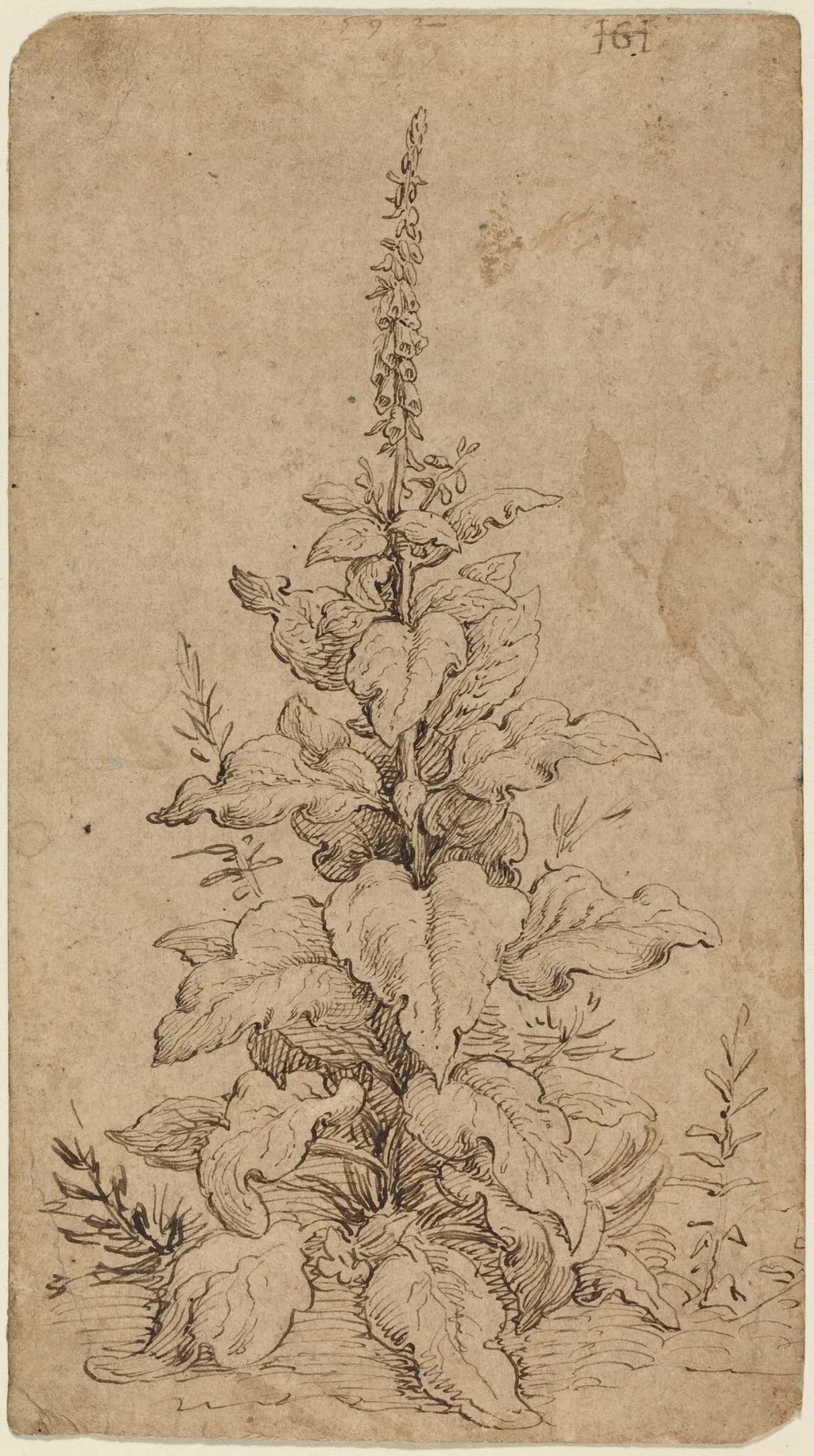
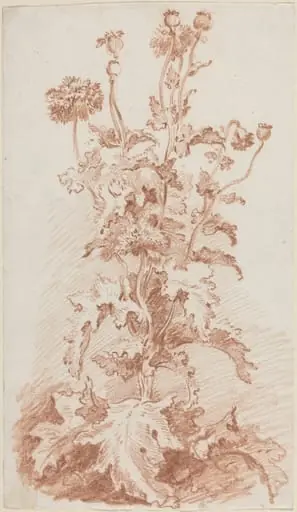
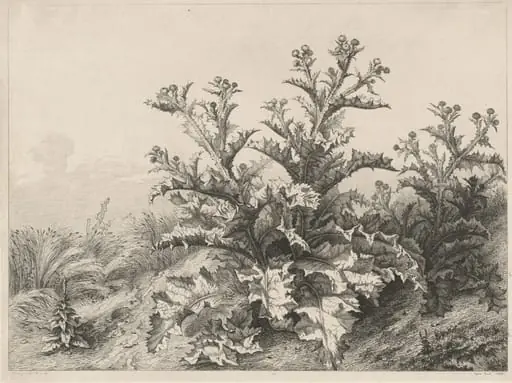
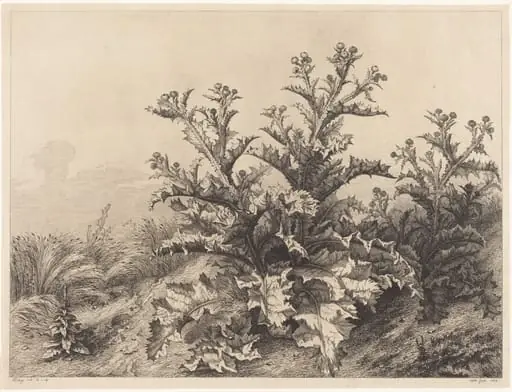
A Foxglove in Bloom is an ink drawing by the Renaissance artist Hendrik Goltzius. It dates from 1592 and is held in the collection of the National Gallery of Art.
About this work
Overview
Created in 1592, *A Foxglove in Bloom* is a pen-and-brown‑ink drawing on laid paper by Hendrick Goltzius. The German‑born Dutch artist, celebrated for his printmaking, applied his draftsmanship to a single botanical subject, rendering the plant with meticulous line work that emphasizes form and texture.
Subject & Meaning
The composition focuses on a solitary foxglove, its broad, undulating leaves gathered around a slender stalk that supports a cluster of tiny blossoms near the apex. By isolating the flower, Goltzius highlights the plant’s natural structure, inviting close observation of its botanical characteristics.
Technique & Style
Goltzius employed fine, intersecting strokes to create a dense cross‑hatching pattern, building tonal variation and a sense of volume. This method, typical of Northern Mannerist drawing, allows the flat surface to suggest depth, giving the foliage a subtle three‑dimensional quality despite the monochrome medium.
History & Provenance
The drawing dates from the early phase of Goltzius’s career, before he expanded into painting later in life. As a leading figure of the early Baroque in the Netherlands, his works were widely circulated among collectors; the piece now resides in a public collection, reflecting its continued relevance to studies of 16th‑century draftsmanship.
Artist & collection
Artist
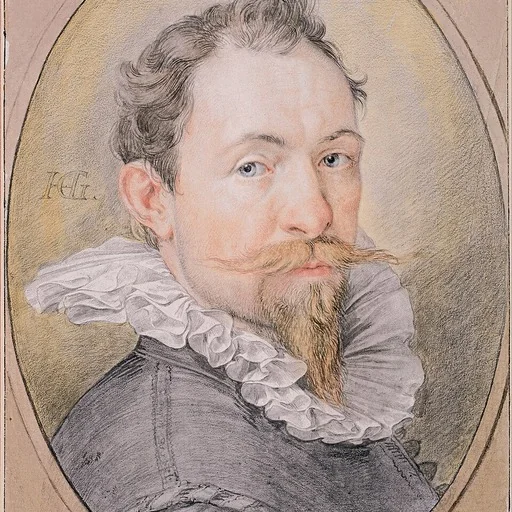
Hendrick Goltzius (German: , Dutch: ; né Goltz; January or February 1558 – 1 January 1617) was a German-born Dutch printmaker, draftsman, and painter.