Artwork
Saint Andrew
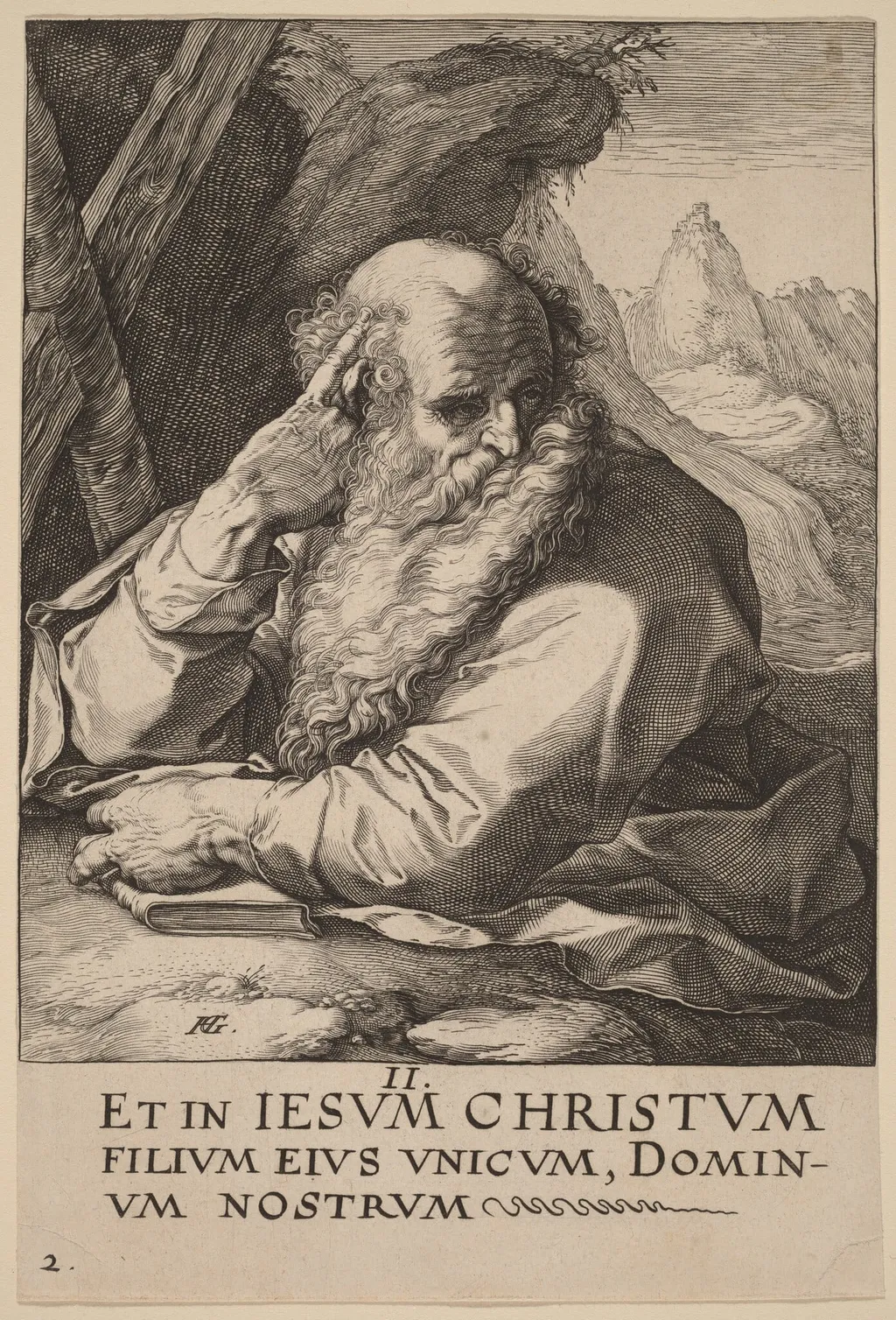
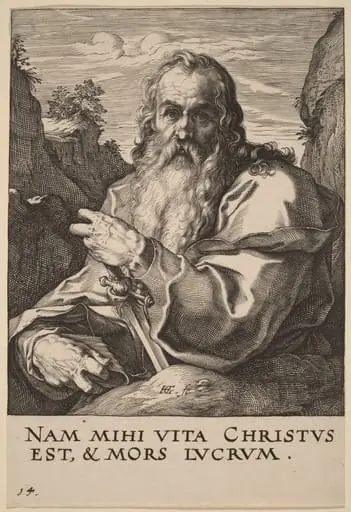
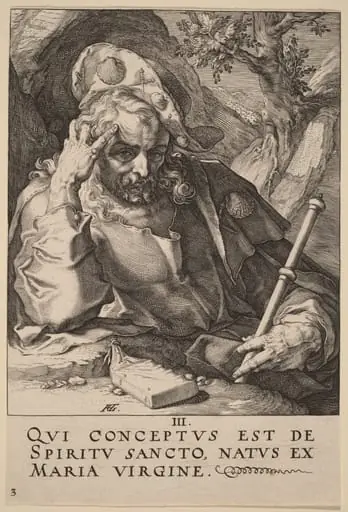
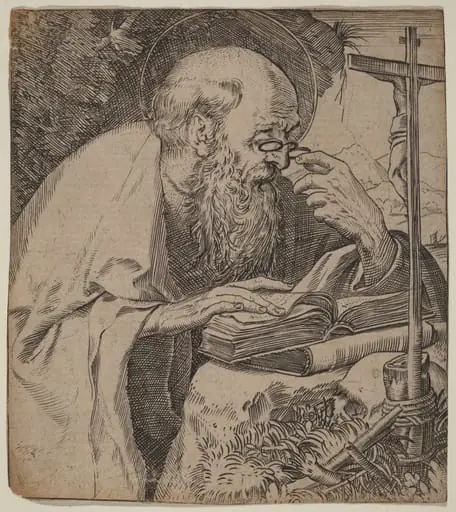
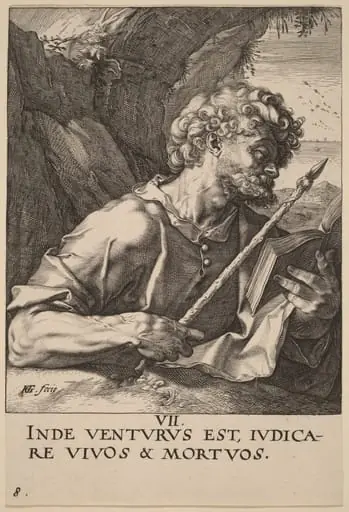
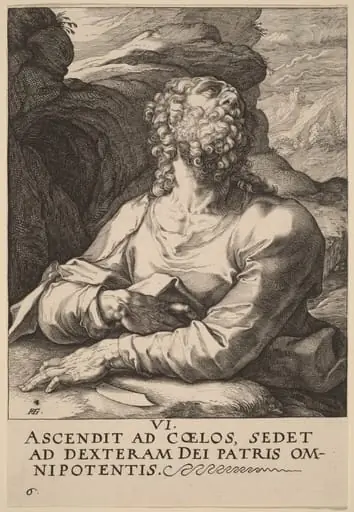
Saint Andrew is an ink print by the Renaissance artist Hendrik Goltzius. It dates from 1589 and is held in the collection of the National Gallery of Art.
About this work
Overview
Saint Andrew is a detailed engraving created by Hendrick Goltzius, a prominent Dutch printmaker, around 1589. Characterized by intricate compositions and technical skill, it exemplifies Goltzius's work within the Northern Mannerism or early Baroque period.
Subject & Meaning
The engraving depicts Saint Andrew in a contemplative pose, seated with his head in hand and a long white beard, conveying introspection. The saint's robe and dark, subtly nuanced background with suggested landscape elements frame his reflective demeanor.
Technique & Style
Goltzius employed meticulous engraving techniques, utilizing fine lines and textures to achieve depth and dimensionality in the image, showcasing his mastery of the medium.
History & Provenance
Created circa 1589 by Hendrick Goltzius, a German-born Dutch artist renowned as the leading engraver of his time, known for technical mastery and complex compositions.
Context
Saint Andrew is part of the broader Renaissance art movement, specifically aligned with Northern Mannerism or the early Baroque period, reflecting the artistic trends of late 16th-century Europe.
Legacy
As a work by Goltzius, Saint Andrew contributes to the artist's legacy as a technically proficient and influential printmaker of his era, though specific impact or notable exhibitions of this piece are not detailed.
Artist & collection
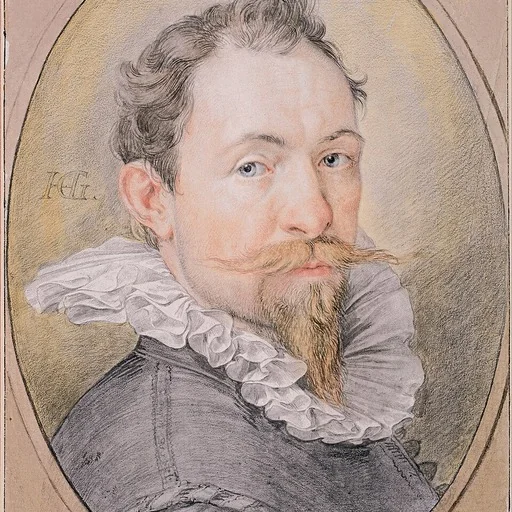
Artist
Hendrick Goltzius (German: , Dutch: ; né Goltz; January or February 1558 – 1 January 1617) was a German-born Dutch printmaker, draftsman, and painter.