Artwork
The Triumph of Galatea
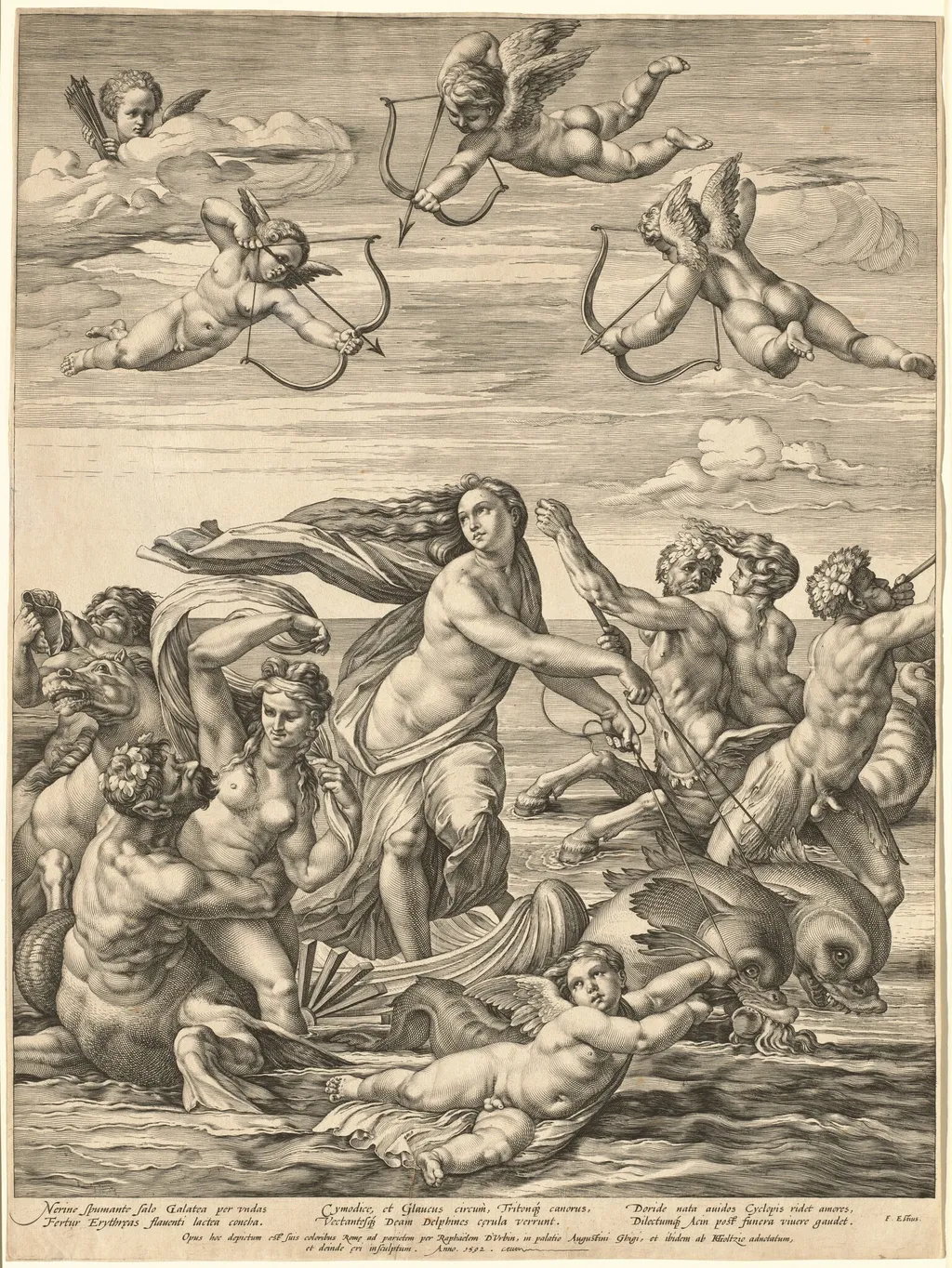
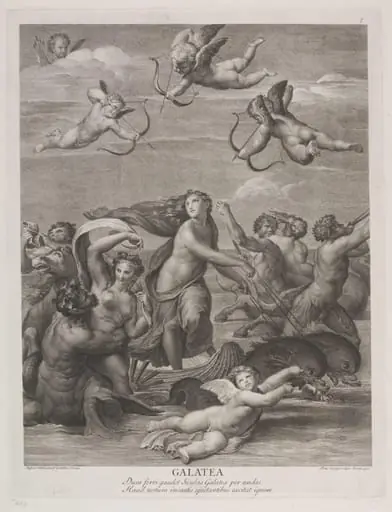
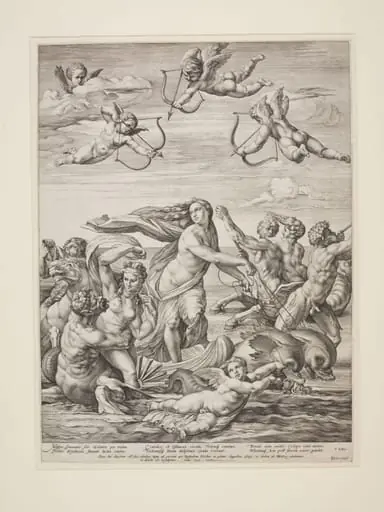
The Triumph of Galatea is an ink print by the Renaissance artist Hendrik Goltzius. It dates from 1592 and is held in the collection of the National Gallery of Art. An engraving by Hendrick Goltzius, created after a design by Raphael, captures the mythological figure Galatea in motion across the sea.
About this work
Overview
An engraving by Hendrick Goltzius, created after a design by Raphael, captures the mythological figure Galatea in motion across the sea.
An engraving by Hendrick Goltzius, created after a design by Raphael, captures the mythological figure Galatea in motion across the sea. Executed on laid paper, the work translates a painted composition into the precise language of line and tone. Goltzius’s technical mastery transforms ink and burin into the illusion of fluid movement, wind, and aquatic life, demonstrating the potential of print to rival painting in expressive depth.
Subject & Meaning
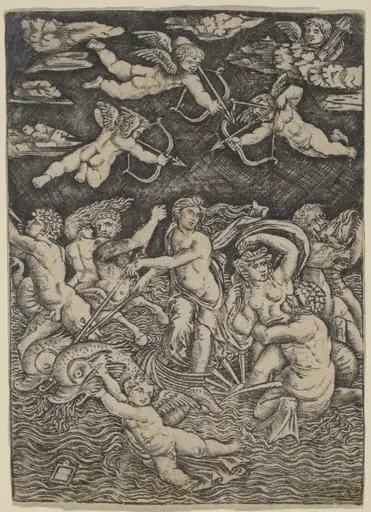
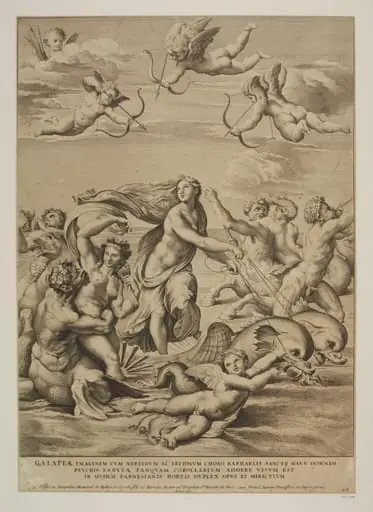
Galatea, a sea nymph from Greek myth, is shown being drawn through the waves by two large fish-like creatures, her drapery swept by an unseen wind. Surrounding her are Tritons, cherubs, and other sea-born figures, forming a dynamic procession. The scene evokes her triumph not through battle, but through serene dominion over nature — a quiet assertion of beauty’s harmony amid chaos.
Technique & Style
Goltzius employed fine, interwoven cross-hatching to model form and suggest texture, turning engraved lines into the shimmer of water and the ripple of fabric. His meticulous control of line weight and density creates a sense of depth and motion, far beyond mere replication. The engraving’s precision gives the illusion of naturalism, transforming rigid ink strokes into the fluidity of the sea and the softness of wind-tossed hair.
History & Provenance
The print derives from Raphael’s lost fresco, painted for the Villa Farnesina in Rome around 1512. Goltzius, working in the late 16th century, adapted the composition into a print for wider dissemination. His version, completed around 1590, reflects both reverence for the Renaissance original and his own Northern European engraving traditions, bridging Italian design with Dutch technical rigor.
Context
In the late Renaissance, reproductive prints like this served as vehicles for disseminating classical themes across Europe. Goltzius’s engagement with Raphael’s work aligned with broader humanist interests in antiquity and idealized form. His adaptation was not mere copying but a reinterpretation, reflecting contemporary Northern European tastes for intricate detail and virtuosic draftsmanship.
Legacy
Goltzius’s engraving became a benchmark for technical excellence in printmaking, influencing generations of artists in both technique and compositional approach. Its widespread circulation helped cement Raphael’s imagery in the visual consciousness of Northern Europe. The work endures as a testament to the dialogue between painting and print, and to the enduring power of myth as a framework for artistic exploration.
Artist & collection
Artist
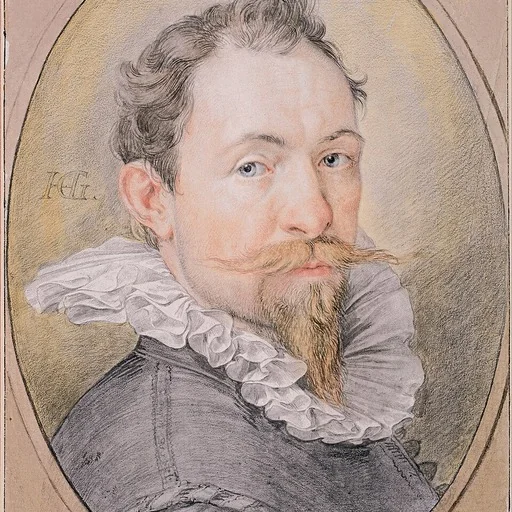
Hendrick Goltzius (German: , Dutch: ; né Goltz; January or February 1558 – 1 January 1617) was a German-born Dutch printmaker, draftsman, and painter.