Artwork
Malacoturnix superciliosus (Mountain Quail)
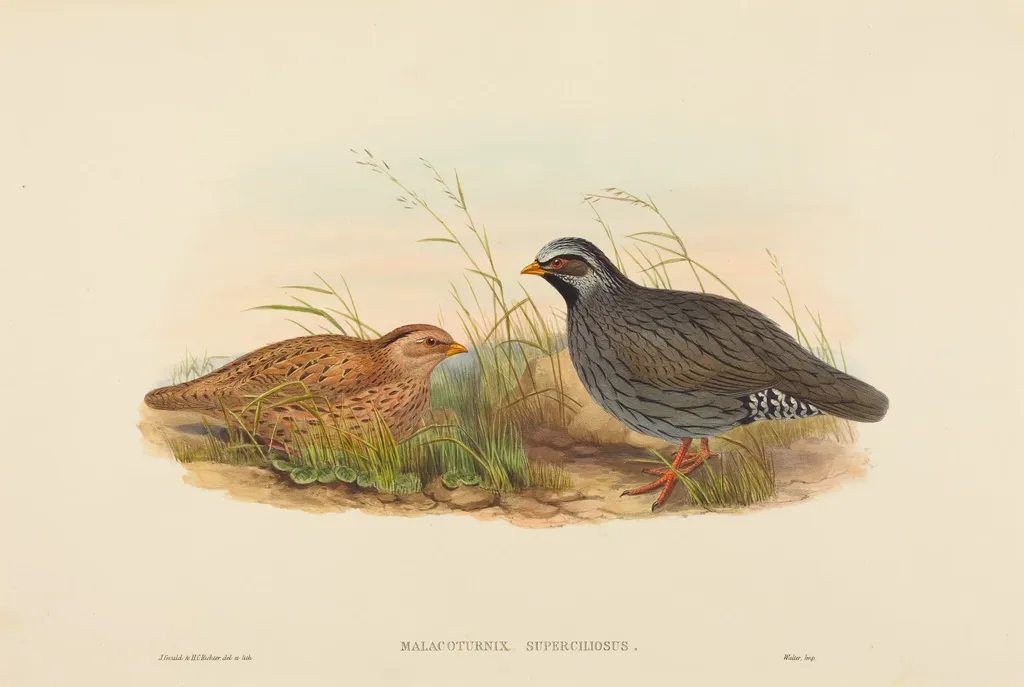
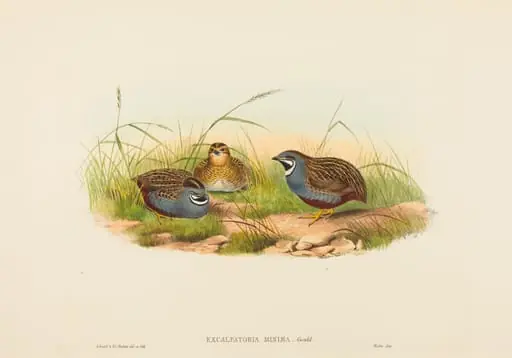
Malacoturnix superciliosus (Mountain Quail) is an ink print by the Romanticist artist John Gould. It dates from 1842 and is held in the collection of the National Gallery of Art. Created in 1842, this hand-colored lithograph depicts the Mountain Quail, a bird native to western North America.
About this work
Overview
Gould’s work aimed to scientifically record bird forms with precision, combining art and biology in an era before photographic documentation.
Created in 1842, this hand-colored lithograph depicts the Mountain Quail, a bird native to western North America. Produced by English ornithologist John Gould, it is part of his extensive documentation of avian species. The image was made using lithographic printing, then meticulously colored by hand to reflect the bird’s natural plumage. Gould’s work aimed to scientifically record bird forms with precision, combining art and biology in an era before photographic documentation.
Subject & Meaning
The print shows two Mountain Quails resting in tall grass, one with brown, spotted feathers and the other gray with a distinct white lateral stripe. Their bright orange beaks contrast sharply against the muted background. The composition emphasizes natural behavior rather than theatrical display, reflecting Gould’s commitment to accurate biological representation. The scientific name, *Malacoturnix superciliosus*, anchors the image in taxonomic classification, signaling its role as a specimen record rather than a decorative piece.
Technique & Style
The image was produced via lithography, a process allowing fine detail to be transferred from a stone surface to paper. Each print was individually hand-colored, requiring skilled artisans to match the birds’ natural hues. The background is softly blurred, suggesting atmospheric depth without distracting from the subjects. Feather textures are rendered with delicate lines and subtle tonal gradations, demonstrating a blend of scientific rigor and artistic sensitivity typical of Gould’s publications.
History & Provenance
This print originated from John Gould’s broader ornithological projects, which began with his work on Australian birds and expanded globally. Though the Mountain Quail is not Australian, it was included in later volumes or related studies. Gould relied on a team of illustrators, including his wife Elizabeth and Henry Constantine Richter, who often executed the coloring. The print likely circulated among scientific institutions and private collectors interested in natural history during the mid-19th century.
Context
In the 1840s, European naturalists were systematically cataloging global biodiversity, often relying on specimens collected during imperial expeditions. Gould’s publications were among the most visually rich of this era, bridging scientific inquiry and public fascination with nature. Hand-colored prints like this one were essential tools for disseminating knowledge before photography became viable. The Mountain Quail’s inclusion reflects the expanding scope of ornithological study beyond Europe and Australia.
Legacy
Gould’s illustrated volumes set a standard for ornithological publishing, influencing both scientific and artistic approaches to bird depiction. While later technologies replaced hand-coloring, his attention to anatomical accuracy and aesthetic composition endured in natural history illustration. Today, these prints are valued as historical documents that capture the intersection of science, craftsmanship, and exploration during a pivotal period in biological classification.
Artist & collection
Artist
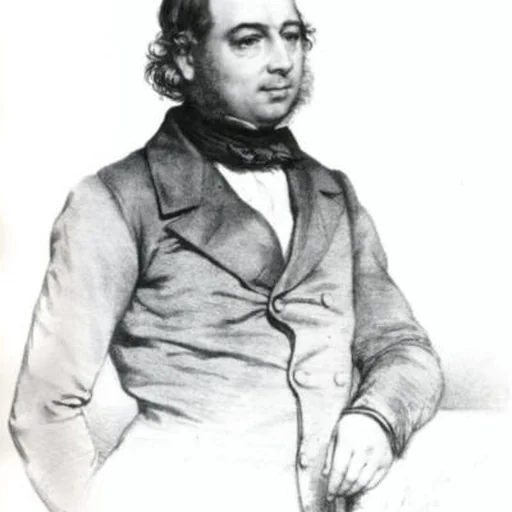
John Gould (; 14 September 1804 – 3 February 1881) was an English ornithologist who published monographs on birds, illustrated by plates produced by his wife, Elizabeth Gould, and several other artists, including Edward…

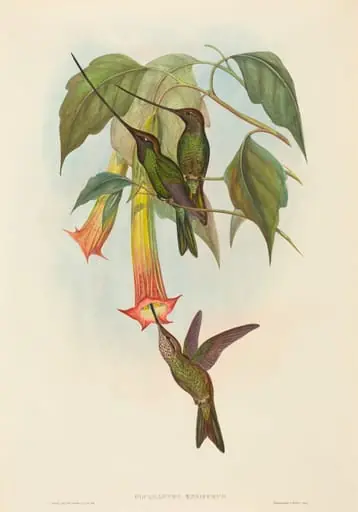 Docimastes ensiferus (Sword-billed Hummingbird)
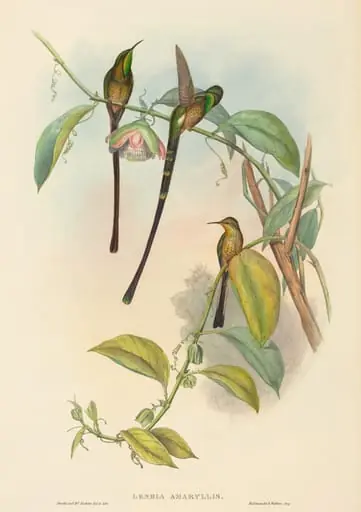 Lesbia Amaryllis
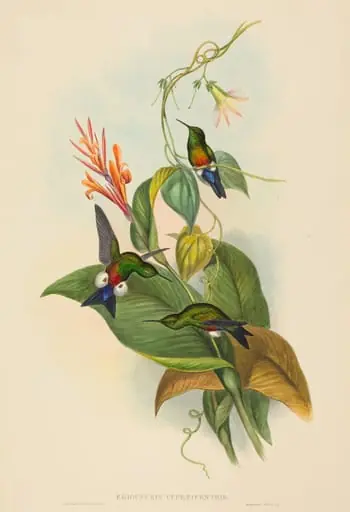 Eriocnemis cupreiventris (Coppery-vented Puff-Leg)
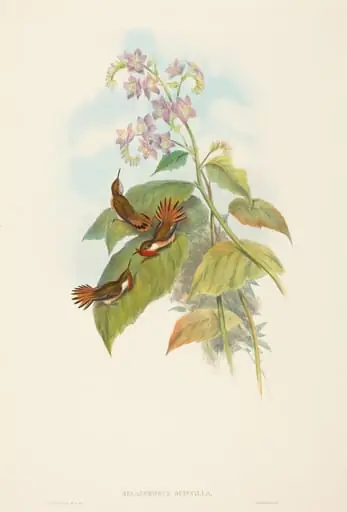 Selashorus scintilla (Scintillant Hummingbird)
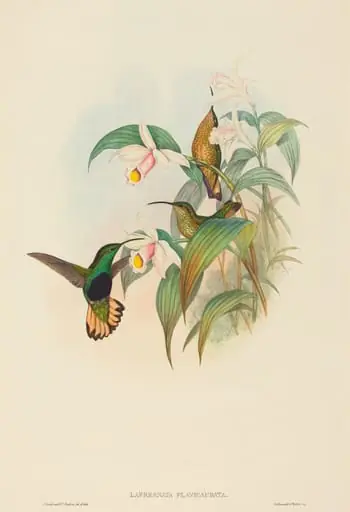 Lafresnaya flavicaudata (Buff-tailed Velvet-breast)
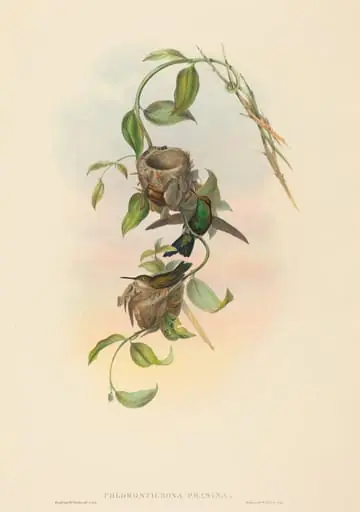 Chlorostilbona prasina (Puncheran's Emerald)
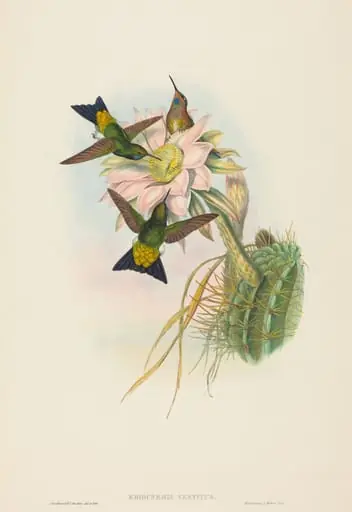 Eriocnemis vestitus (Glowing Puff-Leg)
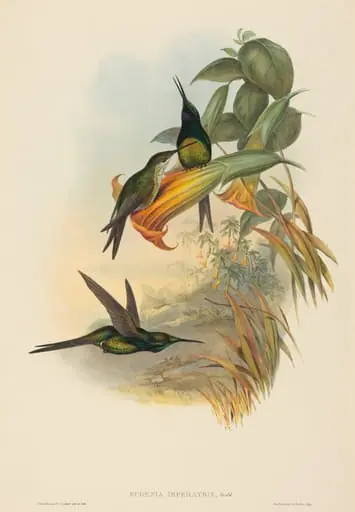 Eugenia imperatrix (Empress Hummingbird)