Artwork
Fork-tailed Gull
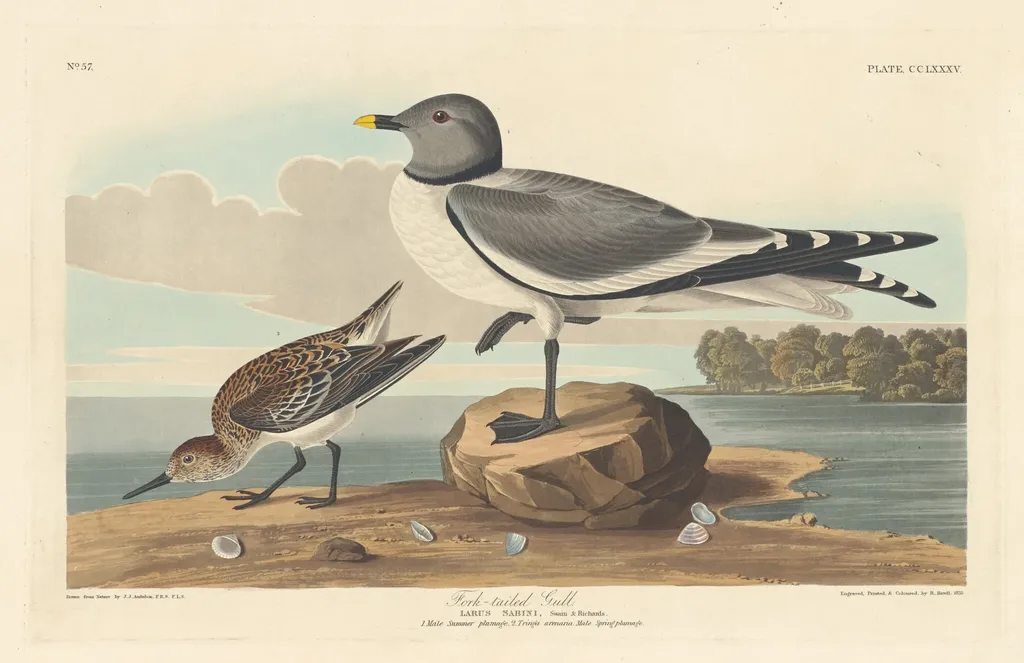
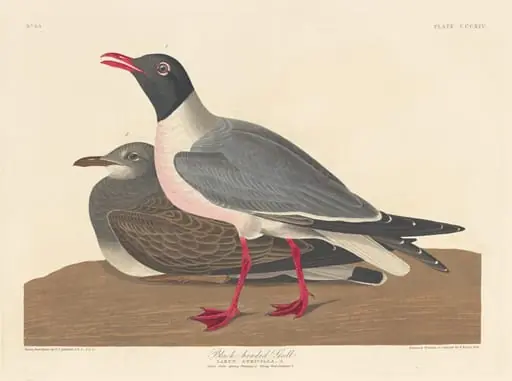
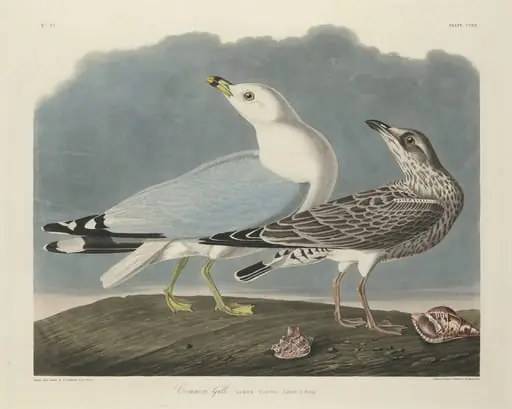
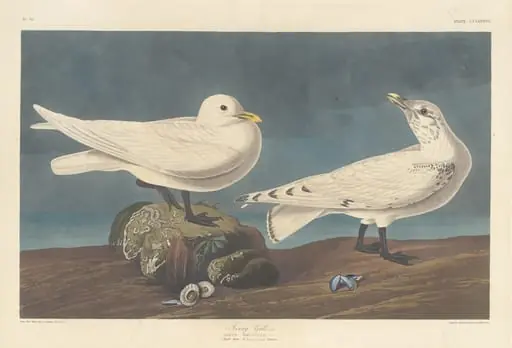
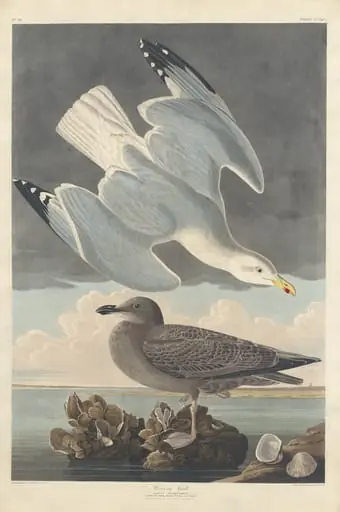
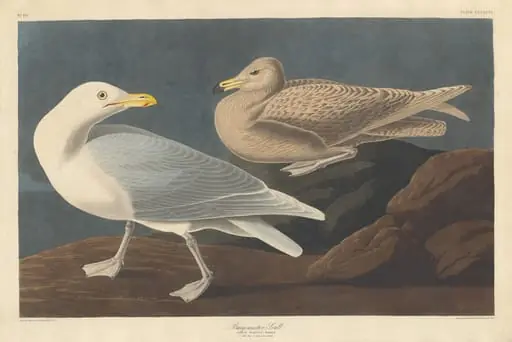
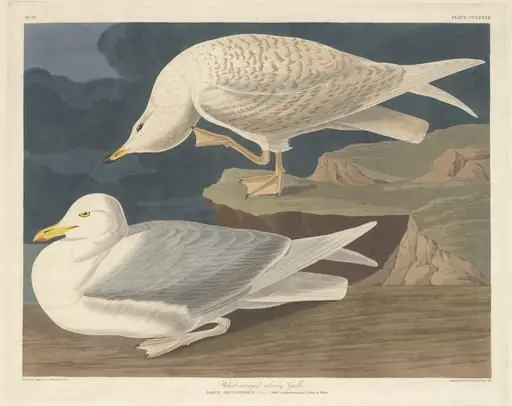
Fork-tailed Gull is an ink print by the Romanticist artist Robert Havell Jr.. It dates from 1835 and is held in the collection of the National Gallery of Art.
About this work
Overview
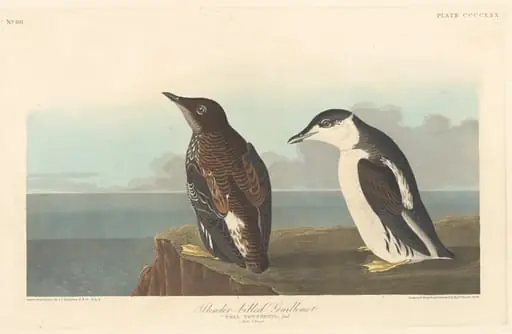
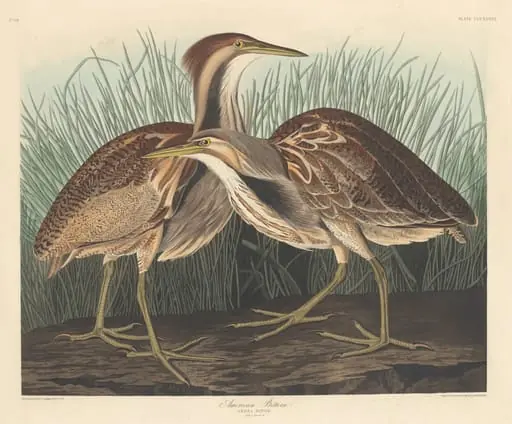
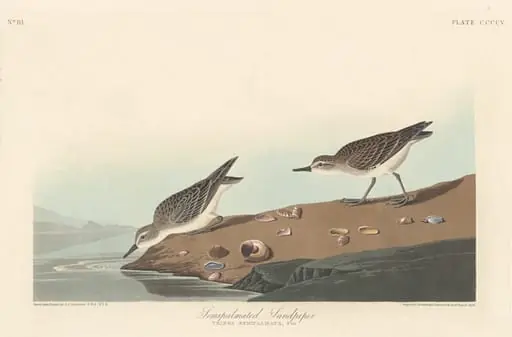
, this hand-colored engraving and aquatint depicts a fork-tailed gull and a smaller companion on a coastal rock.
Created in 1835 by Robert Havell Jr., this hand-colored engraving and aquatint depicts a fork-tailed gull and a smaller companion on a coastal rock. Executed on Whatman wove paper, the print exemplifies the Havell family’s technical mastery in printmaking. The work was produced as part of a broader effort to document avian species with scientific precision, blending naturalist observation with artisanal craftsmanship.
Subject & Meaning
The image portrays two gulls on a windswept shore: a larger bird with gray plumage and a distinctive forked tail, standing alert, and a smaller, speckled individual foraging near shells. The scene captures a quiet moment in nature, emphasizing the birds’ adaptation to their marine environment. No symbolic narrative is present; the focus remains on accurate representation, consistent with 19th-century natural history illustration.
Technique & Style
Havell employed engraving and aquatint to achieve fine detail and tonal gradation. The feathers are rendered with delicate, controlled lines, while the sky and water use soft aquatint washes to suggest atmosphere. Hand-coloring added subtle realism to the plumage and landscape. The use of Whatman paper, prized for its durability and smooth surface, enhanced the clarity of the printed lines and the precision of the coloring.
History & Provenance
Robert Havell Jr. belonged to a family of English engravers and artists based in Reading, Berkshire, known for their work in natural history publications. Though the Havells had ties to Indian art through earlier commissions, this print was made in England as part of a domestic ornithological project. It was likely produced for private collectors or scientific institutions interested in detailed avian studies.
Context
In the 1830s, European naturalists were systematically documenting wildlife through illustrated volumes. Havell’s work aligned with this movement, paralleling the efforts of figures like John James Audubon. The emphasis on anatomical accuracy and environmental setting reflected growing scientific interest in taxonomy and ecological observation, even as artistic tradition remained central to visual communication.
Legacy
Havell’s prints contributed to the standardization of ornithological illustration in the pre-photographic era. While not widely known outside specialist circles, his technique influenced later printmakers working in natural history. The survival of such works in museum and library collections underscores their role as both scientific records and artifacts of 19th-century print culture.
Artist & collection

Artist
The Havell family of Reading, Berkshire, England, included a number of notable engravers, etchers and painters, as well as writers, publishers, educators, and musicians.