Artwork
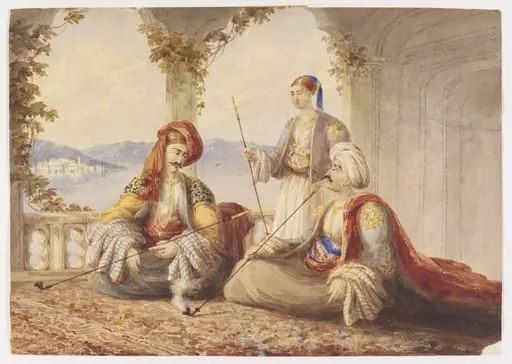
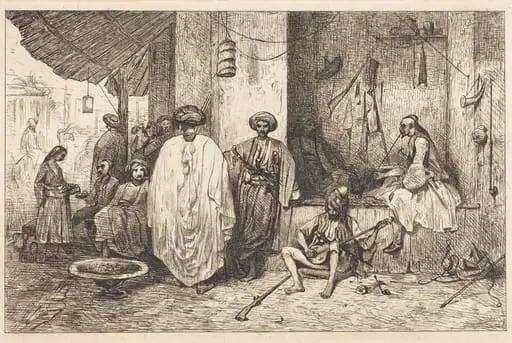
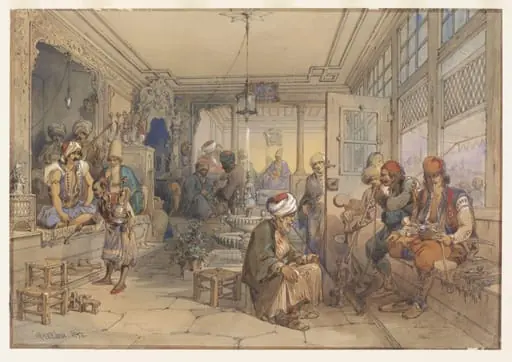
Turkish Musicians in a coffee-house overlooking the Bosphorus
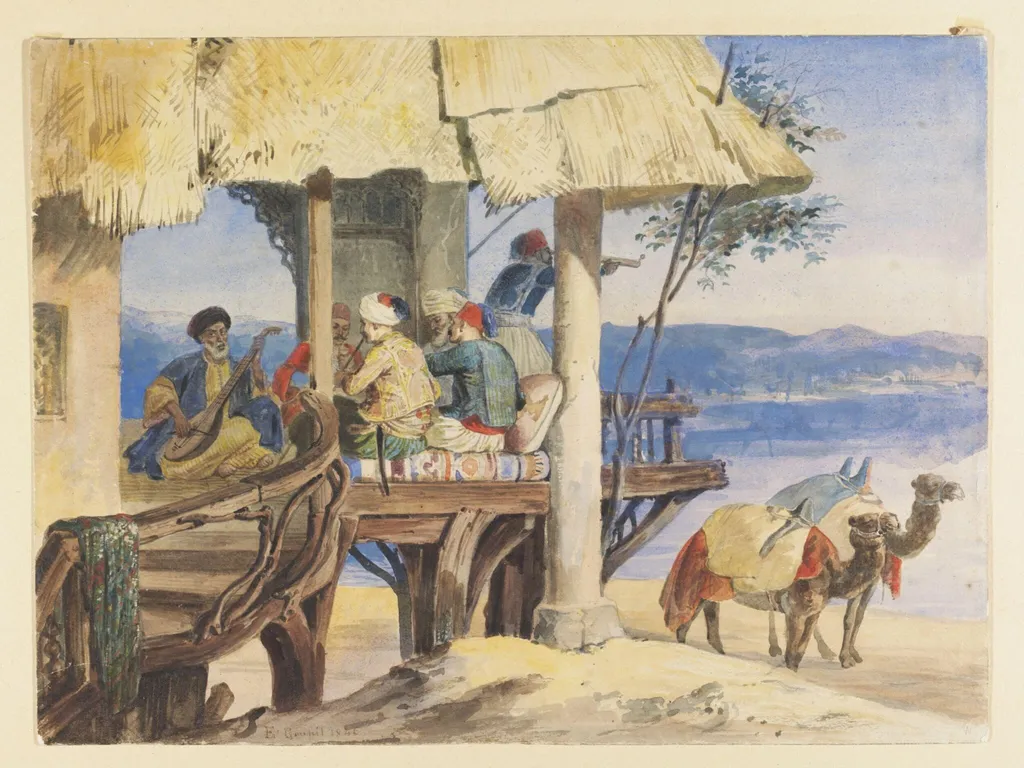
Turkish Musicians in a coffee-house overlooking the Bosphorus is a watercolor work on paper by the Orientalist artist Frédéric Goupil-Fesquet. It dates from 1846 and is held in the collection of the Victoria and Albert Museum.
About this work
Overview
Created in 1846 by Frédéric Goupil-Fesquet, this watercolor depicts a group of musicians seated in a thatch-roofed boat on the Bosphorus. The scene captures a quiet moment of leisure, with the artists’ brushwork emphasizing the soft interplay of light and water. The work is part of the Victoria and Albert Museum’s collection, reflecting 19th-century European interest in Ottoman daily life.
Subject & Meaning
The painting portrays Ottoman musicians in a tranquil setting, their loose garments and headwear suggesting regional dress. The presence of camels on the shore and the distant city skyline situates the scene within Istanbul’s landscape. Rather than a formal performance, the image conveys an intimate, informal gathering, hinting at the cultural rhythms of waterfront life in the mid-19th century.
Technique & Style
Goupil-Fesquet employed transparent watercolor washes to render subtle gradations of light across skin, fabric, and water. The palette is muted yet warm, with delicate tonal shifts defining form without sharp outlines. The calm surface of the Bosphorus is suggested through gentle horizontal strokes, while the thatched roof and distant skyline are rendered with loose, suggestive brushwork.
History & Provenance
Painted during Goupil-Fesquet’s travels in the Ottoman Empire, the work reflects the artist’s engagement with local scenes beyond formal portraiture. It entered the Victoria and Albert Museum’s collection as part of its broader 19th-century decorative arts and travel-related holdings, preserving a visual record of European artists’ encounters with Eastern Mediterranean culture.
Context
In the 1840s, European travelers increasingly documented Ottoman society through sketching and painting. This work aligns with a trend of ethnographic observation, where artists captured everyday moments rather than grand ceremonies. The Bosphorus, as a liminal space between continents, offered rich subject matter for those documenting cultural exchange and urban life.
Legacy
The painting remains a quiet testament to cross-cultural observation in the 19th century. While not widely exhibited, it contributes to scholarly understanding of how Western artists interpreted Ottoman life with nuance and restraint. Its preservation in a major museum underscores its value as a historical document of visual encounter.
Artist & collection

Artist
Frédéric Goupil-Fesquet (1817–1878) was a French painter and photographer who took the first ever photograph of Jerusalem during a trip he made from France in 1839.