Artwork
Old man leaning on a balustrade
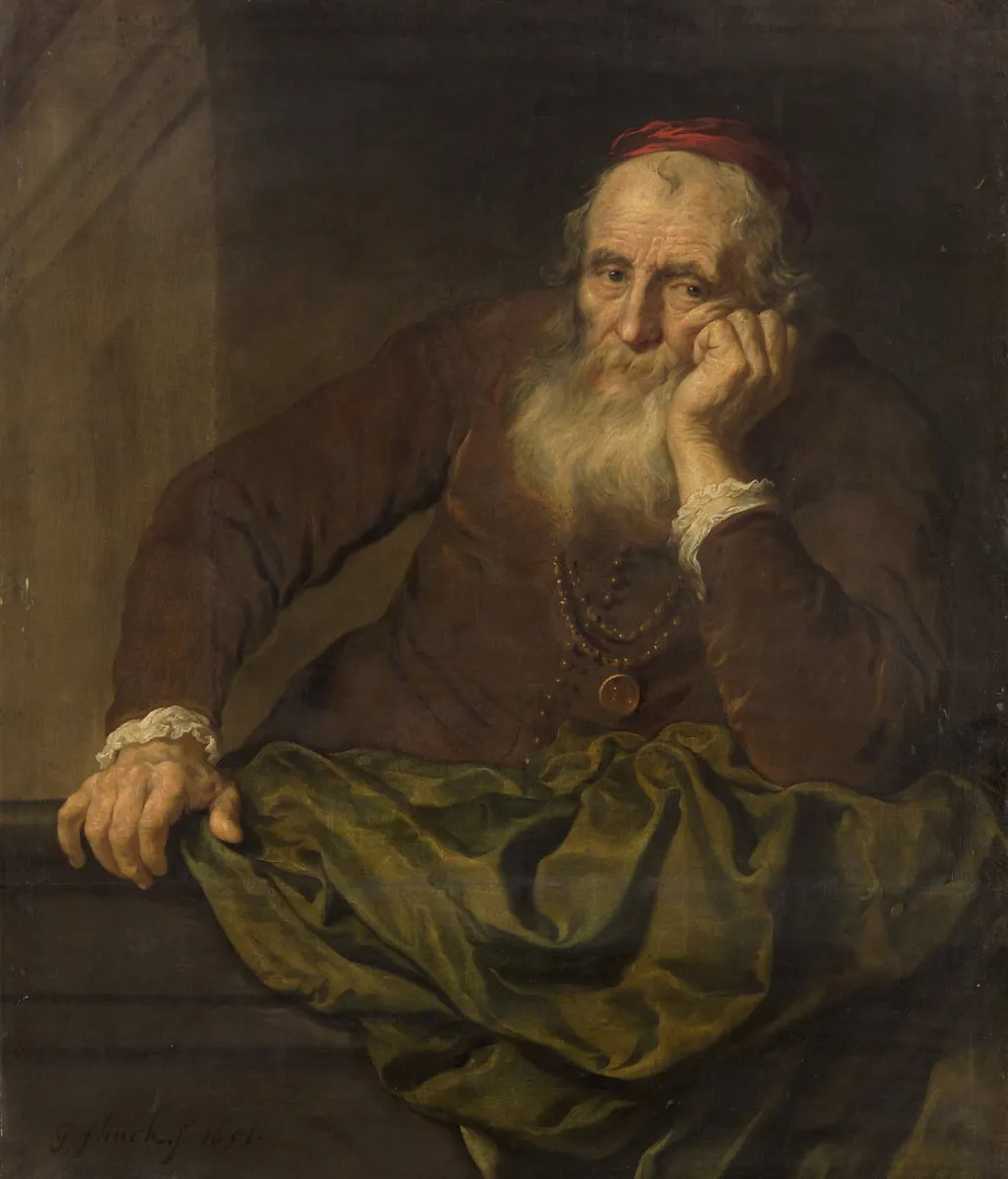
Old man leaning on a balustrade is an oil painting by the Dutch Golden Age artist Govert Flinck. It dates from 1651 and is held in the collection of the Kunsthistorisches Museum.
About this work
Overview
He is dressed in a dark brown shirt with a white lace cuff visible at the wrist, a red headband, and a green cloth draped across his lap.
Painted in 1651, 'Old man leaning on a balustrade' is a half-length portrait by the Dutch Golden Age painter Govert Flinck. The work depicts an elderly man with long white hair and a beard, seated and resting his left hand on a stone balustrade. He is dressed in a dark brown shirt with a white lace cuff visible at the wrist, a red headband, and a green cloth draped across his lap. A gold medallion suspended from a chain hangs around his neck. Flinck, a prominent student of Rembrandt who later developed a more classical, polished style under the influence of the French court, executes this figure with a focus on textural detail and dignified presence. The composition utilizes a dark, neutral background to isolate the sitter, emphasizing the contrast between the white hair, the red headband, and the green drapery. Created during the height of Flinck's career in Amsterdam, the painting reflects his ability to blend Rembrandtesque chiaroscuro with the refined elegance characteristic of his later portraiture, capturing the individual character of the subject through precise rendering of costume and physiognomy.
Subject & Meaning
The sitter is an aged man with a flowing white beard and hair, his gaze meeting the viewer’s directly. He rests his left hand on the balustrade while his right hand lifts toward his face, suggesting contemplation or a moment of self‑inspection. Elements such as the red headband, gold‑medallion chain, and white lace cuff hint at status and personal identity, though the portrait does not identify the individual.
Technique & Style
Flinck employs a pronounced chiaroscuro, contrasting a dark, gradually illuminated background with the illuminated flesh of the figure. This handling of light creates a three‑dimensional presence, emphasizing the texture of the beard, the sheen of the gold medallion, and the folds of the green cloth draped across the sitter’s lap.
History & Provenance
Created in 1651, the painting entered the Kunsthistorisches Museum’s holdings at an unspecified later date, becoming part of the museum’s extensive Dutch Golden Age collection. Its provenance prior to acquisition by the museum is not documented in the available records.
Context
Flinck, a pupil of Rembrandt, worked within the Dutch Baroque tradition, where portraiture often combined realistic observation with dramatic lighting. The composition’s intimate scale and focus on a single figure reflect contemporary trends in portraying elders as embodiments of wisdom and experience.
Artist & collection

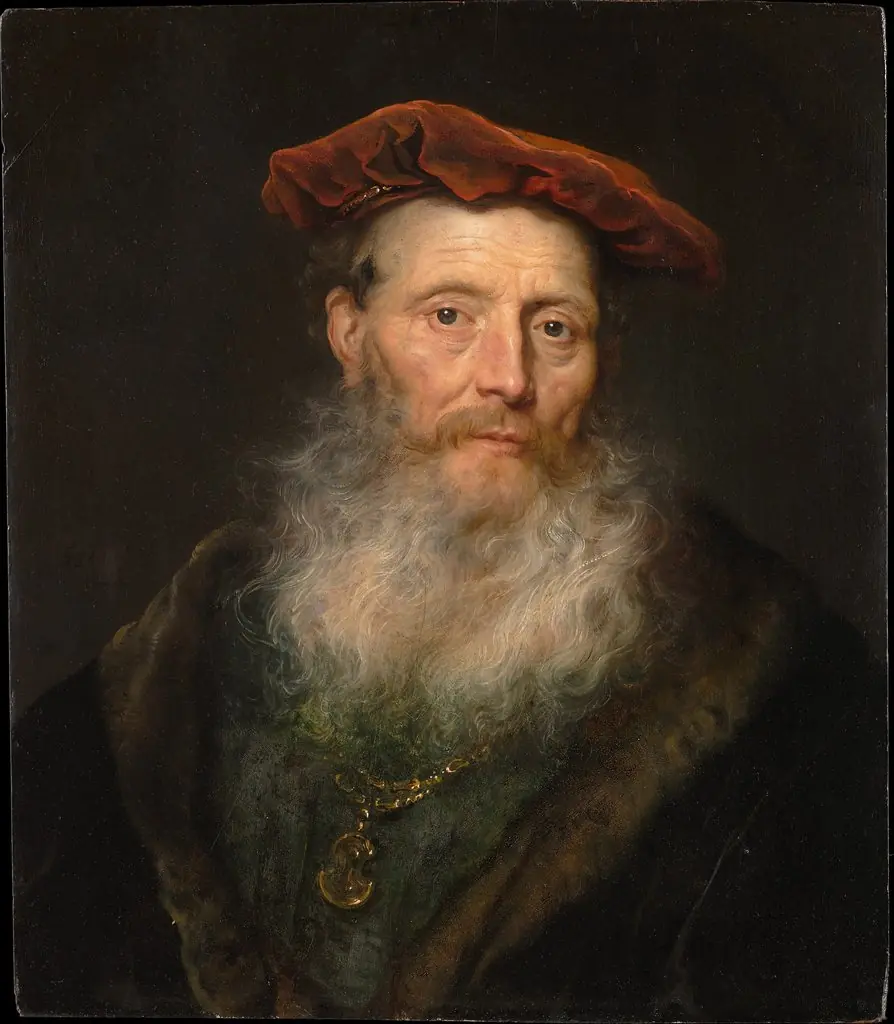 Bearded Man with a Velvet Cap
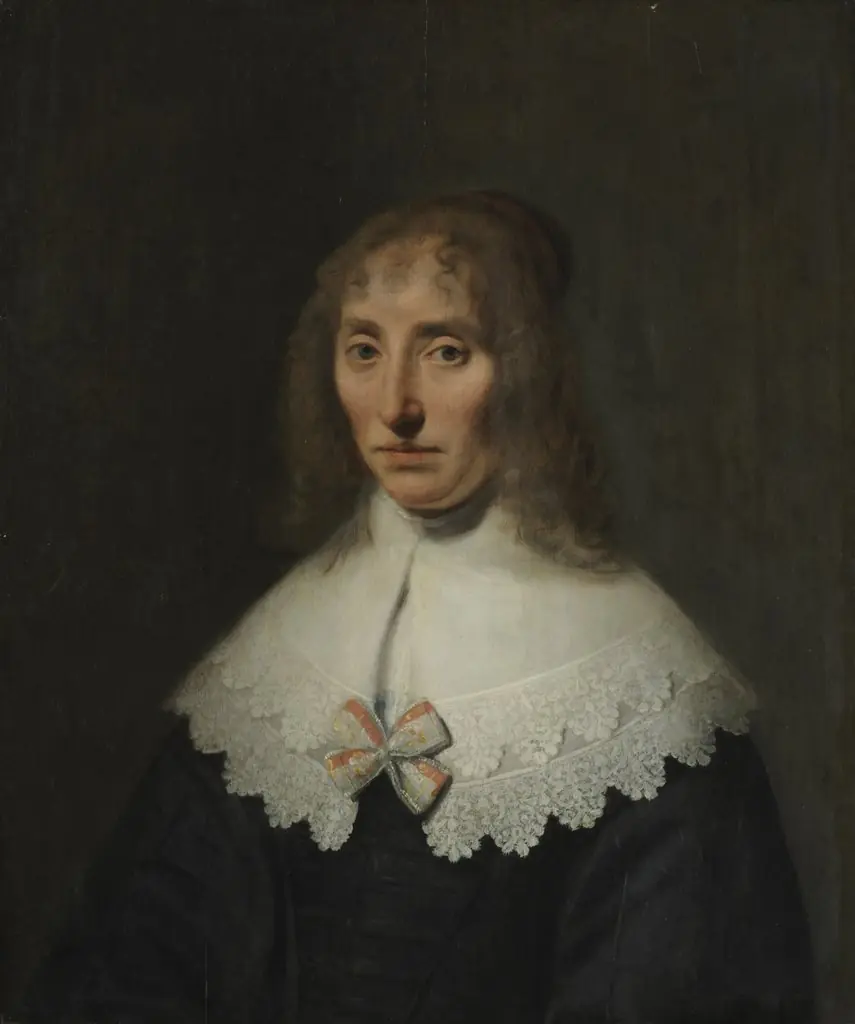 Portrait of a Woman
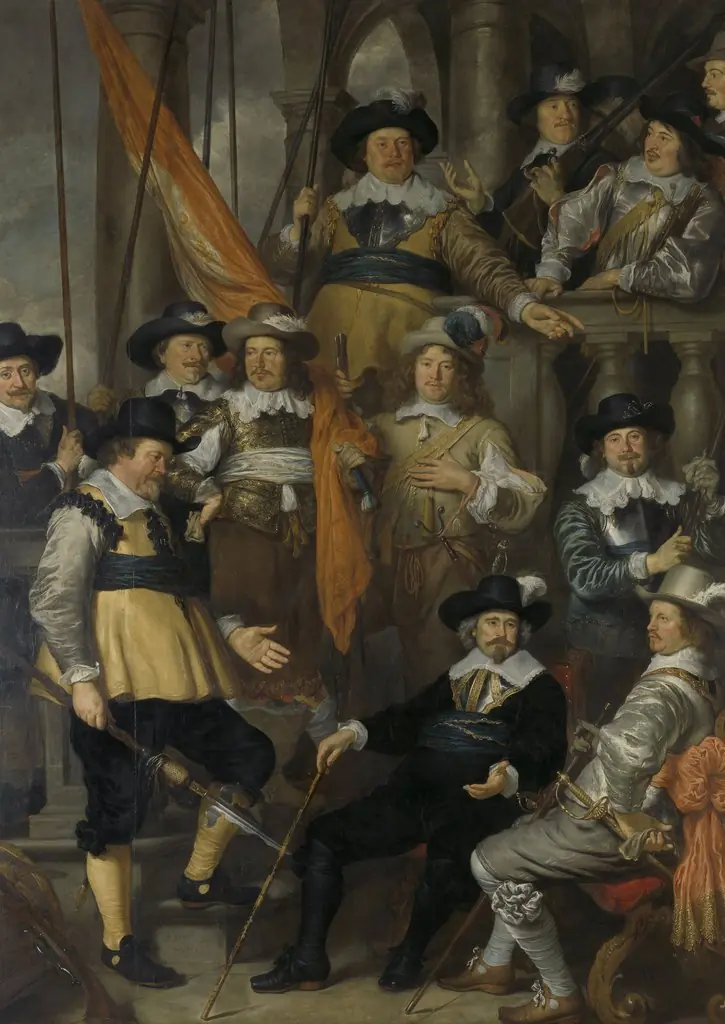 The Company of Captain Albert Bas and Lieutenant Lucas Conijn
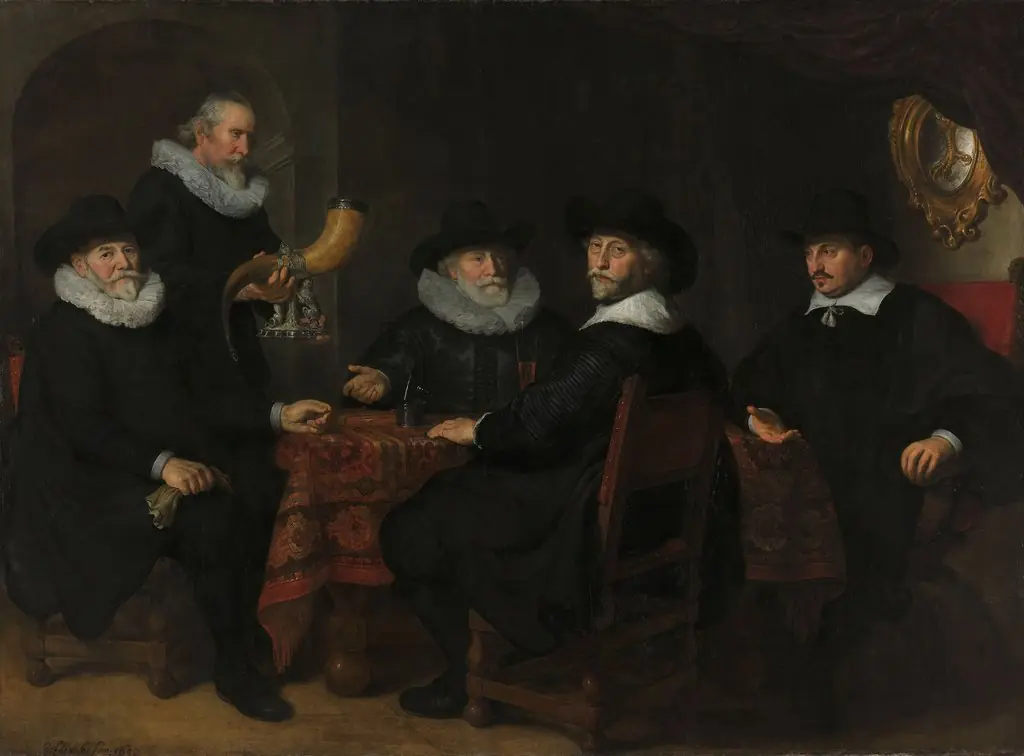 Four directors of the arquebusier's guild, Amsterdam, 1642
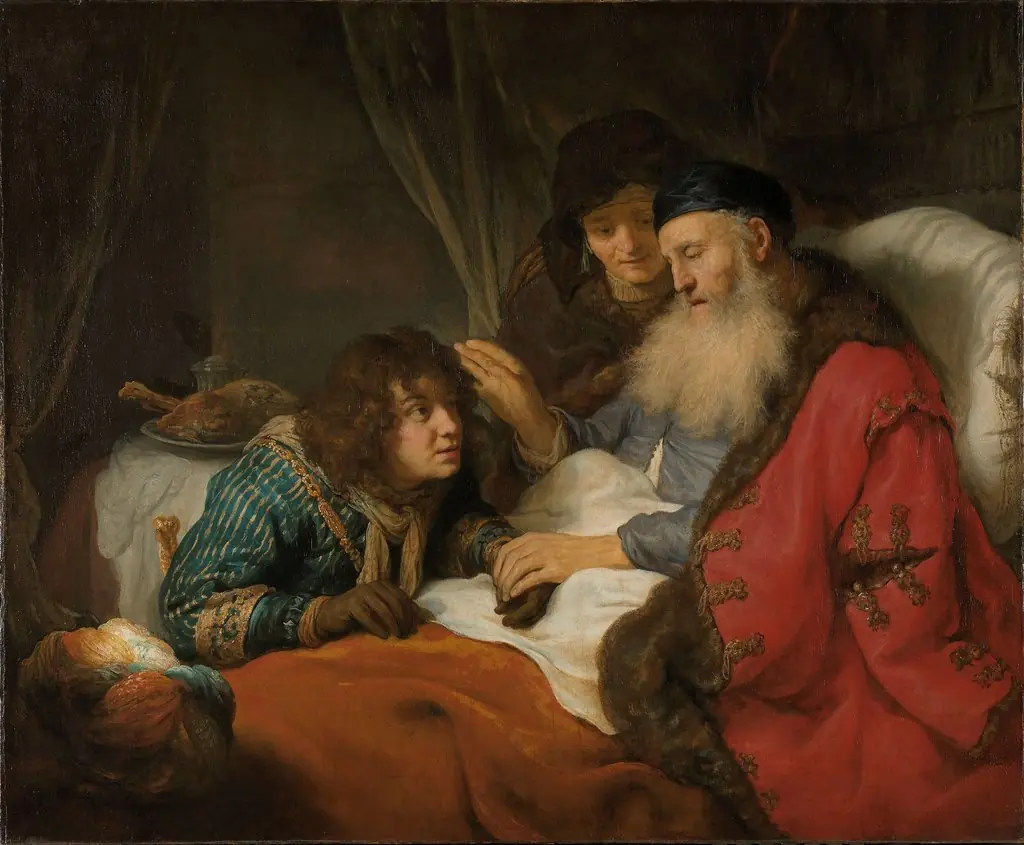 Isaac Blessing Jacob
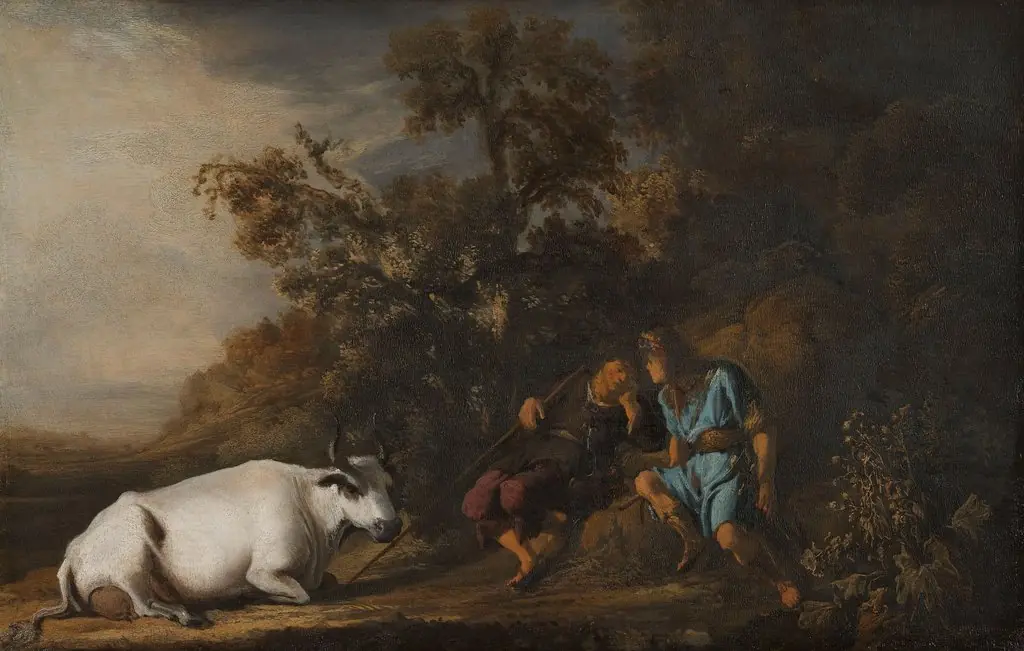 Mercury, Argus and Io
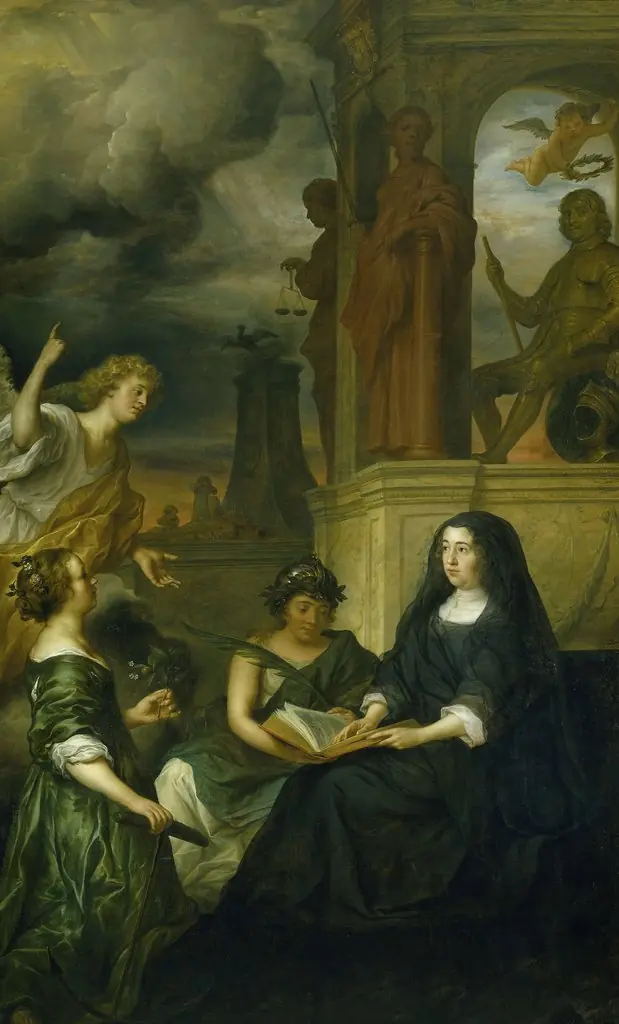 Allegory on the memory of Frederik Hendrik (1584-1647), prince of Orange, with the portrait of his widow Amalia van Solms
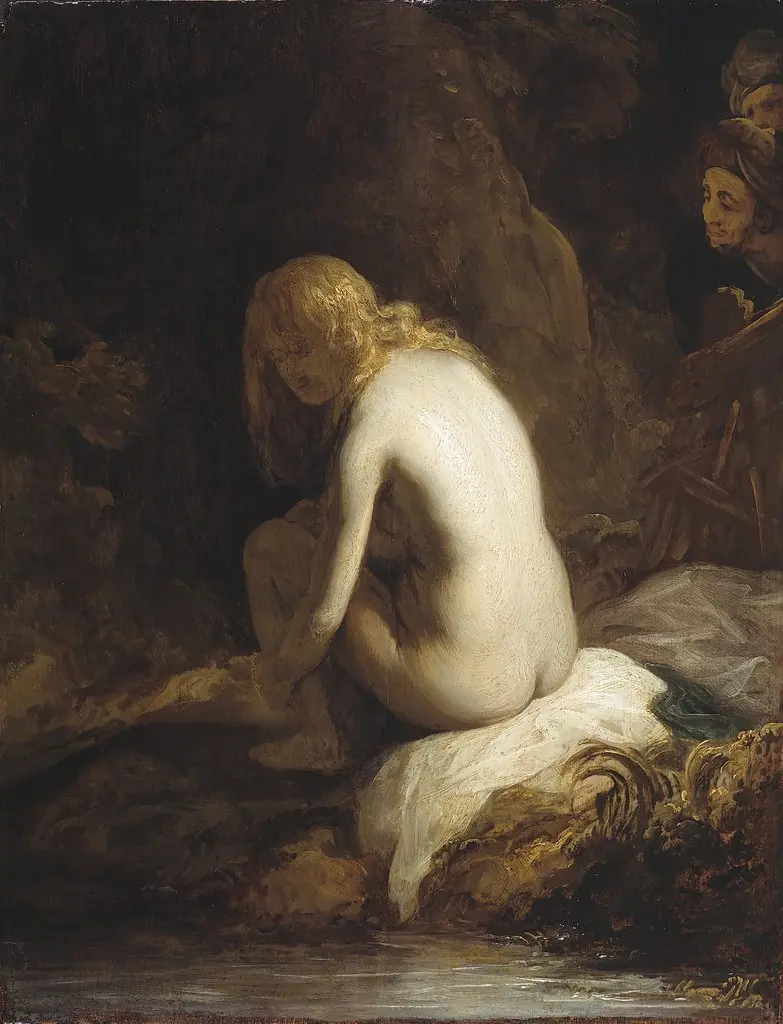 Susanna and the Elders