Artwork
Bobalicon (Simpleton)
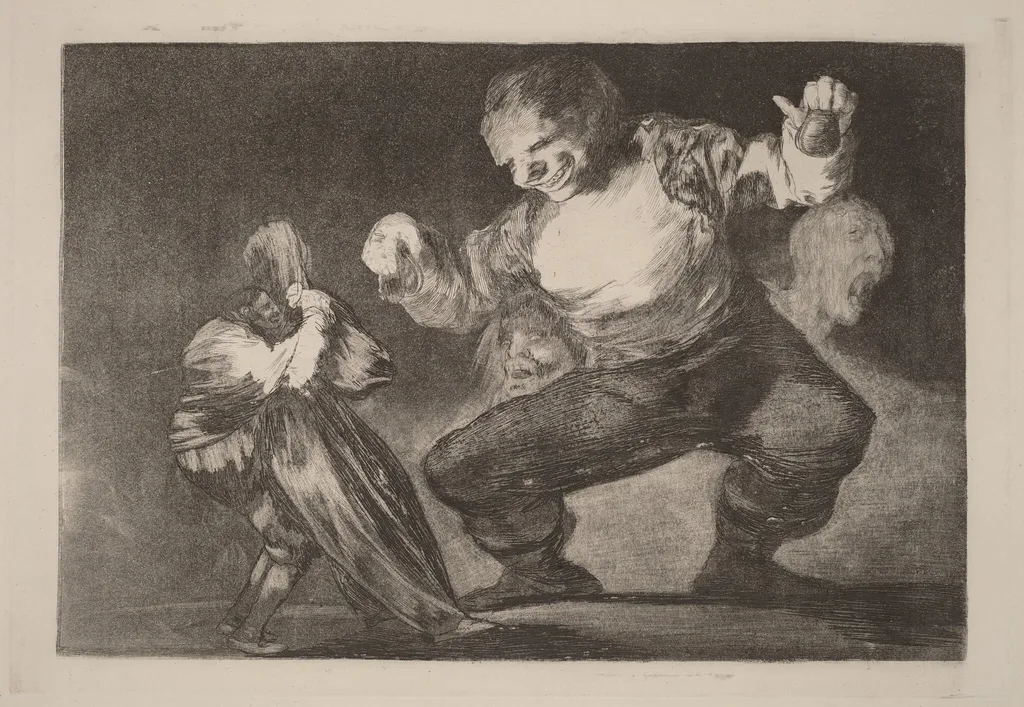
Bobalicon (Simpleton) is an ink print by the Romanticist artist Francisco Goya. It dates from 1816 and is held in the collection of the National Gallery of Art.
About this work
Overview
Bobalicon (Simpleton) is a print created by Francisco de Goya using multiple techniques, including etching and aquatint. It was produced in 1816 but not printed until after the artist's death, between 1854 and 1863.
Subject & Meaning
The print depicts a chaotic scene: a laughing man sits on the ground, clutching a rock, while a woman in a flowing dress attempts to restrain him. Their actions suggest a moment of madness or chaos, critiquing human folly and societal upheaval, themes common in Goya's work.
Technique & Style
Goya employed a range of techniques to create the print, including etching, burnished aquatint, and burin. The rough, sketchy lines and stark contrast between the figures and dark background give the scene a raw, unsettled feel characteristic of his Romantic style.
Artist & collection
Artist
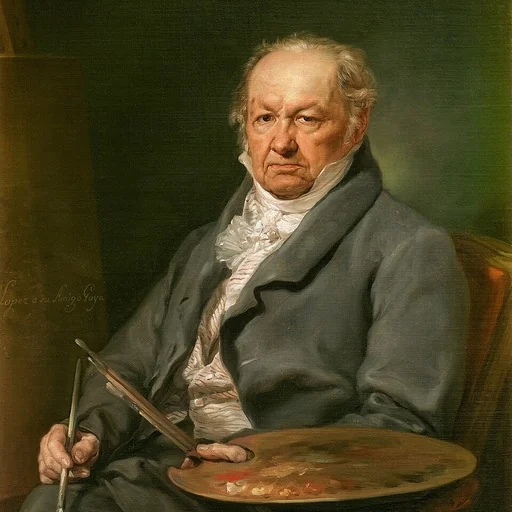
Francisco José de Goya y Lucientes (; Spanish: ; 30 March 1746 – 16 April 1828) was a Spanish romantic painter and printmaker.

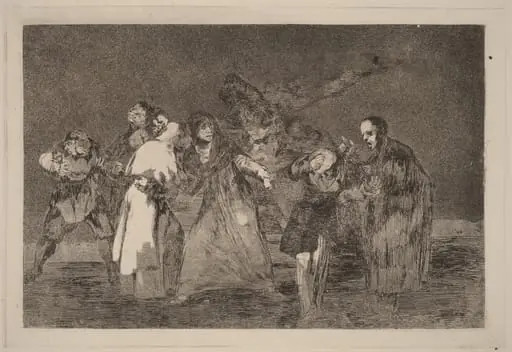 Sanan cuchilladas mas no malas palabras (Wounds Heal Quicker than Hasty Words)
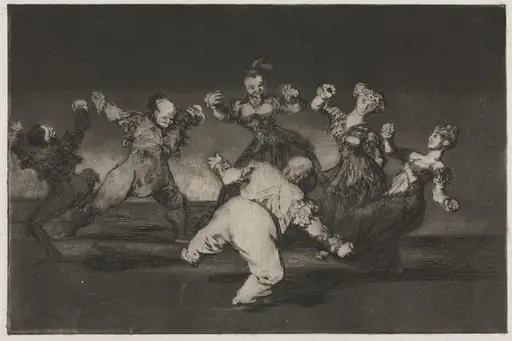 The Proverbs: If Marion Will Dance, Then She Has to Take the Consequences
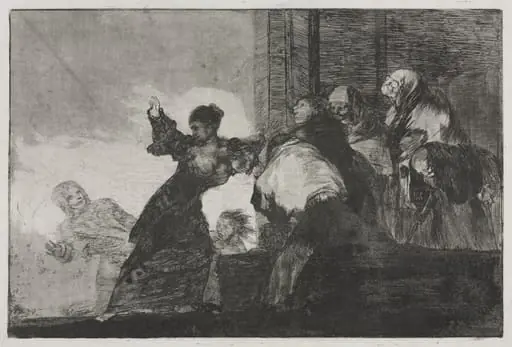 The Proverbs: Two Heads are Better than One or Poor Folly
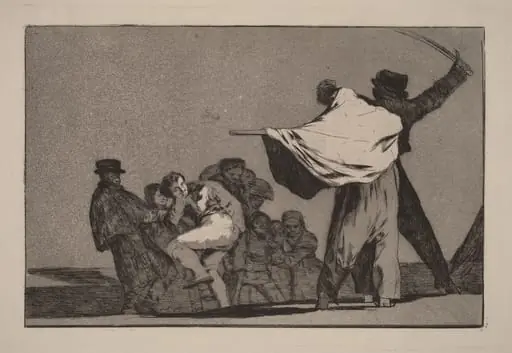 Disparate conocido (Well-Known Folly)
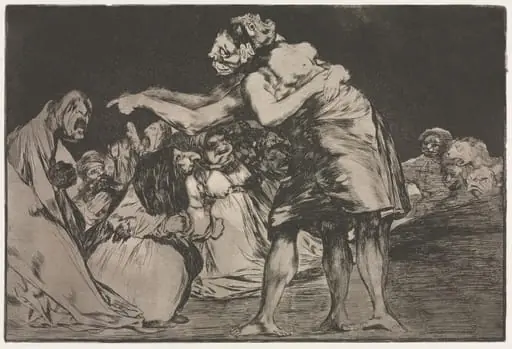 The Proverbs: Matrimonial Folly
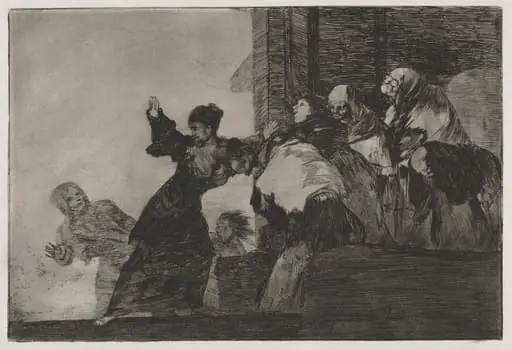 The Proverbs: Poor Folly
 Disparate desordenado (Disorderly Folly)
 Disparate desordenado (Disorderly Folly)
 The Proverbs: The Folly of Fury
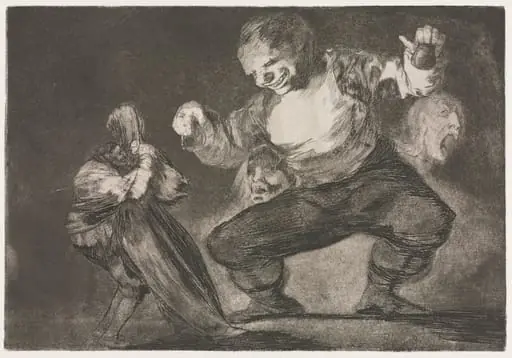 The Proverbs: Simpleton