Artwork
Disparate desordenado (Disorderly Folly)
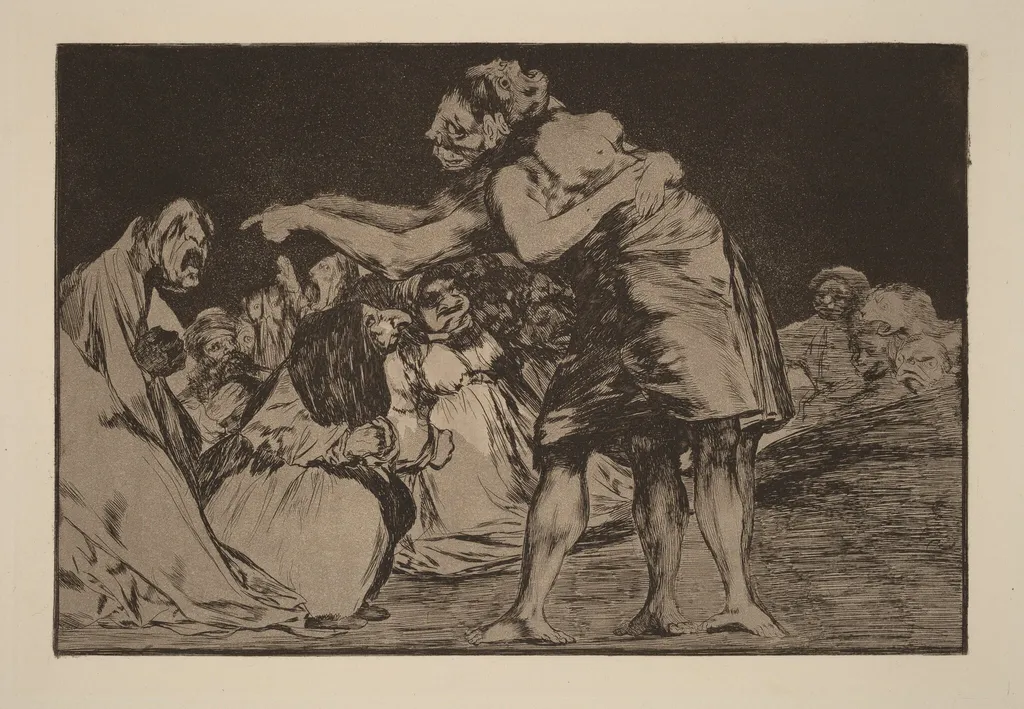
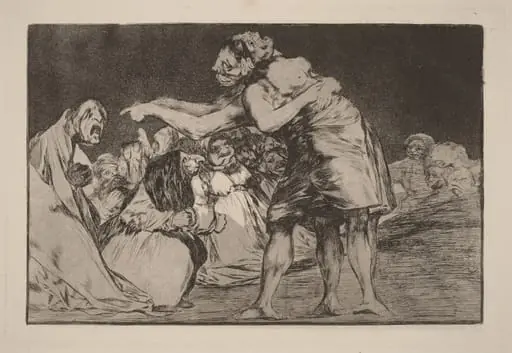
Disparate desordenado (Disorderly Folly) is an ink print by the Romanticist artist Francisco Goya. It dates from 1816 and is held in the collection of the National Gallery of Art.
About this work
Overview
Disparate desordenado (Disorderly Folly) is a print created by Francisco Goya in 1816, combining etching, aquatint, and drypoint techniques. Produced during the late phase of his career, it exemplifies his exploration of graphic mediums in the transition from traditional to modern art.
Subject & Meaning
The print depicts a chaotic, dark scene of a crowd in turmoil. A central figure, a woman bent over a large sack, is surrounded by pushing, blurred-faced individuals. The composition conveys a sense of frantic disorder, reflecting the chaotic social and political atmosphere of early 19th-century Spain.
Technique & Style
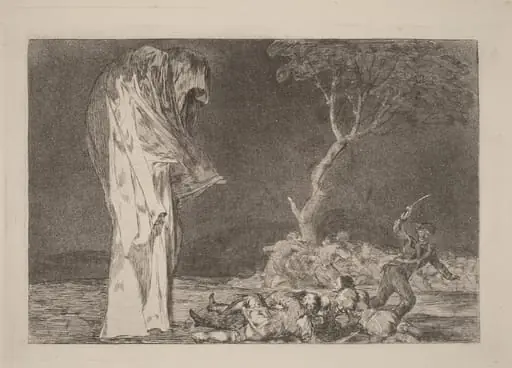
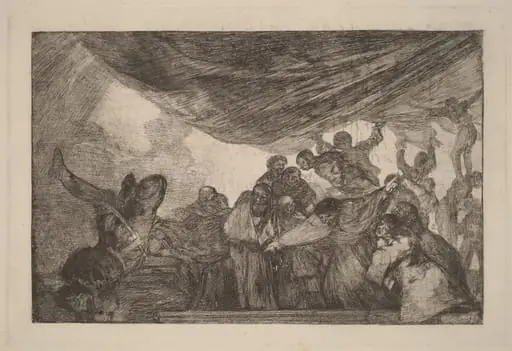
Goya employed sharp, uneven lines through etching and drypoint to evoke movement and confusion. Aquatint contributed to the dark, textured background, enhancing the overall sense of urgency and turmoil. The blurred faces and rough lines amplify the frenetic, unsettling mood of the scene.
History & Provenance
Created in 1816, this work is part of Goya’s later graphic output, characterized by themes of chaos and human folly. Specific provenance details are not provided in the available information.
Context
Disparate desordenado reflects the turbulent era in which it was made, echoing the political and social upheavals of early 19th-century Spain, a period marked by instability and transformation.
Legacy
As part of Goya’s late graphic works, Disparate desordenado contributes to his legacy as a pioneer in exploring the expressive potential of printmaking, influencing the transition to modern artistic practices.
Own this work as a print
Artist & collection
Artist
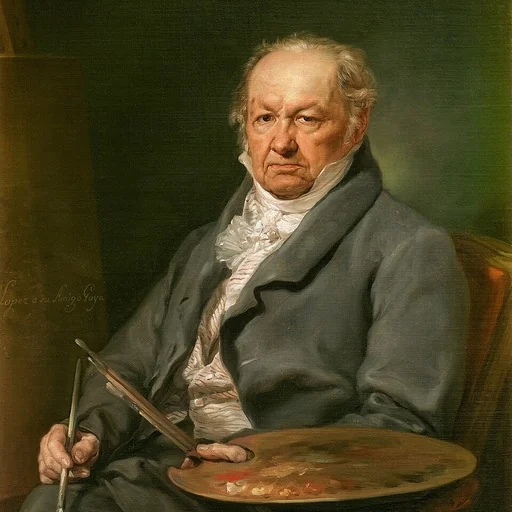
Francisco José de Goya y Lucientes (; Spanish: ; 30 March 1746 – 16 April 1828) was a Spanish romantic painter and printmaker.

 Disparate desordenado (Disorderly Folly)
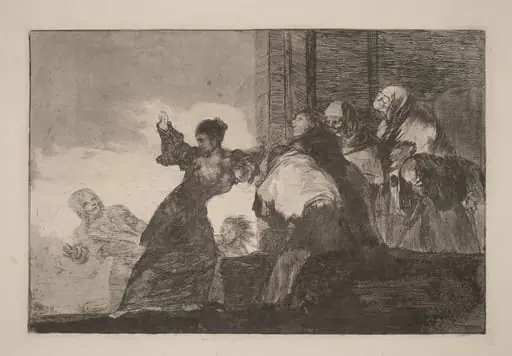 Disparate pobre (Poor Folly)
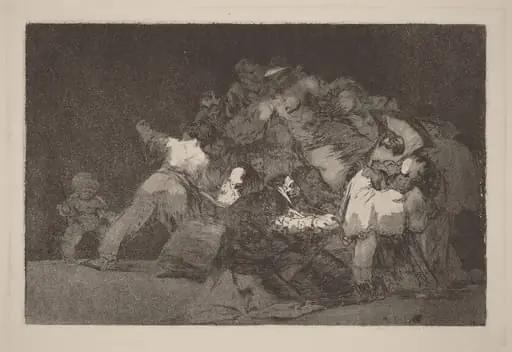 Disparate general (General Folly)
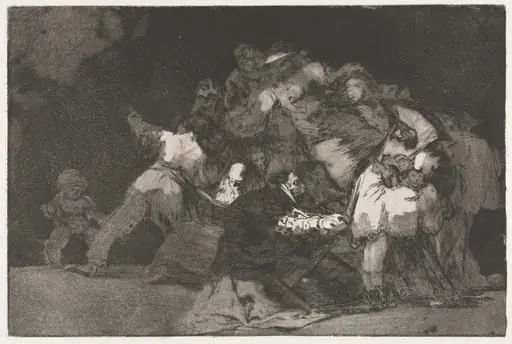 The Proverbs: General Folly
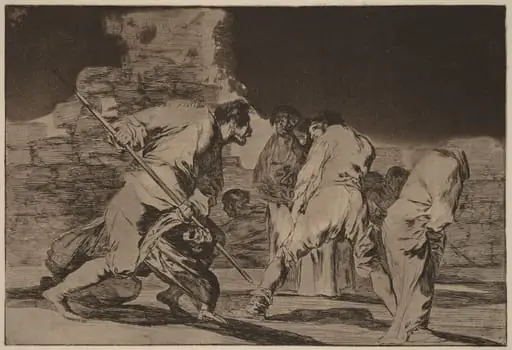 Disparate furioso (Furious Folly)
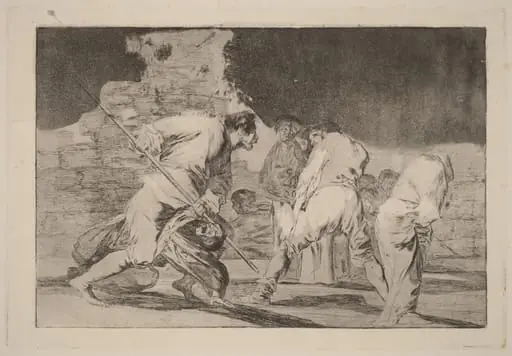 Disparate furioso (Furious Folly)
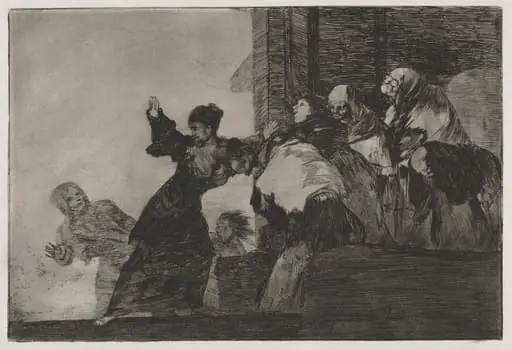 The Proverbs: Poor Folly
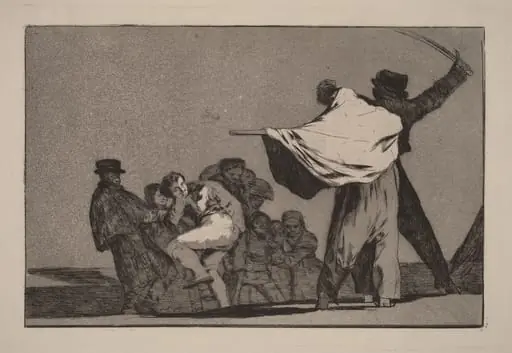 Disparate conocido (Well-Known Folly)
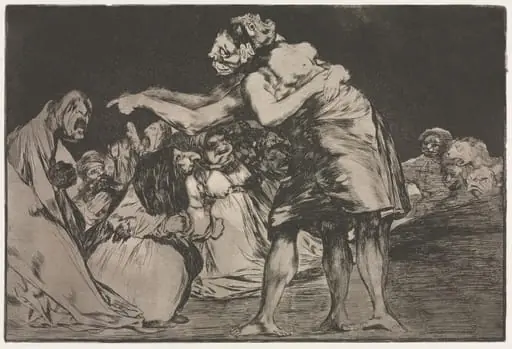 The Proverbs: Matrimonial Folly
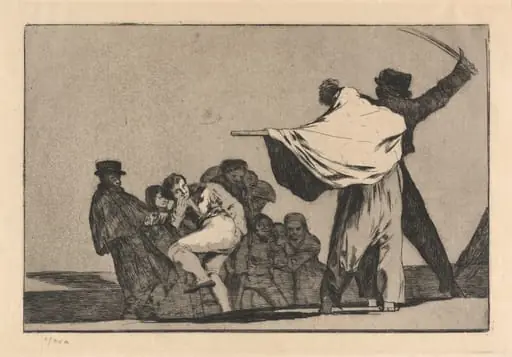 Disparate conocido (Well-Known Folly)
 Disparate de miedo (Folly of Fear)
 Disparate claro (Clear Folly)